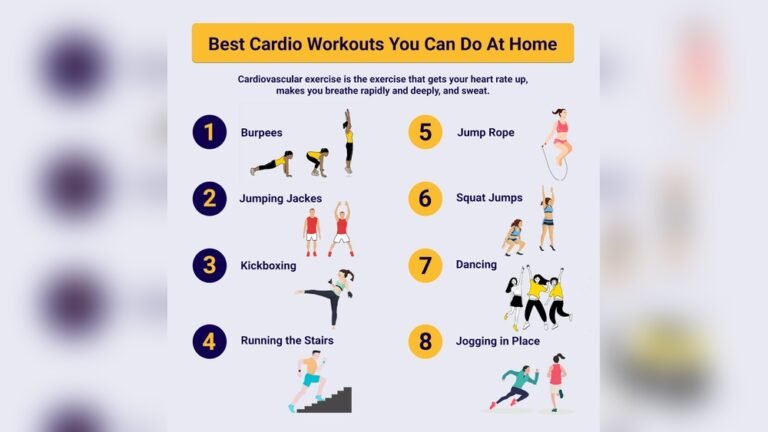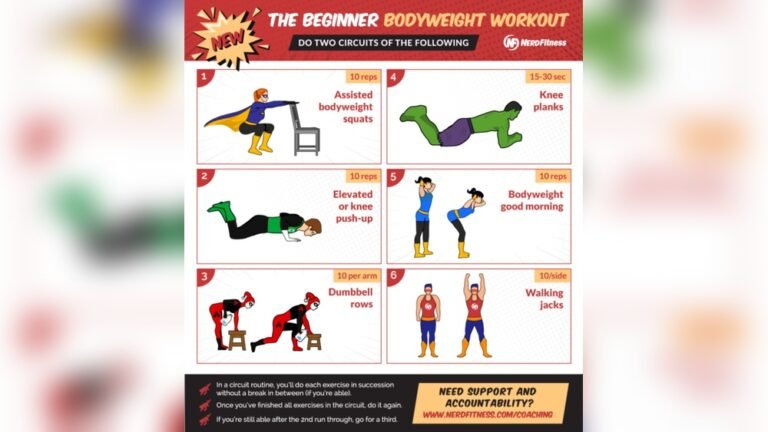
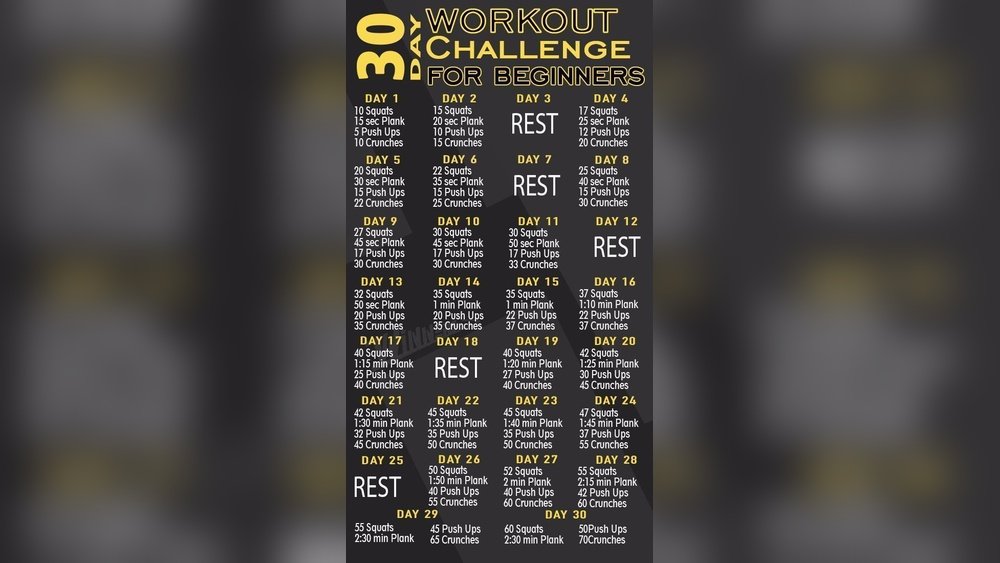
A 30-day workout plan is a simple, structured way to improve your fitness in just one month. It gives you a clear schedule, a mix of exercises, and helps you build healthy habits. Whether you are new to working out, coming back after a break, or looking for a challenge, a 30-day plan can help you make real progress. This article explains how to prepare, what to expect each week, and how to get the most out of your effort. You’ll learn about workout types, how to adjust the plan for your level, and how to support your body with rest, nutrition, and recovery.
Many people start fitness routines but lose motivation after a few days. A 30-day plan solves this problem by giving you daily goals and a sense of achievement. You don’t need a gym membership or expensive equipment. With basic tools like dumbbells, resistance bands, and an exercise mat, you can train at home. The plan includes strength, cardio, flexibility, and recovery days so your body gets time to adapt and grow stronger.
Who Should Follow A 30-day Workout Plan
A 30-day workout plan is designed for:
- Beginners who want a guided start
- Intermediate exercisers seeking new structure
- Advanced athletes needing a reset or challenge
- People looking to lose weight, build muscle, or improve health
It works for almost anyone, but you should check with your doctor if you have health problems or injuries. The plan is flexible, you can adjust exercises, rest days, and intensity to fit your needs.
Benefits Of A Structured 30-day Fitness Program
Following a structured workout plan brings clear benefits:
- Consistency: Daily schedule builds habits
- Progress tracking: Easy to see improvement
- Motivation: Each workout feels purposeful
- Balanced training: Mix of strength, cardio, and flexibility
- Injury prevention: Proper warm-ups and recovery
Research shows that people who follow organized programs are more likely to reach their fitness goals. For example, a study published by the American Council on Exercise found that structured plans improve adherence and lead to better results.
Preparing For Your 30-day Workout Plan
Before you start, careful preparation will help you succeed and avoid mistakes.
Setting Realistic Goals
Think about what you want to achieve:
- Lose weight
- Build muscle
- Increase stamina
- Improve flexibility
Set SMART goals (Specific, Measurable, Achievable, Relevant, Time-bound). For example:
- “Lose 3 pounds in 30 days”
- “Do 10 push-ups in a row by week 4”
- “Run for 20 minutes without stopping”
Tracking Progress
Use simple tools to monitor your journey:
- Write workouts in a notebook
- Take before-and-after photos
- Measure body weight or waist size
- Record reps, sets, and weights
Apps like MyFitnessPal or Google Sheets can help you log workouts and see progress.
Choosing The Right Equipment
You don’t need a full gym. Basic equipment can add variety and challenge:
- Dumbbells: Adjustable or fixed, for upper/lower body
- Resistance bands: Great for beginners or mobility
- Kettlebells: For dynamic strength and cardio
- Exercise mat: For floor work and stretching
- Bench or sturdy chair: For dips, step-ups
- Treadmill or air bike: Optional for cardio
If you have more equipment, like barbells or a pull-up bar, you can add advanced exercises.
Creating A Consistent Schedule
Consistency is key. Pick workout times that suit your routine—morning, lunchtime, or evening. Block 30–60 minutes per session. Use alarms or calendar reminders so you don’t skip workouts.
A sample weekly schedule:
- Monday: Strength
- Tuesday: Cardio
- Wednesday: Flexibility/mobility
- Thursday: Strength
- Friday: Cardio
- Saturday: Active recovery
- Sunday: Rest
Warm-up And Cool-down: Why They Matter
Every workout should start with a warm-up and end with a cool-down.
Warm-up
A good warm-up increases blood flow, loosens joints, and prepares your muscles. This lowers injury risk and improves performance.
Try 5–10 minutes of:
- Light cardio (jumping jacks, brisk walking)
- Dynamic stretches (arm circles, leg swings)
- Mobility drills (hip rotations)
Cool-down
After exercise, a cool-down helps your heart rate return to normal and reduces soreness.
Spend 5–10 minutes on:
- Gentle cardio (walking, slow cycling)
- Static stretches (hamstring, quad, chest stretches)
Don’t skip these—they help your body recover and keep you feeling good for the next session.
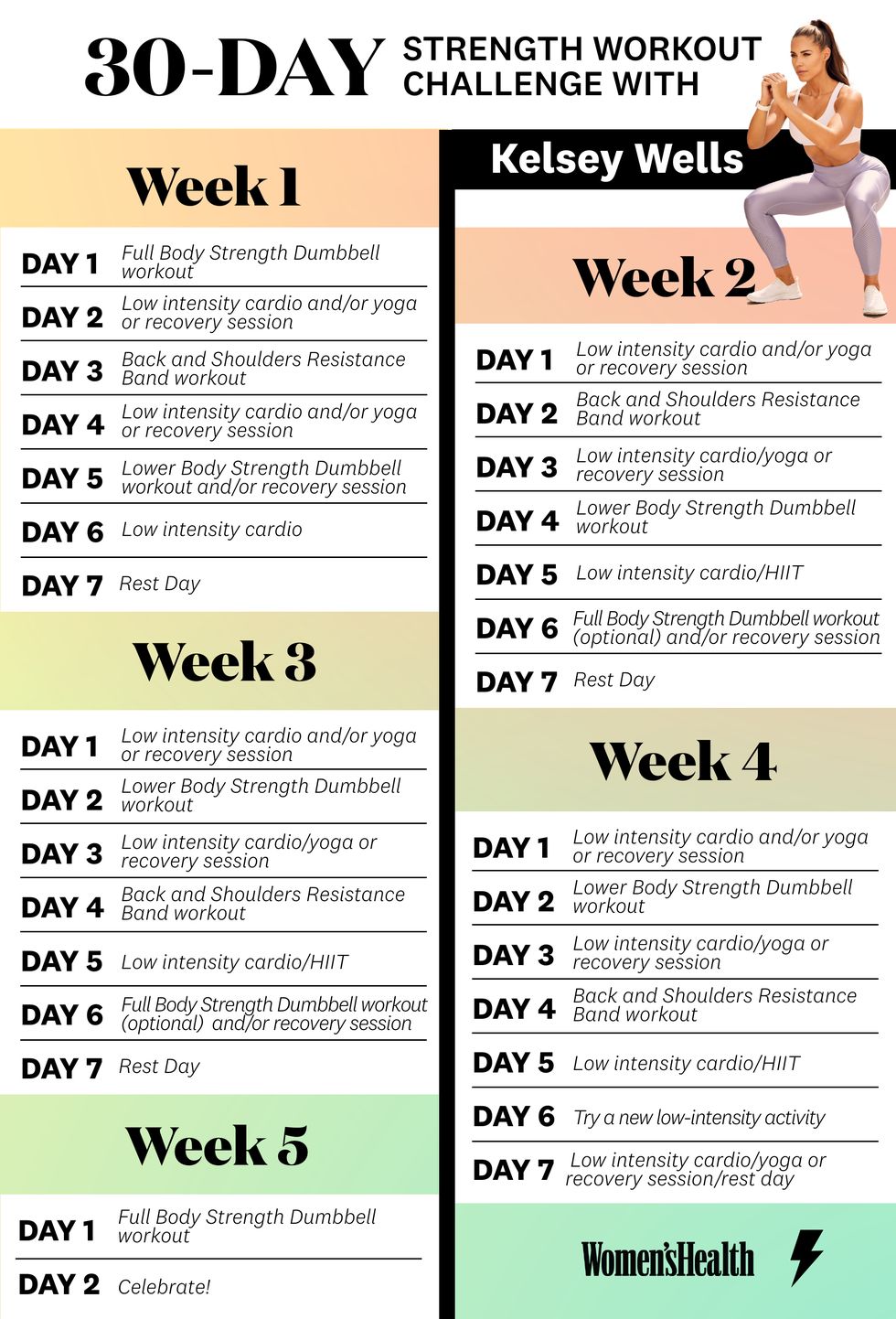
30-day Workout Plan Structure
The plan uses progressive overload—gradually increasing difficulty so your body adapts and improves. Each week, intensity and volume rise a bit. The mix of strength, cardio, flexibility, and recovery prevents boredom and boosts results.
Week 1: Foundation
Goal: Build basic strength, stamina, and mobility. Focus on learning proper form.
- Strength (2 days):
- Push-ups (or knee push-ups)
- Squats (bodyweight)
- Bent-over rows (with dumbbells or bands)
- Plank (core)
- Cardio (2 days):
- Brisk walking or jogging (20–25 minutes)
- Jump rope or air bike (if available)
- Flexibility/Mobility (1 day):
- Yoga or stretching routine (20 minutes)
- Active Recovery (1 day):
- Light activity (walking, gentle cycling)
- Rest (1 day):
- Complete rest or easy stretching
Beginner Tips: Start with lower reps (8–10), shorter times, and gentle pace. Focus on form.
Intermediate/Advanced: Add more sets, faster pace, or extra exercises (lunges, pull-ups).
Week 2: Building Momentum
Goal: Increase reps, add resistance, and improve endurance.
- Strength (2 days):
- Push-ups or incline push-ups
- Goblet squats (with dumbbell or kettlebell)
- Overhead press (dumbbells or bands)
- Side plank
- Cardio (2 days):
- Interval training (walk/run cycles)
- Cycling or treadmill (25–30 minutes)
- Flexibility/Mobility (1 day):
- Deeper stretches, foam rolling if available
- Active Recovery (1 day):
- Gentle yoga, walking
- Rest (1 day):
- Rest or meditation
Beginner: Increase reps to 10–12, try resistance bands.
Intermediate/Advanced: Add weight, speed, or new movements (burpees, mountain climbers).
Week 3: Intensifying Effort
Goal: Push stamina and strength; increase workout volume.
- Strength (2 days):
- Push-ups (regular or decline)
- Bulgarian split squats
- Renegade rows (dumbbells)
- Russian twists (core)
- Cardio (2 days):
- HIIT (high-intensity interval training, 20–25 min)
- Steady-state (longer, 30 min)
- Flexibility/Mobility (1 day):
- Mobility drills, dynamic stretching
- Active Recovery (1 day):
- Swimming, walking, or cycling
- Rest (1 day):
- Rest or restorative yoga
Beginner: Keep pace steady, focus on recovery.
Intermediate/Advanced: More sets/reps, add plyometrics (jump squats).
Week 4: Peak Challenge
Goal: Maximize effort, test progress, prepare for maintenance.
- Strength (2 days):
- Push-ups (max reps or weighted)
- Deadlifts (dumbbells or kettlebell)
- Pull-ups or assisted pull-ups
- Plank variations
- Cardio (2 days):
- HIIT (short bursts, high intensity)
- Cardio of choice (40 min)
- Flexibility/Mobility (1 day):
- Full-body stretch, yoga
- Active Recovery (1 day):
- Light activity, focus on breathing
- Rest (1 day):
- Reflect and rest
Beginner: Celebrate progress, avoid overtraining.
Intermediate/Advanced: Test personal bests, push limits safely.
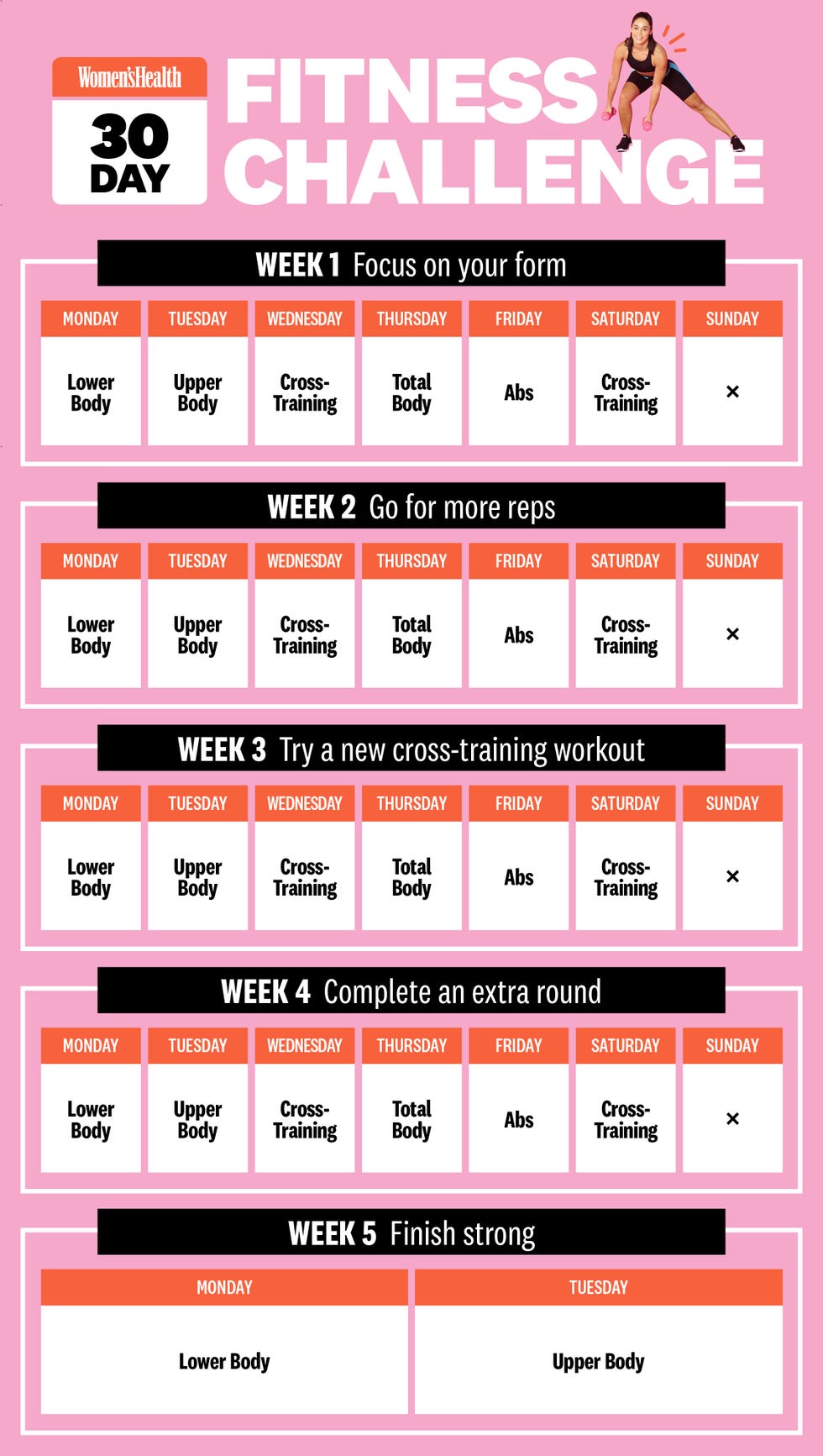
Sample Weekly Workout Schedule
Here’s a sample week from the plan, with exercise variations for different skill levels.
| Day | Beginner | Intermediate | Advanced |
|---|---|---|---|
| Monday | Bodyweight squats, knee push-ups, plank | Goblet squats, push-ups, side plank | Weighted squats, decline push-ups, plank with leg lift |
| Tuesday | Brisk walk (20 min) | Jog/run intervals (25 min) | HIIT sprints (20 min) |
| Wednesday | Stretching routine | Yoga flow | Mobility drills, advanced yoga |
| Thursday | Bent-over rows, lunges, plank | Renegade rows, split squats, Russian twists | Weighted rows, Bulgarian split squats, plank variations |
| Friday | Jump rope (15 min) | Cycling (25 min) | Cardio circuit (30 min) |
| Saturday | Active recovery (walk) | Gentle yoga | Swimming, mobility drills |
| Sunday | Rest | Rest | Rest |
Exercise Variations For Different Levels
Not everyone starts at the same fitness level. Here are examples of how to adapt:
- Push-ups: Knee (beginner), regular (intermediate), weighted or plyometric (advanced)
- Squats: Bodyweight (beginner), goblet (intermediate), jump squats (advanced)
- Rows: Resistance band (beginner), dumbbell (intermediate), heavy dumbbell or barbell (advanced)
- Plank: Standard (beginner), side plank (intermediate), plank with leg lift (advanced)
- Cardio: Walking (beginner), jogging (intermediate), HIIT or sprints (advanced)
If an exercise feels too hard or easy, adjust sets, reps, or rest time.
Progressive Overload: How To Increase Intensity
Progressive overload means making your workouts harder over time. This could be:
- Adding more reps or sets
- Increasing weight or resistance
- Doing exercises faster or with less rest
- Trying harder movements
For example, start with 10 squats and add 2 reps each week. Or, increase dumbbell weight by 2 lbs every 7–10 days.
Sample Progression Table
| Week | Squats (reps) | Push-ups (reps) | Plank (seconds) |
|---|---|---|---|
| 1 | 10 | 8 | 20 |
| 2 | 12 | 10 | 25 |
| 3 | 14 | 12 | 30 |
| 4 | 16 | 15 | 40 |
Small changes each week make a big difference over 30 days.
Credit: www.labels-ribbons.com
Cardio And Strength: Finding The Right Balance
A good plan mixes cardio (heart health, endurance) and strength training (muscle growth, metabolism).
- Strength: Builds lean muscle, supports fat loss, improves bone health
- Cardio: Boosts heart and lung function, burns calories, increases stamina
Aim for at least 2 days of each per week. If you prefer one over the other, balance it by adding extra sessions or combining both in circuits.
Flexibility And Mobility: Why They’re Essential
Flexibility and mobility keep your joints healthy and improve performance. Stretching helps prevent injury and speeds recovery.
Include:
- Static stretches after workouts (hamstrings, quads, shoulders)
- Dynamic stretches before workouts (leg swings, arm circles)
- Mobility drills (hip openers, ankle rotations)
Yoga, Pilates, or simple stretching routines work well.
Active Recovery And Rest Days
Active recovery means gentle movement—walking, yoga, swimming. It helps blood flow, reduces soreness, and keeps you motivated.
Rest days are vital. Your muscles grow and repair when you rest. Don’t skip rest—overtraining can lead to fatigue and injury.
A common mistake is pushing too hard every day. Listen to your body. If you feel pain (not just soreness), take an extra rest day.
Hydration And Nutrition: Supporting Your Results
What you eat and drink affects your progress.
- Hydration: Aim for 8–10 cups (64–80 oz) of water daily. Drink more if you sweat a lot or exercise outdoors.
- Nutrition: Focus on whole foods—lean protein (chicken, fish, beans), healthy carbs (rice, oats, fruit), and good fats (olive oil, nuts).
- Meal timing: Eat protein and carbs before and after workouts for energy and recovery.
Avoid crash diets. Fuel your body, don’t starve it.
Sample Nutrition Table
| Meal | Protein | Carbs | Fats |
|---|---|---|---|
| Breakfast | Eggs, Greek yogurt | Oats, berries | Avocado |
| Lunch | Chicken breast | Brown rice | Olive oil |
| Dinner | Salmon, tofu | Sweet potato | Almonds |
Credit: www.womenshealthmag.com
Sleep And Recovery: The Secret To Progress
Sleep is where your body repairs itself. Aim for 7–9 hours per night. Good sleep boosts energy, mental focus, and muscle recovery.
To improve sleep:
- Avoid screens before bed
- Keep your room cool and dark
- Go to bed at the same time each night
Lack of sleep can stall your progress—even with perfect workouts and nutrition.
Optional Home Gym Equipment
Basic equipment can make workouts easier and more effective:
- Dumbbells: Adjustable sets offer more options
- Resistance bands: Cheap, portable, great for travel
- Kettlebells: Good for swings, squats, and presses
- Bench: Useful for many exercises
- Treadmill/air bike: For indoor cardio
- Exercise mat: Protects your joints and floor
Choose equipment based on space, budget, and goals. If you don’t have any, bodyweight exercises are still very effective.
Common Mistakes And How To Avoid Them
Many people make mistakes that limit results. Here are the most frequent—and how to fix them:
- Skipping warm-ups or cool-downs: Leads to injury and soreness. Always include both.
- Doing too much, too soon: Causes burnout or injury. Increase intensity slowly.
- Neglecting rest days: Muscles need time to recover. Rest is part of the plan.
- Poor form: Leads to injuries and less progress. Learn proper technique.
- Not tracking progress: Makes it hard to see improvements. Use a log or app.
- Ignoring nutrition and hydration: Limits energy and recovery. Eat balanced meals, drink water.
- Unrealistic goals: Causes disappointment. Set achievable targets.
- Comparing yourself to others: Everyone starts somewhere. Focus on your own progress.
A less obvious insight: Beginners often ignore mobility and flexibility, which can cause joint problems over time. Make stretching a regular part of your routine.
Another common mistake is ignoring sleep. Even if you train hard, lack of sleep can undo your effort.
Staying Motivated And Overcoming Plateaus
Motivation can drop after a few days. Here’s how to keep going:
- Celebrate small wins (finishing a workout, doing extra reps)
- Change up exercises to keep things interesting
- Find a workout buddy or join online groups
- Remind yourself why you started—write it down
- Use music, podcasts, or videos for inspiration
If progress slows (a plateau), try:
- Changing exercise order
- Increasing weights or reps
- Adding new movements (jumping, balance drills)
- Taking an extra rest day
Plateaus are normal. Adjust the plan and keep moving forward.
How To Maintain Results After 30 Days
Your body adapts in 30 days, but results fade if you stop. Here’s how to keep progress:
- Set new goals (run farther, lift heavier, try new sports)
- Continue with a similar weekly schedule
- Try new workout programs (strength, HIIT, yoga)
- Track progress and reward yourself
Fitness is a journey. The first 30 days are just the beginning.
Frequently Asked Questions
How Much Weight Can I Lose With A 30-day Workout Plan?
Most people lose 2–6 pounds in a month with regular exercise and healthy eating. Results vary by age, gender, and starting weight. Don’t focus only on the scale—measure inches, energy, and strength.
Can I Do This Plan At Home Without Equipment?
Yes. The plan works with bodyweight exercises. Equipment like dumbbells or resistance bands adds variety, but isn’t required. Adjust movements to match what you have.
What If I Miss A Workout?
Missing one workout won’t ruin your progress. Try to make it up the next day, or just keep going. Consistency matters more than perfection.
How Do I Know If I’m Working Out Hard Enough?
You should feel challenged, but not exhausted or in pain. Use the talk test—if you can speak but not sing during cardio, you’re at the right intensity. For strength, muscles should feel tired at the end of sets.
Where Can I Find More Information On Fitness And Workout Plans?
For reliable advice, visit the Centers for Disease Control and Prevention. They offer guides, tips, and resources for all fitness levels.
Sticking to a 30-day workout plan can transform your body and mind. You’ll learn discipline, gain strength, and feel healthier. The real reward is the habit you build—one that keeps you moving forward long after the 30 days are over.

Credit: www.nourishmovelove.com
I am a certified fitness coach with over 10 years of experience helping people improve their strength, endurance, and overall health. Specializes in workout programming, weight training, fat loss, muscle building, home fitness, and evidence-based nutrition.My goal is to make fitness simple and practical through well-researched guides, honest product reviews, and actionable training advice.