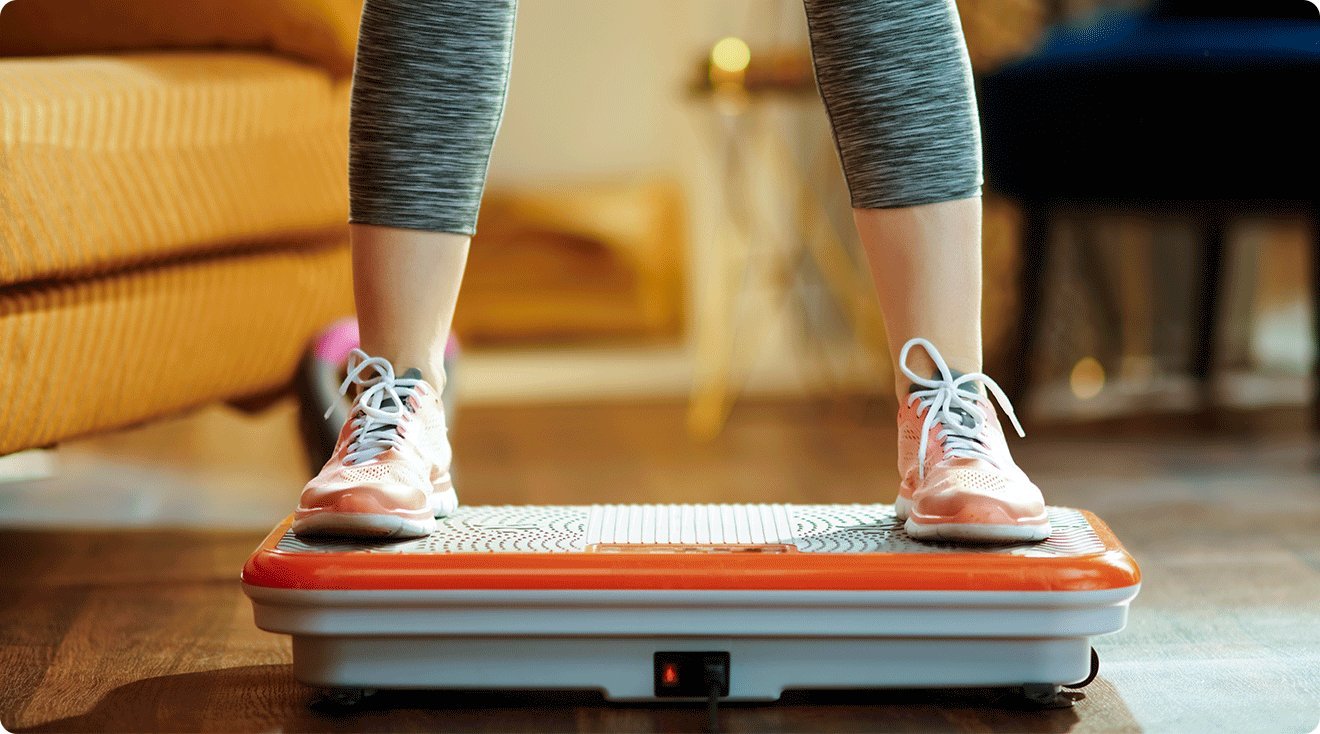
Usually, no. Using a vibration plate during pregnancy depends on your pregnancy, your body, and what your doctor says about your specific case. If you get it wrong, the worst realistic outcome is a fall, a placental problem, or early labor — rare, but serious. Ask your OB before you step on.
Is a vibration plate safe during pregnancy?

| Situation | Safe? | Why |
|---|---|---|
| Second trimester, low-risk, doctor approved | With care | Only with your OB’s clear OK |
| Third trimester, low-risk, doctor approved | With care | Balance gets worse as your belly grows |
| High-risk pregnancy (any trimester) | No | Placental or cervical issues can worsen |
| Placenta previa or low-lying placenta | No | Vibration and standing add bleeding risk |
| History of preterm labor | No | Vibration may trigger contractions |
What can actually go wrong
The real harm is falling. Your center of gravity moves forward as your belly grows, and a moving platform makes balance harder. A fall in the second or third trimester can cause placental abruption — the placenta pulling away from the uterine wall. The American College of Obstetricians and Gynecologists (ACOG) provides patient guidance on pregnancy complications at ACOG’s patient education page. The risk of a fall on a plate isn’t huge, but it’s real and you can’t undo it.
The second harm is less clear. Some doctors worry that strong, repeated vibration near the belly could irritate the uterus or trigger contractions. There’s no solid research proving vibration plates cause miscarriage or preterm labor. But there’s also no good study saying they’re safe. When the evidence is thin, most OBs say skip it.
Money and time matter too. A gym membership or a home plate you paid for sits unused for nine months. That’s a small cost compared to a hospital stay, but it’s still a cost.
Signs to stop right away

- Any bleeding or spotting — call your doctor today; don’t wait.
- Cramping or a heavy, aching pelvis — your body is telling you to stop.
- Fluid leaking from the vagina — this can mean your water broke.
- Dizziness or blurred vision — step off slowly and sit down.
- Baby moving much less than usual — call your OB right away.
If you feel any of these, stop and call your doctor or midwife. Don’t try to push through. A trained OB or midwife handles this — not a gym trainer, not a forum, not me.
Safer ways to stay active
You can get the same benefits — better circulation, less back pain, steadier mood — without a moving platform. Walking, swimming, and stationary cycling all work. ACOG recommends at least 150 minutes of moderate activity per week for healthy pregnant women, spread across the week. That’s about 30 minutes on 5 days, but check with your doctor first if you have any condition.
- Walk briskly for 30 minutes, 5 days a week, on flat ground. Skip hills if your back hurts.
- Swim or do water aerobics for 30 minutes. Water takes the weight off your joints.
- Use a stationary bike for 20-30 minutes at a comfortable pace. No balance risk.
- Try prenatal yoga for 20-30 minutes, 2-3 times a week. Avoid deep twists and lying flat on your back after the first trimester.
- Do gentle strength work with light weights or resistance bands, 2 days a week. Keep the load light.
- Stop when you can’t talk easily while moving. That’s your effort ceiling.
- Drink water before, during, and after. Dehydration can trigger contractions.
- Cool down for 5 minutes with slow walking and deep breaths.
If your doctor clears you for a vibration plate later, keep sessions under 10 minutes, hold the handrail, and set the speed to the lowest level. But most OBs will still say no.
If you already used one

Don’t panic. One short session on a low setting, before you knew, is very unlikely to have hurt your baby. Call your OB or midwife today and tell them what you did — how long, what setting, and how you felt. They’ll decide if you need a check.
Watch for bleeding, cramping, fluid leaking, or reduced baby movement, and call your doctor if any appear. If any of those show up, go to the emergency room or call your doctor right away. Don’t wait for your next appointment.
From here, this stops being a home decision. Your OB handles the rest. Follow their advice, not a blog’s.
Related guides
Frequently asked questions
Can I use a vibration plate while pregnant?
No, not if you’re in a high-risk pregnancy or past 20 weeks. Even in a low-risk pregnancy, most OBs advise against it because of fall risk. Get clear approval from your doctor first.
Why do doctors say no to vibration plates in pregnancy?
Falls are the main reason. Your balance changes as your belly grows, and a moving platform makes a fall more likely. A fall can cause placental abruption, which is a medical emergency.
How long into pregnancy can I use a vibration plate?
Zero weeks is the safest answer. If your OB approves it in your second trimester, keep the speed at the lowest level.
Is it safe to stand on a vibration plate in early pregnancy?
Usually no. The first trimester is when your baby’s organs form, and any fall or trauma carries extra risk. Skip it and walk instead until your doctor says otherwise.
What happens if I used a vibration plate before I knew I was pregnant?
One short session is very unlikely to cause harm. Call your OB, describe what you did, and watch for bleeding, cramping, or reduced movement. If any appear, get care right away.
Does a vibration plate cause miscarriage?
There’s no proof it does. But there’s also no proof it’s safe, and falls are a known risk. That’s why doctors say no rather than yes.
Can I use a vibration plate after giving birth?
Wait until your 6-week postpartum check and get your doctor’s OK. If you had a C-section or diastasis recti, wait longer. Start with walking first.
Does it matter which trimester I’m in?
Yes. The first trimester carries organ-formation risk, and the third trimester carries fall risk. The second trimester is the only window some OBs allow — and only with approval.
Conclusion
Walking, swimming, and stationary cycling give you the same heart and mood benefits with none of the fall risk. Save the vibration plate for after your baby arrives and your doctor clears you.

I am a certified fitness coach with over 10 years of experience helping people improve their strength, endurance, and overall health. Specializes in workout programming, weight training, fat loss, muscle building, home fitness, and evidence-based nutrition.My goal is to make fitness simple and practical through well-researched guides, honest product reviews, and actionable training advice.