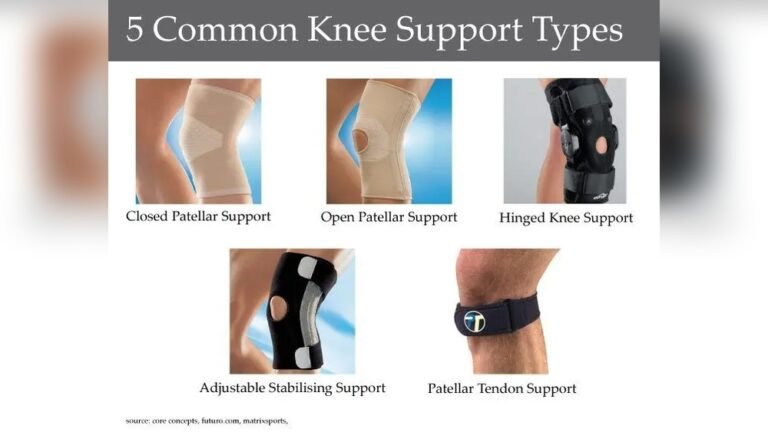
Choosing the right knee sleeves can make all the difference in your workouts and daily activities. But how do you know which size fits you perfectly?
If your knee sleeves are too tight, they can cut off circulation and cause discomfort. Too loose, and they won’t provide the support you need. That’s why understanding the proper size guide for knee sleeves is key to protecting your knees and boosting your performance.
You’ll learn simple steps to measure your knee correctly and find the ideal fit that keeps you comfortable and supported every time you wear them. Keep reading to discover how the right knee sleeves can help you move with confidence and prevent injuries.

Credit: eu.rehband.com
Measuring Your Knee
Measuring your knee correctly is essential for selecting the right knee sleeve size. A proper fit ensures comfort and support during movement. Taking accurate measurements prevents sleeves from being too tight or too loose. Follow simple steps for the best results.
Use a soft tape measure and measure the largest part of your knee. Measure while your knee is slightly bent for accuracy. This guide explains how to measure your knee with ease.
Choosing The Right Tape Measure
Pick a flexible, soft tape measure made of cloth or plastic. Avoid metal tape measures as they do not wrap smoothly. The tape should lie flat without twisting or gaps. Use a tape that shows clear, easy-to-read markings. This choice helps you get an exact measurement.
Finding The Largest Knee Circumference
Locate the widest part of your knee. This is usually around the kneecap or just above it. Wrap the tape measure around this point to find the largest circumference. Take the measurement in inches or centimeters. Write down the number to compare with size charts.
Positioning Your Knee For Accurate Measurement
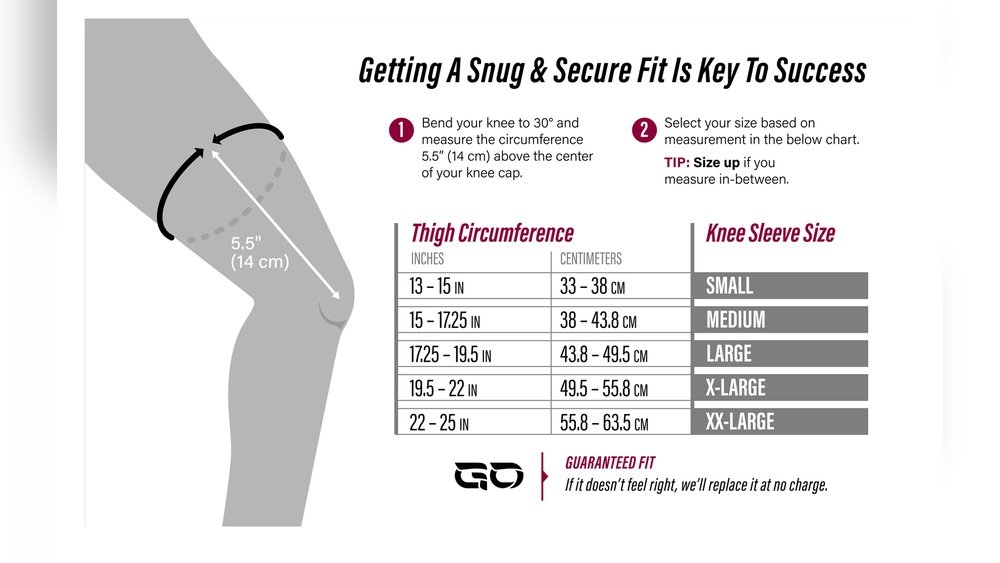
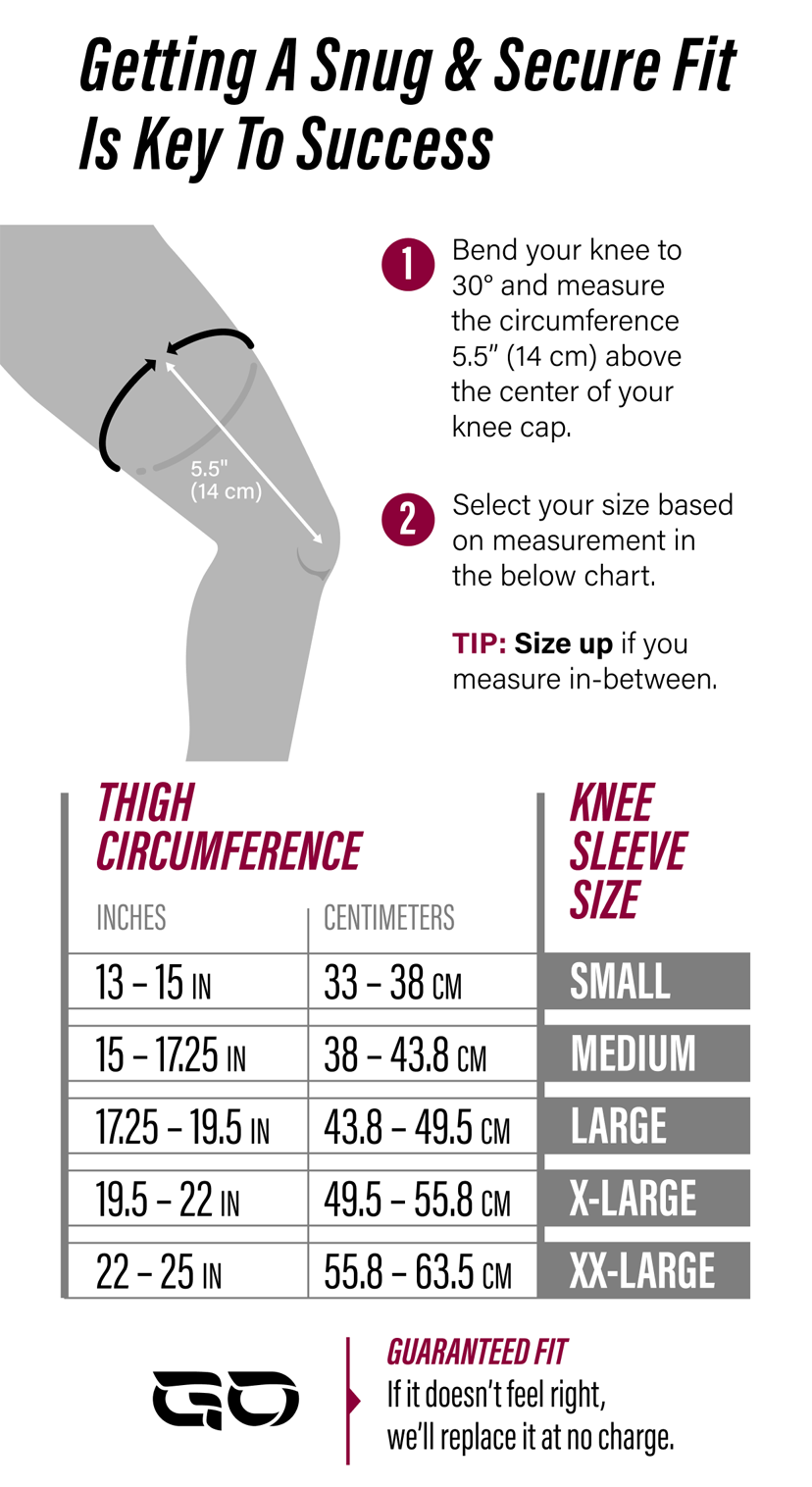
Bend your knee slightly, about 15 to 30 degrees. This position mimics how your knee moves during activity. Stand or sit with your leg relaxed. Keep the tape snug but not tight around your knee. Avoid pulling the tape too tight to prevent errors.
Credit: gokinesiologysleeves.com
Decoding Size Charts
Understanding size charts for knee sleeves can feel confusing at first. These charts are crucial for finding the right fit. A proper fit ensures comfort, support, and injury prevention. This section breaks down how to read and use knee sleeve size charts effectively.
Comparing Measurements To Standard Charts
Start by measuring your knee circumference accurately. Use a flexible tape measure around the center of your knee. Compare this number to the size chart provided by the brand. Most charts list sizes by specific measurement ranges. Choose the size that matches your measurement. Avoid guessing to prevent sleeves that are too tight or loose.
Handling Borderline Measurements
Measurements close to two sizes can be tricky. If your knee falls between sizes, consider your comfort preference. For a tighter, more supportive fit, select the smaller size. For more comfort and flexibility, opt for the larger size. Remember, knee sleeves stretch with use but should not cut off circulation.
Different Size Charts By Brand
Brands do not always use the same size standards. One brand’s medium may be another’s large. Always check the size chart on the product page before buying. Look for charts that specify how to measure your knee. Trust the brand’s own chart over general size guides. This practice helps avoid returns and ensures the best fit.
Fit And Compression Levels
Knee sleeves vary in fit and compression levels to match your needs. Choosing the right fit affects comfort and support. Compression helps reduce swelling and improves blood flow. Understanding these factors ensures better performance and injury prevention.
Tight Vs Loose Fit Benefits
A tight fit offers strong compression and joint stability. It helps keep the knee warm and supports heavy lifting. A loose fit provides more freedom and comfort. It suits light activities and longer wear times. Both fits serve different purposes depending on your activity.
Support Levels: Mild To Extra Strong
Mild support eases minor pain and improves circulation. Medium support stabilizes the knee during moderate exercise. Strong support protects the joint during heavy lifting or rehab. Extra strong sleeves offer maximum protection for serious injuries. Choose support based on your knee’s condition and activity level.
Adjusting Fit For Specific Activities
For running, choose a snug but flexible sleeve to allow movement. Weightlifting needs tighter sleeves for joint stability and power. In daily use, comfort and mild compression work best. Adjust sleeve size and tightness for each activity. This keeps your knee safe and comfortable all day.
Material And Design Considerations
Knee sleeves play a key role in supporting your knees during physical activities. Choosing the right material and design impacts comfort and performance. Different fabrics and designs affect how the sleeve fits and works for various exercises. Understanding these factors helps you pick the best sleeve for your needs.
Impact Of Fabric Stretch On Sizing
The fabric stretch affects how tight or loose the sleeve feels. Sleeves made from highly elastic materials stretch more and fit snugly. Less stretch means a tighter fit is needed when choosing a size. Overstretching can reduce support and durability. Measure your knee and compare it with the size chart carefully. A well-stretched sleeve improves blood flow and reduces swelling.
Choosing Sleeves For Running Vs Weightlifting
Running sleeves focus on light compression and breathability. They use thinner, more flexible fabrics for comfort during long runs. Weightlifting sleeves are thicker and offer stronger support. They protect joints from heavy loads and improve stability. Choose running sleeves for mobility and weightlifting sleeves for joint protection. The design also differs; running sleeves may have ventilation zones while lifting sleeves have reinforced stitching.
Color And Style Options
Knee sleeves come in many colors and designs to match your style. Some brands offer bright colors and patterns for a bold look. Others provide neutral tones for a classic and professional appearance. Color choice does not affect performance but can boost confidence. Style options include slip-on sleeves or ones with adjustable straps. Pick colors and styles that make you feel good while training.
Common Sizing Mistakes
Choosing the right size for knee sleeves can be tricky. Many make common mistakes that affect comfort and support. Understanding these errors helps you get a better fit.
Wrong sizing reduces the sleeve’s effectiveness. It may cause slipping or restrict blood flow. Avoiding these mistakes ensures your knee sleeves work well.
Ignoring Calf Size And Shape
Many focus only on knee circumference. They forget the calf’s size and shape. Calf measurements affect sleeve fit and comfort. A tight calf area can squeeze too much. A loose calf causes the sleeve to slide down. Measure your calf along with your knee for the best fit.
Measuring With A Bent Knee
Measuring the knee when it is bent leads to wrong size. The knee’s circumference changes with bending. Measure your knee straight and relaxed. This gives a true size for the sleeve. A bent measurement results in a sleeve too tight or loose.
Overlooking Manufacturer Variations
Each brand has its own size chart and fit style. Don’t assume sizes are the same across brands. Check the specific manufacturer’s size guide before buying. Compare your measurements carefully. This prevents buying a sleeve that doesn’t fit well.

Credit: www.gymreapers.com
Tips For Buying Knee Sleeves Online
Buying knee sleeves online can be tricky without trying them on first. Choosing the right size is vital for comfort and support. This guide shares easy tips to help you pick the perfect knee sleeves. Follow these steps to shop with confidence and avoid common mistakes.
Using Video Guides And Tutorials
Videos show how to measure your knee correctly. They also explain how tight knee sleeves should fit. Watching tutorials helps you understand different sleeve types and materials. This visual aid makes size selection clear and simple.
Reading Customer Reviews
Customer reviews give honest feedback on fit and comfort. Look for comments about sizing accuracy and fabric feel. Reviews often mention if sleeves run small or large. This information helps you decide the best size for your needs.
Return Policies And Exchanges
Check the store’s return policy before buying. Good policies allow easy exchanges if the size is wrong. Knowing this reduces the risk of buying the wrong sleeve. It ensures you get the right fit without extra cost or hassle.
Frequently Asked Questions
How Do I Measure For Knee Sleeves Correctly?
Measure the circumference around your knee’s largest point with a flexible tape. Keep your knee slightly bent for accuracy. Use this measurement to find your size on the brand’s size chart.
What Size Knee Sleeves Should I Choose?
Select a size that fits snugly but isn’t too tight. If you are between sizes, opt for the smaller size for more compression or the larger size for comfort.
Why Is Proper Knee Sleeve Fit Important?
A proper fit ensures optimal support, improves circulation, and prevents injury. Too tight sleeves can restrict blood flow, while loose ones may slide down and reduce effectiveness.
Can Knee Sleeve Sizes Vary By Brand?
Yes, sizing can differ across brands. Always refer to the specific brand’s size guide and measure your knee before purchasing for the best fit.
Conclusion
Choosing the right knee sleeve size helps protect your joints during activity. Measure your knee carefully using the guide provided. A proper fit offers support without cutting off circulation. Wearing sleeves that are too tight or loose can cause discomfort.
Remember to check your measurements regularly as body size can change. This simple step improves your workout and recovery. Keep your knees safe and comfortable with the right size. Your effort deserves the best support available.
I am a certified fitness coach with over 10 years of experience helping people improve their strength, endurance, and overall health. Specializes in workout programming, weight training, fat loss, muscle building, home fitness, and evidence-based nutrition.My goal is to make fitness simple and practical through well-researched guides, honest product reviews, and actionable training advice.