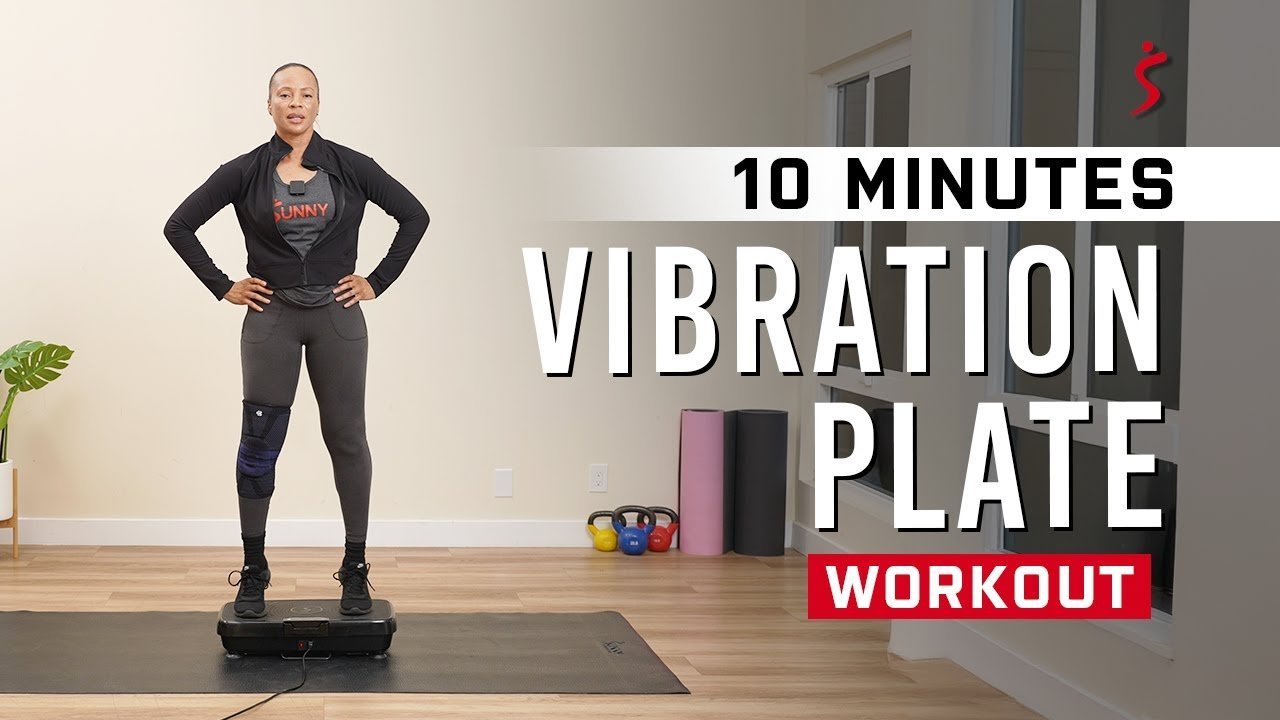
Stand on a vibration plate with soft knees, hold the handles, and start at 1–10 Hz for 1–2 minutes. Build to 10–15 minutes, 3–5 days a week, at 15–30 Hz. It suits healthy adults who want light standing exercise while a machine shakes.
Vibration plate setup basics

Get these in front of you before you switch anything on. The manual matters more than any general guide, because settings differ between machines.
- The plate’s own user manual — read the Hz range and weight limit for your exact model
- Sturdy shoes or bare feet with grip — no thick foam soles, which soak up the vibration
- A clear space of about 2 feet on every side, on a hard floor
- A wall or the machine’s handles within arm’s reach
- A towel and water
- A watch or phone timer
- A chair if you feel unsteady
If you don’t have handles, a wall works fine. A soft rug under the plate does not — it kills the vibration. For any health condition, ask your doctor before you start, not the machine’s manual.
How do you use a vibration plate?
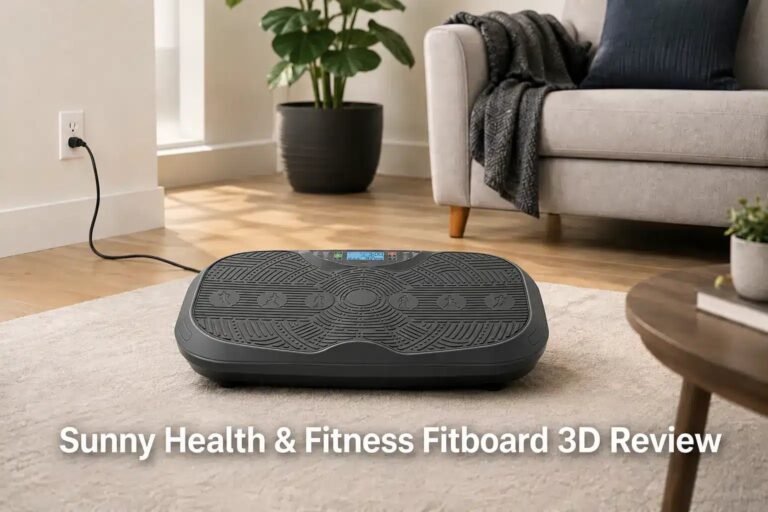
- Place the plate on a hard, level floor. Carpet reduces the shake and makes the session weaker. Keep 2 feet clear on all sides.
- Set your starting frequency at 1–10 Hz for 1–2 minutes. This is your warm-up. If your machine starts higher, use its lowest setting instead.
-
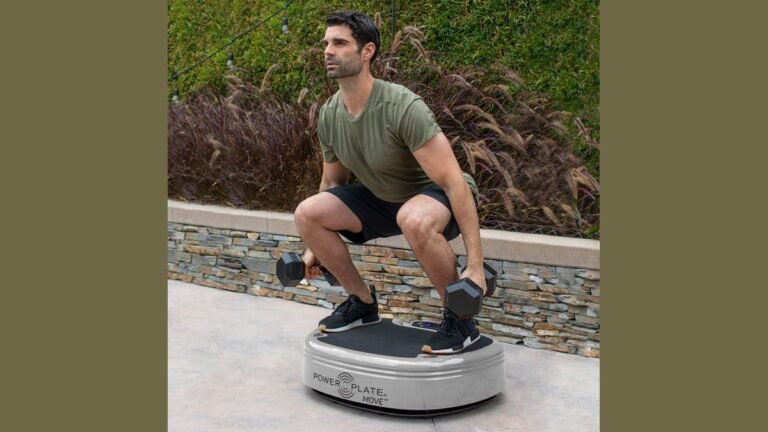
Step on with soft knees and both feet shoulder-width apart. Hold the handles or a wall. Locked knees leave you rigid and less able to absorb the movement, which can stress your joints. Careful: never stand on a plate with fully straight legs. Soft knees absorb the movement.
-
Stand tall for 1–2 minutes, then step off. That’s your first full session. Don’t add exercises yet.
- Add 1–2 minutes each session until you reach 10–15 minutes, 3–5 days a week. Keep the frequency at 15–30 Hz for general use.
-
Add one gentle move at a time — a slow squat, a calf raise, or a lunge. Hold each for 20–30 seconds. Tip: if you can’t talk normally during the set, drop the frequency or the time.
-
Cool down at your lowest setting for 1–2 minutes. Then step off and stretch. Careful: stop at once if you feel dizzy, sick, or have chest pain, and call your doctor.
How sessions change with your situation

Your starting point changes what a safe session looks like. Use the row that matches you, then adjust by how you feel.
| Your situation | Time and frequency | What’s different | Watch for |
|---|---|---|---|
| Complete beginner | 1–2 min, 1–10 Hz | Warm-up only | Dizziness |
| Healthy adult, regular use | 10–15 min, 15–30 Hz | Standard session | Sore legs next day |
| Older adult, new to it | 3–5 min, lowest setting | Hold a wall or handles | Balance loss |
| Joint or back problems | Doctor’s advice first | May be unsuitable | Joint pain during use |
| Standing desk user | 5–10 min, mid setting | Short, frequent breaks | Overdoing it daily |
Start small and add more. Overshooting on day one leaves you sore and puts you off the habit.
How to tell you did it right
A good session leaves your muscles warm and lightly tired, with no joint pain and no dizziness. A poor one leaves you sore for two days, lightheaded, or with aching knees — signs you went too long or too high too fast.
The common quality problem is holding the handles and letting your arms carry your weight, so your legs do less work. Fix it by loosening your grip, keeping your weight in your feet, and lowering the frequency until you can stand tall without pulling.
Safety rules and what to do after
Follow the machine’s own weight limit and frequency range — both are printed in your manual, and they differ by model. The U.S. Consumer Product Safety Commission handles reports of injuries from consumer exercise equipment, so check its site if you have a safety concern about a specific machine. After each session, wipe the plate down, coil the cord, and store it flat. If you have a heart condition, a recent fracture, or a pregnancy, get clearance from your doctor first.
Other ways to get the same effect
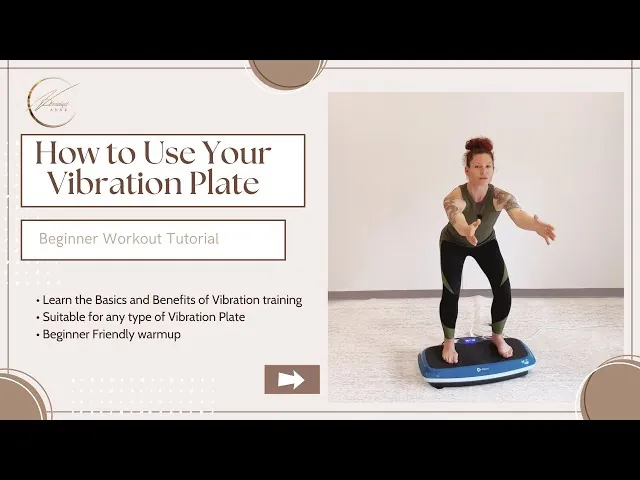
You don’t have to stand still on the plate. These routes change the time, the effort, or who’s guiding you.
Add bodyweight moves
Squats, calf raises, and lunges on the plate raise the effort in the same 10–15 minutes. Your legs work harder, so keep the frequency lower.
Use it seated
Some machines allow seated use for the arms and core. This suits people who can’t stand safely, but the leg benefit drops and you should follow the manual.
Get a physio’s program
A physical therapist can build a routine around an injury or condition. It costs more and takes an appointment, but it’s the safe route if you have a health problem.
Related guides
- Weight Plates Kg Vs Lbs Conversion
- Weight Plates Workout Routines for Beginners at Home
- Safety Tips for Air Bike: Essential Guide for Safe Riding
Frequently asked questions
How long should I use a vibration plate?
Start at 1–2 minutes on your lowest setting, then build to 10–15 minutes per session, 3–5 days a week. That range assumes a healthy adult with no joint or heart condition. If you’re older or new to exercise, stay at 3–5 minutes until it feels easy.
Can I use a vibration plate every day?
Yes, if sessions stay short — 5–10 minutes — and your muscles aren’t sore the next day. Most people do better with 3–5 days a week and rest days between. Daily long sessions at high frequency raise your risk of soreness and joint strain.
Is it safe to use a vibration plate?
For most healthy adults, yes, at low to moderate settings. It’s not safe for everyone — pregnancy, recent fractures, heart conditions, and some joint problems need a doctor’s clearance first.
Why do my legs hurt after using a vibration plate?
Soreness usually means you went too long or too high on frequency. Drop back to 5 minutes at your lowest setting for a week, then add 1–2 minutes at a time.
What happens if I lock my knees on a vibration plate?
Locking your knees leaves you rigid and less able to absorb the movement, which can stress your joints. That raises your risk of knee and lower back pain. Keep a slight bend at all times, and hold the handles or a wall if you feel unsteady.
Do I need shoes on a vibration plate?
No — bare feet with grip work well, and so do flat training shoes. Thick foam soles absorb the vibration, so the session does less.
How much does a vibration plate cost?
Prices vary by brand, size, and power, so check the maker’s site or a retailer for current figures. A basic home plate costs far less than a studio-grade machine.
Conclusion
If you’re new to this, try a short session today and see how your body feels tomorrow. You’ll learn what pace suits you, and you can adjust as you go. Keep it easy, stay steady, and let your comfort guide you.

I am a certified fitness coach with over 10 years of experience helping people improve their strength, endurance, and overall health. Specializes in workout programming, weight training, fat loss, muscle building, home fitness, and evidence-based nutrition.My goal is to make fitness simple and practical through well-researched guides, honest product reviews, and actionable training advice.