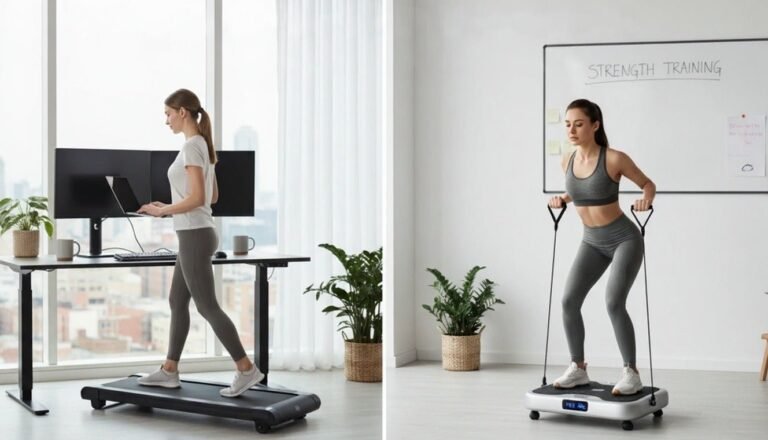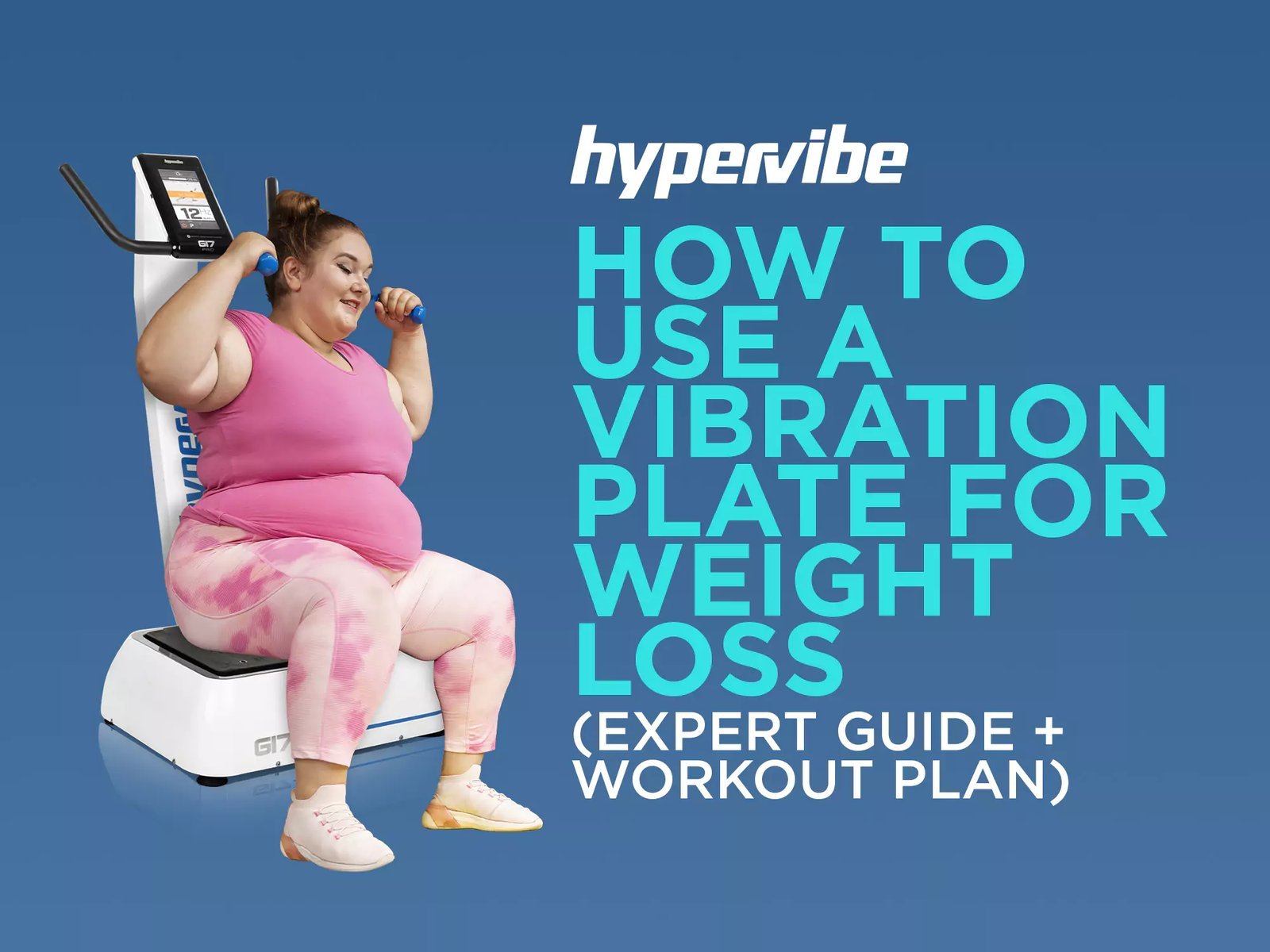
If you type “vibration plate with weights” into a search bar, you’re probably asking one of two things: can I hold dumbbells on a vibrating platform, or should I buy a plate that comes with its own weights? The short answer is yes to the first, and “it depends” to the second. Adding load to a vibrating platform changes the physics of the exercise, the muscles that respond, and the safety rules you need to follow. This guide covers what actually happens when you combine the two, which exercises work, and how to build a routine that doesn’t wreck your joints.
Key Takeaways
- Vibration plates typically cost $80–$600, while bundled weight sets push packages to roughly $150–$900.
- Holding dumbbells on a plate multiplies the load your muscles absorb, so start with 50% of your normal weight.
- Most home plates have a max user weight of 265–330 lb, and added weights count toward that limit on some models.
- Static holds beat dynamic lifts on a vibrating platform; save the heavy reps for solid ground.
- Full-body vibration is generally safe for healthy adults, but contraindicated for pregnancy, recent fractures, and implanted devices.
- A 10–20 minute session, 3–4 times per week, is the standard starting dose.
What a Vibration Plate Actually Does
A vibration plate generates oscillating or tri-planar movement that your body reflexively fights to stay balanced. That reflex fires your muscles 20–50 times per second, which is far faster than voluntary contraction. The result is a high volume of low-load muscle activation, not a replacement for heavy resistance training. When you add weights, you’re stacking external load on top of that involuntary contraction, and the total demand rises sharply.
Can You Use Dumbbells on a Vibration Plate?
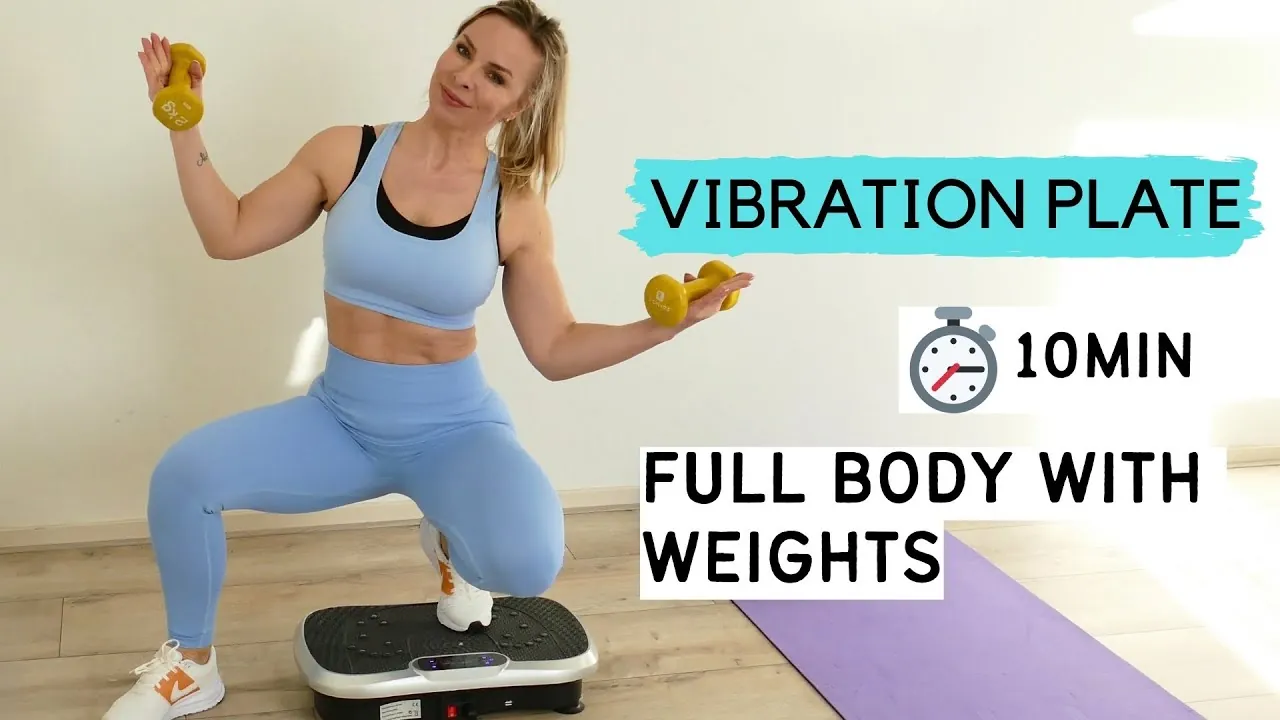
Yes, and plenty of gyms program it this way. The key is that the vibration forces your stabilizers to work overtime while the dumbbell supplies the resistance. A 10 lb dumbbell on a vibrating platform feels considerably harder than the same dumbbell on a bench, because your muscles are managing two inputs at once. Beginners should cut their usual weight in half and add load only after two or three pain-free sessions.
Best Exercises With Added Weight
| Exercise | Weight to Start | Best Frequency | Primary Target |
|---|---|---|---|
| Static squat hold | Bodyweight only | 30 Hz | Quads, glutes |
| Dumbbell shoulder press | 5–8 lb per hand | 25–30 Hz | Deltoids, core |
| Goblet squat | 10–15 lb | 20–25 Hz | Glutes, quads |
| Bicep curl (seated) | 5–10 lb per hand | 20 Hz | Biceps |
| Farmer’s carry hold | 10–20 lb per hand | 30 Hz | Grip, traps, core |
| Weighted lunge hold | Bodyweight first | 20 Hz | Glutes, hamstrings |
Notice that most entries are holds, not repetitions. Vibration plus movement plus load is a lot of variables at once, and form breaks down fast.
How to Set Up Your Session
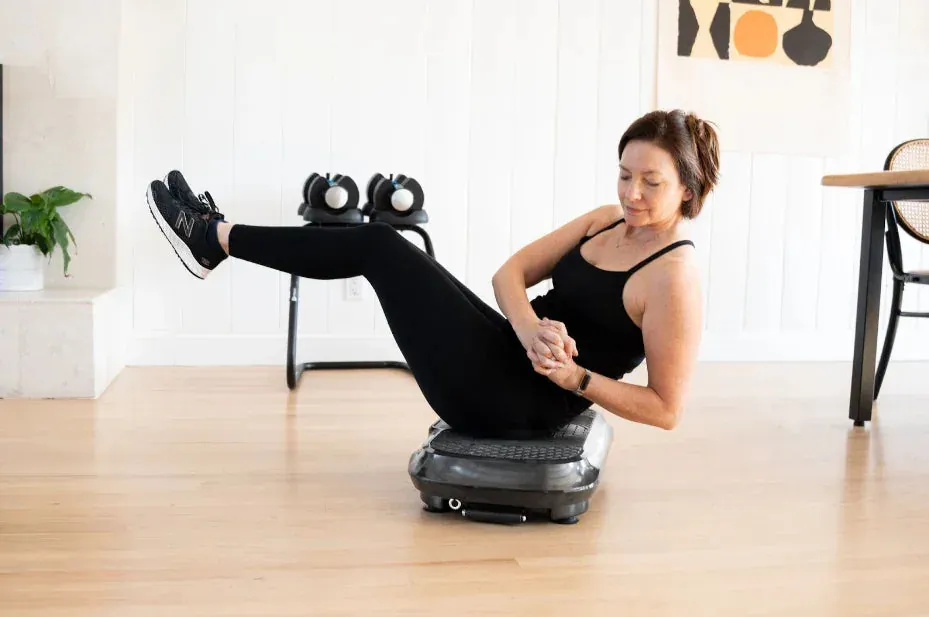
- Warm up for 3–5 minutes on solid ground with bodyweight squats and arm circles.
- Set frequency low — 20 to 25 Hz — for any loaded exercise.
- Step on with weights already in hand, or have a partner hand them to you. Never bend down to pick up dumbbells while the plate is running.
- Hold each position 30–60 seconds, rest 30 seconds, repeat 3 rounds.
- Cool down off the plate with stretching.
Pro Tip: If you can’t hold perfect form for the full 45 seconds, the weight is too heavy. Drop it by 5 lb and repeat the set.
Vibration Plate With Weights: Buying Options
| Type | Typical Price | Weights Included | Best For |
|---|---|---|---|
| Budget oscillating plate | $80–$180 | No | Beginners, walking workouts |
| Mid-range tri-planar | $200–$400 | Sometimes (resistance bands) | Home strength circuits |
| Commercial-grade | $500–$1,200 | No | Small studios, heavy users |
| Bundle with dumbbells | $150–$900 | Yes, 5–20 lb sets | One-stop buyers |
Brands that reliably sell plates include LifePro, Bluefin Fitness, Power Plate, and ThermoBody. If a bundle is advertised, check the dumbbell material — vinyl-coated sets are common and fine for home use, but they crack if dropped on a hard plate surface.
Safety Rules You Can’t Skip
Contraindications matter more here than with most equipment. Avoid vibration training entirely if you’re pregnant, have a recent fracture or joint replacement, have a pacemaker or other implanted electronic device, or have a history of blood clots. The FDA has published guidance on the labeling and safe use of whole-body vibration devices that’s worth reading before you buy.
Warning: Never use a vibration plate while standing on a slippery surface or wearing socks. Bare feet or flat-soled shoes only.
Common Mistakes to Avoid
- Loading too heavy too soon. The vibration amplifies the load; your nervous system needs weeks to adapt.
- Doing explosive movements. Jumping or fast reps on a vibrating surface invites ankle and knee injuries.
- Skipping the warm-up. Cold muscles plus involuntary contraction equals strains.
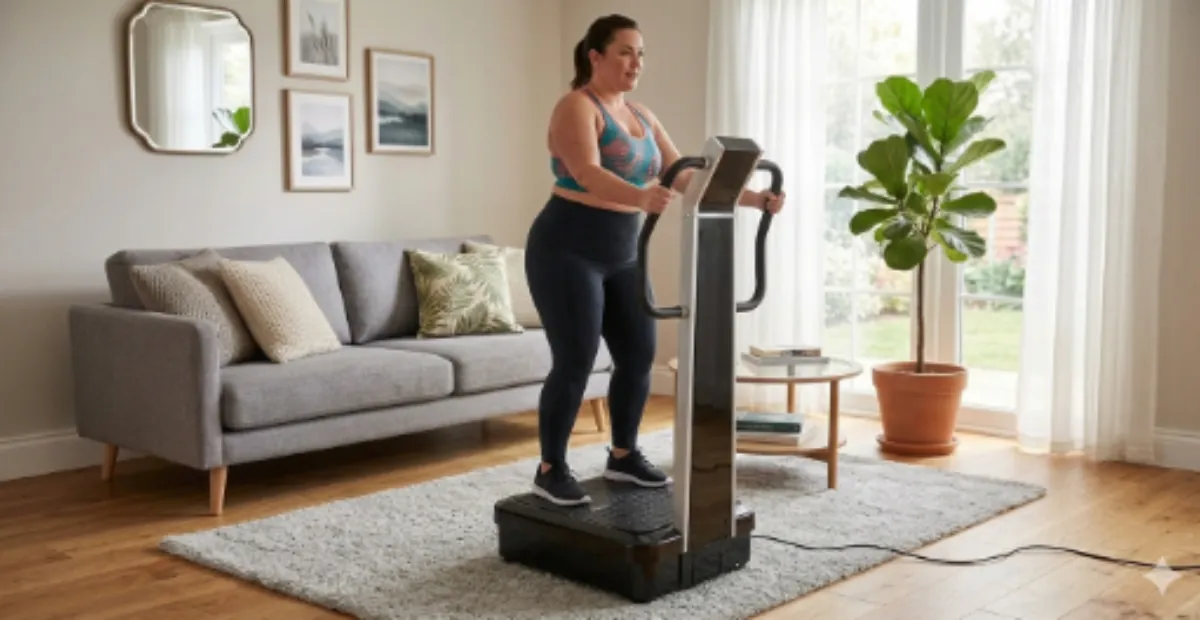
- Ignoring the weight limit. Check your plate’s max user weight, then subtract your body weight and any dumbbells.
- Training every day. Three to four sessions per week is plenty; recovery drives adaptation.
Frequently Asked Questions
Can I hold dumbbells while the plate is running?
Yes, but only after you’re stable on the plate. Step on first with weights in hand, or have someone pass them to you. Picking weights up off the floor while the platform vibrates is the most common cause of falls.
How much weight should I start with?
Half of what you would use on solid ground. If you normally curl 15 lb, start at 5–8 lb per hand. Add 2–5 lb only after two pain-free sessions at the current load.
Is a vibration plate with weights better than regular weight training?
No. It’s a different stimulus, not a superior one. Vibration excels at neuromuscular activation and balance work. Heavy barbell training remains the better tool for building maximum strength and muscle mass.
How long should a session last?
Ten to twenty minutes total, including warm-up. Most people get good results with three rounds of four to six exercises, three or four days per week. Longer sessions don’t add benefit and raise injury risk.
Are bundled weight sets worth it?
Only if the dumbbells match your strength level. Many bundles ship with 5 lb pairs, which most adults outgrow in weeks. Buying a plate and a separate adjustable dumbbell set often costs less overall.
Do vibration plates help with weight loss?
They increase calorie burn modestly, but not enough to drive fat loss on their own. Think of them as a supplement to a calorie-controlled diet and regular cardiovascular exercise, not a replacement.
Conclusion
Start with one loaded exercise — a goblet squat hold at 10 lb for 45 seconds — three times this week. If your knees and lower back feel fine afterward, add a second movement next week. Build slowly, and the plate becomes a genuine tool rather than a gimmick.

I am a certified fitness coach with over 10 years of experience helping people improve their strength, endurance, and overall health. Specializes in workout programming, weight training, fat loss, muscle building, home fitness, and evidence-based nutrition.My goal is to make fitness simple and practical through well-researched guides, honest product reviews, and actionable training advice.