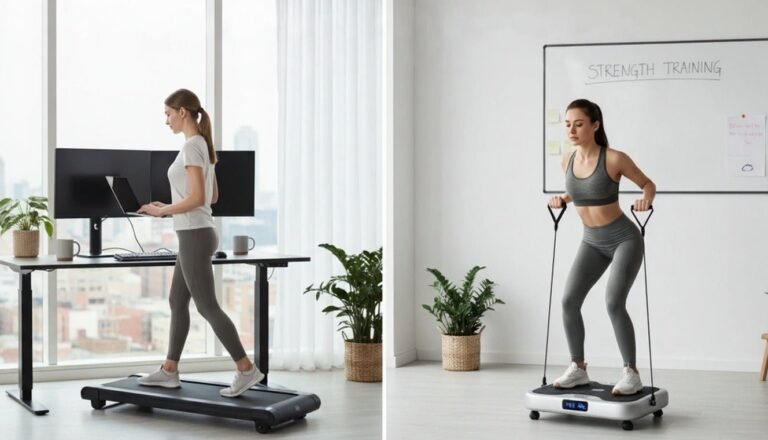
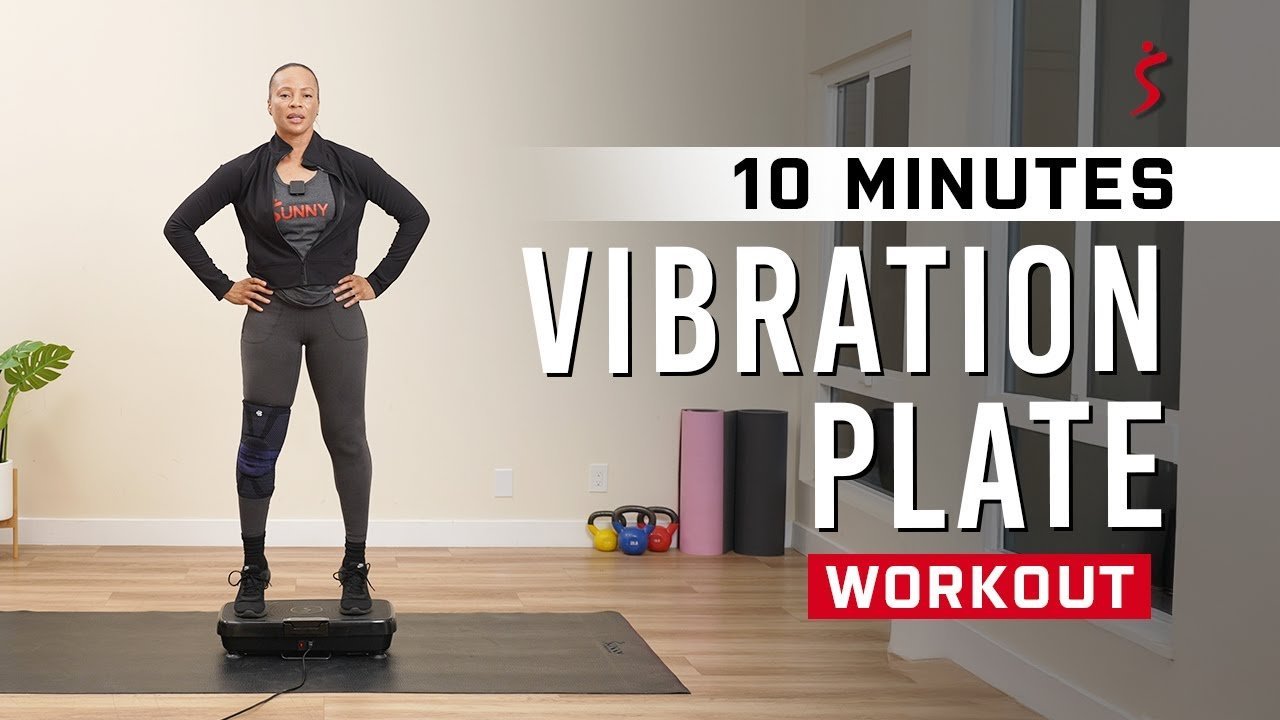
A vibration plate 10 minute workout works best as 30 to 60 seconds per exercise, moving through 8 to 12 moves without long rests. Warm up for 1 minute on the lowest setting, then raise the speed for the main set. Stop after 10 minutes.
What decides if 10 minutes works
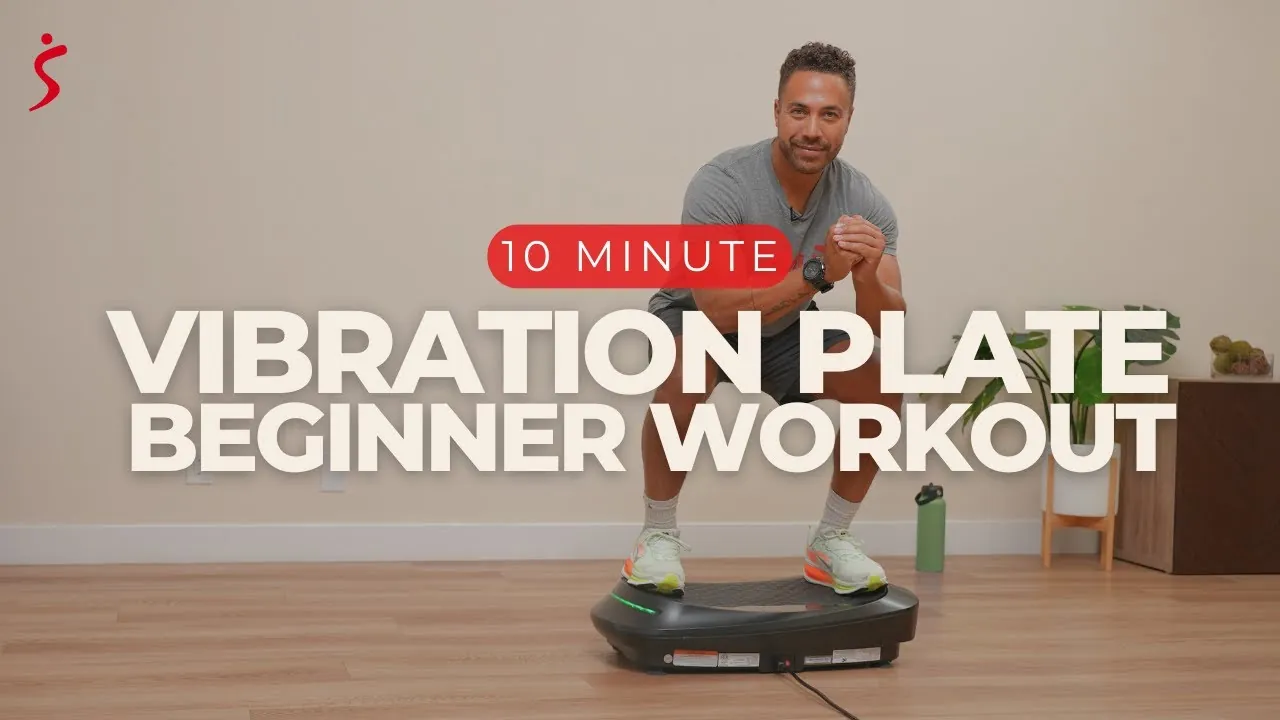
Ten minutes is enough only if you keep moving the whole time.
The most common mistake is starting too fast. Set the speed low, finish all 10 minutes, and raise it next session.
How to run the 10 minutes
- Set the plate to its lowest speed and stand on it for 1 minute. Keep your knees soft, not locked. This is your warm-up, and it also tells you how the machine feels under your feet today.
- Do 30 to 45 seconds per move, then step off for 15 seconds. Eight to ten moves fills the 10 minutes. Step off between moves — this keeps your form clean and your heart rate steady.
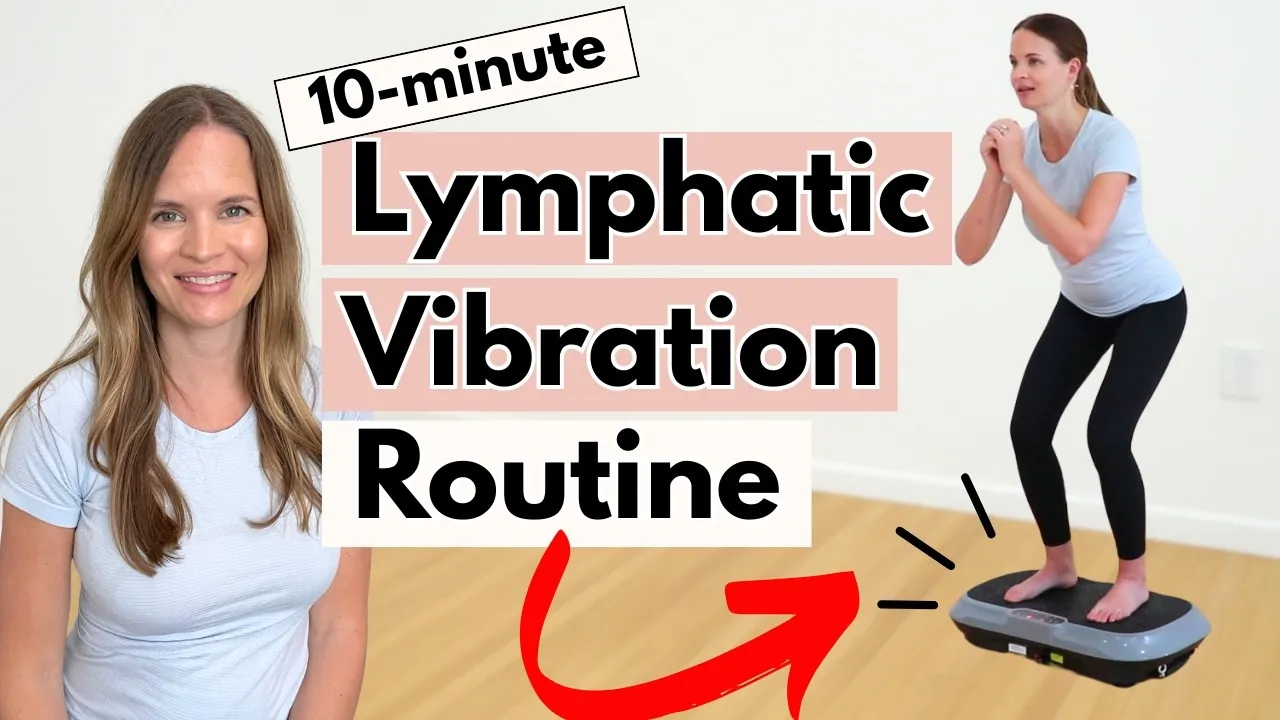
- Hold a squat for 30 seconds at a medium speed. Feet shoulder-width apart, chest up, knees over toes. If your knees hurt, lower the speed before you lower the squat.
- Switch to push-ups or a plank with your hands on the plate for 30 seconds. This shifts the work to your arms and core. Use the lowest speed here — your wrists take the load.
- Do lunges, 30 seconds each leg, at a low speed. Hold a wall or chair if balance is an issue. Balance is the real limit on a plate, not strength.
- Finish with 1 minute of slow marching on the lowest speed. Let your breathing come down before you step off.
Tip: If you feel tingling or numbness in your feet, stop and step off. That’s a sign the speed is too high for you, not a sign you’re working hard.
Tip: Skip the plate completely if you’re pregnant, have a blood clot, a recent fracture, or a joint implant. Ask your doctor first — a plate isn’t a safe starting point for everyone.
How long each part takes
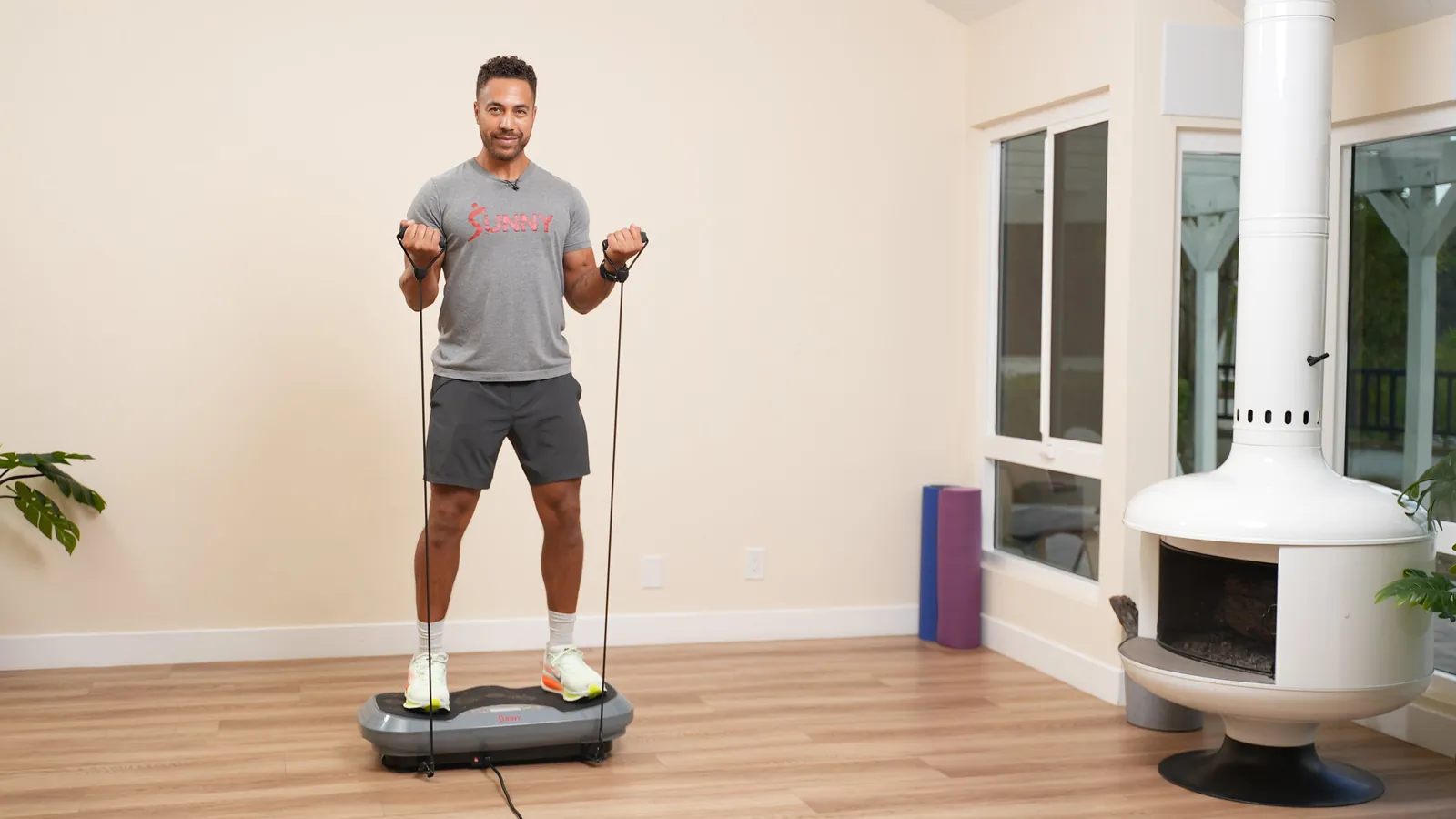
A full session runs about 12 minutes with your shoes on and off. The table below shows how that changes with your speed and how fit you are.
| Situation | How long | What changes it | What to watch for |
|---|---|---|---|
| First session, low speed | 10-12 min | How fast you step on and off | Dizziness when you stop |
| Regular session, medium speed | 10-12 min | Rest length between moves | Form breaking down |
| Higher speed, experienced | 8-10 min | Shorter rests | Sore knees the next day |
| With hand weights added | 12-15 min | Slower move changes | Grip fatigue |
If a session runs past 15 minutes, you’re resting too long. Cut the rest to 15 seconds or drop one move.
Signs your vibration plate session is done
You’ll know it’s done when your legs feel warm and tired, but you can still stand steady and talk. Your breathing should be up, not ragged. If you’re gasping, you went too hard.
The one test that settles it: stand still with your eyes closed for 10 seconds after you step off. If you sway or feel dizzy, you pushed too long.
For safety guidance on whole-body vibration equipment, talk to your doctor, especially if you have a health condition. If you have a health condition, your doctor decides — not a workout plan.
Mistakes that spoil a vibration plate workout
- Starting at full speed. Your legs tire in under a minute and your form collapses. Start at the lowest setting and add one level per week.
- Standing still for the whole 10 minutes. You get almost nothing from it. Move through 8 to 10 exercises instead.
- Locking your knees. It makes it harder to absorb the movement and can strain your joints. Keep a slight bend the whole time.
- Skipping the step-off rests. Ten straight minutes on the plate leaves you dizzy and sore. Take 15 seconds between moves.
- Training on it every day. Your muscles need a rest day to recover. Three to four sessions a week is plenty.
Frequently asked questions
How long should a vibration plate workout be?
10 to 15 minutes is the common range for a home session, at a low to medium speed. Beginners should start at 5 minutes for the first week, then add 1 minute per session until they reach 10.
Can I lose weight with a 10 minute vibration plate workout?
Not from the plate alone. Ten minutes burns a small number of calories, similar to a short walk. Weight loss still comes from your overall activity and what you eat.
Is a vibration plate safe every day?
No — most people should use it 3 to 4 days a week, not daily. If you have a joint implant, a blood clot, or you’re pregnant, don’t use one without asking your doctor first.
What speed should I use for a 10 minute workout?
Start at the lowest speed for the first 2 minutes, then move to a medium setting for the main set. If you can’t hold good form for 30 seconds, drop one level.
What happens if I use a vibration plate for too long?
You’ll feel dizzy, sore, or unsteady on your feet. Tingling or numbness in your legs is a warning sign to stop. Step off, sit down, and drink water.
Do I need shoes on a vibration plate?
Yes, wear flat training shoes. Bare feet or socks give you less grip and more tingle in your soles.
Can I do a vibration plate workout if I have bad knees?
Sometimes, but only at a low speed and with a shallow squat. Deep squats on a plate put extra load through the knee.
Conclusion
Ten minutes on a vibration plate is a short, low-impact add-on to your week — not a replacement for walking, lifting, or any real cardio. Keep the speed low, move the whole time, and rest between moves. If your body says stop, stop.
I am a certified fitness coach with over 10 years of experience helping people improve their strength, endurance, and overall health. Specializes in workout programming, weight training, fat loss, muscle building, home fitness, and evidence-based nutrition.My goal is to make fitness simple and practical through well-researched guides, honest product reviews, and actionable training advice.