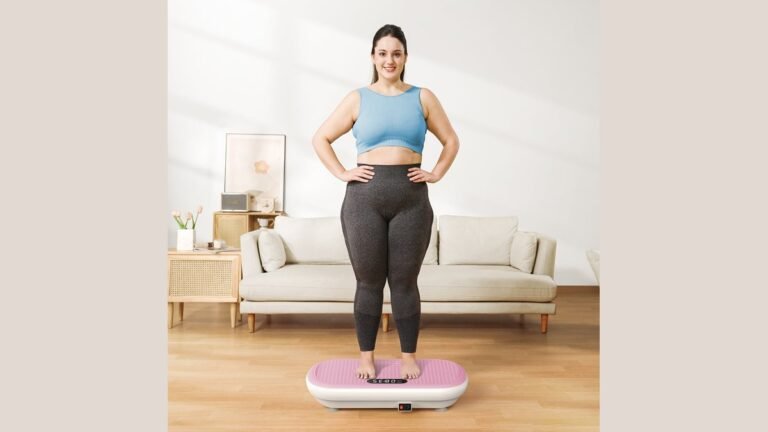

A vibration plate 15 minute workout works best as a short circuit: 3 to 4 minutes of squats, 3 to 4 minutes of lunges or step-ups, 3 to 4 minutes of planks or push-up holds, and the last few minutes of stretching, all on the plate at a low to medium setting. If you’re new to it, start at a low frequency and shorter holds, and check your machine’s manual first.
Why the order matters more than the time
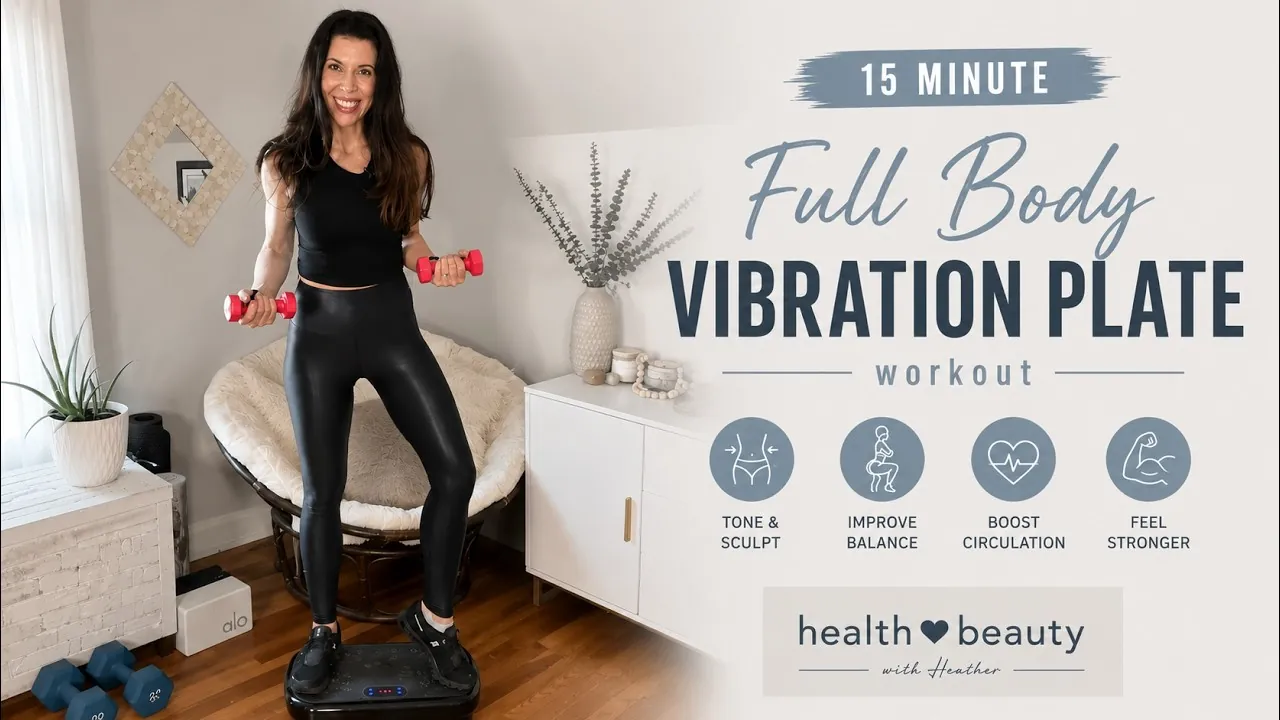
The plate amplifies whatever you put on it. Do squats, lunges and planks on the moving surface, and your muscles have to steady your whole body with every rep.
The most common mistake is standing locked-knee and passive for the whole session. Bend your knees slightly, keep them soft, and make every minute a movement.
Your 15-minute vibration plate workout, step by step
- Warm up off the plate (2 minutes). March in place, swing your arms, and do 10 bodyweight squats on the floor. Cold muscles on a moving platform tighten up fast.
- Set the plate low (1 minute). Start around the lowest setting your machine offers, usually 5–10 Hz on models with a range. If you can’t hold a conversation, it’s too high for your first weeks.
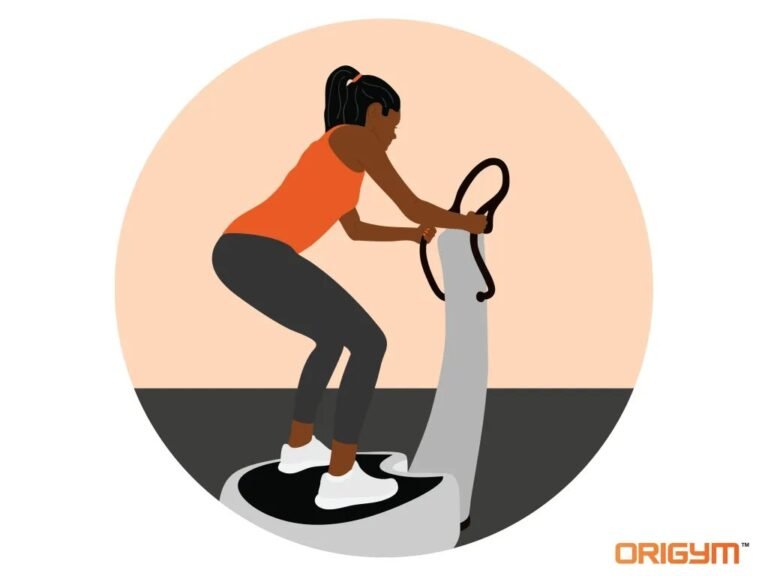
- Squats on the plate (4 minutes). Stand with feet shoulder-width on the plate, knees soft. Do squats in sets of 10, resting about 30 seconds between sets. Keep your heels flat the whole time.
- Lunges or step-ups (4 minutes). Put one foot on the plate and step back into a lunge, 8 reps per leg, then switch. Tip: if you wobble badly, hold a wall or a sturdy chair — balance, not bravado, is the goal here.
- Plank or push-up hold (3 minutes). Put your hands or forearms on the plate and hold a plank for 20–30 seconds at a time, resting between holds. Tip: a round lower back on a vibrating plate is how people strain themselves; keep your body in one straight line or drop to your knees.
- Stretch on the plate (1 minute). Sit or stand on the low setting and stretch your calves, hamstrings and hips while it runs. The vibration loosens tight muscles faster than static stretching alone for most people.
This routine assumes a standard home plate and a healthy adult with no joint or spine problems. If you’re pregnant, have a pacemaker, recent surgery, a hernia, or blood-clot issues, whole-body vibration isn’t something to self-prescribe — ask your doctor or physical therapist first, since these conditions are on most manufacturers’ warning lists.
How long each part should take
| Situation | How long | What changes it | What to watch for |
|---|---|---|---|
| First week on a plate | 10 minutes total | Cut each exercise block to 2–3 minutes | Dizziness, numbness in feet |
| Standard 15-minute session | 15 minutes | Nothing — the routine above | Form breaking down in the last block |
| Intermediate, 2+ months in | 20 minutes | Add a second lunge and plank block | Wrist or lower-back ache in planks |
| Short on time | 8–10 minutes | Keep squats and planks, drop lunges | Skipping the warm-up to save time |
| Older adult or recovering | 10 minutes, low setting | Doctor or therapist sets the plan | Pain that lasts past the session |
If a session is taking far longer than the table says, you’re resting too much between sets — cut rests to 30 seconds or drop a block rather than stretching the session out.
Signs you’re doing it right
You should feel it in your thighs and calves within the first minute of squats — a warm, working ache, not numbness or tingling. For overall health, the CDC’s adult activity guidelines still call for about 150 minutes of moderate aerobic activity a week — treat the plate as strength work on top of that, not a replacement.
Mistakes that ruin the session
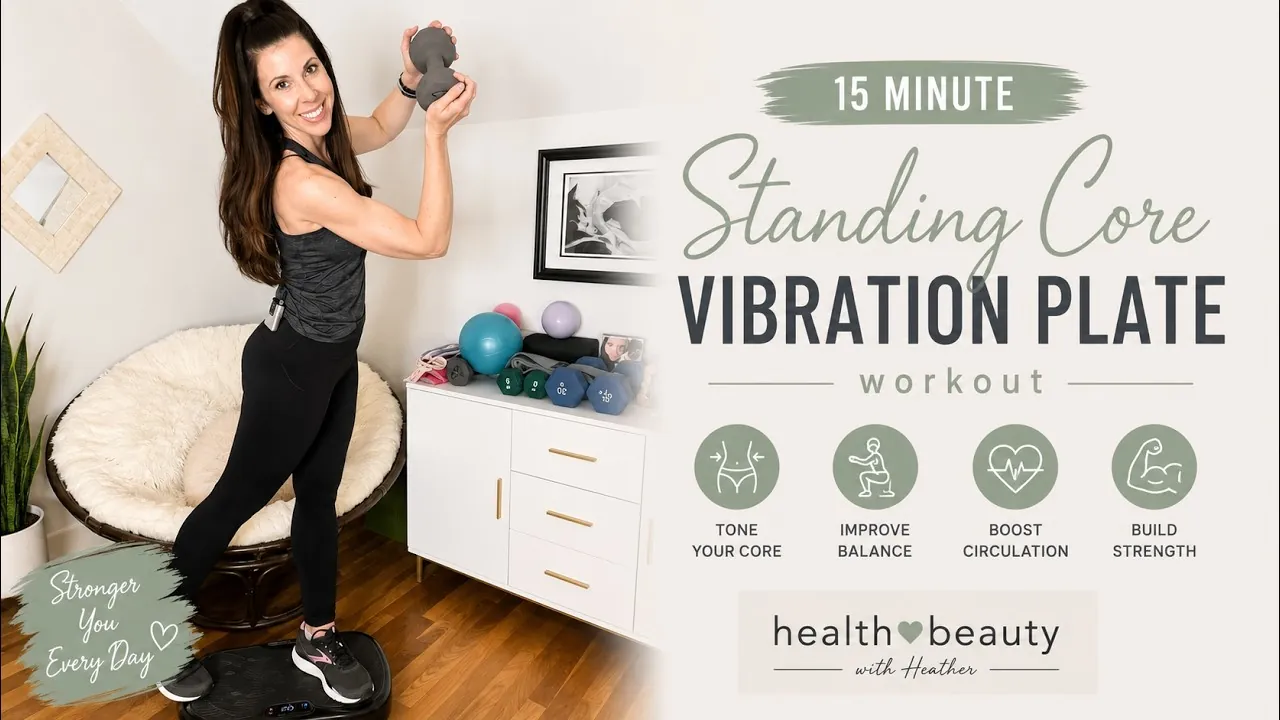
- Standing stiff-legged the whole time. Locked knees let the vibration travel up into your spine and head, which causes that rattling headache feeling. Bend your knees a few degrees and let your legs absorb it.
- Starting at the highest setting. High frequency on day one mostly produces dizziness and sore wrists in planks. Start low and only step up when the current setting feels easy for a full session.
- Skipping the warm-up. Cold muscles on a moving surface cramp and strain more easily. Two minutes of marching and floor squats is enough.
- Using it as your only exercise. Fifteen minutes of vibration plus squats won’t meet your weekly aerobic needs on its own. Pair it with walking, cycling or whatever cardio you’ll actually stick to.
- Ignoring pain that lingers. Soreness for a day is normal; joint pain that lasts past the next morning means your form or setting is wrong. Drop the intensity and, if it keeps up, see a physical therapist.
Frequently asked questions
Is 15 minutes on a vibration plate enough?
Yes, for a strength-focused session it’s enough — if you’re exercising on the plate, not just standing. Fifteen minutes of squats, lunges and planks on a vibration plate compares reasonably to a short bodyweight workout on the floor. It’s not enough for your weekly cardio needs, though.
Can you use a vibration plate every day?
Yes, most healthy people can, but daily high-intensity sessions don’t give muscles time to recover. A practical split is 3–5 sessions a week, with at least one rest day. If you’re sore two days in a row, take the day off.
How long does it take to see results from a vibration plate?
Most people notice better balance and leg strength within 4–8 weeks of regular sessions, 3 times a week. Visible muscle change takes longer and depends on your diet and the rest of your activity. There’s no honest single number — your baseline strength decides how fast you notice a difference.
Is it safe to use a vibration plate every day if you’re over 60?
It can be, at low settings, and vibration training is actually used in fall-prevention programs for older adults. But conditions like osteoporosis, blood clots, or a recent joint replacement change the answer completely. Get clearance from your doctor before starting, and begin with 10 minutes at the lowest setting.
What happens if you use a vibration plate too long?
You’ll usually get numb or tingling feet and toes first, then dizziness or a headache from the vibration reaching your head. Stop when that starts — longer sessions don’t add benefit past muscle fatigue, and they raise the risk of straining your lower back or wrists in plank positions.
Should you bend your knees on a vibration plate?
Yes, always keep your knees slightly bent. Straight legs send the vibration straight up your spine into your skull, which is what causes that shaky-head feeling. Soft knees absorb the movement in your leg muscles, where you want it.
Conclusion
A 15-minute session is a real workout when every minute involves a movement, but it’s one building block, not a whole fitness plan. Set the machine low, keep your knees soft, and add walking or other cardio on the days you’re off the plate — that combination is what actually moves your fitness over a few months.
I am a certified fitness coach with over 10 years of experience helping people improve their strength, endurance, and overall health. Specializes in workout programming, weight training, fat loss, muscle building, home fitness, and evidence-based nutrition.My goal is to make fitness simple and practical through well-researched guides, honest product reviews, and actionable training advice.