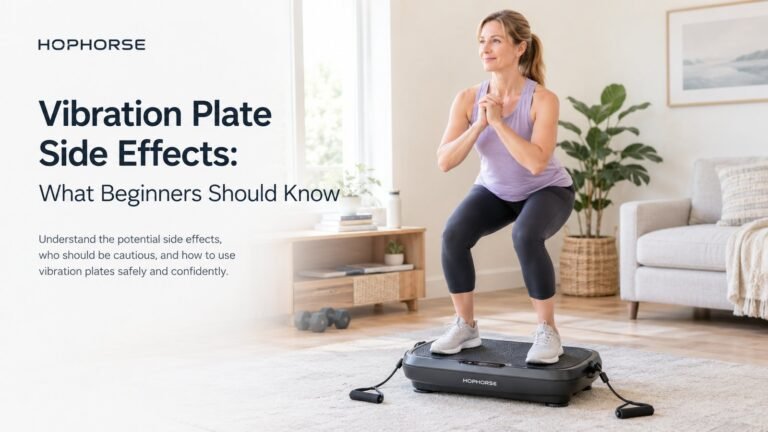
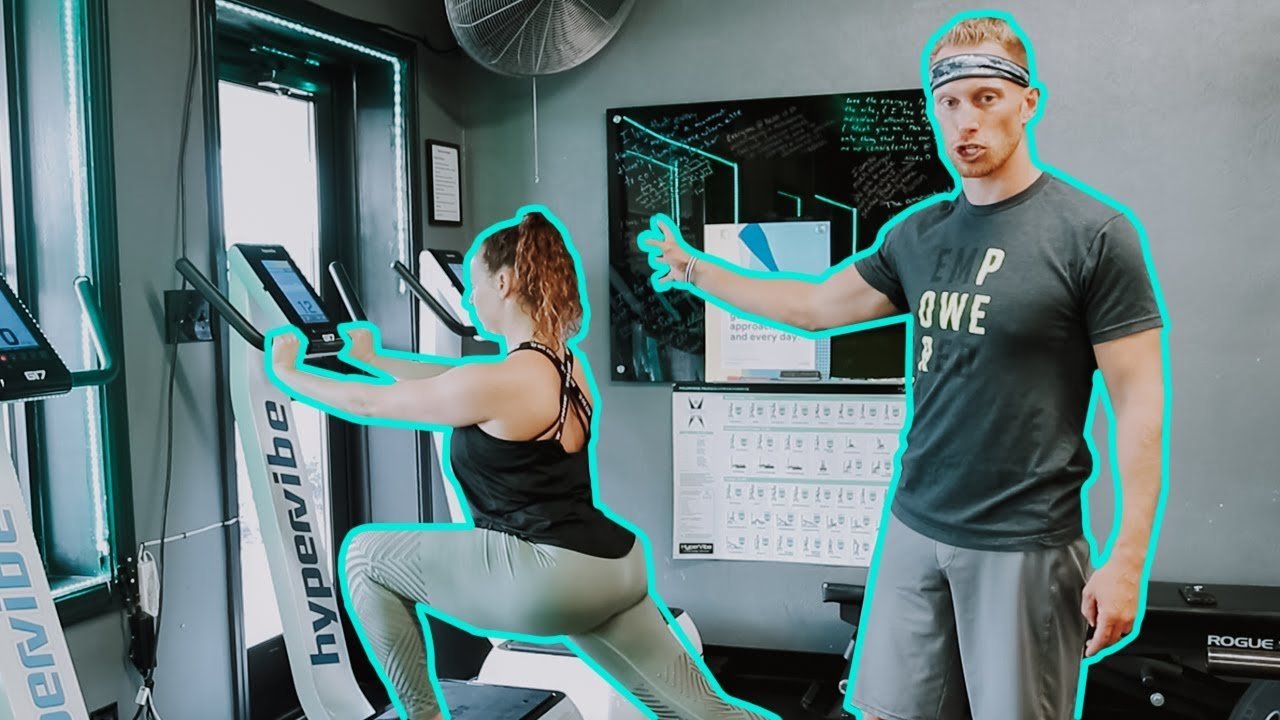
A hypervibe g17 review comes down to one thing: the G17 is a whole-body vibration (WBV) platform that makes you stand on a moving plate, and it’s built for home users who want short, low-impact sessions — not a replacement for strength training. It won’t build big muscle on its own.
What changes the answer for you is your goal, your body weight, and your budget. The rest of this page covers those three, plus what the machine can and can’t do.
Who should read this G17 review

Three kinds of people search this term. The first is someone with joint pain or low mobility who wants gentle movement at home and has never used a vibration plate. They need to know if standing on a plate is safe and what it feels like.
The second is a home-gym owner who already lifts and wants to add a warm-up or recovery tool. They need specs — frequency range, amplitude, weight limit — and they’ll compare it to other brands.
The third is a shopper comparing prices across WBV machines, often after seeing social media clips. They need a straight answer on cost and whether the claims hold up.
This page serves the first two readers best. If you’re looking for a machine to replace your gym membership, read a strength-training guide instead.
What decides whether a vibration plate works for you
Your goal decides everything. If you want to improve balance, circulation, or general movement in short daily sessions, a plate can help. If you want to add muscle size or lift heavier weights, it won’t.
Your body weight and height matter too. Every WBV machine has a maximum user weight, and the G17’s is listed in its manual. A plate that’s overloaded will strain the motor.
Frequency and amplitude are the two settings you’ll actually adjust. Frequency is how fast the plate moves per second, in hertz (Hz). Amplitude is how far it travels. Higher frequency with low amplitude feels like a fast buzz; lower frequency with higher amplitude feels like a slow, bigger shake. Most home plates run in the 5–40 Hz range — confirm the G17’s exact range in its manual.
The one people get wrong most often is consistency. Ten minutes once a week does almost nothing. Short, regular sessions are where the benefit sits.
Setting up and using the G17
- Unbox and check the parts. Confirm you have the platform, the remote or control panel, the power cord, and the manual. If anything’s missing, stop and contact the seller before assembly.
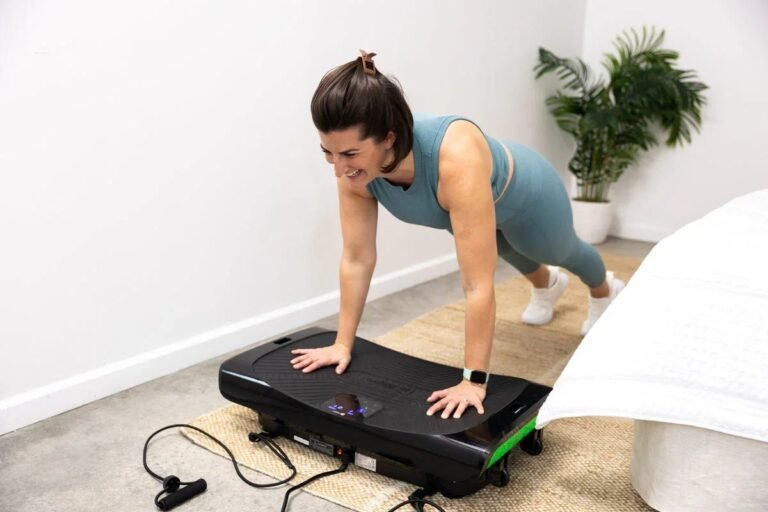
- Place it on a hard, level floor. Carpet absorbs vibration and makes the plate wobble. Put it on tile, concrete, or a rubber mat over a hard floor.
- Leave 2 feet (about 60 cm) of clear space on all sides. You’ll step on and off, and you don’t want to catch a table edge.
- Plug in and power on. The display should light up. If it doesn’t, check the outlet before assuming the unit is faulty.
- Set the time first — start at 5 minutes. Beginners shouldn’t start at 10 or 15. Build up over a few weeks.
- Set frequency low, around 5–10 Hz, for your first sessions. This is gentle. You can raise it later.
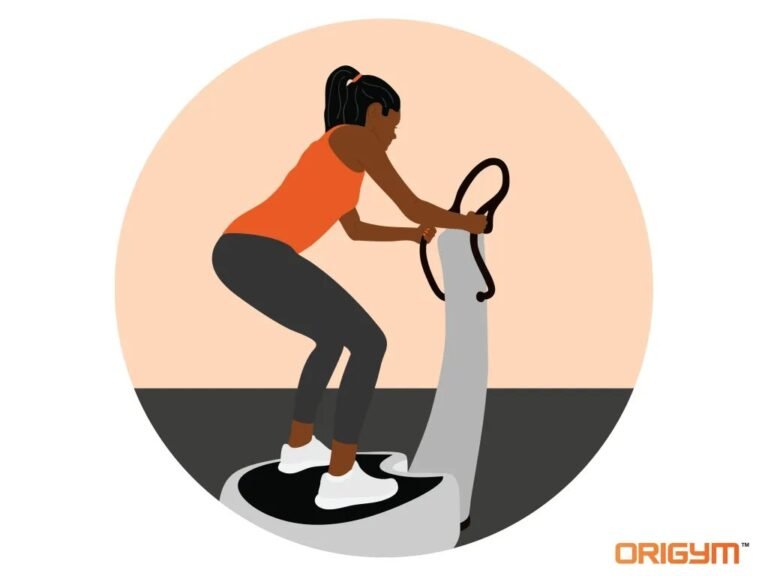
- Step on with both feet, shoulder-width apart. Hold a wall, chair, or rail if you feel unsteady. Never step on while the plate is already moving fast.
- Stand tall, knees slightly bent. Don’t lock your knees. Keep your gaze forward.
- Stop if you feel dizzy, sick, or get a headache. Step off slowly and sit down.
- Wipe the plate down after each use. Sweat and dust build up on the surface.
The judgement call is progression. Adding 1–2 minutes or a few Hz every week or two is fine. Jumping straight to 20 minutes at high frequency on day one is how people hurt themselves or give up.
If you have a pacemaker, are pregnant, have a recent fracture, or have a history of blood clots, don’t use a vibration plate without asking your doctor first. That’s a medical decision, not a fitness one.
G17 setups for different users
| Your situation | What to do | What it takes | What to watch for |
|---|---|---|---|
| Total beginner, joint pain | 5 min, low Hz, holding support | 5 min daily | Dizziness on first tries |
| Home gym user | Warm-up before lifting | 3–5 min pre-workout | Skipping the cool-down |
| Limited floor space | Corner placement, mat underneath | 2 ft clearance | Carpet wobble |
| Shared household | Set a fixed session time | One plate, two users | Different weight limits |
| Balance training | Single-leg holds, low Hz | 2–3 min per leg | Falling without a rail |
| Post-injury recovery | Only with doctor approval | Varies by case | Doing too much too soon |
What experienced users get right

They prepare the space, not just the machine
A hard, level floor and 2 feet of clear space around the plate matter more than any setting. Experienced users also keep a chair or rail within arm’s reach for the first few sessions, then move it away once balance is steady.
They watch the clock, not the display
The number on the screen isn’t the goal — the time under vibration is. Most people who stick with a plate cap sessions at 10–15 minutes and never chase the highest Hz setting.
Common problems and fixes
| What you notice | What it usually means | What to do first | How to stop it happening again |
|---|---|---|---|
| Plate feels weak | Loose power connection | Check the cord and outlet | Use a dedicated outlet |
| Loud rattling noise | Loose bolt or floor contact | Tighten fittings, check floor | Re-check after each move |
| Numb or tingling feet | Session too long | Step off and rest | Cap sessions at 10 min |
| Dizzy after standing up | Frequency too high too soon | Sit down, lower Hz next time | Build up over weeks |
| Sore knees next day | Locked knees during use | Rest, then keep knees soft | Slight bend every session |
| Machine stops mid-session | Overheat or weight overload | Let it cool, check weight limit | Stay under the rated limit |
Limits, warnings, and who to ask
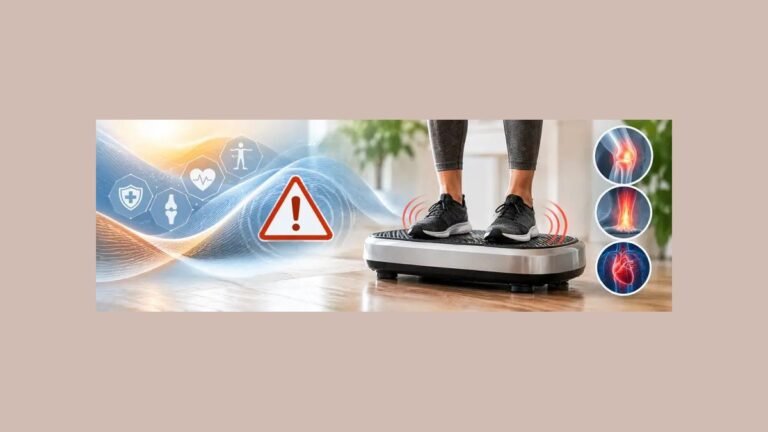
Vibration plates carry real safety warnings, and the G17 is no exception. If you have a pacemaker or another implanted electronic device, the manufacturer and medical guidance say to avoid WBV unless a doctor clears you. The same applies if you’re pregnant or have a history of blood clots.
Weight limits are set by the maker — read the G17’s rated maximum in your manual.
What the G17 costs you
The real cost isn’t just the purchase price. A plate you use for 10 minutes a day, five days a week, is about 50 minutes a week.
Prices for home WBV machines vary widely by brand, model, and country, and they change often.
The things that push cost up are higher weight limits, stronger motors, and extra programs. The things that push it down are simpler models with fewer settings — which is often all a beginner needs.
Keeping your G17 in good shape
Wipe the plate after every session with a damp cloth and dry it — sweat and dust are what wear the surface. Check the bolts and feet every few weeks; a loose foot is the most common cause of a new rattle.
Store it out of direct sunlight and away from damp, since moisture gets into the electronics. The sign it needs attention is a change in sound, a wobble, or a display that flickers. Fix those before they become a repair, and you won’t have to start over.
When a vibration plate isn’t the right choice

Skip a WBV plate if you want to build visible muscle or increase your lifting strength — you need resistance training for that, not vibration. Look at free weights or a gym program instead.
Skip it if you have a pacemaker, are pregnant, or have a recent fracture or blood clot history, unless your doctor clears you first. That’s a medical call, and no review can make it for you.
Skip it too if you have very little floor space or thin apartment walls, since the vibration travels. A walking routine or a stationary bike may suit you better.
Frequently asked questions
Is the Hypervibe G17 worth it?
It’s worth it if you’ll use it 5–15 minutes most days for balance, circulation, or gentle movement. It’s not worth it if you expect muscle growth, since vibration alone won’t build size.
How long should a G17 session be?
Start at 5 minutes, then build to 10–15 minutes over several weeks. Longer isn’t better — most home users cap sessions at 15 minutes, and beginners who start higher often feel dizzy.
Is a vibration plate safe every day?
Daily short sessions are generally fine for healthy adults at low to moderate settings. Skip it if you’re sore, dizzy, or unwell, and check with a doctor if you have any implanted device.
Does the G17 build muscle?
No, not on its own. Vibration can add a small stimulus, but building muscle needs resistance — weights, bands, or bodyweight loading. Treat the plate as a support tool, not a strength program.
What is the weight limit on the G17?
The rated maximum is set by the manufacturer and printed in your manual and on the product page. Check that number against your own weight before use — going over it strains the motor and can void the warranty.
Can I use the G17 if I have a pacemaker?
No — not without your doctor’s approval. Implanted electronic devices are a standard warning on WBV machines, and the decision belongs to your cardiologist, not a product listing.
How much space does the G17 need?
Plan for about 2 ft by 2 ft of floor space, plus 2 ft of clear room on every side so you can step on and off safely. Carpet makes it wobble, so a hard, level floor works best.
Why does my G17 rattle or feel weak?
A rattle usually means a loose foot or bolt, and a weak feel usually means a poor power connection. Check the cord and outlet first, then tighten the fittings before assuming the machine is faulty.
What to do next with your G17
Start with one 5-minute session at low frequency today, holding something for balance. You may notice mild tingling in your legs and a relaxed feeling after. Stop and call your doctor if you feel dizzy, get chest pain, or feel faint.
I am a certified fitness coach with over 10 years of experience helping people improve their strength, endurance, and overall health. Specializes in workout programming, weight training, fat loss, muscle building, home fitness, and evidence-based nutrition.My goal is to make fitness simple and practical through well-researched guides, honest product reviews, and actionable training advice.