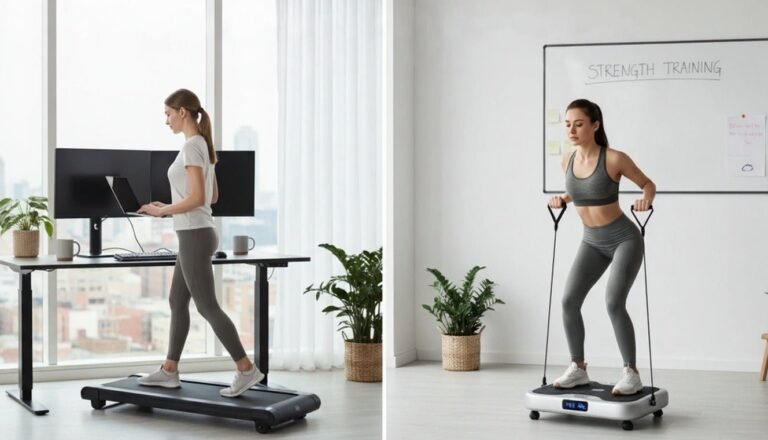
A vibration plate morning routine can be the fastest way to make the machine earn its floor space. Ten to fifteen minutes before your shower can wake up stiff joints and fire up circulation. This guide walks you through what to do.
Key Takeaways
- A useful morning session runs 10–15 minutes, not 45 — longer sessions on high settings mainly add fatigue.
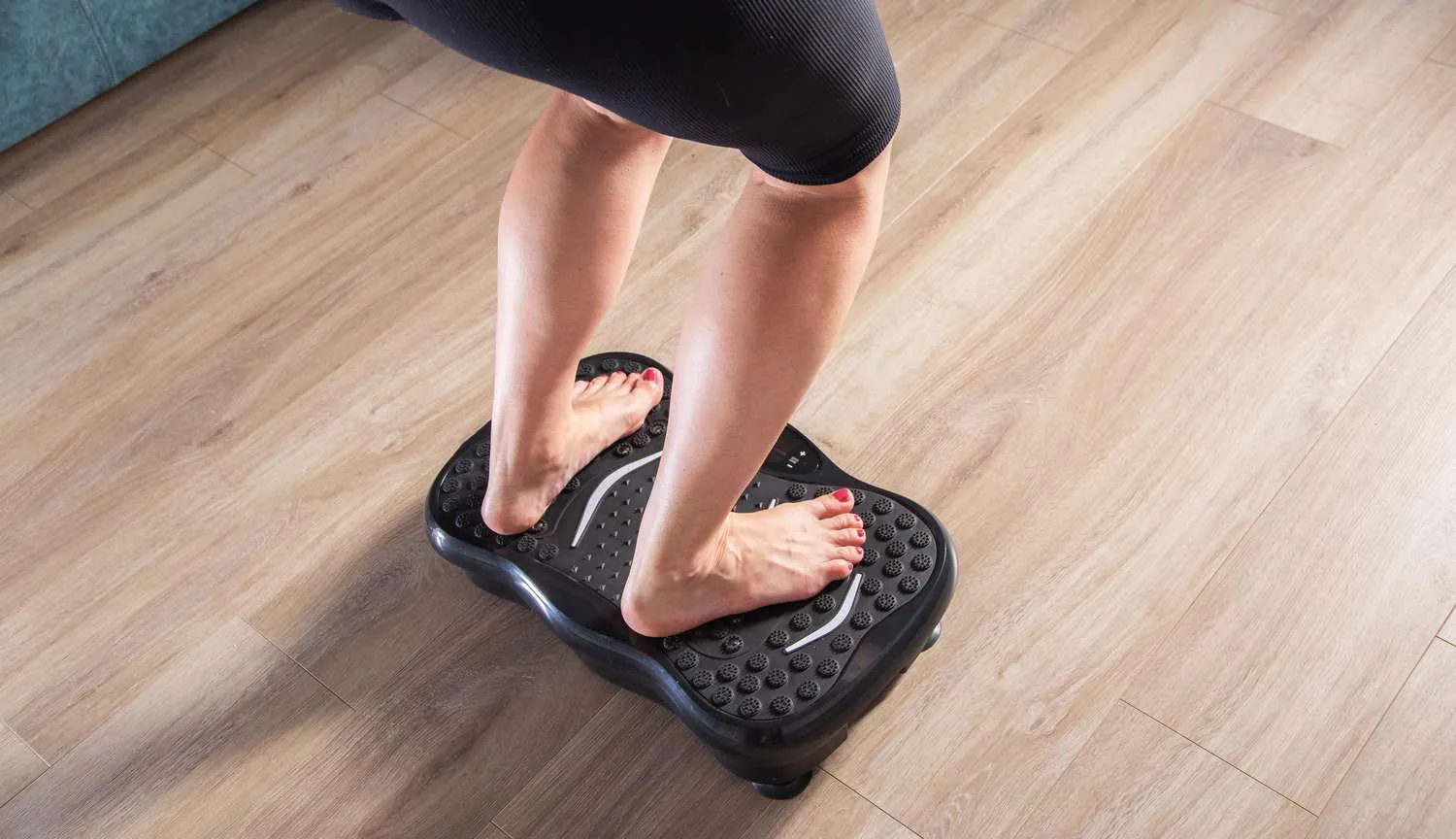
- Stand with soft knees; locked knees send vibration straight into your spine and teeth.
- Start at low frequency (15–25 Hz) for your first two weeks before touching higher settings.
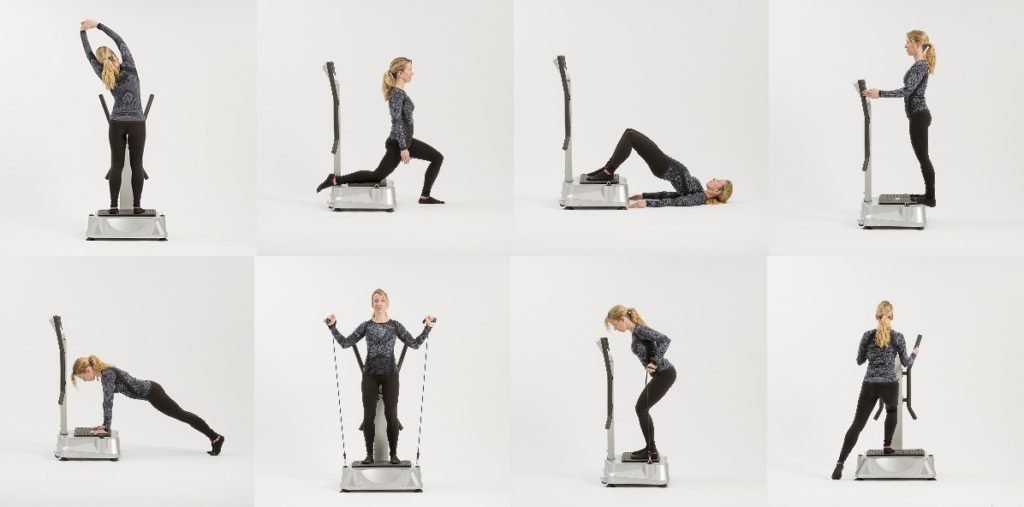
- Do dynamic moves — squats, calf raises, planks — rather than just standing still.
- Most manufacturers advise waiting 30–60 minutes after eating before stepping on.
- People who are pregnant, have recent implants, blood clots, or acute hernias should clear it with a doctor first.
Why Mornings Work Best
Whole-body vibration raises circulation and body temperature quickly, which is exactly what a stiff, half-awake body needs. Many users also report it works as a caffeine substitute for the first groggy hour.
What a 12-Minute Morning Vibration Plate Routine Looks Like
Here is a practical schedule to follow from day one. Times assume an oscillating or dual-motor plate, the most common home style.
| Minutes | Activity | Setting |
|---|---|---|
| 0–2 | Stand centered, knees soft, breathe | Low (15–20 Hz) |
| 2–4 | Bodyweight squats, slow tempo | Low–medium |
| 4–6 | Calf raises and slow marches | Low–medium |
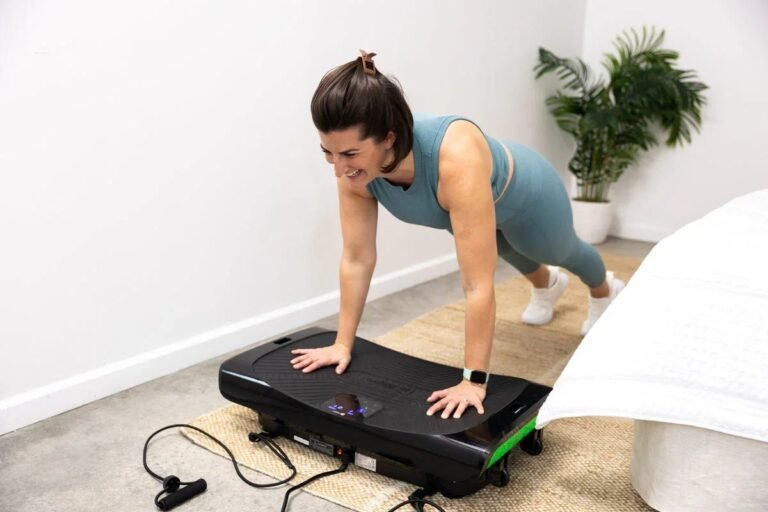
| 6–8 | Push-ups with hands on platform (or forearms) | Medium |
| 8–10 | Plank or front hold, elbows on platform | Medium |
| 10–12 | Cool-down: shoulder rolls, deep breathing, step off | Low |
Rest 20–30 seconds between exercises if you need it.
Warm Up Before You Step On
Thirty seconds of prep prevents most first-week complaints. Try:
- Ankle circles — ten each direction, standing.
- Hip hinges — five slow good-mornings, no weight.
- Shoulder rolls — ten backward.
Cold, tight ankles are the most common reason squats on the plate feel jarring rather than smooth.
Choosing Your Frequency and Time
| Goal | Frequency range | Session length |
|---|---|---|
| Circulation and warm-up | 15–25 Hz | 10–12 min |
| Muscle and strength work | 25–35 Hz | 10–15 min |
| Recovery and stretching | 10–20 Hz | 8–10 min |
If your plate lists speed levels instead of Hz, treat the bottom third as your first two weeks, the middle third as your working range, and the top third as occasional bursts.
Best Exercises to Rotate In
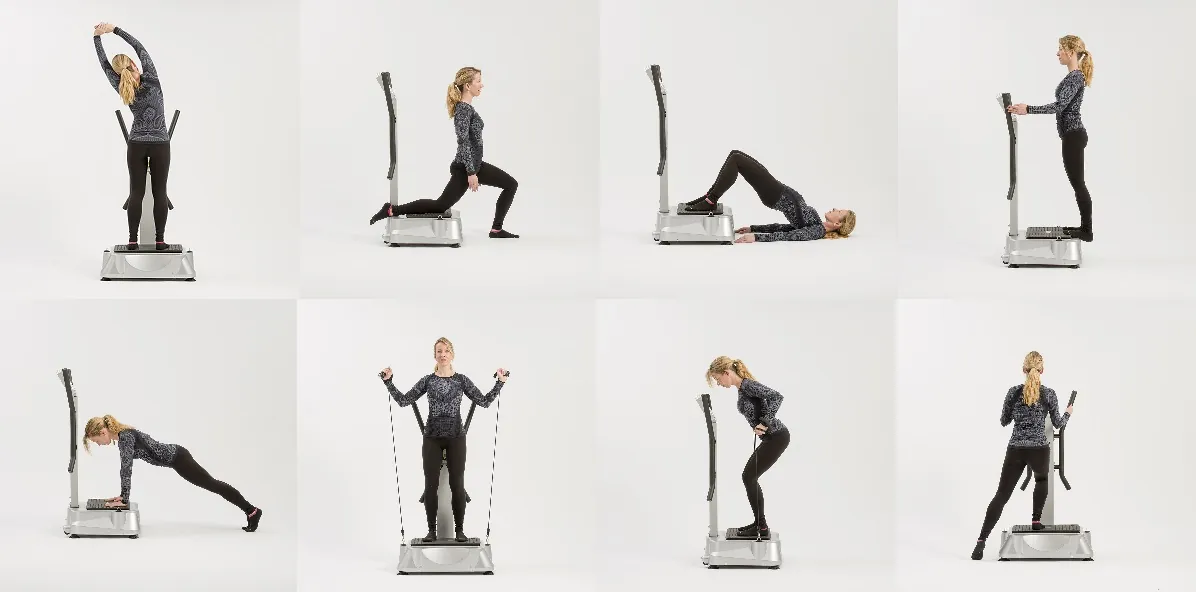
Once the base routine feels easy, swap exercises in rather than adding minutes:
- Split squats — rear foot on the floor, front foot on the platform.
- Glute bridge — heels on the plate, hips lifted.
- Tricep dips — hands on the platform edge.
- Lateral lunges — one foot on the plate, slow tempo.
- Calf stretch hold — great at low frequency after a run.
Rotate three to five of these across the week so no single joint group takes every session.
Common Mistakes That Ruin Results
- Standing rigid. Locked knees and a stiff spine turn vibration into a headache machine. Stay springy.
- Going too long. Twenty-plus minutes daily on high settings causes fatigue, not faster results.
- Only standing still. Passive standing has modest benefits; loaded movement is where strength and bone benefits come from.
- Skipping water. Vibration dehydrates faster than it feels like it does. Drink a glass before and after.
- Using it right after a big breakfast. Wait 30–60 minutes after eating to avoid nausea.
Pro Tip: Keep the plate next to something you already do every morning — the coffee maker is the classic spot — so the routine hooks onto an existing habit instead of demanding new willpower.
Is It Actually Good for You?
The evidence supports modest benefits for circulation, muscle activation, balance, and flexibility, especially in older adults and people returning from inactivity. Vibration training works best as a supplement to walking, resistance work, and general activity — the NHS exercise guidance recommends adults also accumulate 150 minutes of moderate activity weekly, and a plate fits inside that rather than replacing it.
Safety: Who Should Not Use One
Warning: Whole-body vibration isn’t safe for everyone. Talk to your doctor before starting if you’re pregnant, have a recent fracture, blood clot, pacemaker or other implanted electronic device, acute hernia, retinal detachment history, epilepsy, or recent surgery. Stop immediately if you feel dizziness, chest pain, numbness, or sharp joint pain — those are stop signals, not soreness.
Troubleshooting the First Two Weeks
| Problem | Likely cause | Fix |
|---|---|---|
| Headache after sessions | Frequency too high, knees locked, or dehydration | Drop to 15 Hz, soften knees, add water |
| Tingling feet | Bare skin on a hard platform | Wear thin-soled shoes or an exercise mat on the plate |
| Itchy legs | Circulation response, common in beginners | Usually fades in 1–2 weeks; lower intensity meanwhile |
| Nauseous | Session too soon after eating or too intense | Wait longer after meals, shorten sessions |
| Plate “walks” across the floor | Soft flooring or uneven feet | Move to a hard surface, check levelers |
Pro Tip: If itching is the thing driving you crazy, it’s usually a circulation response in beginners and typically settles within a fortnight — but if it comes with rash or swelling, stop and ask a doctor.
Building the Habit
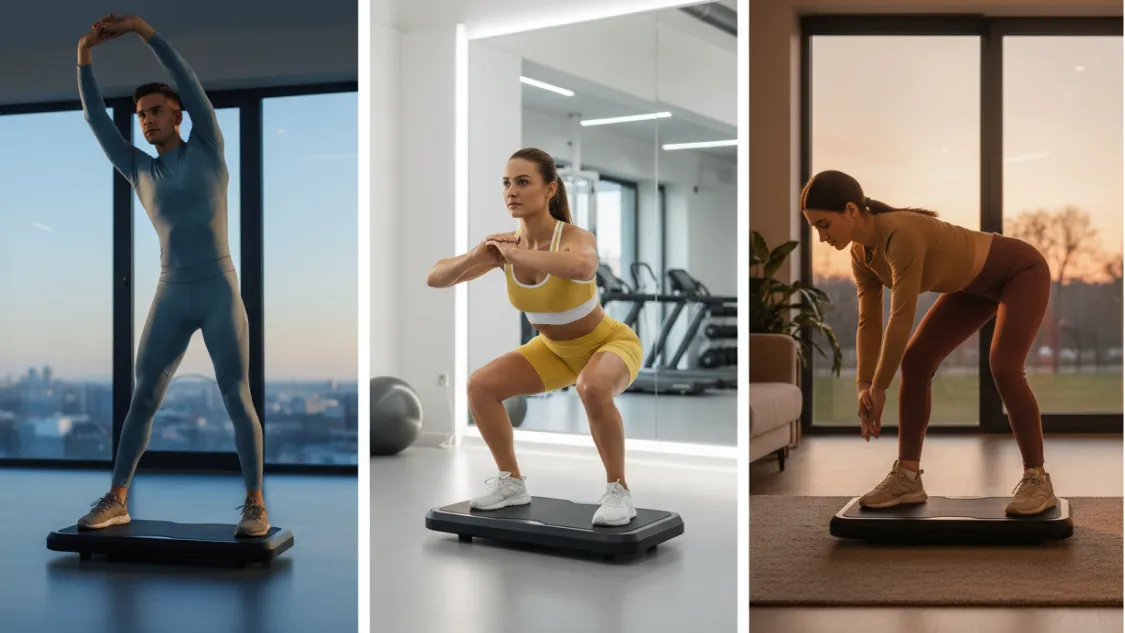
Attach the routine to an anchor: alarm goes off, water glass, two minutes on the plate. After a month, most people either increase frequency settings slightly or add one exercise, never both at once.
Related guides
- Weight Plates Workout Routines for Beginners at Home
- Weight Plates Kg Vs Lbs Conversion
- Best Bumper Plates for Home Gym Reddit Picks 2026: Top Buys
Frequently Asked Questions
How long should a vibration plate session be?
Ten to fifteen minutes is the sweet spot for most people, once daily. Beginners should start with five to eight minutes at low frequency for the first week. More time doesn’t mean more benefit — fatigue and headaches usually arrive before results do.
Should I use a vibration plate before or after breakfast?
Wait 30–60 minutes after eating. A full stomach plus vibration commonly causes nausea. Exercising before breakfast is fine for most healthy people, but keep the first sessions gentle and see how your body responds.
Does standing on a vibration plate count as exercise?
Passive standing gives mild circulation and balance benefits, but it isn’t equivalent to real exercise. The benefits grow substantially when you add movement — squats, planks, calf raises — so the muscles actually work against the vibration.
Can vibration plates help with lymphatic drainage?
Manufacturers and many users say yes, and the circulation boost is real, but strong clinical proof for lymphatic drainage specifically is limited. If you have lymphedema or a related condition, ask your doctor or lymphedema therapist before using a plate.
Is it OK to use a vibration plate every day?
Yes, at low-to-moderate intensity for 10–15 minutes, daily use is generally fine for healthy adults. If you’re doing high-frequency strength work, take a rest day or alternate with lighter sessions, the same way you would with any resistance training.
Why do my legs itch when I use the vibration plate?
Vibration rapidly increases blood flow to the skin, which can trigger itching in new users. It typically fades within one to two weeks. Lower the intensity, stay hydrated, and if itching comes with a rash, swelling, or breathlessness, stop and seek medical advice.
Conclusion
A 12-minute morning session, three or four exercises, low frequency for two weeks — that’s the whole formula. Set your plate out tonight where you’ll see it, put a water glass beside it, and step on tomorrow morning before the coffee finishes brewing. The routine that survives is the one that asks the least of you at 6:30 a.m.
I am a certified fitness coach with over 10 years of experience helping people improve their strength, endurance, and overall health. Specializes in workout programming, weight training, fat loss, muscle building, home fitness, and evidence-based nutrition.My goal is to make fitness simple and practical through well-researched guides, honest product reviews, and actionable training advice.