People with certain health conditions, pregnant women, and anyone with a recent fracture or implanted medical device shouldn’t use a vibration plate. If you have a heart condition, a hernia, or a spinal injury, skip it too. Everyone else can usually use one after a quick check with a doctor.
Quick safety check before you start
- Pregnancy: skip vibration plates entirely, as whole-body vibration isn’t recommended during pregnancy.
- Implanted devices: pacemakers and defibrillators can be disturbed by strong vibration, so don’t use a plate.
- Recent fracture or surgery: wait until your doctor clears you, often several weeks to months depending on the bone.
- Heart or circulation problems: get a doctor’s OK first, because whole-body vibration raises heart rate and blood pressure.
- Hernia or spinal injury: the jolt can strain the area and make symptoms worse, so avoid it.
- Dizziness or vertigo: the platform moves under you, and losing balance on it’s a real fall risk.
Why vibration plates aren’t safe for everyone
A vibration plate works by shaking your whole body many times per second, and that force travels through your bones, joints, and organs. Your muscles contract and relax fast to keep you steady, which is why it feels like a workout. But the same shake reaches parts of you that can’t handle it — a healing bone, a loose implant, or a growing baby.
The vibration also raises your heart rate and blood pressure, similar to light exercise. For a healthy person that’s fine. For someone with a heart condition or uncontrolled blood pressure, it can be too much. That’s why the first question isn’t “does it work” — it’s “is my body safe on it.”
If you’re unsure, check the safety guidance from a health body you trust, or simply ask your doctor. A two-minute phone call beats a fall or a flare-up.
When a vibration plate isn’t right for you
| Situation | What changes | What to do instead |
|---|---|---|
| Pregnant | Vibration stresses the womb | Walk or swim instead |
| Pacemaker fitted | Device may be disturbed | Ask your cardiologist first |
| Recent fracture | Healing bone can re-break | Wait for doctor’s clearance |
| Hernia | Strain pushes it out more | Try gentle core work |
| Bad vertigo | Balance is already poor | Sit-down exercises only |
| Very high blood pressure | Heart rate climbs fast | Control it before starting |
How to use one safely if you’re cleared
- Check with your doctor first if you have any condition on the list above, and get a clear yes before you step on.
- Start at the lowest setting for 5 minutes, once, and see how your body feels the next day.
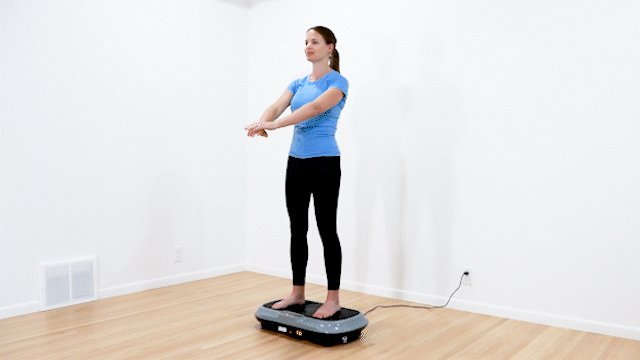
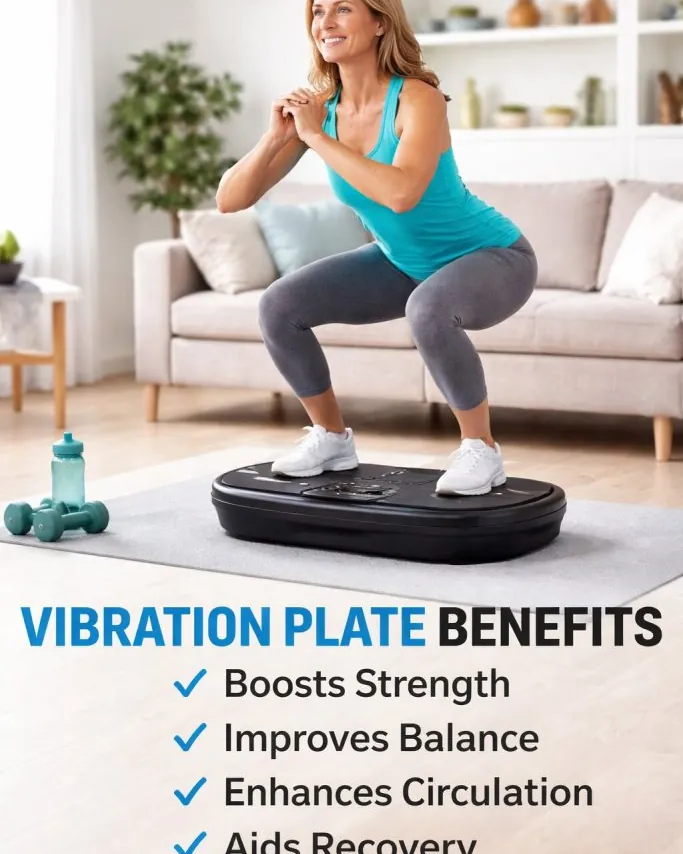
- Stand with soft knees, never locked, so your joints absorb the shake instead of your spine.
- Hold a rail or wall for your first few sessions until your balance feels steady.
- Build up slowly — add about 1 to 2 minutes per session, up to 10-15 minutes, only if you feel fine.
- Stop at once if you feel dizzy, sick, or feel pain anywhere, and don’t push through it.
- Skip it on days you’re unwell, injured, or just had a procedure, and wait until you’re recovered.
Mistakes that spoil your results
- Ignoring a health condition because the plate “looks gentle” — vibration is still force, and it can trigger a flare-up.
- Jumping to the highest setting on day one, which often causes dizziness and sore joints.
- Locking your knees while standing, which reduces your ability to absorb the shake and raises your risk of losing balance.
- Using it right after surgery without clearance, which can undo weeks of healing.
- Pushing through pain because you think it’s “working” — pain is a stop sign, not progress.
Related guides
Frequently asked questions
Can I use a vibration plate if I’m pregnant?
No. Pregnancy is one of the clearest cases to avoid it, because the vibration puts stress on the womb and pelvic area. Walk, swim, or do gentle strength work instead, and follow your doctor’s advice on what’s safe for you.
Why can’t I use a vibration plate with a pacemaker?
Strong vibration can jostle a pacemaker or defibrillator and its leads, so ask your cardiologist before trying one. Ask your cardiologist before trying one, and follow their answer, not a sales page. They know your device and your heart best.
How long should I use a vibration plate each session?
Start with 5 minutes at the lowest setting, then build to 10-15 minutes as your body adjusts. The right number depends on your fitness and the plate’s power, so add time slowly and stop if anything feels wrong.
Is a vibration plate safe if I have a bad back?
It depends on your injury. A recent disc problem or spinal injury is a reason to avoid it, since the shake travels up your spine. If your back is stable, get a doctor’s OK and keep your knees soft when you stand.
What happens if I use a vibration plate with a hernia?
The vibration can increase pressure in your abdomen and make the hernia more painful. Skip the plate and choose gentle core exercises instead. See your doctor before starting any new routine.
Does a vibration plate help you lose weight?
No, not on its own. It may help with balance and muscle tone, but real weight loss comes from food and regular activity. Treat it as a small extra, not the main plan.
Can older adults use a vibration plate?
Often yes, but balance is the main risk. Hold a rail, start at the lowest setting for 5 minutes, and have someone nearby at first. If you have osteoporosis or a fracture history, ask your doctor before you start.
Is it safe to use one every day?
For most healthy people, yes — 10-15 minutes a day is a common limit. If you feel sore, dizzy, or worn out, take a rest day. Your body’s response, not the calendar, tells you when to stop.
Conclusion
Vibration plates are a tool, not a treatment, and the people who get hurt are usually the ones who skip the health check. If you’re clear, start low, keep it short, and stop at the first sign of trouble. If you’re not sure, one call to your doctor settles it.

I am a certified fitness coach with over 10 years of experience helping people improve their strength, endurance, and overall health. Specializes in workout programming, weight training, fat loss, muscle building, home fitness, and evidence-based nutrition.My goal is to make fitness simple and practical through well-researched guides, honest product reviews, and actionable training advice.