
If you live in an apartment, share a wall, or work odd hours, a standard vibration plate can feel like a liability. The machine shakes, the floor hums, and your downstairs neighbor starts texting. A quiet vibration plate solves that specific problem: it delivers the same style of whole-body vibration training while keeping noise and floor-borne vibration low enough to use without bracing for a knock on the door. This article covers how quiet they actually get, which features matter, what to expect at each price, and how to keep the noise down even if you already own a loud one.
Key Takeaways
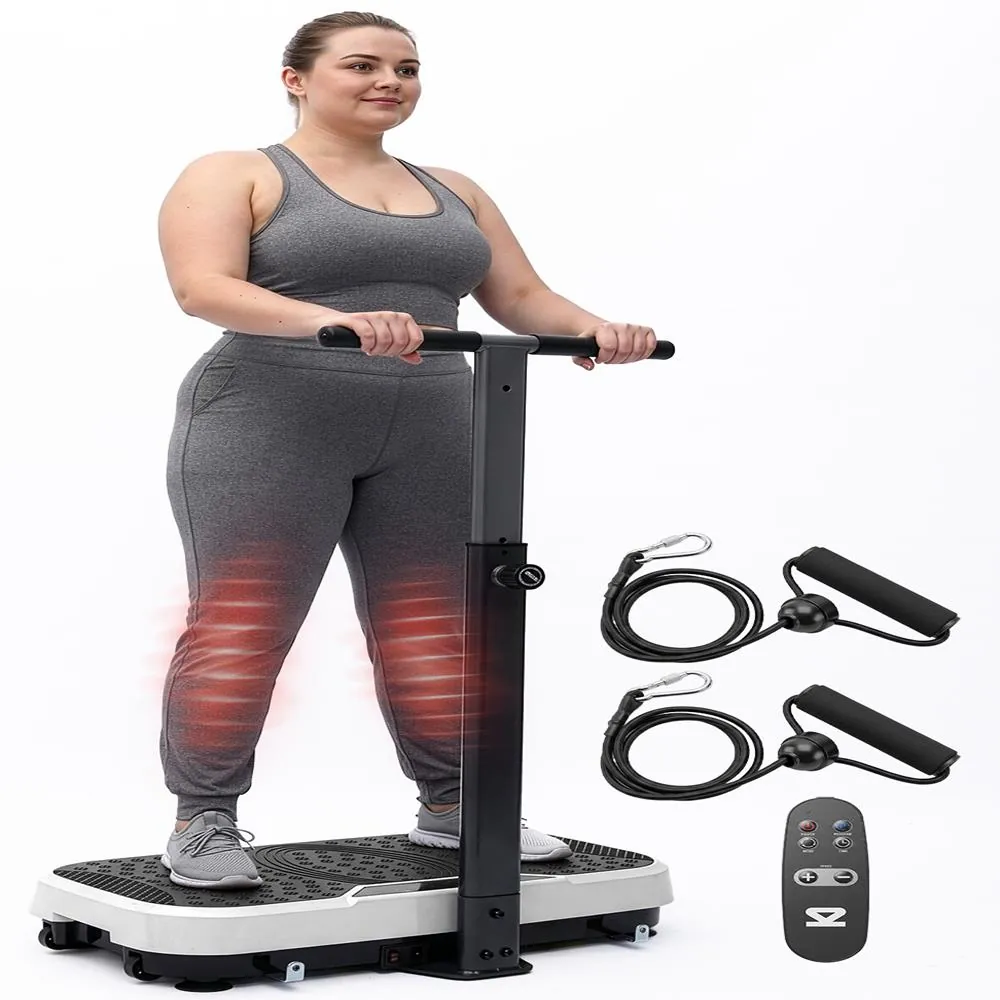
- Most vibration plates measure roughly 55–75 dB at arm’s length; a genuinely quiet model sits near the lower end.
- Pivotal (oscillating) plates are usually quieter than linear (vertical) plates at the same speed.
- Rubber anti-vibration mats and dense foam pads cut transmitted floor vibration more than they cut airborne sound.
- A brushless motor and a steel frame are the two hardware features most tied to lower noise.
- Expect to pay roughly $150–$400 for a quiet home unit and $600–$1,500 for a studio-grade quiet machine.
- No plate is silent — the realistic goal is “won’t travel through a floor,” not “inaudible.”
What “Quiet” Actually Means
Manufacturers rarely publish decibel ratings, so “quiet” is a marketing word. A plate at 60 dB is roughly as loud as someone talking next to you; 75 dB is closer to a vacuum cleaner.
The number also changes with speed. Always ask for the dB rating at a stated frequency.
Airborne Noise vs. Floor Vibration
These are two different problems, and they need two different fixes.
- Airborne noise is what you hear — motor whine, rattle, the platform clacking. A mat barely helps this.
- Floor vibration is what your neighbor hears through the structure. This is the one that gets you complaints, and it’s the one mats and pads actually address.
Which Type Is Quietest?
| Type | Motion | Typical Noise | Best For |
|---|---|---|---|
| Pivotal / oscillating | See-saw | Quietest (55–65 dB) | Apartments, beginners |
| Linear / vertical | Up and down | Louder (65–75 dB) | Athletes, higher intensity |
| Dual-motor | Both | Loudest | Gyms, not shared floors |
If quiet is your priority, a pivotal plate is almost always the answer. It moves like a seesaw around a central axis, which requires less motor torque than driving a platform straight up and down.
Features That Lower the Noise
When you compare models, these are the specs that matter:
- Brushless motor — fewer moving contacts, less whine than a brushed motor.
- Steel frame with welded joints — plastic housings and bolted frames rattle over time.
- Rubber feet or suspension mounts — decouple the machine from the floor.
- Smooth speed control — abrupt jumps in frequency cause a clunk; a gradual dial does not.
- Weight — a heavier machine (60–90 lb) resists walking across the floor better than a 25 lb one.
- Low minimum frequency — a plate that starts at 5–8 Hz lets you warm up quietly.
Pro Tip: A heavier plate isn’t automatically quieter, but a light plate almost always transmits more vibration into the floor. Mass absorbs movement.
How to Reduce Noise on Any Plate

You don’t have to buy a new machine to get quieter. Work through this list in order:
- Add a vibration isolation mat. A ½-inch rubber or EVA foam mat under the plate is the single biggest improvement for floor transmission.
- Layer cork over rubber. Cork adds damping; rubber adds isolation. Together they outperform either alone.
- Move off suspended floors. A concrete slab transmits far less than a wood-joist floor. A basement or garage beats a second-floor bedroom.
- Tighten every bolt. Loose fasteners are the most common source of rattle. Check them monthly.
- Lubricate per the manual. A dry bearing squeals. Use only the lubricant the maker specifies.
- Run at lower frequencies. Dropping from 30 Hz to 15 Hz can cut perceived noise noticeably.
- Place it on a rug over the mat. Extra decoupling, and it protects the floor finish.
Warning: Never block the motor’s cooling vents with padding. Overheating shortens motor life and can void your warranty.
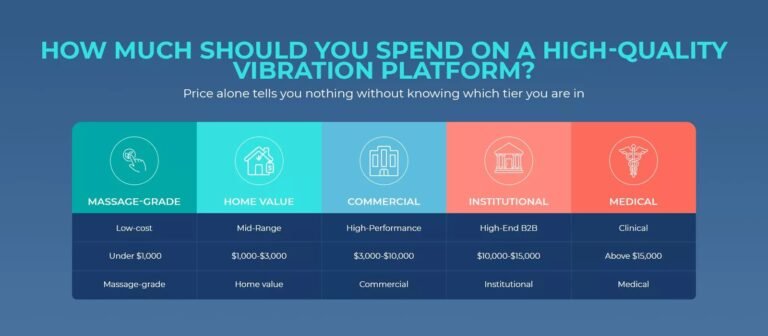
What Quiet Plates Cost
| Tier | Typical Price | What You Get |
|---|---|---|
| Budget | $80–$150 | Brushed motor, plastic frame, louder |
| Mid-range | $150–$400 | Brushless motor, steel frame, 55–65 dB |
| Premium / studio | $600–$1,500 | Dual motors, commercial build, lowest dB |
Prices vary by brand and season, so treat these as ranges rather than fixed figures. Established names in this space include LifePro, Confidence Fitness, and Power Plate, though availability and specific models change frequently — verify the current spec sheet before buying.
Safety and Who Should Skip It
Whole-body vibration isn’t for everyone. If you’re pregnant, have a pacemaker, a recent fracture, a herniated disc, or a history of blood clots, talk to a physician before using any vibration plate. The same caution applies to people with uncontrolled hypertension or recent joint replacement.
For general users, sessions of 10–15 minutes, three to four times a week, are the common recommendation. Start at a low frequency and short duration, and build gradually.
Setting Up for a Shared Building
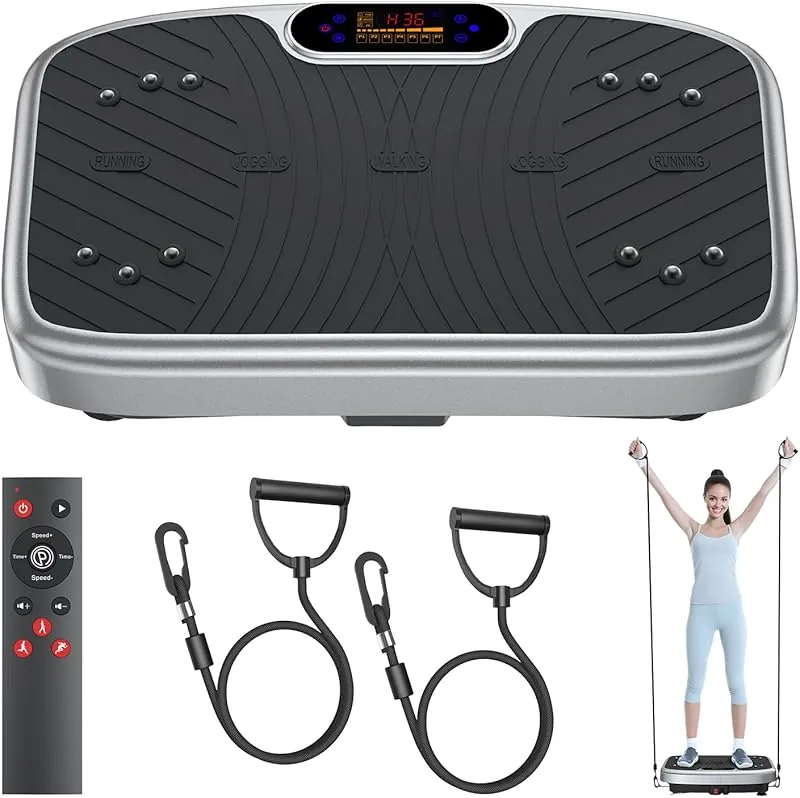
If you live above someone, combine approaches:
- Put the plate on a concrete floor if you have one.
- Use a mat plus cork under the machine.
- Run sessions before 9 p.m. and keep them under 15 minutes.
- Mention it to your neighbor in advance — most complaints start with surprise, not volume.
Pro Tip: Run the plate for 60 seconds at your normal setting while your neighbor listens from their unit. You’ll learn more from that one test than from any spec sheet.
Frequently Asked Questions
How loud is a quiet vibration plate in decibels?
Most home plates land between 55 and 75 dB measured nearby. Quiet models cluster at the low end, around 55–62 dB at moderate frequencies. Because ratings vary by speed and distance, ask the seller for the dB figure at a specific frequency, or measure it yourself with a phone app.
Are vibration plates bad for downstairs neighbors?
They can be, because low-frequency vibration travels through building structures more easily than airborne sound. A rubber isolation mat, a cork layer, and a concrete floor reduce transmission substantially. Running shorter sessions at lower frequencies also helps.
Do vibration plates actually burn calories?
They raise muscle activity and heart rate modestly, but they aren’t a substitute for cardio. Research on whole-body vibration shows small effects on strength and balance in some populations. Treat it as a supplement to, not a replacement for, regular exercise.
Can I use a vibration plate in an apartment?
Yes, with preparation. Choose a pivotal model, add an isolation mat, avoid late hours, and keep sessions short. If your building has wood joists and thin ceilings, test it once with your neighbor listening before committing to a routine.
What is the quietest type of vibration plate?
Pivotal or oscillating plates are generally the quietest because their see-saw motion needs less motor torque than vertical linear motion. A brushless motor and a heavy steel frame further reduce noise. Dual-motor machines are typically the loudest.
Does a mat really make a difference?
For floor vibration, yes — often the single biggest improvement you can make. For airborne motor noise, the effect is small. Buy a mat rated for appliance or treadmill isolation rather than a thin yoga mat, which compresses and does little.
Conclusion
Start by measuring your current setup: run the plate for one minute and note the frequency and how it sounds from the next room. If the noise is structural rather than airborne, a $30–$60 isolation mat will likely fix more than a new machine would. Fix the cheap problem first, then upgrade only if it’s still not enough.
I am a certified fitness coach with over 10 years of experience helping people improve their strength, endurance, and overall health. Specializes in workout programming, weight training, fat loss, muscle building, home fitness, and evidence-based nutrition.My goal is to make fitness simple and practical through well-researched guides, honest product reviews, and actionable training advice.