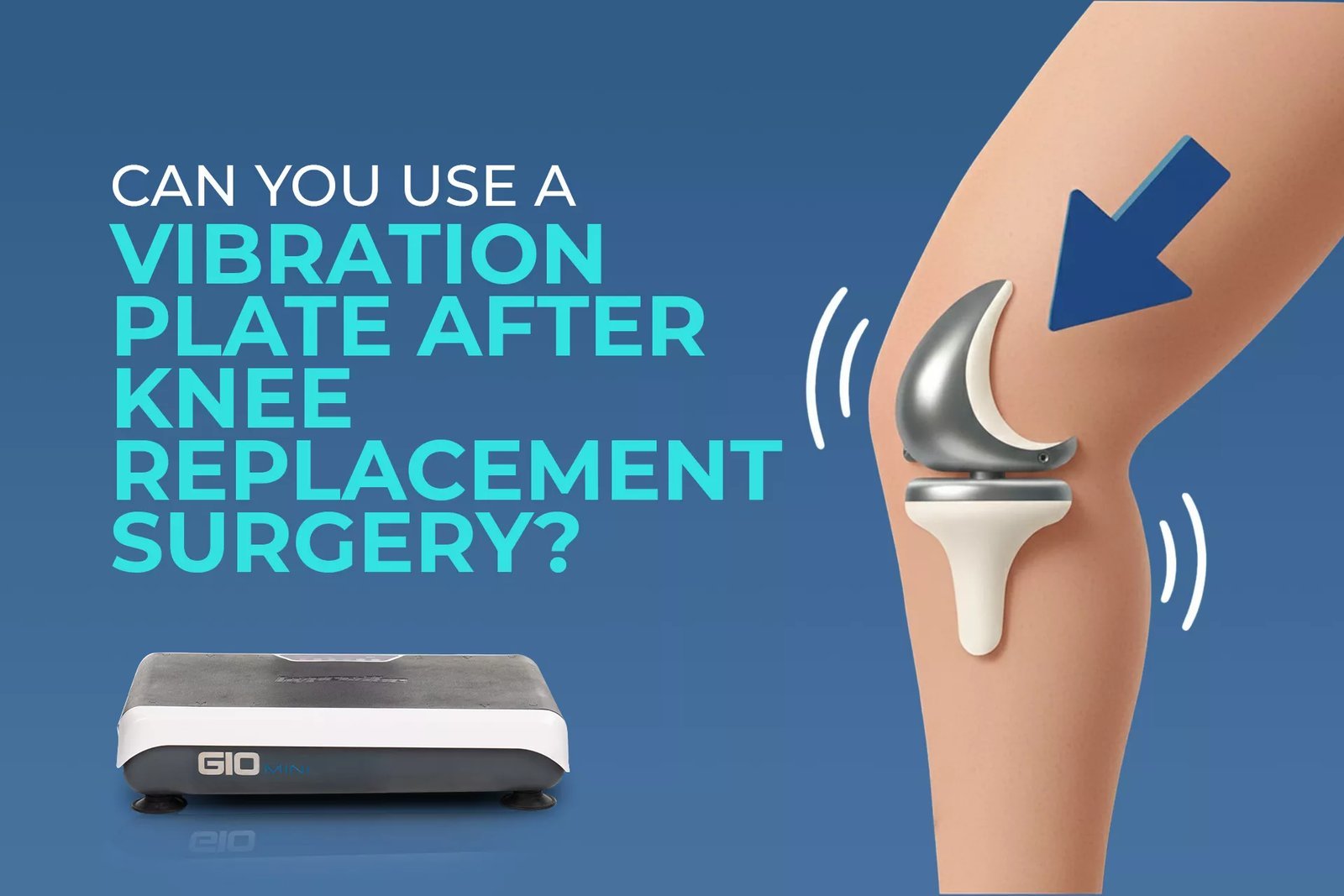
Yes, you can use a vibration plate after surgery, but only once your surgeon clears you. The answer flips on one thing: whether your tissue is still healing or already stable. Check your discharge papers for your surgeon’s movement rules before you stand on any plate.
When a vibration plate fits your recovery

A vibration plate sends fast up-and-down movement through your whole body. After surgery, that force reaches the exact spot that’s still healing.
| Your situation | Answer | Why |
|---|---|---|
| 1 week after knee or hip replacement | No | Surgeon’s rules usually block it |
| 6 weeks after knee replacement, cleared | Usually yes | Tissue has bonded, surgeon agrees |
| 3 days after a tummy tuck | No | Core and stitches still fragile |
| 8 weeks after a tummy tuck, cleared | Often yes | Soft tissue settled, low setting |
| 2 weeks after a hernia repair | No | Mesh and tissue still fixing |
| 6 weeks after a sprain or scope | Yes, gentle | Small injury, quick healing |
| Any surgery, wound still open | No | Infection risk, no exceptions |
What actually decides the answer
The deciding factor is whether your surgeon has cleared you for full weight-bearing and whole-body vibration. Healing runs in stages: early on, the tissue is weak and any strong shake can pull it apart. Later, the tissue is strong enough to take normal load.
Your surgery type sets the timeline. Bone work, mesh, and muscle repair heal slower than a simple scope. Your surgeon knows which stage you’re in — that’s why their clearance matters more than any general rule.
Age, fitness, and how well you follow wound care also shift your date. So does the plate’s setting: a low speed is gentler than a fast one.
If your surgeon says no weight-bearing yet, then wait; if they say you’re cleared and the wound is closed, then you can start slow.
How to start safely once you’re cleared

- Get written clearance first. Ask your surgeon directly about vibration plates. The sign it worked: they say yes in plain words, or write it in your notes.
- Start at the lowest speed for 3-5 minutes. Most plates list their speed range on the console. The sign it worked: you feel a light buzz, not a jolt.
- Hold the handrail and keep both feet flat. Don’t do squats or lunges yet. The sign it worked: you stay balanced the whole time.
- Check the surgical area right after. Look for new swelling, redness, or pain. The sign it worked: nothing changed.
- Add 1-2 minutes per session, every few days. Stop at 10 minutes until your surgeon says more is fine. The sign it worked: no soreness the next morning.
If any step brings sharp pain, stop and call your surgeon. A dull ache that fades in an hour is usually fine; a sharp stab is not.
The mistake that sets recovery back
The most common error is starting too soon because the wound looks closed. A closed scar on the outside doesn’t mean the tissue underneath has healed. Deep layers — muscle, mesh, bone — take longer than skin.
That mistake costs you time and can cost you a repair surgery. The check that avoids it: ask your surgeon for a specific date, not a vague “when you feel ready.” Write that date down and don’t touch the plate before it.
When to stop and call your surgeon

- New or worse pain at the surgical site — could mean the tissue is being pulled, so call your surgeon.
- Swelling that grows after a session — fluid is building up, so let your care team look.
- Redness, heat, or discharge from the wound — possible infection, so see a doctor the same day.
- Any popping or tearing feeling — stop at once and get checked.
- Numbness or tingling that won’t settle — nerve irritation, so get it looked at.
Once infection, a possible tear, or nerve symptoms are in play, this stops being a home question. Only your surgeon or a physical therapist can judge it safely. Don’t push through it.
Related guides
- Weight Plates Beginner Guide for Home Gym: Start Strong Today
- Common Mistakes Beginners Make With Weight Plates and How to Avoid Them
Frequently asked questions
Can I use a vibration plate after surgery?
Only with your surgeon’s clearance. Most surgeons say no during early healing, then yes once the wound is closed and you’re cleared for full weight-bearing. Ask for a specific date.
How long after surgery can I use a vibration plate?
It depends on your surgery. Simple scopes may clear in about 2-4 weeks; joint replacement or hernia repair often takes 6-12 weeks. Your surgeon sets your exact date.
Is a vibration plate safe after a knee replacement?
Usually yes, once your surgeon clears you. Start at the lowest speed for 3-5 minutes and hold the rail. Skip it if you still have swelling or limited clearance.
Why does my surgeon say no to vibration plates?
Because the shaking force reaches healing tissue. Early on, that force can pull stitches, mesh, or new bone apart. It’s a caution, not a permanent ban.
Does a vibration plate help recovery?
It may help circulation and muscle tone once you’re cleared, but it’s not a treatment for healing tissue. Treat it as light exercise, not therapy. Ask your care team first.
What happens if I start too early?
You can reopen the wound, loosen mesh, or damage new tissue. That can mean more pain, a longer recovery, or another surgery. Wait for clearance.
Does it matter which setting I use?
Yes. The lowest speed is gentlest. Higher speeds send more force through your body. Start low and only go higher if your surgeon agrees.
Your next step
Call your surgeon’s office today and ask one question about when you can use a vibration plate. Expect a clear date in return. You’ll know it’s working when you feel a light buzz, no pain, and no new swelling the next day. Stop and call your surgeon if sharp pain, spreading redness, or a popping feeling shows up.

I am a certified fitness coach with over 10 years of experience helping people improve their strength, endurance, and overall health. Specializes in workout programming, weight training, fat loss, muscle building, home fitness, and evidence-based nutrition.My goal is to make fitness simple and practical through well-researched guides, honest product reviews, and actionable training advice.