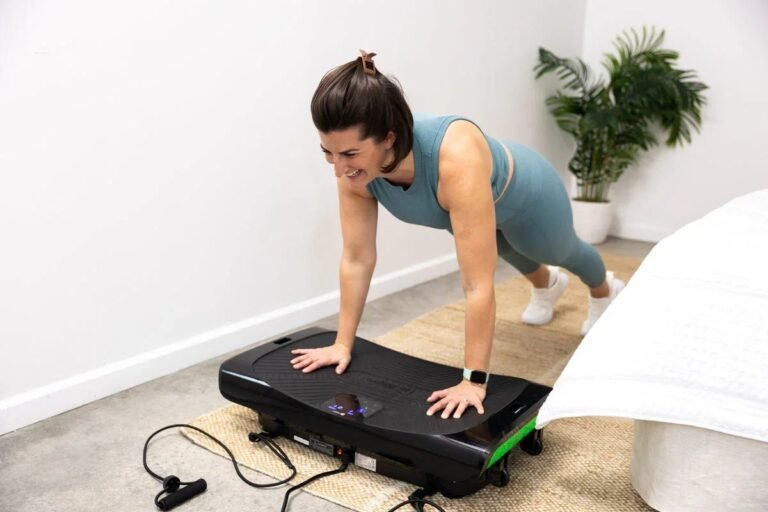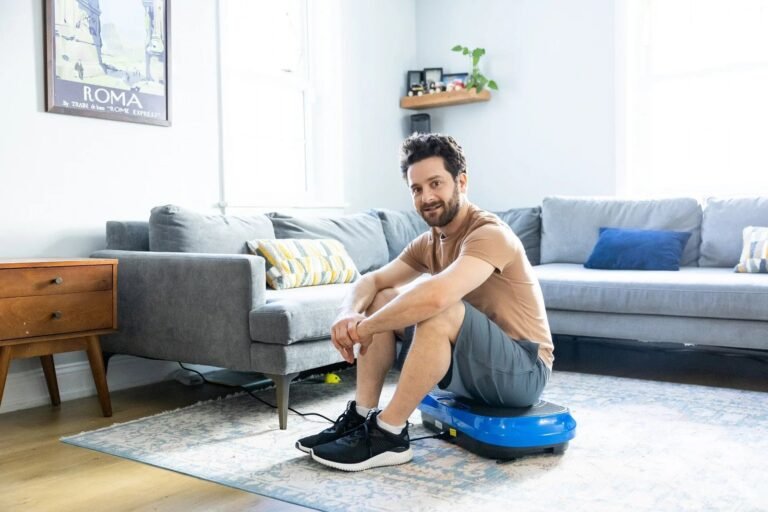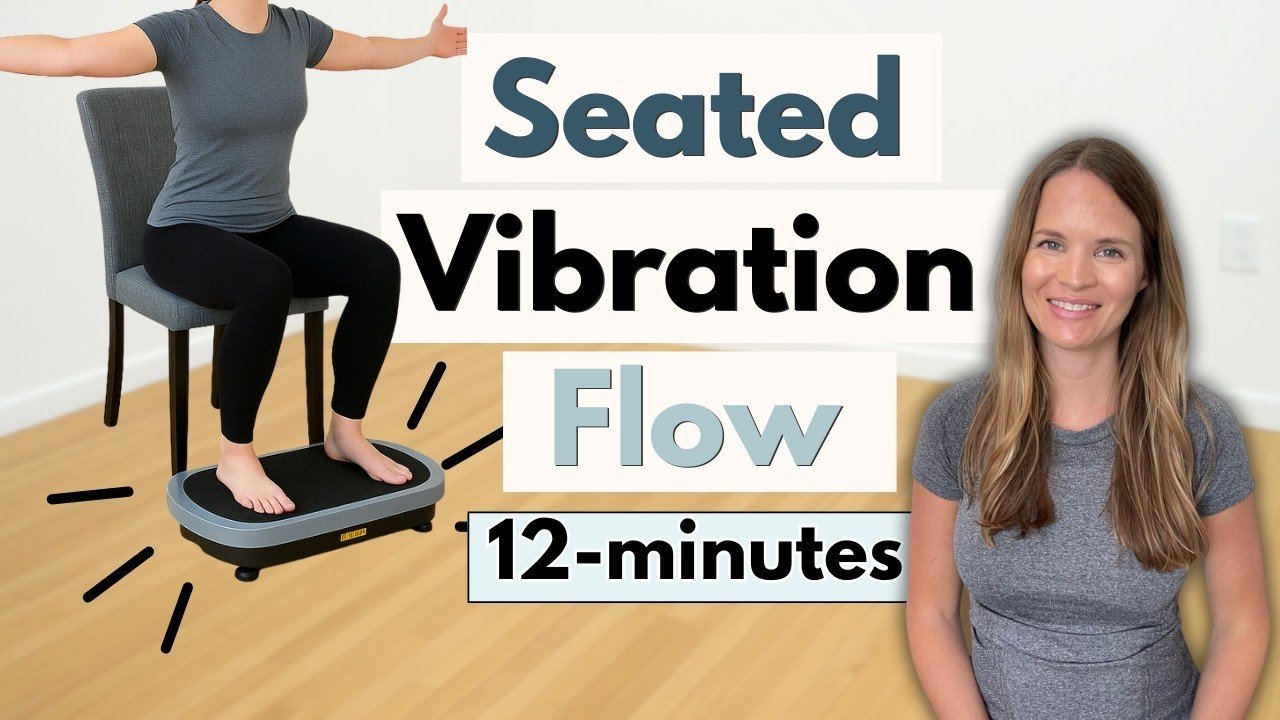
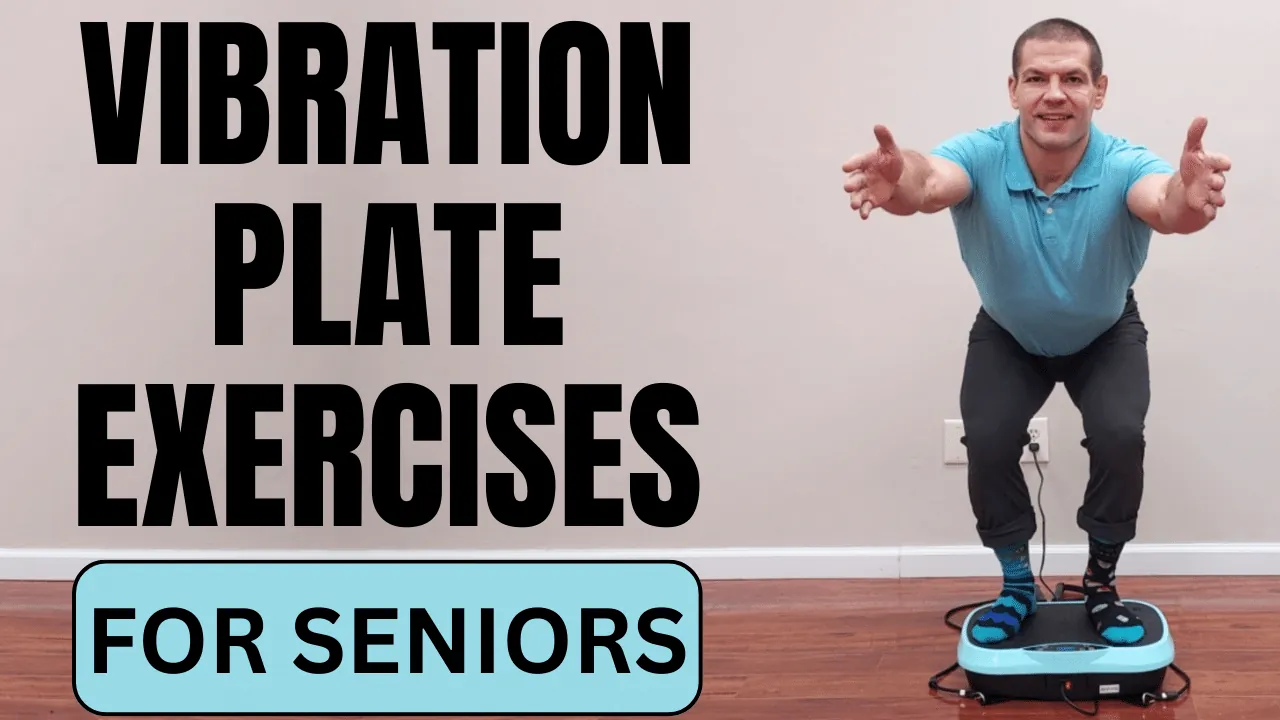
Whole-body vibration platforms send mechanical vibrations through your body while you stand, sit, or hold a pose on them. If you’re looking for vibration plate exercises for seniors, the short answer is this: gentle standing, seated, and supported moves work best, sessions run 10–15 minutes, and you should check with your doctor first if you have a joint replacement, heart condition, or balance problem.
Key Takeaways
- Start with 2–3 sessions per week, 5–10 minutes each, and build slowly.
- Hold each pose 30–60 seconds, resting between moves.
- A sturdy chair or wall within arm’s reach makes most moves safer.
- Turn the speed to low (usually 1–3 on most dials) until you’re comfortable.
- Never use a plate as your only strength or balance training — it’s a supplement.
- Stop immediately if you feel dizzy, and tell your doctor about any new pain.
Why Vibration Plates Appeal to Seniors
As we age, bone density, muscle mass, and balance tend to decline. Whole-body vibration (WBV) is marketed as a low-impact way to stimulate muscles and bones without jumping, running, or heavy lifting. That’s the appeal: you can “train” while standing still.
The research is mixed but not empty. Some studies suggest WBV may modestly improve balance and leg strength in older adults, while others find the benefits similar to simple standing exercises. Think of it as a tool that adds variety — not a replacement for walking, resistance bands, or physical therapy.
Safety First: Who Should Skip It
Warning: Talk to your doctor before your first session if you have any of the following:
- A pacemaker or implanted electronic device
- Recent fracture, joint replacement, or surgery
- Blood clots, or a history of them
- Severe osteoporosis or spinal compression fractures
- Vertigo, inner-ear problems, or uncontrolled dizziness
- Pregnancy (check with your OB regardless of trimester)
If you use a walker or cane indoors, use it near the plate too. Balance doesn’t improve instantly.
How to Set Up Your Plate Safely
| Setup Step | What to Do |
|---|---|
| Location | Place the plate on a firm, level floor near a wall or counter |
| Footwear | Wear non-slip shoes or bare feet — no socks on a smooth surface |
| Speed | Start on the lowest setting and stay there for the first week |
| Support | Keep a chair or counter within arm’s reach |
| Session length | 5–10 minutes to start, never more than 15 |
Pro Tip: Do your first session without the vibration running. Just stand on the plate and practice stepping on and off. Confidence matters more than intensity.
8 Vibration Plate Exercises for Seniors
Here are eight moves, ordered from easiest to most challenging. Hold each 30–60 seconds.
1. Standing Still (The Foundation)
Stand with feet shoulder-width apart, knees soft, hands on the counter. Let the plate do the work. This is your baseline — master it before anything else.
2. Seated Marching
Sit on a sturdy chair beside or on the plate (only if your plate supports seated use). Lift one knee, lower it, then the other. This builds hip flexor strength without balance demands.
3. Supported Squats
Hold the counter or chair back. Lower into a shallow squat — no deeper than comfortable — and rise. The plate adds instability, so keep the squat small.
4. Calf Raises
Hold the counter. Rise onto the balls of your feet, pause, lower slowly. This targets ankles and calves, which support walking stability.
5. Wide Stance Hold
Step feet wider than shoulder-width. Hold the position with hands on hips or counter. This challenges hip stabilizers.
6. Standing Leg Lift
Hold the counter. Shift weight to one leg, lift the other slightly to the side, hold, lower. Switch sides.
7. Seated Arm Press
Sit beside the plate and press your hands down onto the surface while it vibrates. This gently works arms and shoulders without standing.
8. Step On and Off
With the plate running on low, step on, stand for 20 seconds, step off. Repeat. This trains real-world balance and foot placement.
A Sample Weekly Schedule
| Day | Activity | Duration |
|---|---|---|
| Monday | Standing Still + Calf Raises | 8 minutes |
| Wednesday | Seated Marching + Supported Squats | 10 minutes |
| Friday | Wide Stance Hold + Step On/Off | 10 minutes |
| Other days | Walking or light stretching | 20–30 minutes |
Pro Tip: Keep a log of speed, duration, and how you felt. Patterns show up fast — and so do problems.
Common Mistakes to Avoid
- Cranking the speed too soon. Higher isn’t better; it’s just harder to control.
- Skipping the warm-up. Two minutes of marching in place first.
- Using it daily at first. Muscles need recovery, especially at 70+.
- Ignoring footwear. Socks on a vibrating surface are a fall risk.
- Treating it as a cure-all. It complements exercise; it doesn’t replace it.
Related guides
- Best Kettlebells for One-Hand Exercises 2026: Top Picks for Strength
- How Many Weight Plates Do I Need for Beginner Strength Training?
Frequently Asked Questions
How long should a senior use a vibration plate?
Most guidance suggests 10–15 minutes per session, two to three times weekly. Beginners should start at 5 minutes and add a minute or two each week. Longer sessions don’t appear to add much benefit and may increase soreness or dizziness.
Is vibration training safe for osteoporosis?
It depends on severity. Gentle WBV is sometimes studied for bone health, but the FDA has warned that some high-force vibration devices aren’t cleared for bone-density claims. Ask your doctor before using one with diagnosed osteoporosis.
Can I use a vibration plate if I have a knee replacement?
Only with your surgeon’s or physical therapist’s clearance. Implanted hardware is generally sturdy, but vibration can stress surrounding tissue. Many people are cleared for low settings after full recovery.
Does it actually help with balance?
Some studies show modest improvements in older adults, but results vary widely by device and protocol. It works best combined with standard balance training, not as a standalone fix.
What speed should beginners use?
Start at the lowest setting your machine offers. Stay there for one to two weeks. Increase only when you can hold all your poses without gripping the support for dear life.
Can I sit instead of stand?
Yes, if your plate is designed for seated use. Seated marching and arm presses are excellent starting points for anyone with balance concerns.
Before You Buy or Begin
Check the plate’s weight limit, its minimum speed, and whether the manufacturer supports seated use. The FDA’s guidance on whole-body vibration devices is worth reading before you act on any bone-density or medical claims you see in advertising.
Start with one session this week — standing still, lowest speed, five minutes, counter within reach. That single step tells you more than any article can.

I am a certified fitness coach with over 10 years of experience helping people improve their strength, endurance, and overall health. Specializes in workout programming, weight training, fat loss, muscle building, home fitness, and evidence-based nutrition.My goal is to make fitness simple and practical through well-researched guides, honest product reviews, and actionable training advice.