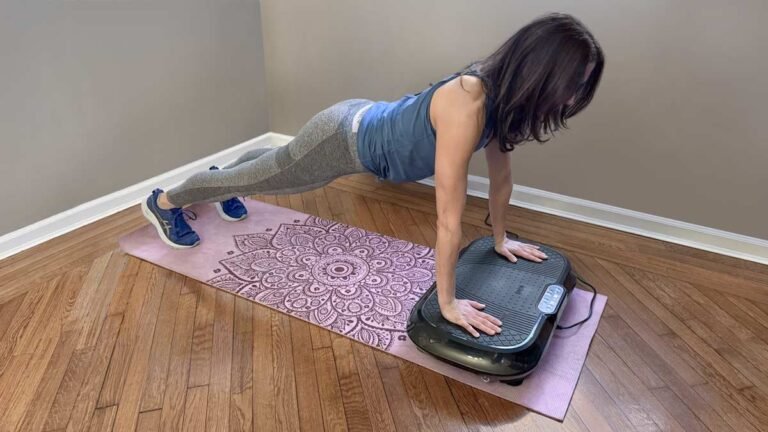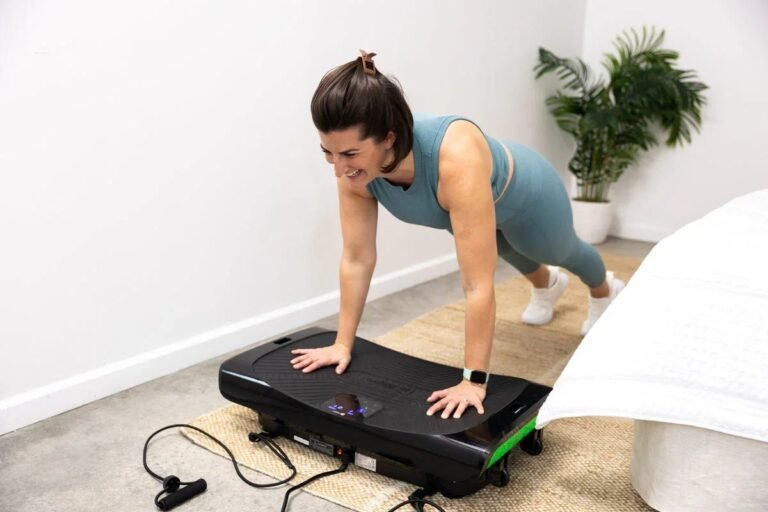
If you’re lying on a vibration plate, you’ve probably already discovered the obvious: standing on one is awkward, and the manual says nothing about lying down. Whole-body vibration platforms are designed for standing, seated, or supported positions, and lying flat across the plate is a different animal — it changes which muscles get the stimulus, how much vibration reaches your spine, and how safe the whole thing is. Here’s what actually happens, what it’s good for, and how to do it without hurting yourself.
Key Takeaways
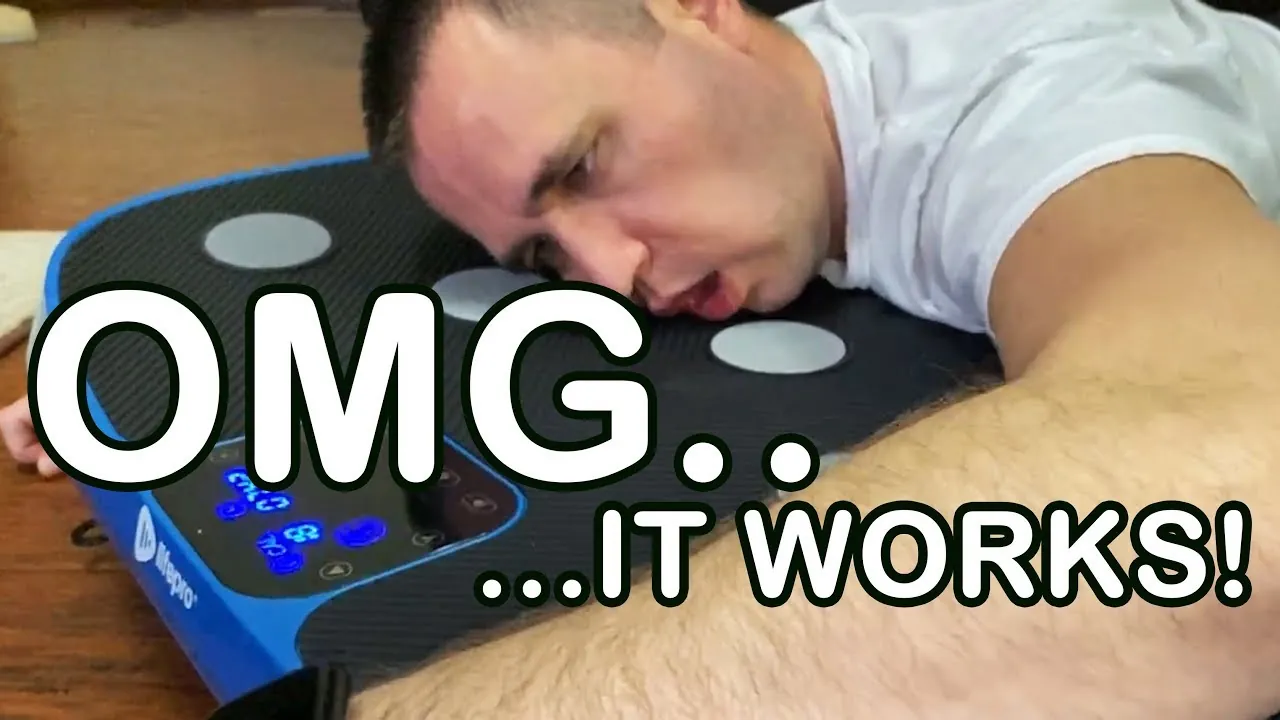
- Lying on a plate delivers whole-body vibration through your back, hips, and shoulders rather than your feet and legs.
- Most home plates are rated for a user weight of 250–330 lb, but lying adds pressure points the platform wasn’t engineered for.
- Sessions should stay short: 5–15 minutes, usually split into 30–60 second bouts.
- Low frequencies (15–30 Hz) suit lying positions; high frequencies (35–50 Hz) are built for standing.
- Never lie face-down on the plate with your head over the motor housing — keep your head clear of the platform edge.
- If you have a spinal implant, recent fracture, or pregnancy, get medical clearance before any vibration training.
What Happens When You Lie Down
A vibration plate works by oscillating — either seesawing (pivotal) or moving up and down (linear). When you stand, that energy travels from your feet up through your legs and gets damped by your knees and hips.
When you lie on the platform, the energy enters through your back, glutes, and shoulder blades, and there’s no joint chain to absorb it. That means more vibration reaches your torso and spine, which is why lying is considered an advanced or therapeutic position rather than a beginner one.
Which Position Should You Use?
There’s no single “lying” position — the three common ones do genuinely different things.
| Position | Body Area Targeted | Typical Frequency | Best For |
|---|---|---|---|
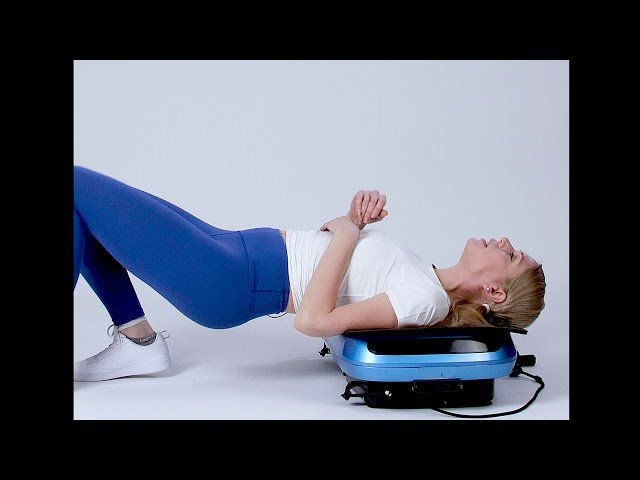
| Supine (on your back) | Core, hips, lower back | 15–25 Hz | Core activation, pelvic floor work |
| Prone (face-down) | Glutes, hamstrings, upper back | 20–30 Hz | Glute activation, posterior chain |
| Side-lying | Obliques, hips, IT band area | 15–25 Hz | Hip stability, unilateral work |
| Seated on plate | Pelvic floor, deep core | 10–20 Hz | Beginners, rehab |
How to Set Up Safely
- Pad the platform. A folded yoga mat or thick towel prevents bruising on bony points like the sacrum and shoulder blades.
- Keep your head off the plate. Rest it on a pillow on the floor beside the platform, never on the vibrating surface.
- Start at the lowest setting. Most plates bottom out around 10–15 Hz; that’s where you begin.
- Bend your knees. A slight bend in supine position reduces direct transmission into the lumbar spine.
- Hold 30–60 seconds, then rest for the same amount. Repeat 5–10 times.
Warning: Never use a vibration plate while lying on your stomach if you’re pregnant, and never place your head or neck directly in contact with the platform.
A Simple Lying Routine
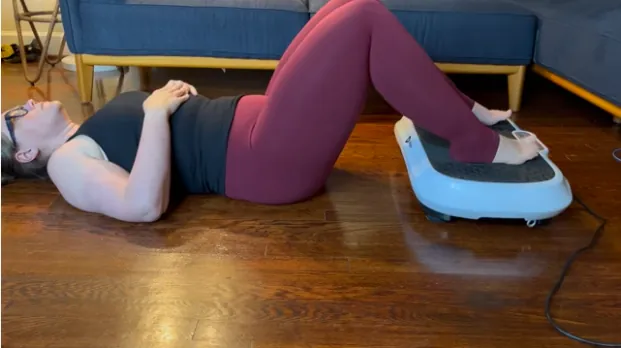
Here’s a beginner-friendly sequence you can run in about 10 minutes.
| Step | Position | Duration | Frequency |
|---|---|---|---|
| 1 | Supine, knees bent | 60 sec | 15 Hz |
| 2 | Rest on floor | 60 sec | — |
| 3 | Prone, forearms down | 45 sec | 20 Hz |
| 4 | Rest on floor | 60 sec | — |
| 5 | Side-lying, left | 45 sec | 15 Hz |
| 6 | Side-lying, right | 45 sec | 15 Hz |
Repeat the whole circuit once if you feel comfortable. That’s it — no need to chase longer sessions.
Does Lying on a Plate Actually Work?
The evidence for whole-body vibration generally is mixed but not empty. Research has examined it for bone density, balance, and muscle activation, and results vary by population and protocol. The honest answer for the lying position specifically: it’s under-studied compared to standing. You’re getting a real stimulus, but claims that it “melts belly fat” or “detoxes” your organs aren’t supported. Treat it as a supplemental tool, not a replacement for resistance training or cardio.
Pro Tip: If your goal is bone density or balance, the standing position has far more research behind it than lying. Use lying as an add-on, not your main protocol.
Common Mistakes to Avoid
- Lying flat for 20+ minutes on your first try — expect bruising and lower-back soreness.
- Using maximum amplitude while supine — the spine takes the hit.
- Placing the plate on a thick carpet, which dampens the vibration and forces you to crank the setting.
- Skipping the padding and lying directly on the bare platform.
- Assuming a higher frequency equals a better workout. For lying work, lower is usually smarter.
Who Should Skip This
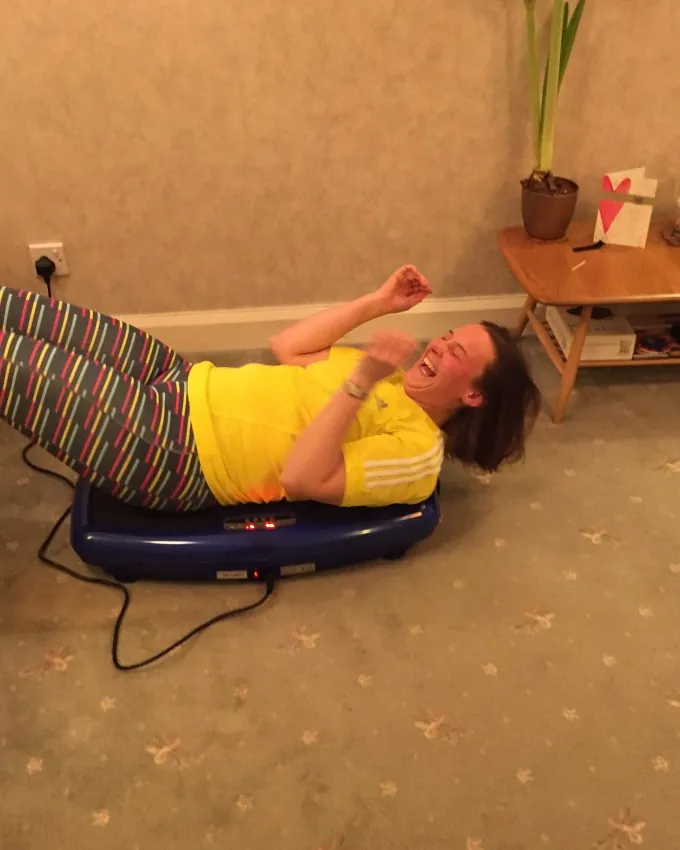
Vibration training isn’t for everyone, and lying positions narrow the field further. Avoid it if you have:
- A spinal fusion, rod, or pacemaker
- An acute disc herniation or recent vertebral fracture
- Pregnancy
- Uncontrolled high blood pressure or a history of blood clots
- Recent joint replacement in the hips or shoulders
Warning: If you feel dizziness, headache, or sharp back pain during or after a session, stop and speak to a physician before continuing.
Related guides
- Weight Plates Kg Vs Lbs Conversion
- Weight Plates Workout Routines for Beginners at Home
- Best Bumper Plates for Home Gym Reddit Picks 2026: Top Buys
Frequently Asked Questions
Can you lie on a vibration plate?
Yes, but it’s an off-label use for most machines. Lying changes the vibration path through your body and increases spinal exposure, so keep sessions short and frequencies low. Check your manual first — some manufacturers explicitly warn against lying positions.
How long should you lie on a vibration plate?
Start with 30–60 second bouts and build to no more than 15 minutes total per session, three to four times a week. Longer isn’t better here; the stimulus is about frequency and consistency, not duration.
Is lying on a vibration plate good for back pain?
It depends on the cause. Some people report relief from muscle tension, but vibration can aggravate disc issues or nerve compression. Get a diagnosis first, and never use it as a substitute for physical therapy.
Can you lie on your stomach on a vibration plate?
You can, but keep your head and neck completely off the platform and support your forehead on a pillow beside it. Prone positioning is best for glute and hamstring activation, not for anything involving your spine.
What frequency should you use while lying down?
Stay between 10 and 30 Hz. Standing protocols often run 30–50 Hz, but that range is too aggressive for a supine or prone spine. Lower amplitude matters just as much as frequency.
Conclusion
If you’re new to this, pick one position — supine with knees bent is the safest starting point — set your plate to its lowest frequency, and run three 45-second bouts with equal rest. Do that twice this week before adding anything else, and stop immediately if your back complains.

I am a certified fitness coach with over 10 years of experience helping people improve their strength, endurance, and overall health. Specializes in workout programming, weight training, fat loss, muscle building, home fitness, and evidence-based nutrition.My goal is to make fitness simple and practical through well-researched guides, honest product reviews, and actionable training advice.