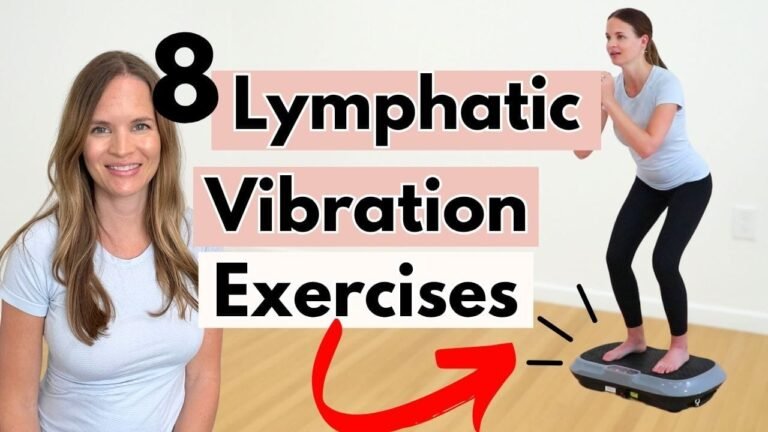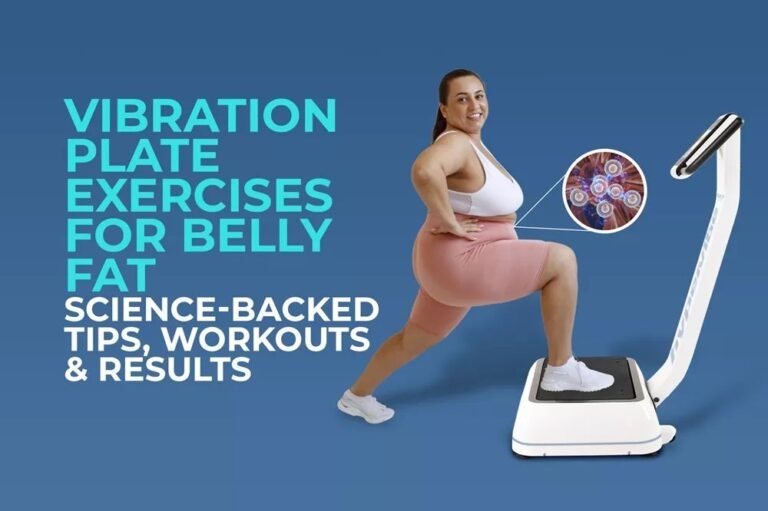
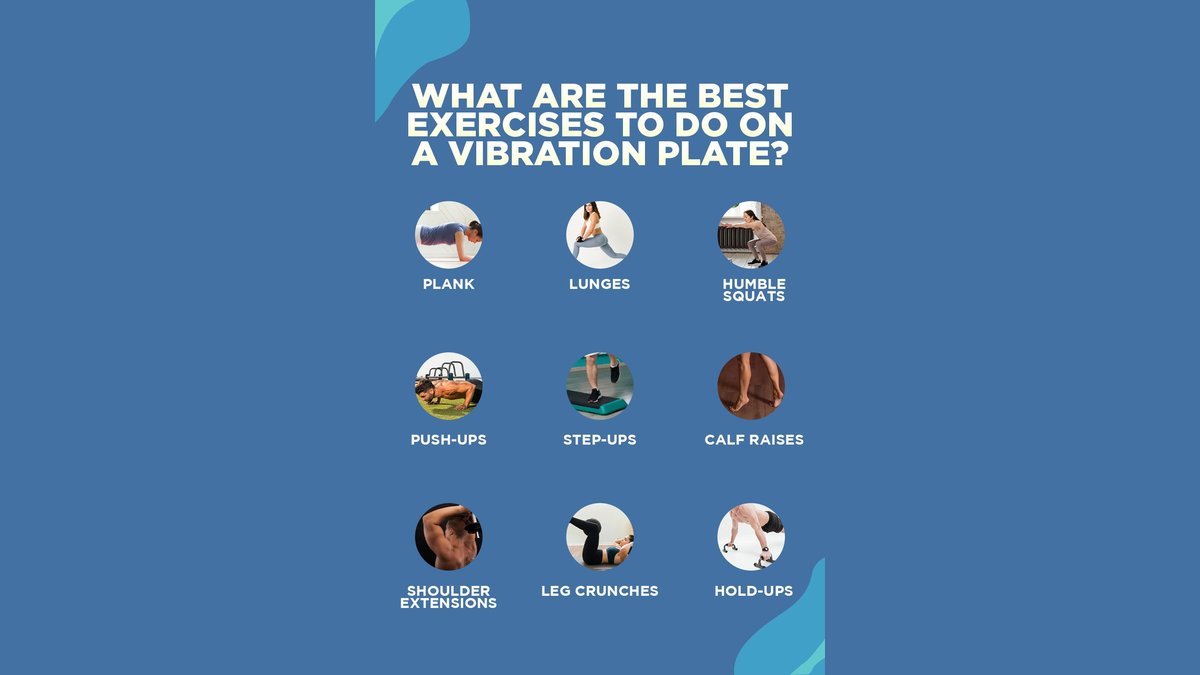
Standing on a vibrating plate while holding a plank is one of the most popular ways people try to make a core exercise harder without adding weight or time. The idea is simple: the plate shakes 20–50 times per second, your muscles must constantly re-stabilize, and the result feels far more demanding than a floor plank. Whether that translates into real strength gains depends on how you set it up, how long you hold, and whether your plate is even built for standing load. This guide covers the setup, the numbers, the mistakes, and the safety rules.
Key Takeaways
- Set the plate to low frequency (20–30 Hz) and low amplitude for planks; high settings make the hold nearly impossible and shift work away from the core.
- Hold 20–45 seconds per set, 3–4 sets, 2–3 times per week — not the 2-minute holds you may use on the floor.
- Never place your hands directly on the vibrating surface with locked elbows; forearms on the plate or hands on the floor beside it are safer.
- Most consumer vibration plates are rated for standing use up to 120–150 kg (265–330 lb); check your manual before loading one side.
- Stop immediately if you feel numbness, tingling, or joint pain — vibration plus a static hold stresses the spine differently than a floor plank.
- A floor plank plus a separate vibration session is often more effective than combining them poorly.
Why a Vibration Plate Changes a Plank
A normal plank is an isometric hold: your muscles contract without changing length. Adding vibration introduces a tonic vibration reflex, a phenomenon where rapid mechanical oscillation triggers involuntary muscle contraction. Your core, shoulders, and hip stabilizers fire in rapid on-off cycles to keep your spine neutral.
That sounds like a bonus, and it partly is. But the same oscillation also travels up through your wrists, elbows, and spine. The harder the plate shakes, the more your body prioritizes bracing against the machine rather than training the core in a controlled way. Setting matters more than effort.
Best Settings for a Plank
| Setting | Recommendation | Why |
|---|---|---|
| Frequency | 20–30 Hz | Fast enough for reflex, slow enough to control |
| Amplitude | Low | High amplitude throws the hips out of alignment |
| Duration | 20–45 seconds | Longer holds degrade form quickly |
| Sets | 3–4 | Enough stimulus without joint fatigue |
| Sessions per week | 2–3 | Allows recovery between vibration loads |
Start at the bottom of every range. If you can hold perfect form past 45 seconds, increase frequency slightly before increasing time.
How to Set Up the Plank
- Warm up first. Five minutes of walking or glute bridges before you touch the plate.
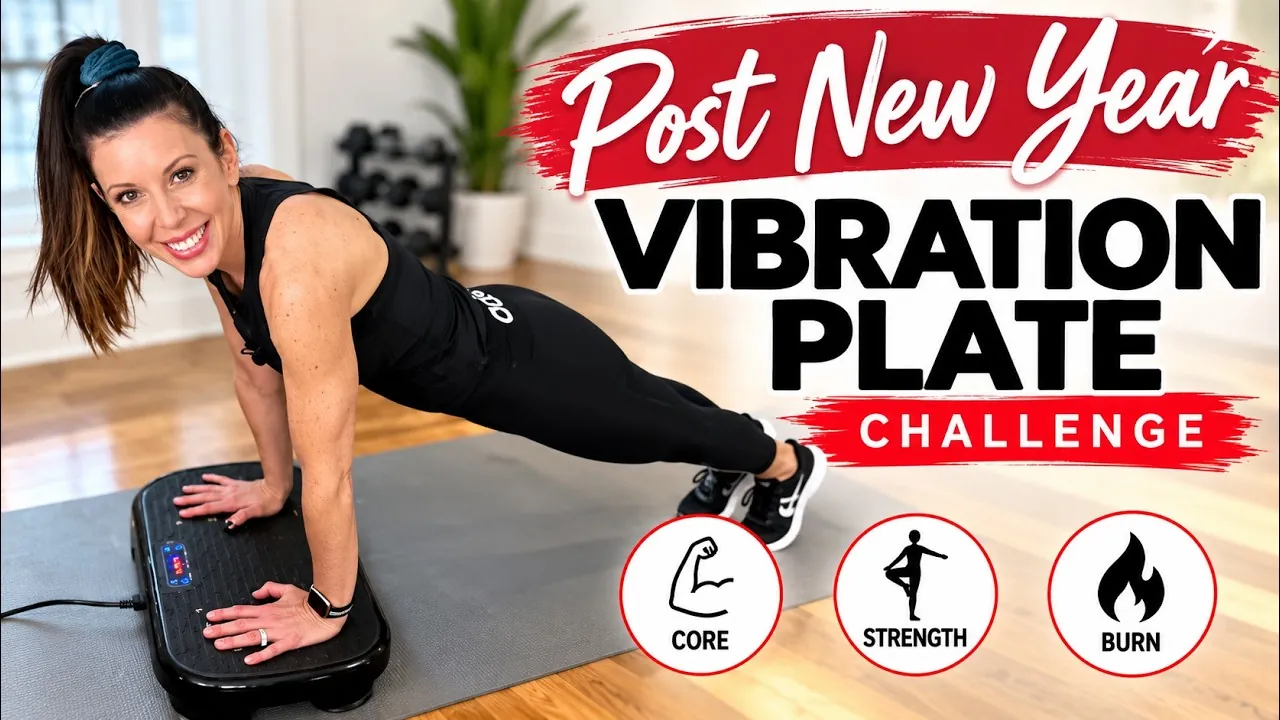
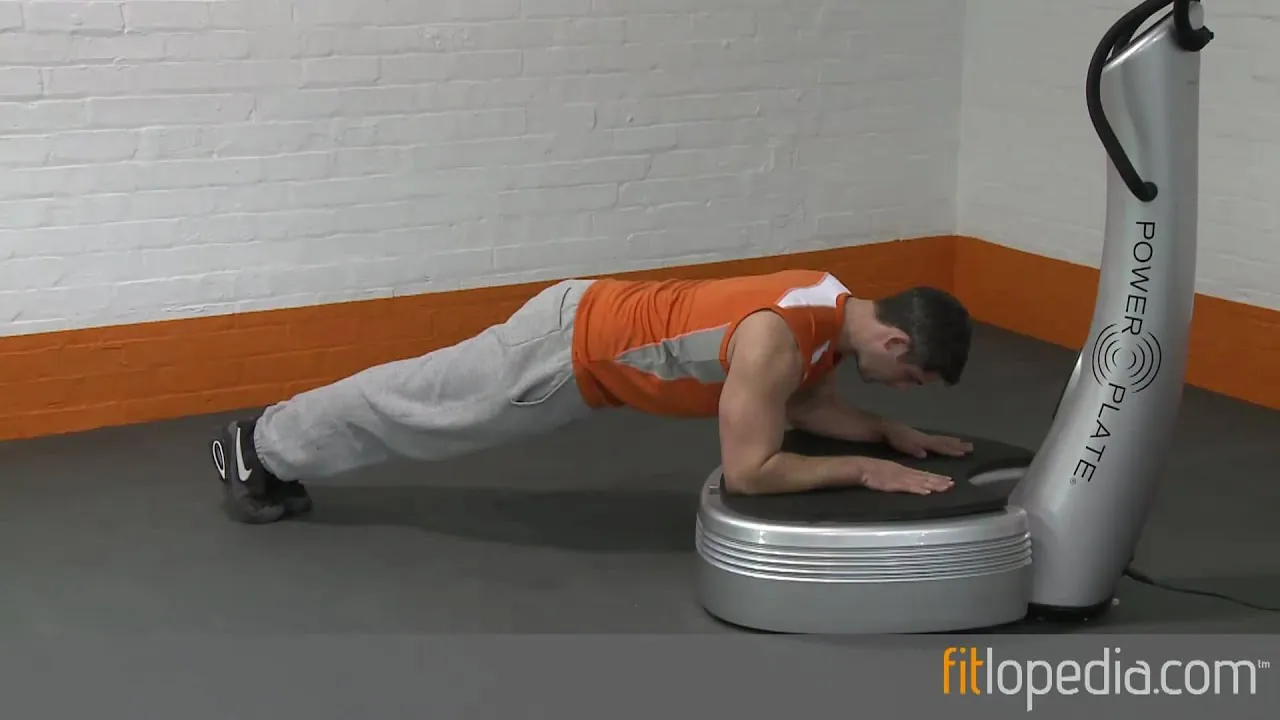
- Place forearms on the plate, elbows under shoulders, or place hands on the floor and feet on the plate for a harder variation.
- Start the plate before you settle in. Stepping onto a running plate is safer than starting it while loaded.
- Brace your abs as if bracing for a light punch, squeeze glutes, and keep hips level.
- Breathe normally. Holding your breath is the most common error.
- Step off before stopping the plate, not after.
Pro Tip: If your lower back sags or your hips rotate, you have exceeded your usable time. End the set rather than pushing through.
Common Mistakes to Avoid
- Maxing the frequency. 50 Hz feels impressive and trains almost nothing useful in a plank.
- Locking the elbows. Straight, rigid arms transmit vibration straight into the shoulder joint.
- Holding your breath. This spikes blood pressure and shortens the set.
- Using a plate not rated for standing load. Some compact models are designed for seated use only.
- Skipping the floor plank entirely. Vibration is a supplement, not a replacement.
Warning: If you have a spinal disc condition, recent fracture, pacemaker, or are pregnant, get medical clearance before using a vibration plate at all. The U.S. Food and Drug Administration classifies vibration plates as general wellness devices, not medical treatment, so no regulator has approved them for treating back pain or bone density.
Vibration Plank vs. Floor Plank
| Factor | Floor Plank | Vibration Plank |
|---|---|---|
| Core demand | Moderate, scalable by time | High, scalable by frequency |
| Joint stress | Low | Higher at wrists, shoulders, spine |
| Skill needed | Low | Moderate — setup matters |
| Typical hold | 30–60 seconds | 20–45 seconds |
| Best use | Foundation strength | Added challenge, variety |
Neither is superior. Most people get the best result by building a solid floor plank first, then adding vibration once they can hold two minutes with clean form.
Sample Weekly Schedule
| Day | Work |
|---|---|
| Monday | Floor plank 3 × 45 sec + vibration plank 2 × 25 sec |
| Wednesday | Vibration plank 4 × 30 sec |
| Friday | Floor plank 3 × 60 sec + side planks |
| Weekend | Rest or light walking |
Keep at least one full rest day between vibration sessions. Vibration loading is a novel stimulus, and connective tissue adapts more slowly than muscle.
Who Should Skip It
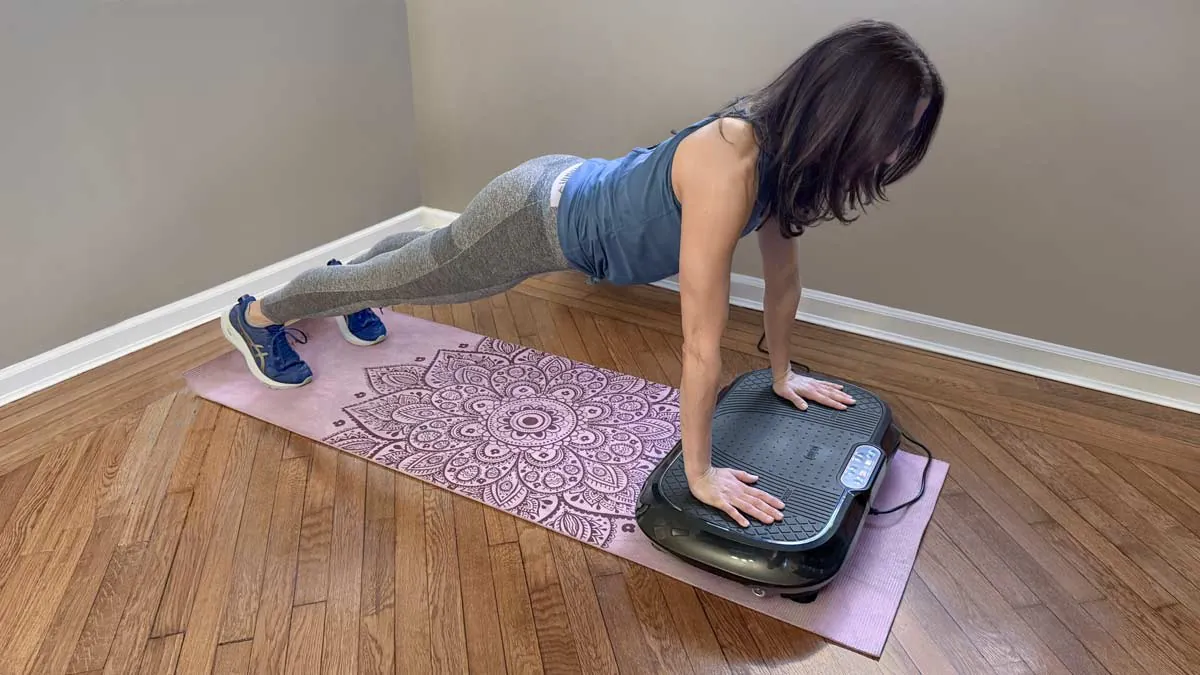
Avoid vibration planks if you have a herniated disc, recent surgery, uncontrolled vertigo, or a joint replacement in the wrist, elbow, or shoulder. People with osteoporosis shouldn’t assume vibration strengthens bone — the research on that claim is mixed, and the loading in a plank position isn’t the same as standing vibration therapy.
Related guides
- Weight Plates Kg Vs Lbs Conversion
- Weight Plates Workout Routines for Beginners at Home
- Best Bumper Plates for Home Gym Reddit Picks 2026: Top Buys
Frequently Asked Questions
How long should I hold a plank on a vibration plate?
Start with 20 seconds and build to 45 seconds. Anything past that usually means your hips drop or your lower back arches, which defeats the purpose. Three to four sets is plenty.
What frequency is best for planking on a vibration plate?
20–30 Hz with low amplitude. Higher frequencies feel intense but tend to make you brace against the machine rather than train the core in a controlled way.
Is a vibration plank better than a regular plank?
Not better — different. A regular plank builds a strength base; the vibration version adds instability and reflex demand. Use both rather than replacing one with the other.
Can I do a plank on any vibration plate?
No. Check your manual for a standing-use weight rating. Many compact plates are rated for seated or hand-held use only, and standing on them can void the warranty or damage the motor.
How many times a week should I do vibration planks?
Two to three sessions per week, with at least one rest day between them. Vibration is a novel stimulus and your nervous system needs recovery time.
Does a vibration plank burn belly fat?
No exercise burns fat from a specific area. Vibration planks build core endurance, which is a strength outcome, not a fat-loss one. Fat loss comes from overall energy balance.
Conclusion
Start with one set today: plate on 25 Hz, low amplitude, forearms down, 20 seconds. If your form holds, add five seconds next session and build from there before you touch the frequency dial.
I am a certified fitness coach with over 10 years of experience helping people improve their strength, endurance, and overall health. Specializes in workout programming, weight training, fat loss, muscle building, home fitness, and evidence-based nutrition.My goal is to make fitness simple and practical through well-researched guides, honest product reviews, and actionable training advice.