
What you’ll need before you start
Gather these items for a lymphatic massage at home, then you’re ready to begin:
- Clean hands and short nails — long nails scratch and drag the skin.
- A light oil or lotion — unscented is best; heavy creams make your hands slip and slide.
- A mirror — a full-length one helps you see the neck and collarbone area.
- A timer or phone — sessions run 10 to 20 minutes, so track the time.
- A glass of water — drink it after, not during.
- A quiet, warm room — cold rooms make the skin tighten and the strokes drag.
- A soft towel — for wiping oil off your hands between areas.
Any light body oil works here. Skip deep-tissue or warming balms — they’re too heavy for these gentle strokes and pull at the skin. If you have a heart, kidney or liver condition, ask your doctor before you start, since fluid shifts can matter for you.
How to do lymphatic massage at home
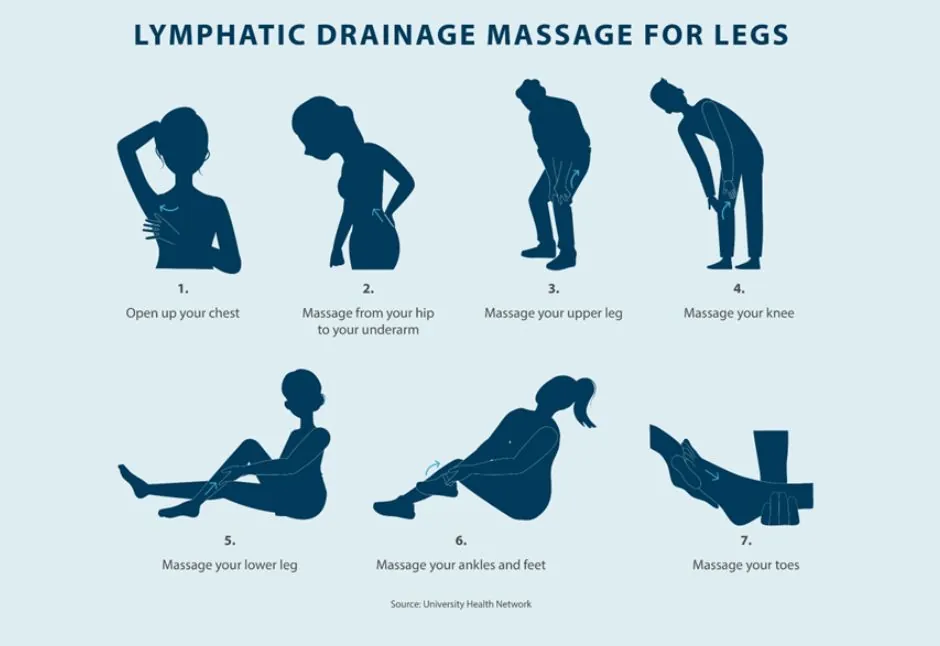
- Start at the collarbone. Place two flat fingers just above each collarbone and press gently for 3 seconds, then release. Repeat 5 times. This starts the sequence at the main drainage area before you work the limbs.
-
Move to the neck. With flat fingers, stroke lightly down the side of your neck toward the collarbone, 5 strokes per side. Use feather-light pressure — you’re moving skin, not muscle. Careful: never press on the front of the throat or the windpipe.
-
Work the underarm area. Press gently into the hollow of each armpit for 3 seconds, 5 times. This is a major drainage point for the arm and breast area.
- Stroke the arms. From wrist to shoulder, use light sweeping strokes, 5 to 8 per arm. Keep the pressure even — no digging.
-
Do the legs. Start at the ankle and sweep upward toward the groin, 5 to 8 strokes per leg. If you have varicose veins or a clot history, skip this step and talk to your doctor first. Tip: keep strokes slow — about 1 inch per second. Fast strokes don’t help and just irritate the skin.
-
Finish at the belly. Using flat palms, stroke gently in a clockwise circle around the navel, 10 slow circles. This is a gentle abdominal stroke that many people find relaxing.
- Repeat the collarbone press. End where you started — 5 gentle presses on each side to clear the pathway again.
- Drink water and rest 5 minutes. Don’t rush back to activity right away.
Stop at any point if you feel pain, dizziness or shortness of breath. These aren’t normal and mean you should check with a doctor.
How it changes with the situation
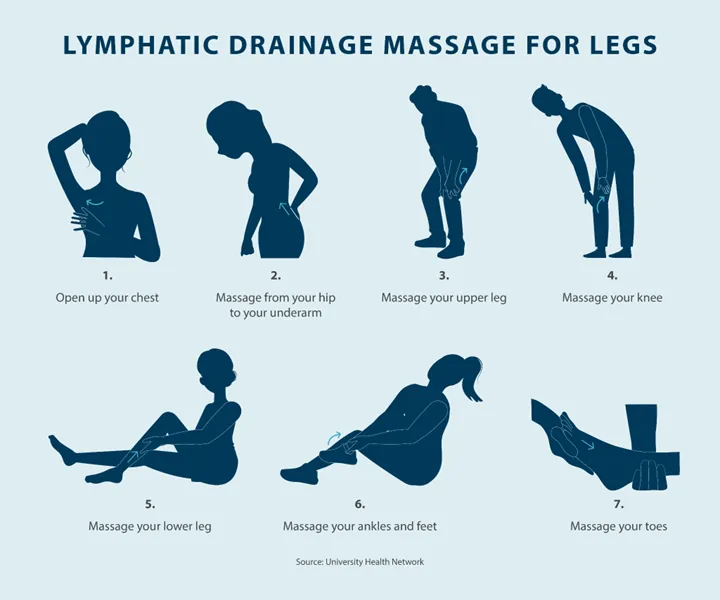
The time and effort shift depending on your goal, your body and how much area you cover. The table below shows the main differences.
| Your situation | Time per session | What’s different | What to watch |
|---|---|---|---|
| General relaxation | 10–15 min | Light, slow strokes over the whole body | Keep pressure gentle throughout |
| Post-surgery swelling (with doctor’s OK) | 15–20 min | Focus on one area only | Stop if the area reddens or hurts |
| After long sitting or travel | 10 min | Legs and feet only | Don’t press hard on swollen calves |
| Daily maintenance | 5–10 min | Quick neck and collarbone routine | Consistency matters more than length |
| Sensitive or thin skin | 5–8 min | Very light touch, more oil | Watch for redness or bruising |
Starting small and adding more is safer than going long on your first try.
How to tell you did it right
A good result feels light and calm — less puffy limbs, normal skin, and relaxation. A poor result shows as redness, bruising, soreness or worsening swelling.
Three things prevent it: keep your touch feather-light, always stroke toward the heart and the nearest drainage point, and stop the moment anything hurts.
The rules and what comes after
There’s no single government standard for home lymphatic massage, but the general guidance is to use light pressure only. The Cleveland Clinic explains that this technique is meant to be gentle, not deep.
After your session, wipe off excess oil and store your bottle away from heat. For most people, the calm feeling lasts a few hours. If you want ongoing results, repeat once a day — but check with your doctor first if you have any ongoing health condition.
Other ways to do it
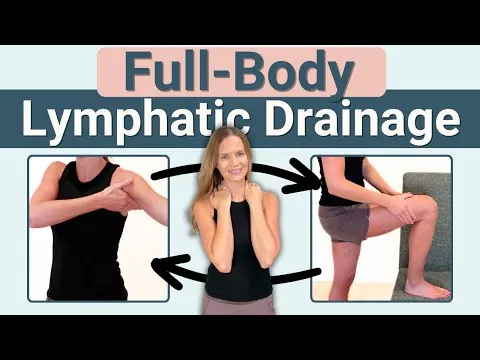
See a trained therapist
A licensed massage or physical therapist can do manual lymphatic drainage properly. It costs more and needs an appointment, but is more precise and safer if you have a medical issue.
Use a dry brush
A soft body brush stroked toward the heart gives a lighter version of the idea. It takes 5 minutes, costs very little, and works well as a daily habit — but it’s less targeted than hands.
Try compression garments
Your doctor may suggest compression sleeves or stockings between sessions. These need a proper fit, so get measured by a professional.
Related guides
- 20 Best Adjustable Dumbbells for Home Workouts 2026
- Weight Plates Workout Routines for Beginners at Home
- Home Workouts | Complete Guide for All Fitness Levels
Frequently asked questions
How long should a lymphatic massage at home take?
About 10 to 20 minutes for a full session, or 5 to 10 minutes for a quick routine.
Can I do lymphatic massage at home every day?
Yes, once a day is fine for most people. If your skin gets sore or red, skip a day and use lighter pressure next time.
Is it safe to do on your own?
Yes, for healthy people using light pressure. It’s not safe with an active infection, a blood clot, heart or kidney disease, or recent surgery — check with your doctor first.
What happens if I press too hard?
You’ll likely see bruising, soreness or redness, and worse swelling. Light pressure is the whole point — firm strokes work against the goal.
Why do I need to drink water after?
Drinking water afterward is a harmless habit, not a requirement of the technique.
How often should I do it for swelling?
Once a day is typical for mild swelling, but if swelling is new, painful or one-sided, see a doctor first.
Can I do it if I had surgery recently?
Only with your surgeon’s approval, and usually not on the surgical area itself. Follow their instructions on timing and pressure.
Conclusion
Lymphatic massage at home is a gentle, low-cost habit you can build into your day. Keep the pressure light, work toward your heart, and stop at the first sign of pain. If you have any health condition or recent surgery, get your doctor’s OK first — that one step keeps the whole routine safe.
I am a certified fitness coach with over 10 years of experience helping people improve their strength, endurance, and overall health. Specializes in workout programming, weight training, fat loss, muscle building, home fitness, and evidence-based nutrition.My goal is to make fitness simple and practical through well-researched guides, honest product reviews, and actionable training advice.