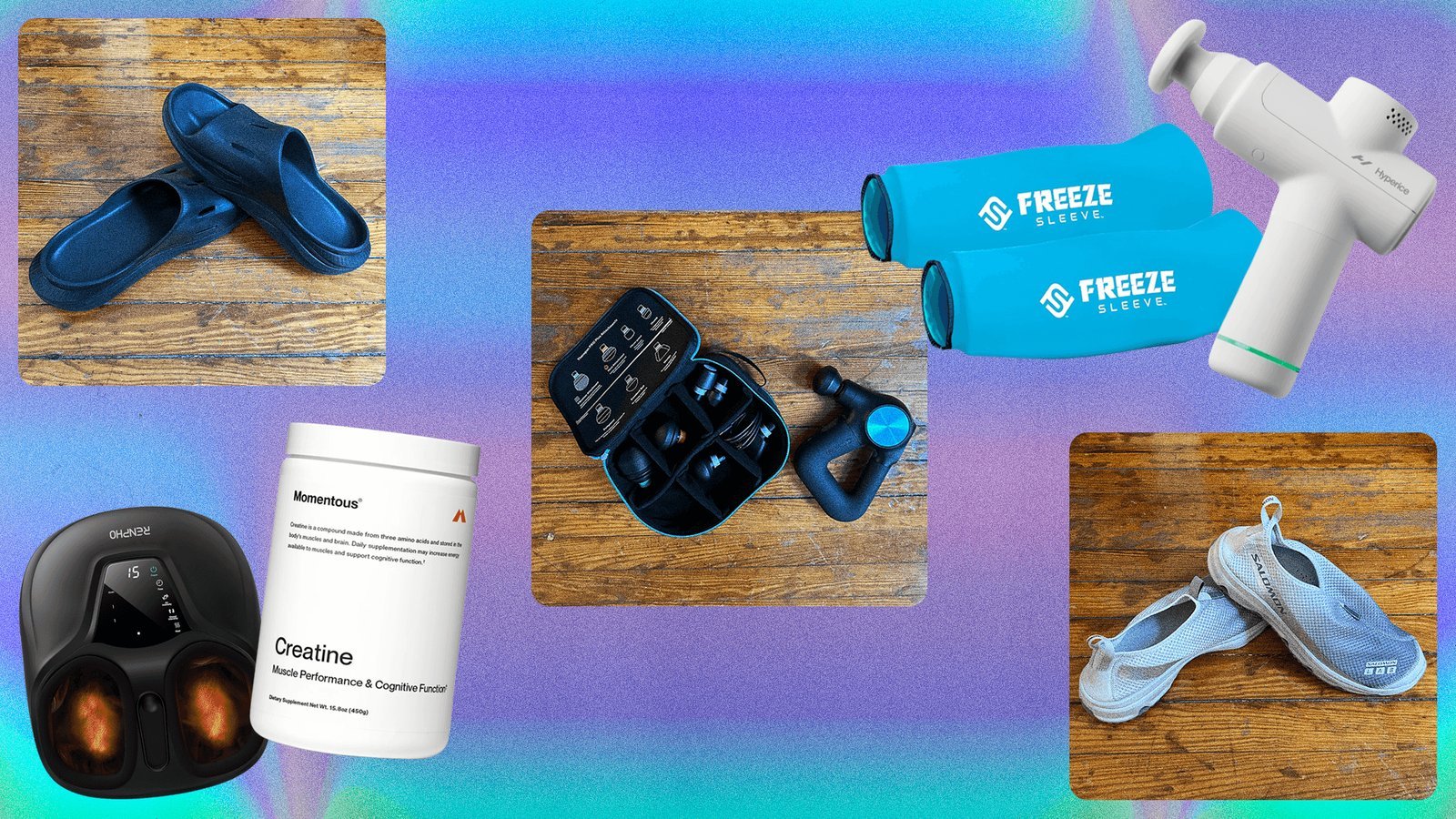
Sports recovery tools for athletes are foam rollers, massage guns, compression boots, cold water immersion, sleep tracking, and mobility work like yoga. They all help your body bounce back after training. What separates them is how much time, money, and effort each one asks from you.
Recovery tools for athletes
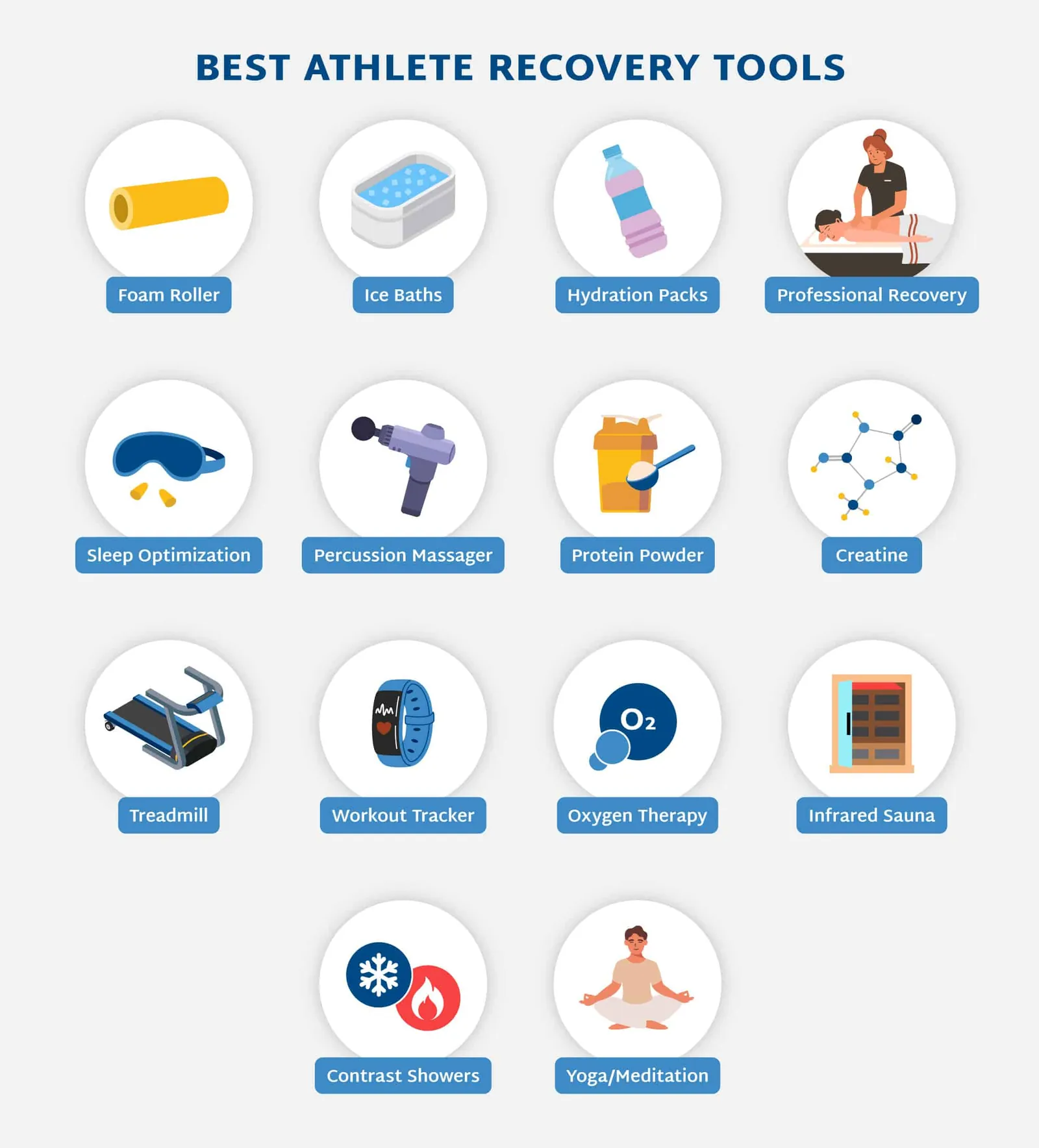
Pick your tool based on what you have and what you need. Here’s the quick view.
| Tool | Best for | Example |
|---|---|---|
| Foam roller | Cheap daily muscle release | TriggerPoint GRID roller |
| Massage gun | Quick spot treatment on tight spots | Theragun or Hypervolt |
| Compression boots | Leg recovery after long runs | NormaTec or Air Relax |
| Cold water immersion | Reducing soreness after hard sessions | Ice bath or cold plunge |
| Sleep tracking | Measuring your real recovery window | Whoop or Oura Ring |
| Yoga and mobility | Flexibility and joint range | 20-minute flow session |
| Active recovery walks | Flushing out stiffness on rest days | 20-30 minute easy walk |
Foam rollers
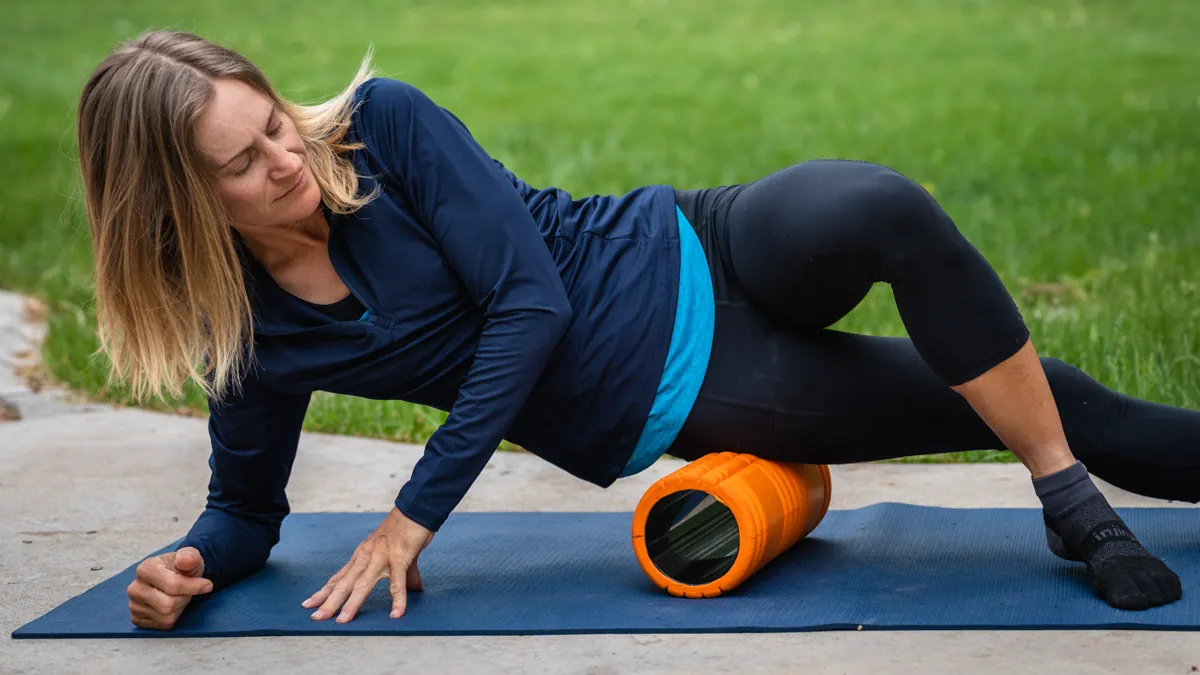
A foam roller is a cylinder you roll under your muscles to release tight spots.
- Loosens tight spots in your quads, calves, and back
- Costs far less than most powered tools
- Fits in a gym bag or under a bed
- Works as a warm-up before training too
Roll each muscle group for 30-60 seconds, slowly, and stop on any spot that feels sharp. A runner training for a half marathon might roll their calves for 45 seconds per leg after an easy 5-mile run. That timing assumes moderate pressure — go lighter if you’re new to it.
Massage guns
A massage gun is a handheld device that pulses or vibrates into one muscle at a time, reaching spots a roller can’t — like your upper back.
- Hits deep into one tight spot in under a minute
- Lets you target hard-to-reach areas like the upper traps
- Speeds up your pre-workout routine
Most units let you set speed.
Compression boots
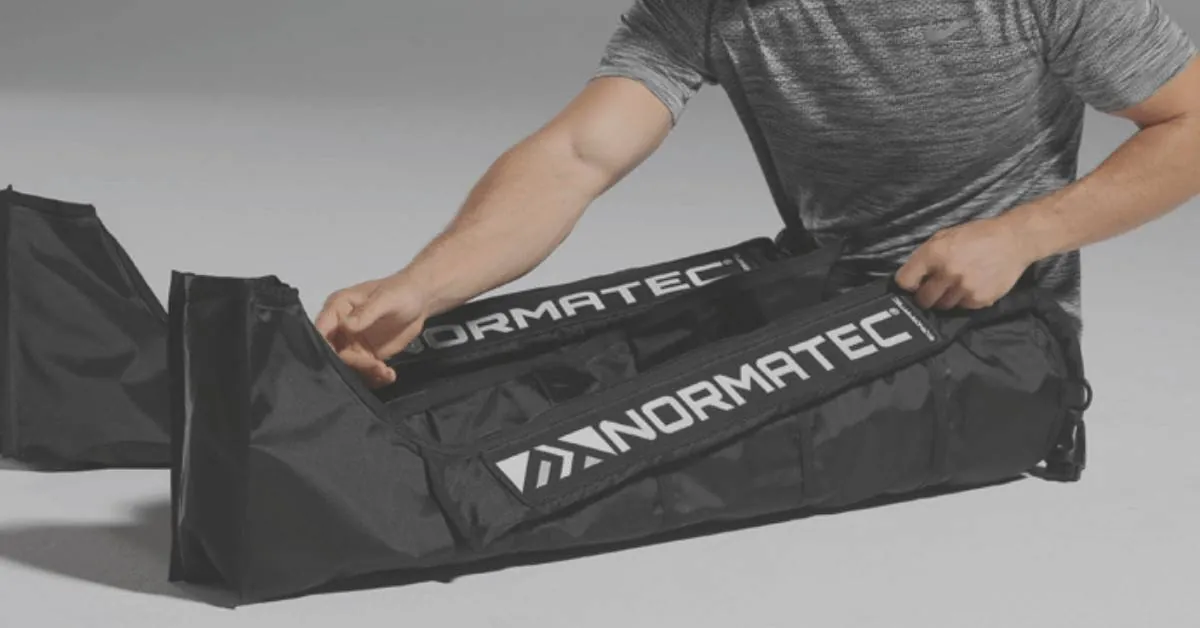
Compression boots are inflatable sleeves that squeeze your legs in waves.
- Eases heavy, swollen legs after long efforts
- Lets you lie down and recover while it runs
- Fits into an evening routine at home
Sessions usually run 20-45 minutes. A cyclist after a 60-mile ride might run a 30-minute leg program while watching TV.
Cold water immersion
Cold water immersion means sitting in cold water — a bath, a plunge tub, or a natural body of water — to ease soreness.
- Cuts the heavy, sore feeling after tough sessions
- Works well right after a game or race
- Needs no skill, only cold water and time
Most protocols run 10-15 minutes at roughly 50-59°F (10-15°C). A soccer player after a match might sit in a 55°F tub for 12 minutes. This isn’t for anyone with heart conditions or circulation problems — talk to a doctor first, because cold shock can be dangerous for some people.
Sleep tracking
Sleep tracking uses a wearable or app to measure how long and how well you sleep.
- Shows your real sleep hours, not your guess
- Flags nights that hurt your next-day performance
- Needs no extra time — you just wear it
A swimmer training twice a day might see they average 6.5 hours and add 45 minutes to hit 7.5. Accuracy varies by device, so treat the trend as the signal, not one night’s number.
Other recovery tools worth knowing
A few more options round out the list. Each one fits a different gap in your routine.
- Yoga and mobility work — builds flexibility and joint range; best for athletes who feel stiff rather than sore.
- Compression garments — tight sleeves and socks that support circulation during or after training; good for travel days.
- Active recovery walks — easy movement on rest days; best for anyone who stiffens up sitting still.
- Massage therapy — hands-on work from a trained therapist; best when a specific area won’t release on its own.
How to choose your recovery tools
Your budget and your schedule decide more than any review does. If you have a little to spend and a few minutes a day, a foam roller is your tool. If you can spend more and want fast, targeted work, a massage gun fits better.
If your legs feel heavy after every long session, compression boots earn their place. If you just feel tired all the time, sleep tracking tells you why before you buy anything else.
You can combine these — most athletes do. But if you only pick one, pick the one that fixes your biggest daily problem, not the one with the best marketing.
Related guides
- Usage Guide Knee Sleeves: Maximize Support and Boost Recovery
- Best Bumper Plates for Crossfit 2026: Top Picks for Serious Athletes
- Benefits of Knee Sleeves: Enhance Support, Boost Recovery, Prevent Injury
Frequently asked questions
What are the best recovery tools for athletes?
Foam rollers, massage guns, compression boots, and cold water immersion top the list. The best one for you depends on your budget, your sport, and how much time you’ll actually give it each day.
How long should I use a foam roller?
Roll each muscle group for 30-60 seconds at moderate pressure. If you’re new to rolling or the area feels sharp, cut it to 20-30 seconds and go lighter. Longer isn’t better — slow and steady wins here.
Can a massage gun replace a sports massage?
No. A massage gun handles surface muscle tightness on your own, but it can’t assess your body or work on deep restrictions. For a specific injury or a stubborn area, see a licensed massage therapist or physical therapist.
Is cold water immersion safe?
It can be safe for many healthy adults, but the right temperature and time depend on the person and should be approached cautiously. It’s not safe for people with heart conditions, circulation problems, or open wounds. If you’re unsure, check with your doctor before you try it.
Do compression boots actually work?
Yes, for many athletes. They help move fluid out of your legs and reduce that heavy feeling after long sessions. Results vary by person, so try a 30-minute session and judge how your legs feel the next morning.
How much sleep do athletes need for recovery?
Most athletes need 7-9 hours per night, and some need up to 10 during heavy training. Track your sleep for two weeks to find your own number — the hours you wake up feeling recovered are your target.
What happens if I skip recovery?
Soreness builds up, performance drops, and injury risk rises. You don’t need every tool, but skipping recovery entirely for weeks usually shows up as slower times, heavier legs, and more small nagging injuries.
Start with one tool this week
Pick the single tool that matches your biggest problem right now — a roller if you’re sore, boots if your legs feel heavy. Expect easier movement and less stiffness within a week of daily use. If pain gets sharp, lasts more than a few days, or wakes you at night, stop and see a doctor or physical therapist.
I am a certified fitness coach with over 10 years of experience helping people improve their strength, endurance, and overall health. Specializes in workout programming, weight training, fat loss, muscle building, home fitness, and evidence-based nutrition.My goal is to make fitness simple and practical through well-researched guides, honest product reviews, and actionable training advice.