For most people, an oscillating vibration plate is the better pick — its see-saw motion is gentler on joints and easier to stay balanced on. A linear plate wins only if you already train hard and want maximum muscle activation.
Oscillating vs linear vibration plate: which is better?
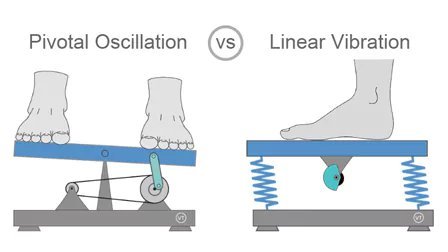
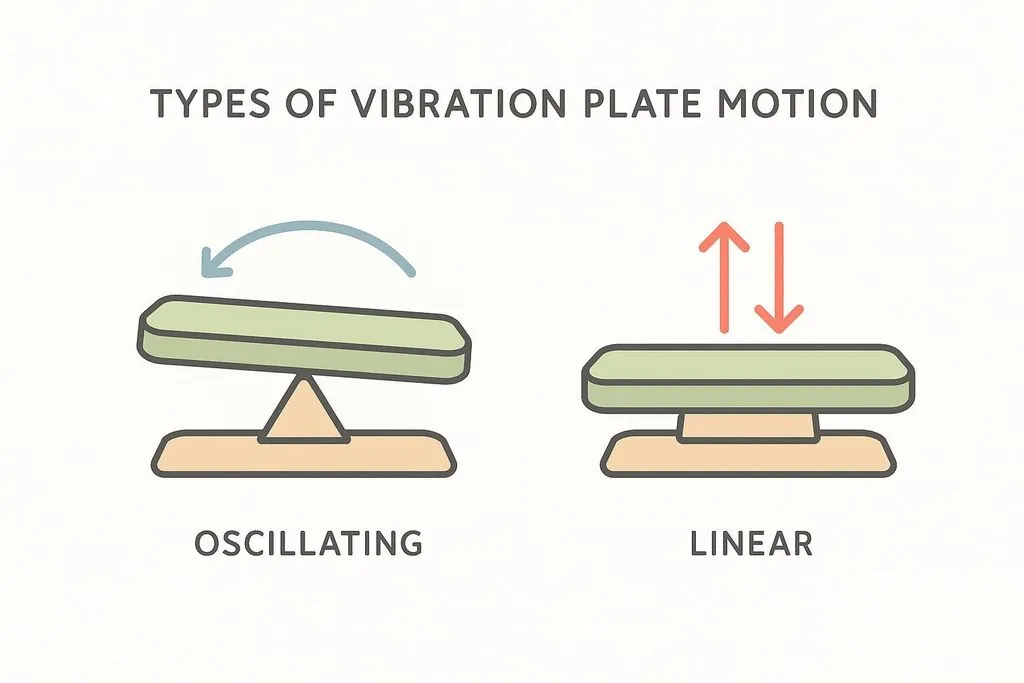
The two plates move in completely different ways, and that changes who they suit. Oscillating plates tilt like a see-saw around a center axis. Linear plates move straight up and down, often with a second side-to-side motion. Here’s how the main options compare.
| Method | How long | Effort | Cost | Best for |
|---|---|---|---|---|
| Oscillating plate | 10–20 min | Low | Medium | Beginners, balance work |
| Linear (vertical) plate | 10–15 min | High | High | Strength and power training |
| Pivotal (see-saw) plate | 10–20 min | Low | Medium | Joint-friendly sessions |
| Whole-body vibration with straps | 15–30 min | Medium | Medium | Adding resistance |
How an oscillating plate works
An oscillating plate rocks side to side around a central pivot, so one side goes up while the other goes down. That tilting motion is what makes it feel steadier under your feet.
- Stand with feet shoulder-width apart, near the center.
- Start at a low frequency, around 15–20 Hz, for 30 seconds.
- Build to 25–30 Hz in short bouts of 1–2 minutes.
- Keep knees slightly bent and hold a rail if you need it.
- Rest 30–60 seconds between bouts.
It’s great for balance, circulation, and light muscle activation, and it’s kind to knees and hips. Its weakness: the tilting motion gives less raw muscle stimulus than a plate that fires straight upward. If you have a joint condition, a heart condition, or you’re pregnant, check with your doctor before starting.
How a linear plate works
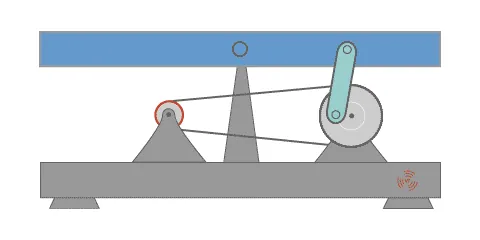
A linear plate drives straight up and down, so both feet rise and fall together. Many models add a second motion that shifts the platform side to side as well.
- Set the frequency low, around 20 Hz, and stand centered.
- Hold a squat position with knees bent to about 30 degrees.
- Run 30–60 second bouts at 30–40 Hz.
- Add a second movement, like a lunge, for more load.
- Rest 60 seconds between bouts.
The vertical drive sends more force through your muscles, which suits power and strength work. The trade-off is real: the up-and-down jolt is harder on joints, and balance is tougher to hold. People with back, hip, or knee problems often find it uncomfortable. If you’re unsure whether it’s safe for you, ask a physiotherapist first.
Which one fits your goal?
For a quick session before work, pick the oscillating plate — the gentler tilt lets you step on and go without a long warm-up. For your first plate ever, oscillating wins again, because balance is easier and the risk of a stumble is lower.
If you want the best possible strength result and you already train, a linear plate gives more muscle activation per minute. So the trade-off is simple: oscillating trades peak intensity for comfort and control, while linear trades comfort for output. Neither is “better” in a vacuum — it depends on your joints, your training age, and how much time you have.
What matters no matter which plate you pick
Frequency and amplitude are the two settings that decide how hard a session feels, and every maker publishes its own range — check the spec sheet for your model. The U.S. Consumer Product Safety Commission tracks home fitness equipment injuries, so it’s worth reading CPSC fitness equipment safety guidance before you buy.
Prepare first: clear the space, wear flat shoes or go barefoot, and keep a rail or wall within reach. Check partway through that your knees stay soft and your back stays straight. At the end, step off slowly and stretch for 2–3 minutes. If you have a medical condition, get clearance from your doctor before you start.
Related guides
- Weight Plates Kg Vs Lbs Conversion
- Weight Plates Workout Routines for Beginners at Home
- Best Bumper Plates for Home Gym Reddit Picks 2026: Top Buys
Frequently asked questions
Is an oscillating or linear vibration plate better for beginners?
Oscillating is better for beginners. The see-saw tilt is easier to balance on, so you can start at 15–20 Hz without holding on. Linear plates demand more control from the first session.
How long should a vibration plate session last?
Most sessions run 10–20 minutes total, split into bouts of 30–60 seconds with 30–60 seconds of rest. Start at the low end and add time only when the current routine feels easy.
Can I lose weight using a vibration plate?
No — a plate alone won’t cause meaningful weight loss. It can add light muscle activation, but fat loss comes from your overall diet and activity level. Treat it as a small add-on, not the main plan.
Is it safe to use a vibration plate every day?
For most healthy adults, yes — 10–15 minutes a day is a common routine. Skip it if you’re pregnant, have a heart condition, a recent fracture, or a joint implant, and ask your doctor first.
What happens if I stand wrong on a vibration plate?
You’ll feel it mostly in your ankles and lower back, and balance gets harder. Keep feet shoulder-width, knees slightly bent, and hold a rail until you’re steady.
Why does a linear plate feel stronger than an oscillating one?
Because the platform drives straight up and down, both legs get the same upward force at the same time. An oscillating plate splits the motion, so each side gets less push per cycle.
Do vibration plates build real muscle?
They can add some muscle activation, mainly in the legs and core, but they don’t replace resistance training. Use them alongside weights or bodyweight work, not instead of it.
Conclusion
Pick the plate that matches your body and your goal, not the one with the biggest number on the box. Start slow, keep sessions short, and let your joints tell you which motion they prefer.
I am a certified fitness coach with over 10 years of experience helping people improve their strength, endurance, and overall health. Specializes in workout programming, weight training, fat loss, muscle building, home fitness, and evidence-based nutrition.My goal is to make fitness simple and practical through well-researched guides, honest product reviews, and actionable training advice.