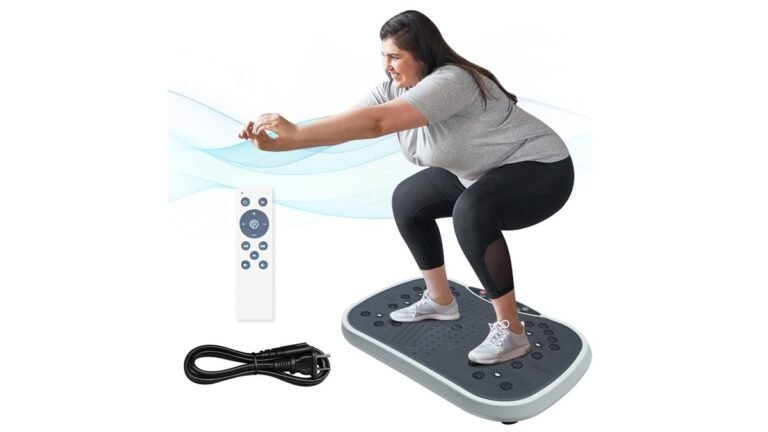

A workout for bad knees works best short and gentle: 10–15 minutes, 3 days a week, using body weight and a chair. Start with a half squat to a seat, and stop each set 2 reps before the knee hurts. It suits people with mild, everyday knee aches — not sharp pain, swelling or a locking joint.
What you need before you start
Get these in front of you first.
- A sturdy chair or a bench, back against a wall so it can’t slide
- A mat or a folded towel for floor work
- A wall or countertop within arm’s reach for balance
- Flat, non-slip shoes, or bare feet on a non-slip floor
- A pillow or rolled towel to place under the knee for some moves
- A phone timer, to keep each hold honest
- A note of your pain score out of 10 before you start
A resistance band is a fine swap for ankle weights. Deep knee bends under heavy load are not — skip those until a physiotherapist clears them. If you’ve had knee surgery or been told you have arthritis, get a physiotherapist to check your plan first.
How to do the workout, step by step
- Warm up for 5 minutes. Walk on the spot, swinging your arms, until you feel warm but not out of breath. In cold weather, add 2 more minutes.
- Do a chair squat, 2 sets of 8. Stand in front of the chair, push your hips back, and touch the seat lightly. Don’t sit down. If that’s easy, hover 2 inches above it instead.
-
Do a sit-to-stand, 2 sets of 10. Stand up from the chair without using your hands, then sit back down slowly, taking 3 seconds. Use your hands on the armrests if you need to. Tip: Pushing through your heels keeps the load off the front of the knee.
-
Do a straight-leg raise, 2 sets of 10 per leg. Lie on your back, one knee bent, the other leg straight. Lift the straight leg to the height of the bent knee and hold for 2 seconds.
-
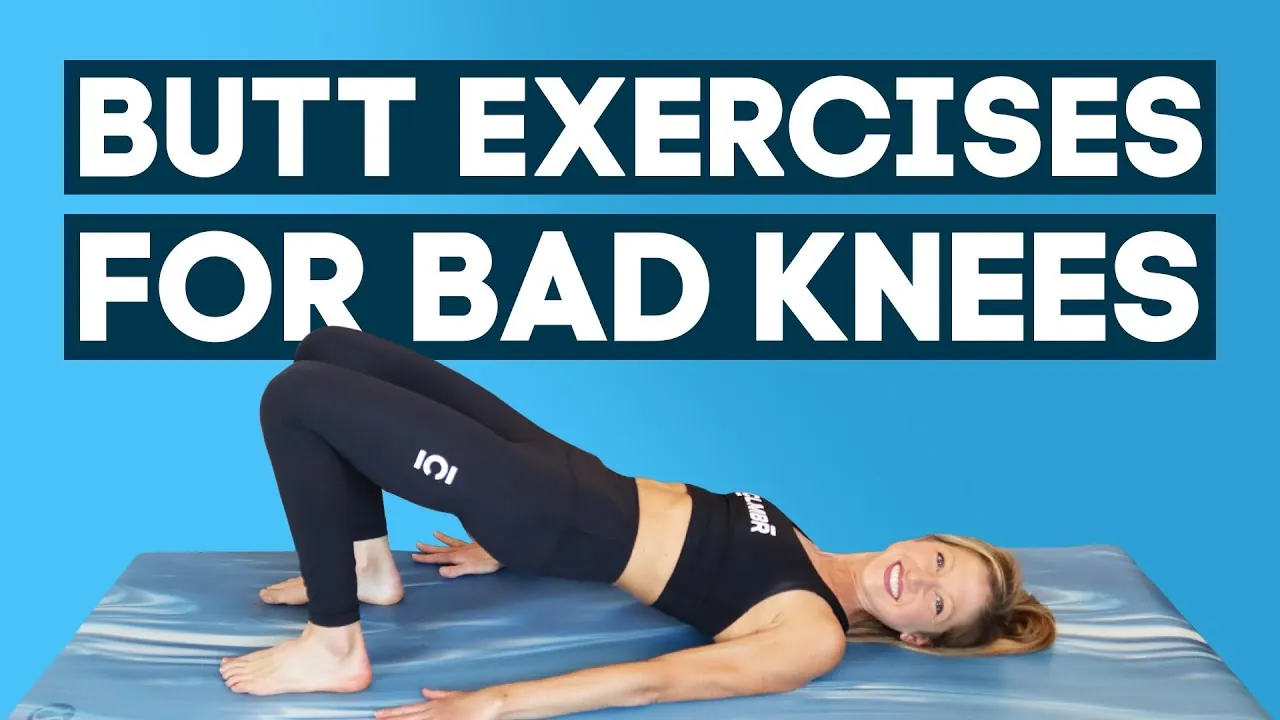
Do a glute bridge, 2 sets of 10. Lie on your back, knees bent, feet flat. Squeeze your buttocks and lift your hips 3–4 inches. Hold for 2 seconds at the top. Careful: If your knee clicks with pain rather than a soft grind, stop that move for the day.
-
Do a step-up, 2 sets of 6 per leg. Use a step about 6 inches high. Step up leading with the working leg, then step down. A higher step means more load on the knee — drop the height if it hurts.
- Stretch for 5 minutes. Hold a hamstring stretch and a calf stretch for 30 seconds each, twice per side. Breathe out as you sink into each one.
- Cool down and log it. Write down the pain score during and 24 hours after. If it rose above your starting number, cut the sets by half next time.
How the workout changes with your situation

The same routine shifts a lot depending on where you’re starting from. The times below assume you’re doing the full 10–15 minute session.
| Your situation | Time per session | What’s different | What to watch |
|---|---|---|---|
| Mild ache, no swelling | 10–15 min | Full routine, 2 sets each | Pain during the last 2 reps |
| Sharp pain on stairs | 8–10 min | Skip step-ups, add sit-to-stands | Pain that lingers past 24 hours |
| After knee surgery | 5–10 min | Physio-led only, no load | Swelling and heat in the joint |
| Desk job, stiff knees | 5 min, twice a day | Just the raises and bridges | Stiffness that doesn’t ease |
| Older adult, new to exercise | 10 min | Chair support for every move | Balance, not just the knee |
Starting small and adding a set next week beats going hard on day one. An angry knee can set you back a fortnight.
How to tell you did it right
A good session leaves the knee feeling the same or looser, not hot or swollen. You’ll walk down stairs the next morning without thinking about it. A poor result is a knee that’s puffy, warm, or stiffer than before. Keep the sets low, keep the range small, and leave 2 reps in the tank. Those three things prevent most flare-ups.
The rules, and what to do after
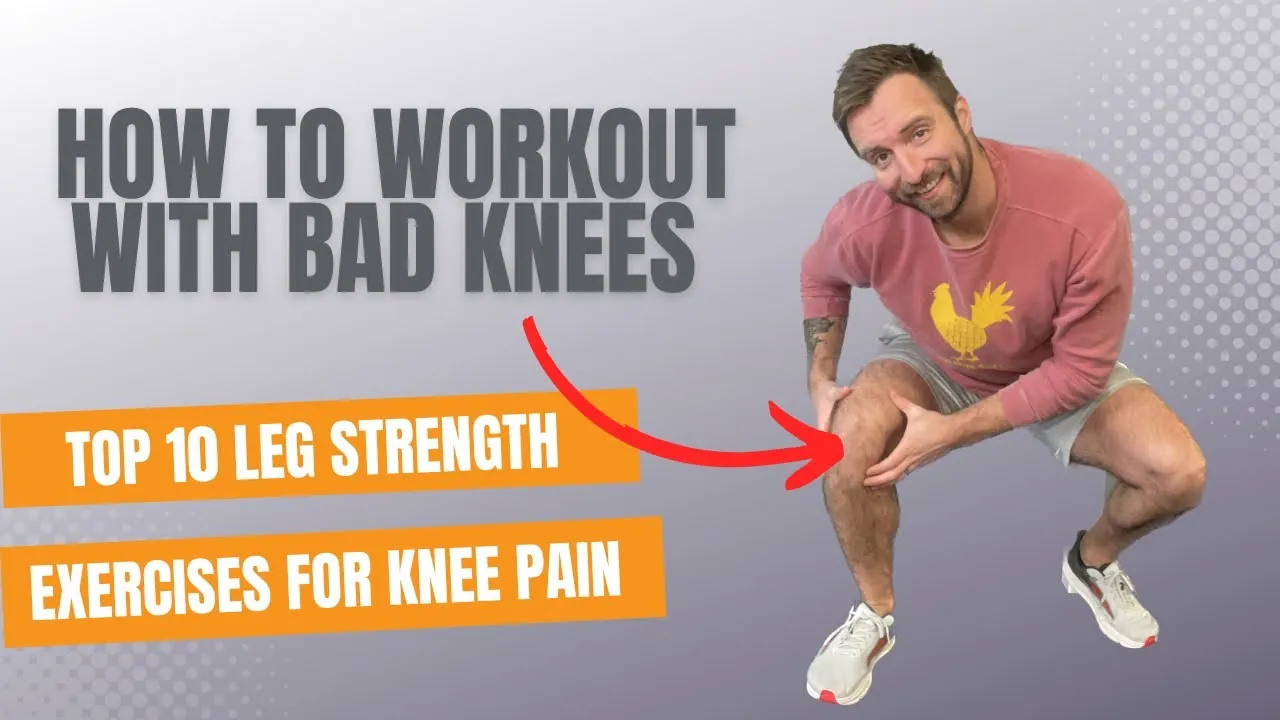
The American College of Sports Medicine recommends strength training on 2 or more days a week, with a rest day between sessions. If pain, swelling or giving-way gets worse rather than better, stop and see a doctor or physiotherapist.
Alternative 1: pool workouts
Water supports most of your body weight, so the same moves put far less load through the knee. You’ll need access to a warm pool, and many gyms run arthritis-friendly classes.
Alternative 2: a physiotherapist-led plan
A physiotherapist watches you move and builds a plan just for your knee. It costs more and takes booking time, but it’s the safest route if you’ve had surgery, a tear, or months of pain that won’t settle.
Alternative 3: cycling or a stationary bike
Pedaling is low-impact and builds the same muscles. Start with 10 minutes at low resistance, seat high enough that your knee stays slightly bent at the bottom.
Related guides
Frequently asked questions
Can I work out with bad knees?
Yes, in most cases. Gentle strength work and low-impact cardio are usually fine and often help. Skip anything that causes sharp pain, and get a doctor’s clearance first if you’ve had surgery or an injury.
Why do my knees hurt when I squat?
The load lands on the kneecap and the tendon below it, usually because your knees drift past your toes. Sit back toward a chair, keep your shins more upright, and lower the depth.
How long until I see results?
Expect 4–6 weeks of 3 sessions a week before stairs and chairs feel easier. If nothing changes after 6 weeks, get your knee checked.
Is it safe to work out if my knee is swollen?
No. Swelling means the joint is still irritated, and loading it makes things worse. See a doctor if the swelling doesn’t settle in a few days.
What happens if I push through the pain?
You’ll likely get more swelling and stiffness, and lose weeks of progress. Pain during a set is your signal to stop that set, not to finish it. Work to a pain score of 3 out of 10 at most.
How often should I do this workout?
Three days a week, with a rest day in between, is a good start. If you feel fine after 2 weeks, add a fourth day rather than more sets.
Can I do this workout every day?
No. Strength work needs recovery days, so 3–4 sessions a week is plenty.
Conclusion
Keep the sessions short, keep the load light, and let your knee tell you when to stop. Three gentle sessions a week for 6 weeks will teach you more about your knee than any single hard workout.
I am a certified fitness coach with over 10 years of experience helping people improve their strength, endurance, and overall health. Specializes in workout programming, weight training, fat loss, muscle building, home fitness, and evidence-based nutrition.My goal is to make fitness simple and practical through well-researched guides, honest product reviews, and actionable training advice.