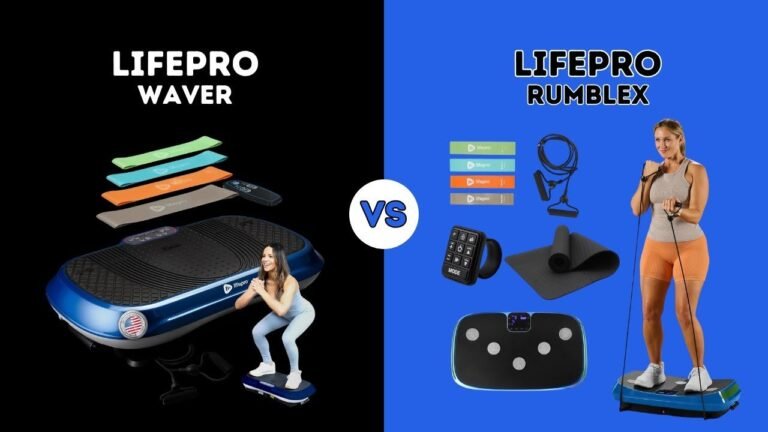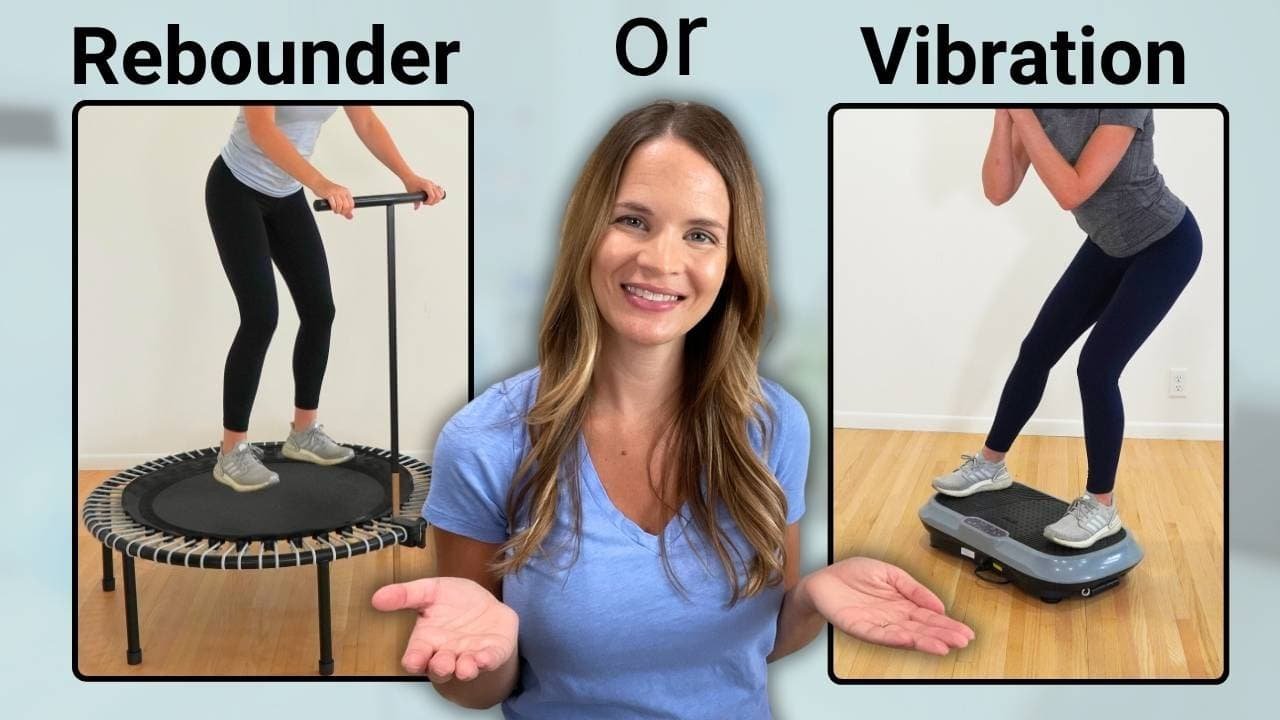
For most people, a vibration plate wins if the goal is muscle activation in less time, because you just stand on it. A rebounder wins if you want a low-impact cardio bounce and better balance. If your joints are sore or your balance is poor, talk to a doctor before either.
Vibration plate vs rebounder: which is better?
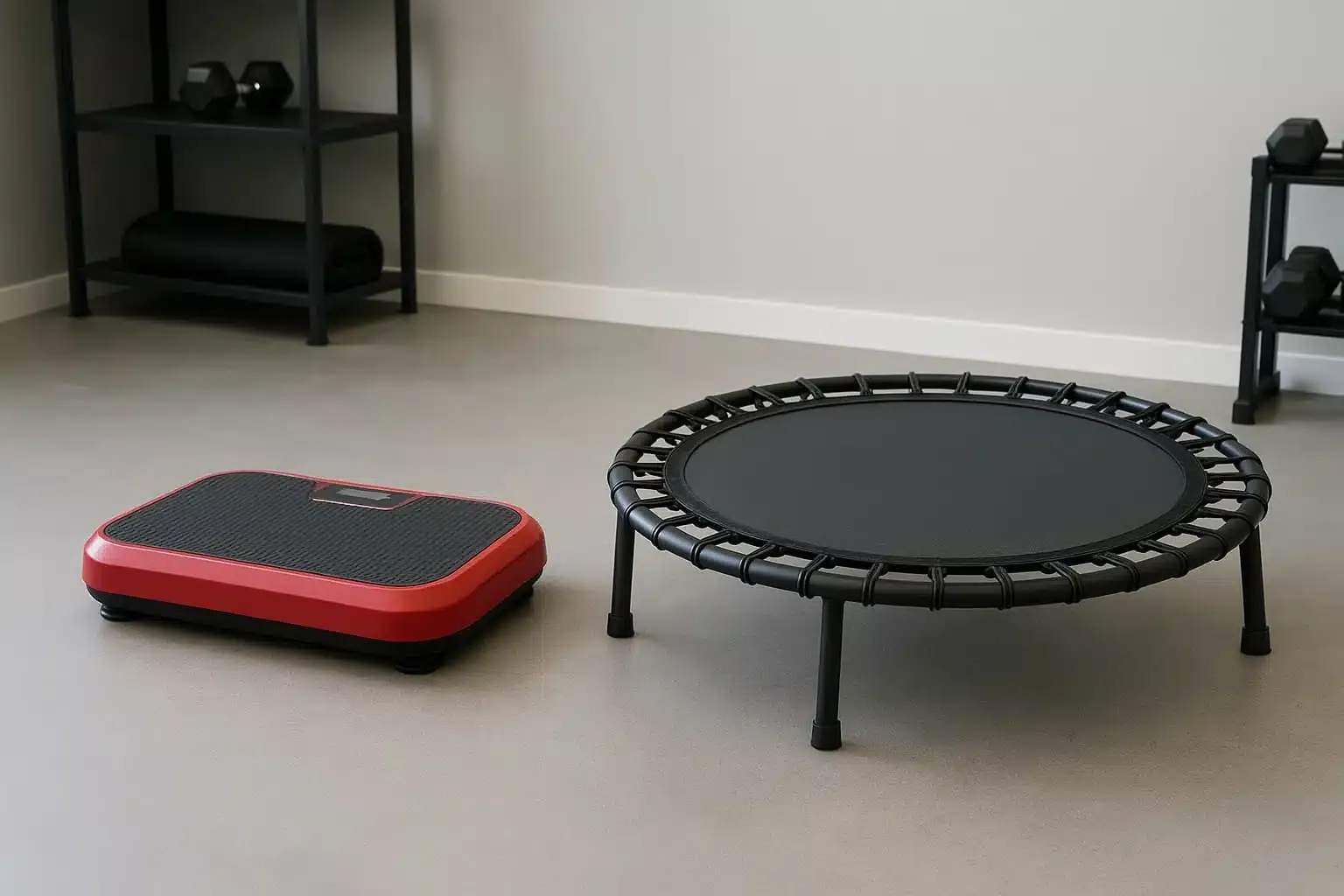
Both machines make you move without leaving the house, but they work in different ways. A vibration plate sends fast up-and-down pulses through your body while you hold a pose. A rebounder is a small trampoline — you bounce on it. Here’s how the main options compare.
| Method | How long | Effort | Cost | Best for |
|---|---|---|---|---|
| Vibration plate | 10–15 min | Low | Medium | Muscle activation, standing still |
| Rebounder | 15–30 min | Medium | Medium | Low-impact cardio, balance |
| Bodyweight exercise | 20–30 min | Medium | Low | Strength without equipment |
| Walking outdoors | 30–60 min | Low | Low | General daily movement |
How a vibration plate works
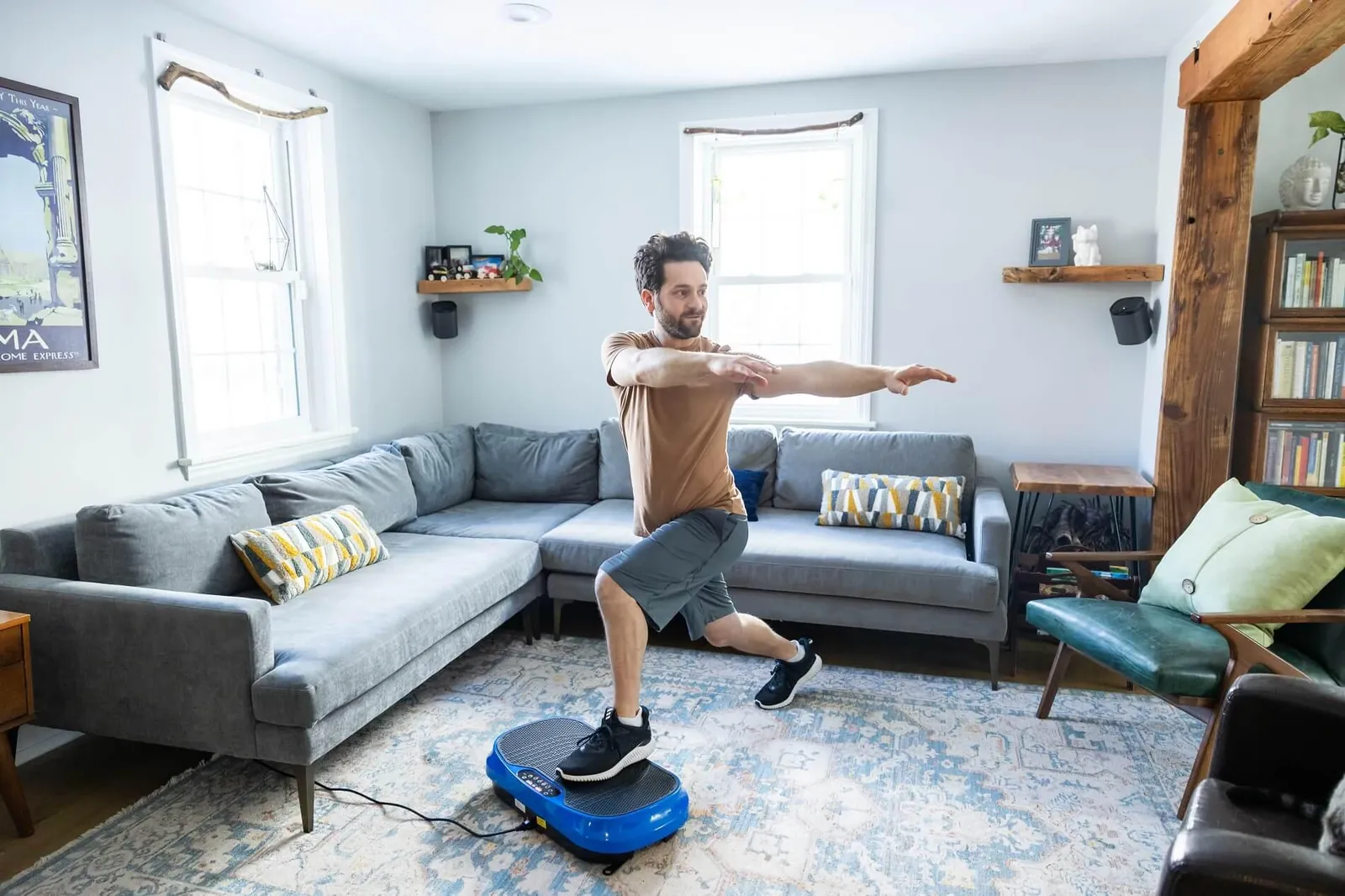
A vibration plate shakes your muscles many times per second, so they contract and relax without you doing much. You stand, hold a handle, and let the machine do the work.
- Set the frequency between 20 and 40 Hz for general use — higher is harder on joints.
- Stand with knees slightly bent, feet shoulder-width apart.
- Hold a static squat or lunge for 30–60 seconds.
- Rest 30 seconds, then repeat for 3–5 rounds.
- Stop at 10–15 minutes total.
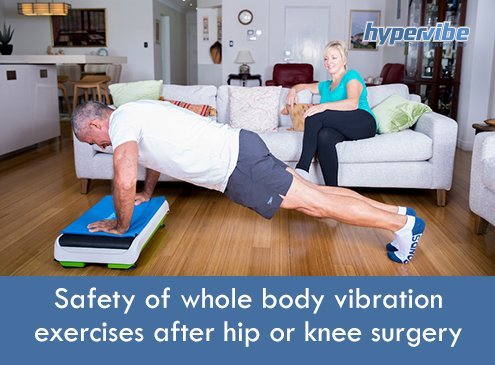
It’s good for people with limited mobility, and it takes very little space. Its weakness: the research on long-term muscle gain is still thin, so don’t expect the same results as lifting weights. If you have a pacemaker, blood clots, or are pregnant, check with your doctor first — vibration isn’t safe for everyone.
How a rebounder works
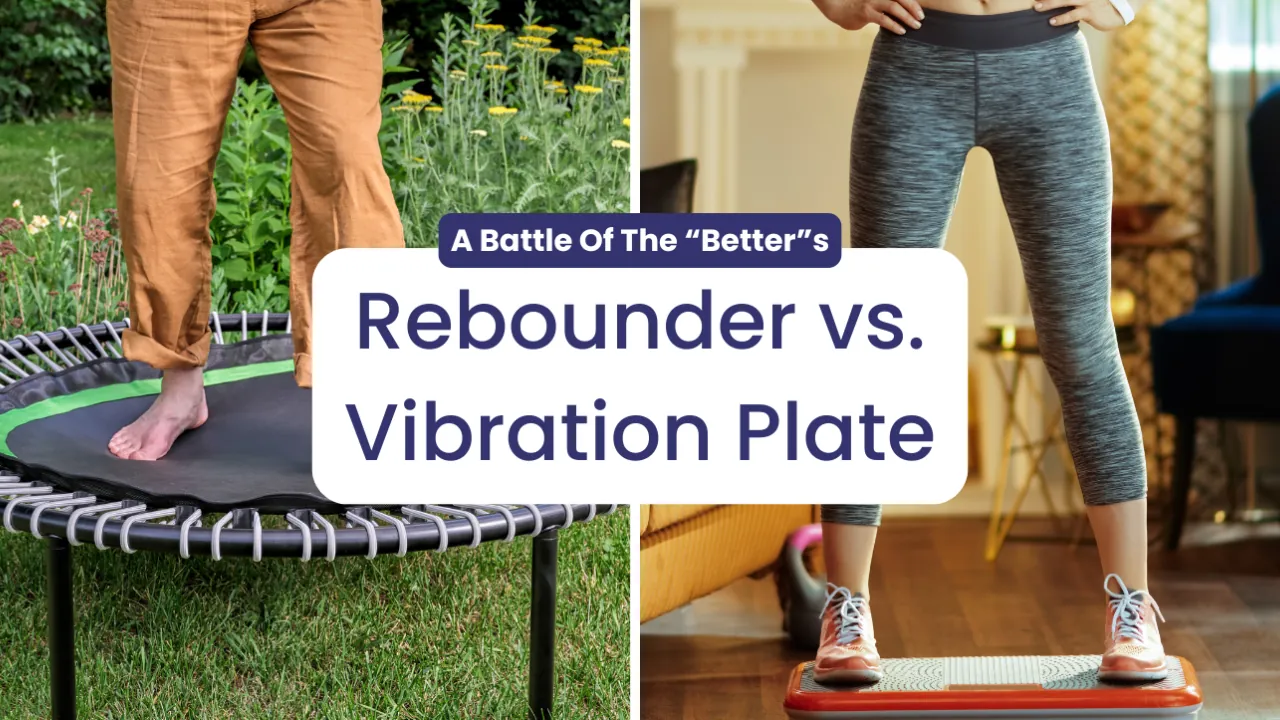
A rebounder is a mini trampoline with a springy mat. Each bounce is low-impact, so your knees take far less force than on a hard floor. The movement is gentle but it raises your heart rate.
- Start with 2 minutes of easy bouncing to warm up.
- Bounce with both feet, keeping them close to the mat — no big jumps.
- Work up to 15–30 minutes, 3–5 days a week.
- Keep your core tight and eyes forward for balance.
- Cool down with 2 minutes of slow, small bounces.
It’s great for cardio, coordination, and it’s genuinely fun. Its weakness: balance is required, so it’s risky if you’re unsteady on your feet. Use a support bar if you’re new, and check the mat’s weight limit before you buy.
Vibration plate or rebounder: which fits your goal?
If you’re short on time, the vibration plate wins — 10 minutes of standing beats 30 minutes of bouncing, and you can do it while watching TV. If it’s your first time, the rebounder is easier to learn because bouncing is a natural motion most people already know.
And if you want the best possible result whatever it takes, neither machine alone beats a mix of strength training and real cardio — use the plate for activation and the rebounder for heart rate, or pick one and add walking.
The trade-off is simple: the plate saves time but asks less of your body, while the rebounder asks more effort but gives more cardio benefit. Time saved or effort spent — you can’t have both.
What matters no matter which you pick
Check the weight limit and the warranty before you buy — the manufacturer publishes both on its own product page. Clear a space at least 3 feet wider than the machine on every side, and put a mat under it to protect your floor.
Partway through a session, check your posture: knees soft, back straight, no gripping the handle too hard. At the end, slow down for a full minute instead of stopping dead. If you have a heart condition, a recent injury, or you’re pregnant, ask your doctor before you start — these machines aren’t medical devices and don’t treat any condition.
Related guides
- Weight Plates Kg Vs Lbs Conversion
- Size Guide Squat Rack: Find Your Perfect Fit Fast
- Size Guide Treadmill: Find Your Perfect Fit Easily
Frequently asked questions
Is a vibration plate or rebounder better for weight loss?
Neither burns a huge amount alone. A rebounder burns more calories per session because you’re moving your whole body, but weight loss depends mostly on your diet.
Can I use a vibration plate every day?
Yes, 10–15 minutes daily is fine for most healthy adults. Give yourself one rest day a week if your muscles feel sore or tired.
How long should I bounce on a rebounder?
Start with 5 minutes and build to 15–30 minutes, 3–5 days a week. Beginners should keep sessions short for the first two weeks.
Is a rebounder safe for bad knees?
Often yes, because the mat absorbs impact. But check with a physical therapist first if you have an existing knee injury or joint pain.
What happens if I use a vibration plate with a pacemaker?
Don’t. Vibration can interfere with a pacemaker or other implanted device. Ask your cardiologist before using one.
Can I use either machine if I’m pregnant?
Ask your doctor first. Both involve forces on your body that may not be safe during pregnancy, especially in later months.
Do I need to warm up before using either machine?
Yes, 2–3 minutes of easy movement first. A short warm-up lowers your risk of a strain or a slip.
Conclusion
Pick the machine you’ll actually use. A vibration plate suits short, quiet sessions; a rebounder suits longer, bouncier ones. Neither replaces strength training or a walk, so treat it as one part of your week, not the whole plan.

I am a certified fitness coach with over 10 years of experience helping people improve their strength, endurance, and overall health. Specializes in workout programming, weight training, fat loss, muscle building, home fitness, and evidence-based nutrition.My goal is to make fitness simple and practical through well-researched guides, honest product reviews, and actionable training advice.