
You can’t do a true bodyweight bench press, because your body isn’t the load — the bar is. What you can do is build the same pushing muscles with floor presses, push-up variations, and dips, using 3-5 sets of 8-15 reps and 60-90 seconds of rest. This guide covers the exact swaps, the numbers to use, and where this plan stops working.
What this actually is
A bodyweight bench press is a push-up pattern loaded by your own body. It trains the same muscles — chest, front shoulders, triceps — so it substitutes when you have no bench or weights. The common misconception is that push-ups are too easy to build strength. Load is what you make it.
How to do a bodyweight bench press
- Warm up for 5 minutes with arm circles and 10 slow shoulder rolls each side.
- Start with standard push-ups. Hands slightly wider than shoulders, body straight from head to heels.
- Do 3 sets of 8-15 reps. Rest 60-90 seconds between sets.
- Too easy? Elevate your feet on a chair. This shifts more load to your shoulders and chest.
- Still easy at 15 reps? Move to decline push-ups or weighted push-ups with a backpack holding 10-20 lb.
- Add dips between two sturdy chairs — 3 sets of 6-12 reps — for the triceps and lower chest.
- Finish with a floor press using a slow 3-second lowering phase for 2 sets of 10.
The one judgement call is depth. Lower until your chest is about a fist’s width from the floor. Going lower with flared elbows is where shoulders get hurt. If you have a shoulder injury or feel sharp pain, stop and see a physical therapist.
Bodyweight bench press numbers at a glance
Use this as your starting point, then adjust by feel. If a set feels easy at the top of the rep range, move down one row.
| Situation | What to use | How long | What to watch for |
|---|---|---|---|
| Complete beginner | Knee push-ups | 3 sets of 8-12 | Keep hips in line, don’t sag |
| Can do 10 standard push-ups | Standard push-ups | 3 sets of 10-15 | Elbows at 45°, not flared |
| Can do 25+ push-ups | Feet elevated on a chair | 3 sets of 8-12 | Wrists and lower back |
| Want more chest load | Weighted push-ups, backpack | 3 sets of 8-10 | Keep the pack tight to your back |
| Triceps focus | Bench dips between chairs | 3 sets of 8-12 | Don’t shrug shoulders up |
| Short on time | Push-up + dip superset | 3 rounds, 60s rest | Form breaks before reps do |
| Shoulder pain | Incline push-ups on a table | 3 sets of 10-15 | Stop if pain is sharp, not dull |
What separates good results from bad ones
The people who get strong from push-ups treat them like a barbell lift, not a warm-up. They write down reps and sets, and they add one rep or one set each week.
Order and tempo
Push movements go first in a session. Slow the lowering phase to 3 seconds. That single change adds real difficulty without adding a single rep, and it’s safer on the elbows than speeding up.
What to check partway through
At the halfway point of each set, check three things: hips level, elbows at roughly 45 degrees, and shoulders pulled down. When any of these break, the set is over.
What to leave alone
Don’t add ankle weights or a heavy pack in month one. Your joints need time to adapt to the load.
Common problems and quick fixes
Most issues come down to setup, not strength.
| What you notice | What it usually means | What to do first |
|---|---|---|
| Wrist pain | Hands too far forward, weight on the heel of the palm | Spread fingers, press through the base of the index finger |
| Shoulder pinching | Elbows flared out to 90° | Tuck elbows to about 45° |
| Lower back sags | Weak core, not a chest problem | Squeeze glutes and brace abs before each rep |
| Neck aches after | Head pushing forward to touch the floor | Keep chin slightly tucked, eyes on a spot ahead |
| No progress in 3 weeks | Same reps every session | Add 1 rep per set, or slow the lowering phase |
The rules that apply
There’s no governing body for push-ups, but two sources set the safety frame. If you have a heart condition, uncontrolled blood pressure, or a recent shoulder or wrist injury, get doctor clearance first. See a physical therapist for joint pain lasting more than a week.
Keeping it working afterwards
Write your sets and reps in a notebook or phone after every session — that’s the record that tells you when to add load. Progress stalls when the same number feels the same for 3 weeks; then add a rep, slow the tempo, or elevate your feet. After a break of 2 weeks or more, restart at about 70% of your old reps and rebuild over 2-3 sessions.
When to use a different approach
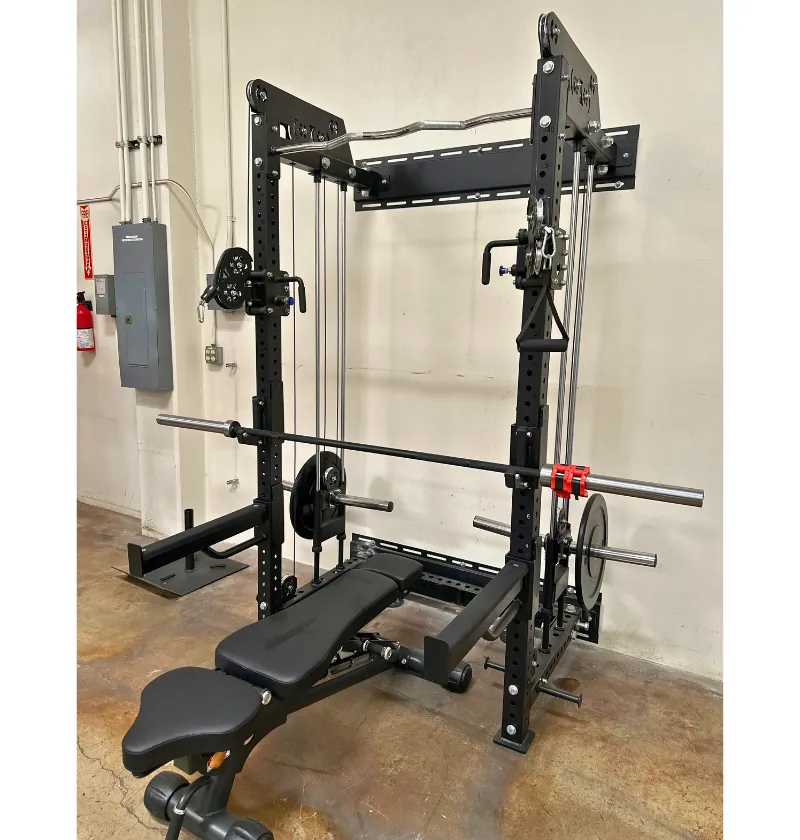
For maximal strength — a 1-rep max, powerlifting numbers — push-ups won’t get you there. You need a barbell and a coach. If a shoulder impingement or wrist injury flares on every push-up, switch to resistance bands or machines.
Frequently asked questions
Can push-ups replace the bench press?
For muscle size and everyday strength, mostly yes. For maximal strength and 1-rep max numbers, no — you need external load a bar provides.
How many push-ups should I do to build muscle?
Aim for 3-5 sets of 8-15 reps, stopping 1-2 reps before failure. Once 15 feels easy, add elevation or a weighted backpack.
How long until I see results?
Strength gains show in about 4-6 weeks with 2-3 sessions a week. Visible muscle change usually takes 8-12 weeks.
Is it safe for your shoulders?
Yes, with elbows tucked to about 45° and a controlled tempo. Sharp pain means stop and see a physical therapist — that’s not normal soreness.
What happens if I only do push-ups and nothing else?
You’ll build a strong chest and triceps but weak back and rear shoulders. Add rows or band pull-aparts to balance the joint.
Why can’t I feel my chest working?
Your triceps and shoulders are taking over. Slow the lowering phase to 3 seconds and think about squeezing your chest at the bottom.
How often should I train this?
Twice a week is enough for most people, with at least one rest day between sessions.
Conclusion
The catch here is your own rep count at a given tempo — that number, not a chart, decides which row of the table you’re on. Test it once a month with a clean set to failure, write it down, and let that single figure drive every change you make.

I am a certified fitness coach with over 10 years of experience helping people improve their strength, endurance, and overall health. Specializes in workout programming, weight training, fat loss, muscle building, home fitness, and evidence-based nutrition.My goal is to make fitness simple and practical through well-researched guides, honest product reviews, and actionable training advice.