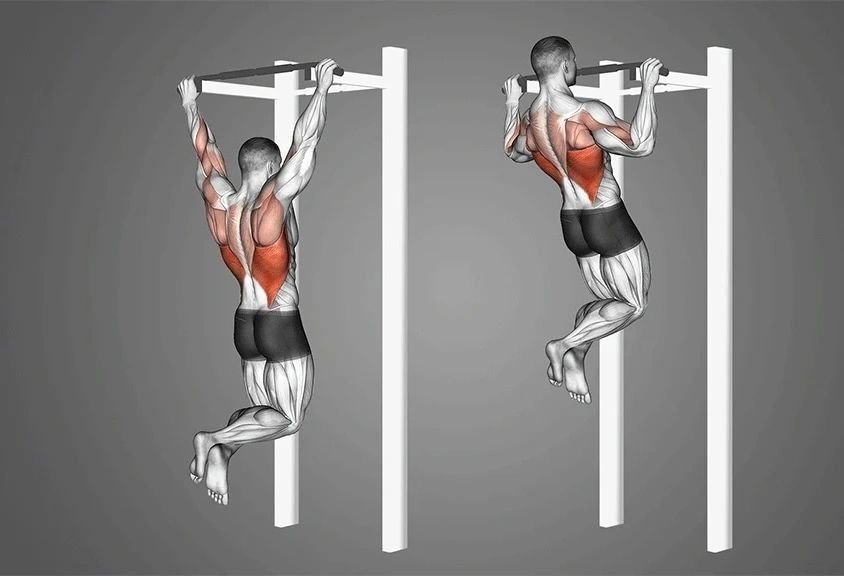
You can do pull-ups by hanging from a bar with straight arms, pulling your chest toward the bar, and lowering yourself slowly. Most people need 4-12 weeks of practice. Start with 3 sets of 3-5 reps, or use a band if you can’t do one yet.
What You Need
You don’t need much, but the few things you do need matter. A wobbly bar or the wrong grip can slow you down for weeks, so sort out your setup before you start counting reps.
- A pull-up bar — a doorway bar, a wall-mounted bar, or a bar at a gym. It must hold your full body weight without moving.
- A resistance band — a loop band with 15-50 lb of tension. A light band helps at the bottom; a heavy one helps all the way up.
- A sturdy chair or box — for jumping up to the top and lowering yourself down slowly.
- Chalk or a towel — sweaty hands slip, and slipping kills your grip before your back gets tired.
- A phone timer — for counting rest between sets, usually 90 seconds to 3 minutes.
- A notebook or notes app — to write down reps, so you can see progress week to week.
- Flat shoes — running shoes with soft heels make your body swing.
A doorway bar works for most homes, but it won’t fit a door frame with molding. If you have shoulder pain or a past injury, get cleared by a doctor or physical therapist before you hang.
Step by Step
Here’s the full sequence, from your first hang to your first clean rep. Do it 3 times a week, with at least one rest day between sessions.
- Warm up for 5 minutes. Row or walk fast, then circle your arms 10 times each way. Cold shoulders pull badly.
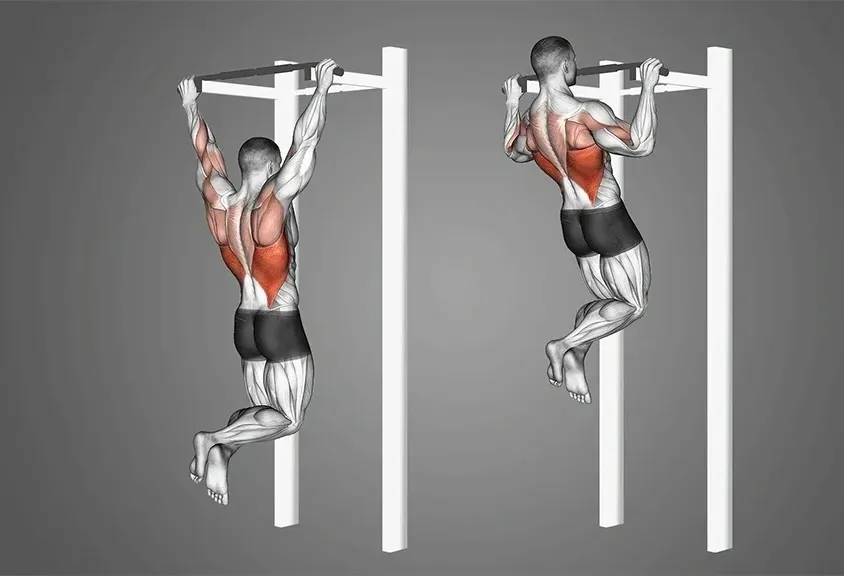
- Hang from the bar for 20-30 seconds. Grip the bar slightly wider than your shoulders, palms facing away. Keep your arms straight and your feet off the floor.
Tip: If you can’t hang 20 seconds, use a box under your feet and take some weight off.
- Do 3 sets of 5 slow lowers. Jump or step to the top, chin over the bar, then lower yourself over 5 seconds. This builds the same muscles as a full rep.
- Add band-assisted reps. Loop the band over the bar and put one knee or foot inside it. Do 3 sets of 5 reps. A thicker band gives more help.
Careful: Step into the band with both hands on the bar. If it snaps off your foot, you’ll fall.
- Rest 90 seconds to 3 minutes between sets. Shorter rest means fewer total reps, so don’t rush.
- Try one unassisted rep. When band reps feel easy at 8 or more, drop the band and try a single rep from a dead hang.
- Stop 1-2 reps before failure. Your last set should feel hard but not desperate. Grinding to zero reps every session slows recovery.
- Log your reps and rest 48 hours. Write down sets, reps, and band color, then wait two days before the next session.
If your shoulder pinches or your elbow aches during any step, stop and see a doctor or physical therapist. Don’t push through joint pain.
How Progress Changes With Your Starting Point

The time to your first pull-up depends on how much you can already do. Someone who can hang 30 seconds and lower slowly will get there much faster than someone starting from zero.
| Your starting point | Time to first rep | What’s different | What to watch |
|---|---|---|---|
| Can’t hang 10 seconds | 8-12 weeks | Grip work comes first, then pulling | Grip gives out before back |
| Can hang 20-30 seconds | 4-8 weeks | Band-assisted reps work well | Bands too thick, progress stalls |
| Can do 1-2 with a band | 2-4 weeks | Just need to drop the band | Losing form at the top |
| Can do 1-3 strict reps | 1-2 weeks to 5 reps | Add reps, not new exercises | Swinging and kipping |
| Can do 5+ strict reps | Ongoing | Add weight or slow the tempo | Overtraining the elbows |
Start with the easiest version you can do well, then make it harder. Jumping straight to full reps before your shoulders are ready is how people get hurt and quit.
How to Tell You Did It Right
A good rep looks calm. Your chin clears the bar, your chest stays up, your legs stay still, and your arms lower you all the way down. A poor rep looks jerky — you swing, you kick, and your chin stops well below the bar.
The most common quality problem is half reps. People pull until their head is near the bar, then drop. That happens because the top range is the hardest part, so the body quits early. Three things fix it: start each rep from a full hang, lower yourself over 3-5 seconds, and film one set from the side so you can see your own chin height.
Rules and What to Do After
There’s no single rule for how many pull-ups you should do, because it depends on your training goal and your body. The American Council on Exercise publishes general strength-training guidance, and the CDC recommends adults do muscle-strengthening activities at least 2 days a week.
After each session, wipe the bar down, put the band back on its hook, and write your reps in your log. Rest 48 hours before training the same muscles again.
If you have a heart condition, a shoulder injury, or you’re pregnant, talk to a doctor before starting.
Other Ways to Build Strength for Pull-Ups
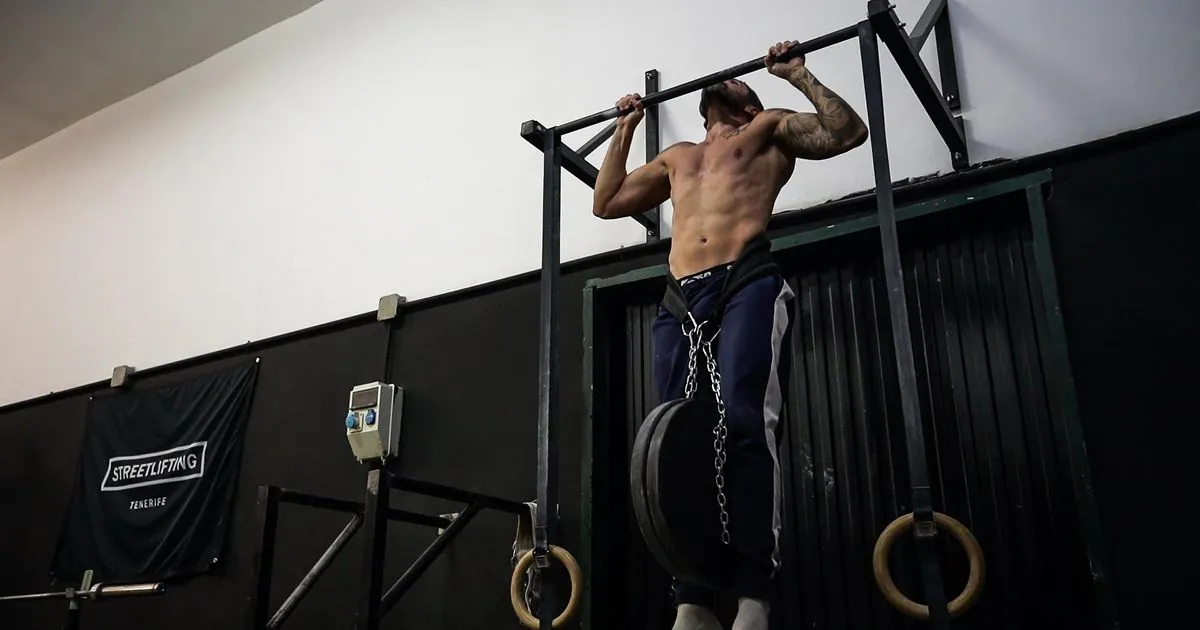
Not everyone has a bar or a gym nearby. These three routes get you to the same place with different tools.
Use a Gym Assisted Pull-Up Machine
The machine takes weight off you with a counterweight stack. Set it to about half your body weight, then lower the help by 5-10 lb each week.
Do Inverted Rows Under a Table
Lie under a sturdy table, grab the edge, and pull your chest up. The higher the bar or table, the easier it is.
Hire a Personal Trainer
A trainer watches your form and builds a plan for your body. It costs more, but it’s the fastest route if you’ve been stuck for months or have an old injury.
Frequently asked questions
How long does it take to do a pull-up?
Most people get their first pull-up in 4-12 weeks of training 3 times a week. The exact time depends on your starting strength, body weight, and how consistent you are. Someone who can already hang 30 seconds will get there faster.
Can I do pull-ups every day?
No — your back and arm muscles need about 48 hours to recover. Train 2-3 times a week with rest days between. Doing them daily leads to elbow and shoulder pain, not faster progress.
Why can’t I do a single pull-up yet?
Usually it’s because your back and grip aren’t strong enough yet, not because you’re doing something wrong. Build up with slow lowers and band-assisted reps for 4-6 weeks. If you’ve trained for 3 months with no progress, get your form checked.
Are pull-ups safe for your shoulders?
Yes, for most healthy shoulders, when you use full range and control. They can irritate an existing injury, so stop if you feel a pinch or sharp pain. See a doctor or physical therapist if pain lasts more than a few days.
What happens if I skip the warm-up?
Your shoulders and elbows are cold, so your first reps feel weak and your risk of a strain goes up. Warm up for 5 minutes with arm circles and light rowing. It costs you almost no time and saves weeks of recovery.
How many pull-ups should a beginner do?
Start with 3 sets of 3-5 reps, or 3 sets of 5 slow lowers if you can’t do a full rep yet. Add one rep per set each week. Stop each set 1-2 reps before you can’t do any more.
Do bands really help you get your first pull-up?
Yes, bands let you practice the full movement while taking off some of your body weight. Start with the thickest band you need, then move to a thinner one every 1-2 weeks.
Conclusion
Once you can handle a few on your own, try adding a little weight or slowing your descent to build more strength. Keep showing up a couple times a week, and you’ll be surprised how far you’ve come. Your back and arms will thank you.

I am a certified fitness coach with over 10 years of experience helping people improve their strength, endurance, and overall health. Specializes in workout programming, weight training, fat loss, muscle building, home fitness, and evidence-based nutrition.My goal is to make fitness simple and practical through well-researched guides, honest product reviews, and actionable training advice.