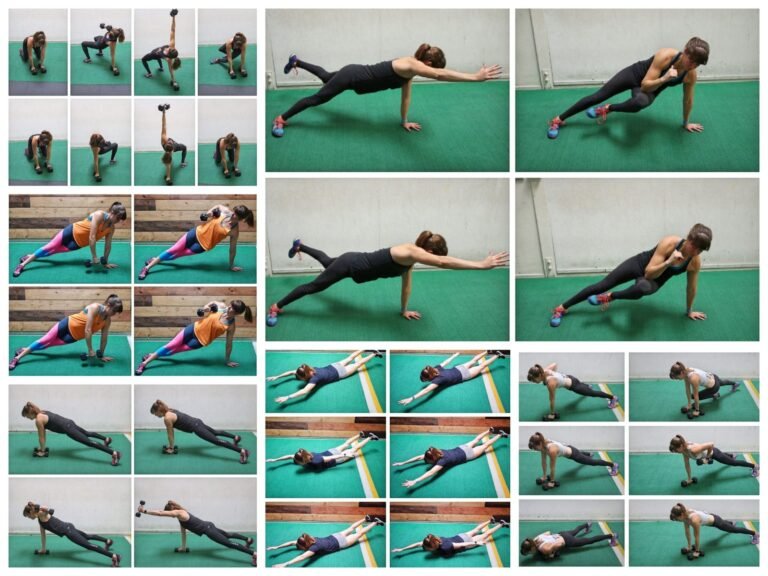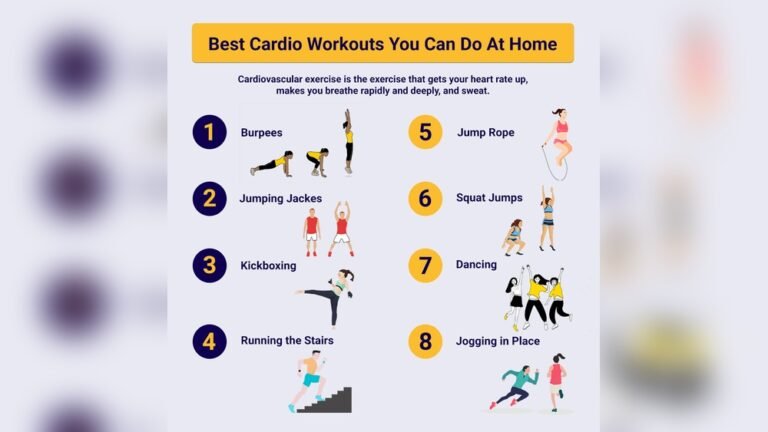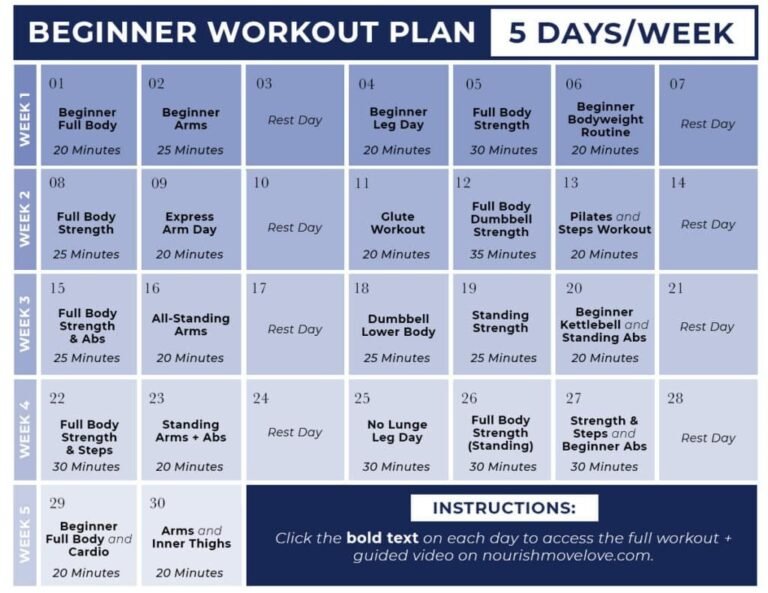
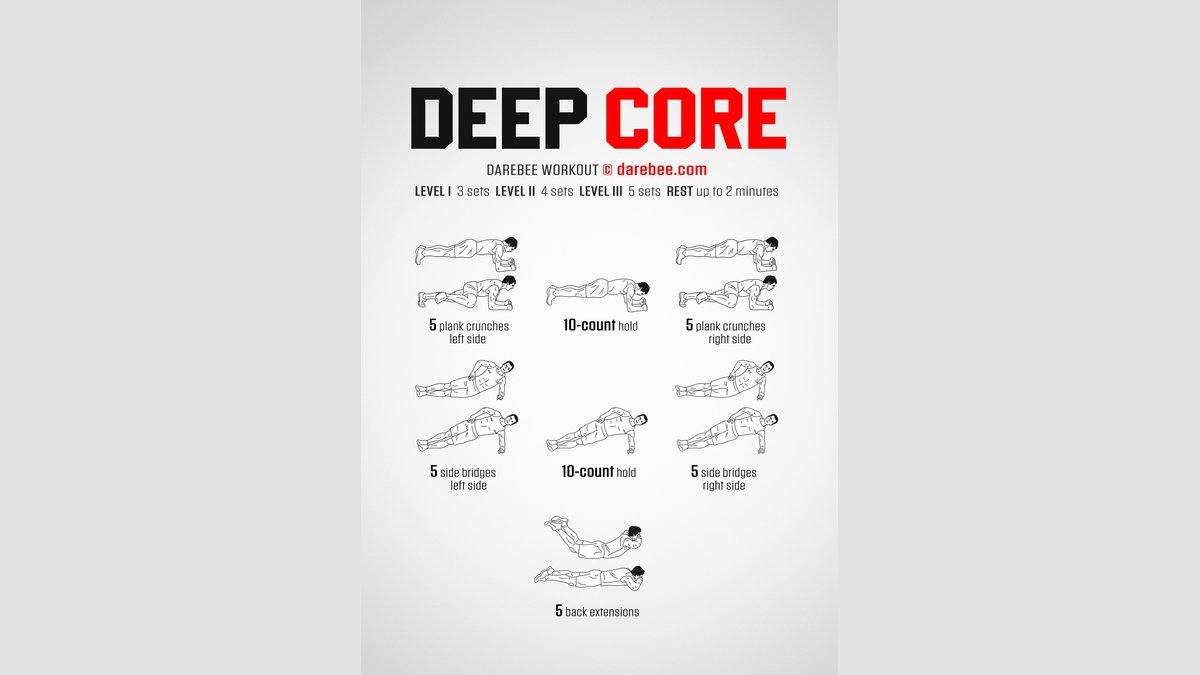
Core workouts train the muscles around your middle — your abs, obliques, and the deep muscles along your spine. Most people need 2 to 3 sessions a week, about 10 to 20 minutes each. What a two-line answer can’t give you is the order to work in, the numbers behind each move, and the signs that tell you to stop.
What core training really means
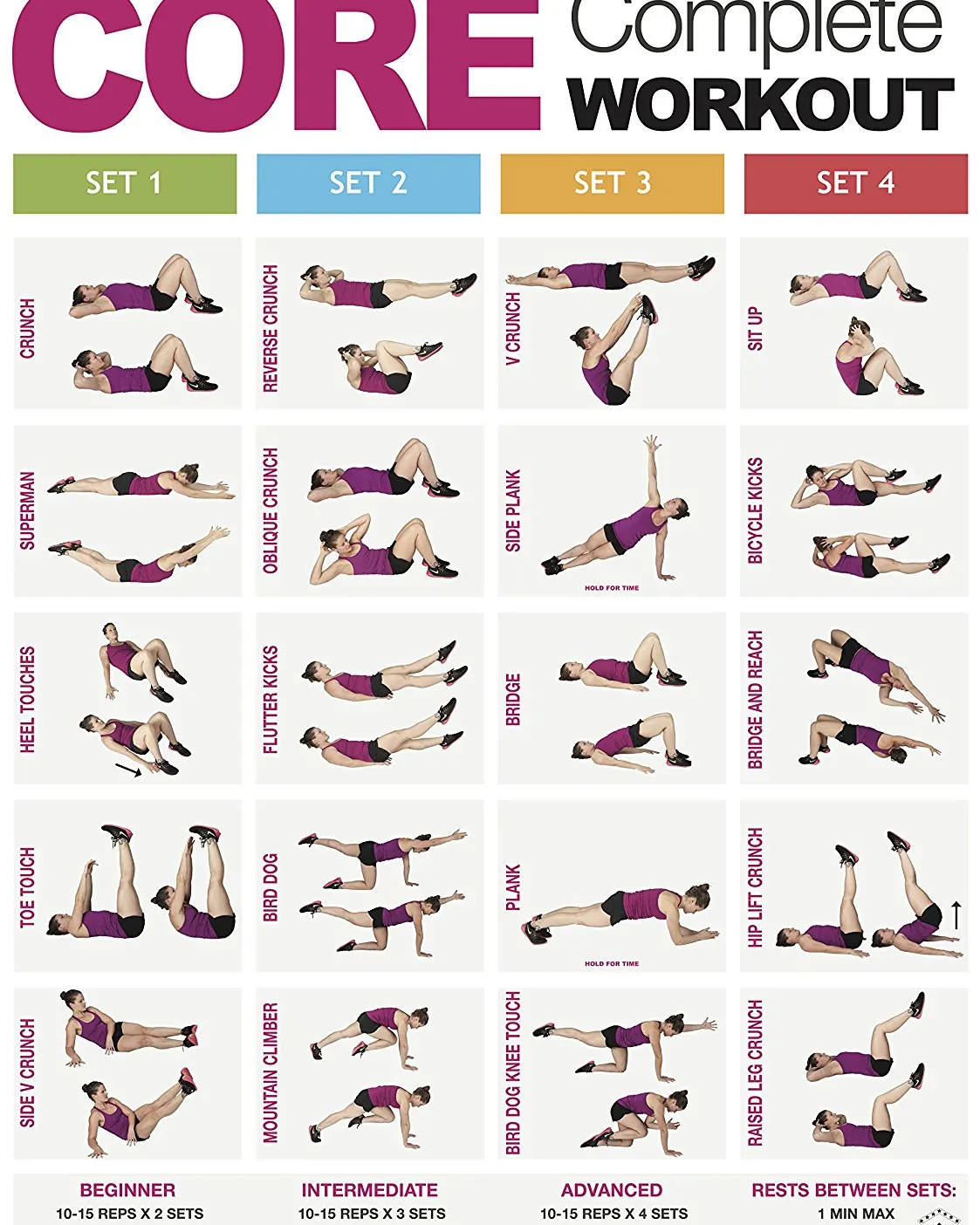
Your core is the group of muscles that wraps around your trunk and holds you steady while your arms and legs move. The deep layer — the transverse abdominis and the muscles beside your spine — does most of the quiet work.
People use core training for everyday things: lifting groceries, sitting at a desk, running, or getting out of a chair. It suits almost anyone who can lie on the floor and stand back up.
The big misconception is that endless sit-ups build a strong middle. They don’t. A useful core program trains stability, rotation, and the sides too.
How to do a core workout at home
- Warm up for 3 to 5 minutes. Walk in place, roll your shoulders, and do 10 slow cat-cow stretches on all fours.
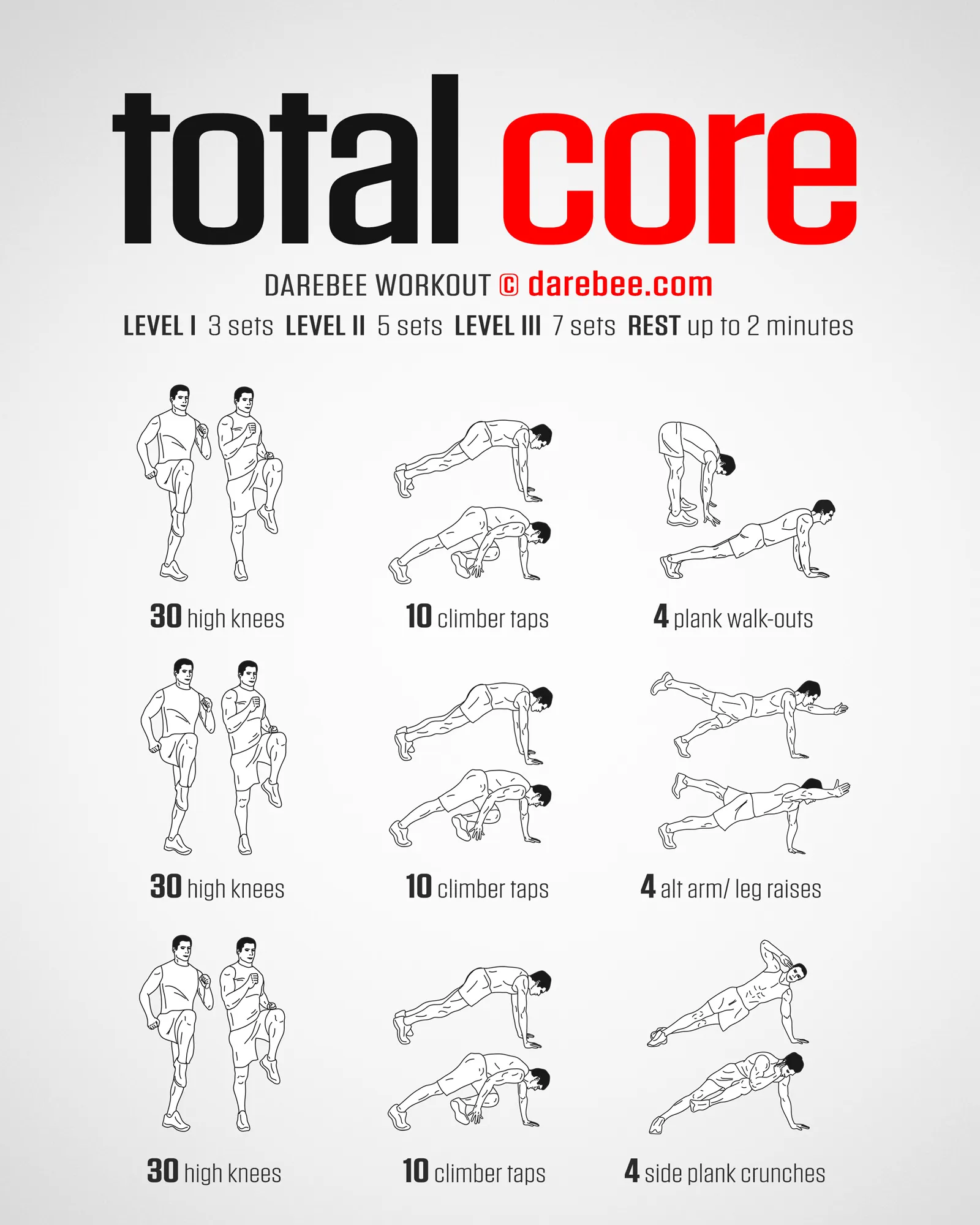
- Start with a plank. Hold 20 to 30 seconds. Keep hips level with your shoulders. Do 2 rounds.
- Add dead bugs. Lie on your back, arms up, knees bent at 90 degrees. Lower one arm and the opposite leg, then switch. Do 8 to 10 reps per side, 2 rounds.
- Do bird dogs. On all fours, extend one arm and the opposite leg. Hold 3 seconds. Do 8 per side.
- Finish with side planks. Hold 15 to 20 seconds per side, 2 rounds. Drop to your knees if your hips sag.
- Rest 30 to 60 seconds between rounds. Total time: 10 to 15 minutes.
- Cool down. Lie flat and breathe slowly for 1 minute.
The judgement call is quality over count. Five slow, controlled reps beat twenty fast ones where your back arches and your hips drop. If you can’t keep your ribs down and your lower back flat, stop the set.
If you have back pain, are pregnant, or had recent surgery, see a doctor or a physical therapist before starting. They’ll tell you which moves are safe for you.
Core workout numbers at a glance
Here are the main variations and what changes with each. Times assume a beginner who can hold a plank for 20 seconds without their hips dropping.
| Situation | What to use | How long | What to watch for |
|---|---|---|---|
| Complete beginner | Dead bugs, bird dogs | 8 reps per side | Back lifting off the floor |
| Can hold a plank 30 sec | Front plank, side plank | 30 sec per hold | Hips sagging or hiking up |
| Desk worker with tight hips | Bird dogs, glute bridges | 10 reps each | Holding your breath |
| Runner or cyclist | Side planks, Pallof press | 20 sec / 10 reps | Twisting your torso |
| Already strong | Hanging knee raises, hollow holds | 20 sec holds | Swinging from momentum |
| Sore lower back | Dead bugs only | 6 reps per side | Pain that shoots down a leg |
| Short on time | Plank plus side planks | 3 rounds, 45 sec each | Rushing the rest |
What separates good core work from wasted effort
The people who get results treat breathing as part of the exercise, not something in the background. They exhale as they move, keep their ribs stacked over their hips, and stop the set the moment their form breaks. That last point matters more than any rep target.
They also work in a set order: easy stability moves first, harder holds last.
What they check partway through
Halfway into a plank, they check three things: is my lower back flat, are my shoulders over my elbows, am I still breathing?
What they leave alone
They skip sit-ups, full crunches, and any move that pulls the neck. They don’t train core every day either — the muscles need rest like any other.
Common problems and quick fixes
| What you notice | What it usually means | What to do first |
|---|---|---|
| Lower back aches during planks | Hips are sagging | Drop to knees, shorten the hold |
| Neck hurts during crunches | Pulling with your head | Switch to dead bugs |
| No progress after weeks | Same moves, same reps | Add 5 seconds or 2 reps |
| Can’t feel your abs working | Moving too fast | Slow down to 3 seconds per rep |
| Dizzy or lightheaded | Holding your breath | Breathe out on each effort |
| Wrist pain in plank | Too much weight on hands | Use forearms or fists |
The rules that apply
There’s no government rule that says how often you should train your core. But two bodies matter here. The American College of Sports Medicine recommends strength training for all major muscle groups at least 2 days a week. And the CDC physical activity guidelines recommend muscle-strengthening activities on at least 2 days a week.
If you’re recovering from a back injury, a hernia, or surgery, that’s not a do-it-yourself job. A physical therapist or your doctor decides what’s safe.
Keeping your core strong long-term
Once you’ve built a base, you don’t need to train hard every session. Two short sessions a week hold most of your progress. Keep a simple log — date, moves, hold times — so you can see when numbers stop moving.
If a move feels easy for two sessions in a row, make it harder: add 5 seconds, add a rep, or lift one foot. If your back starts aching again, drop back to the easier version for a week. That’s your sign you pushed too far.
When core workouts aren’t right
If you have an untreated hernia, a slipped disc, or pain that travels down a leg, skip these moves and see a doctor first. Core training can make those worse.
If your goal is visible abs, exercise alone won’t get you there — body fat matters more, and that’s driven by diet. And if you’re training for a specific sport, a coach should build the plan. A general routine won’t target what your sport demands.
Related guides
- Top 10 Best Adjustable Dumbbells for Workouts 2026
- 20 Best Adjustable Dumbbells for Home Workouts 2026
- Weight Plates Workout Routines for Beginners at Home
Frequently asked questions
How often should I do core workouts?
Two to three times a week is enough for most people. Your muscles need a rest day between sessions. Daily training raises injury risk without adding much benefit.
How long does it take to see results?
Expect 4 to 6 weeks for better stability and less back tiredness. Visible changes take longer and depend on body fat, which exercise alone won’t shift much.
Is it safe to do core workouts every day?
No, not at full effort. Light moves like dead bugs are fine daily, but planks and hard holds need recovery time. Give yourself at least one rest day between hard sessions.
What happens if I only do sit-ups?
You’ll train one layer of muscle and load your lower back. You’ll miss your sides, your deep stabilizers, and the muscles along your spine. Mix in planks and bird dogs instead.
Can I do core workouts with lower back pain?
Sometimes, but check with a doctor or physical therapist first. Dead bugs and bird dogs are usually gentler than crunches. Stop at once if pain shoots down a leg.
Do I need equipment for core workouts?
No. A mat helps your back and elbows, but the floor is enough. A resistance band adds options later. Skip machines until your basic form is solid.
How many reps should I do?
Start with 8 to 10 reps per side, or 20 to 30 second holds. Add 2 reps or 5 seconds when the last rep feels easy. Stop the set when your form breaks, not at a number.
Conclusion
Start with two sessions this week and keep the moves simple. Ten focused minutes beats an hour of rushing, and your back will tell you if you got it right.

I am a certified fitness coach with over 10 years of experience helping people improve their strength, endurance, and overall health. Specializes in workout programming, weight training, fat loss, muscle building, home fitness, and evidence-based nutrition.My goal is to make fitness simple and practical through well-researched guides, honest product reviews, and actionable training advice.