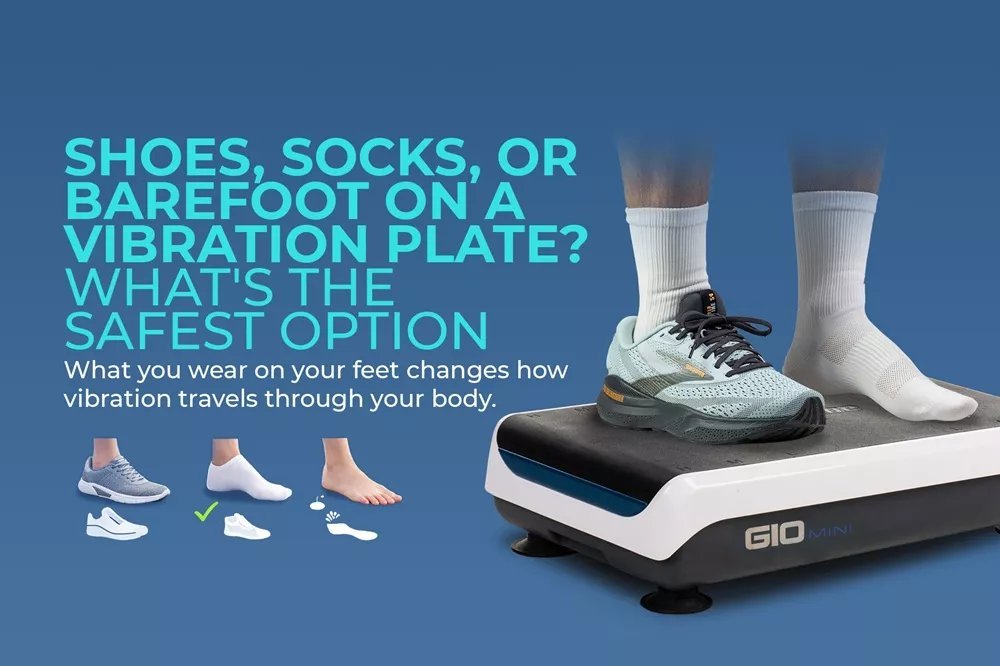
Most people get more from a vibration plate barefoot, because skin on the plate transmits the vibrations directly — shoes with thick soles soak them up. The exception: if your feet hurt or the plate feels harsh, thin-soled shoes or grippy socks are the smarter pick.
Barefoot or shoes on a vibration plate compared

You’ve got three real options, and each changes how much vibration reaches your legs. Here’s how they stack up side by side.
| Method | How long | Effort | Cost | Best for |
|---|---|---|---|---|
| Barefoot | Same session length | None | Low | Maximum vibration transfer |
| Grip socks | Same session length | None | Low | Cold feet, shared gym plates |
| Thin-soled shoes | Same session length | None | Low | Sore feet, sensitive joints |
| Thick running shoes | Same session length | None | Low | Almost nobody — they block the effect |
Using the plate barefoot
Barefoot is the default most manufacturers design for, and it takes no setup at all.
- Wipe the plate surface with a clean cloth before you step on, especially at a gym.
- Step on with both feet, roughly shoulder-width apart, in the center of the plate.
- Start at a low frequency — around 15 Hz if your machine shows numbers — for 1 to 2 minutes.
- Stand with slightly bent knees so the vibration travels through your legs instead of jolting your joints.
- Build up to 10 minutes per session as your body gets used to it.
Bare feet give you the strongest muscle activation and the best grip on the plate. The weakness is comfort: hard plates can feel uncomfortable underfoot, and shared machines carry hygiene concerns.
Wearing socks or thin-soled shoes

Socks and thin-soled shoes soften the contact a little while keeping most of the effect.
- Choose socks with rubber grip dots, or flat shoes like minimal trainers or ballet-style slippers.
- Check the soles — press them with your thumb; if you can feel the floor texture through them, they’re thin enough.
- Step on and start at the same low setting you’d use barefoot, around 15 Hz.
- If the session feels too mild, increase the frequency slightly rather than removing your footwear.
- Keep sessions to the same 10 minutes; socks don’t change your time limits.
This option wins on hygiene at the gym and comfort if you have plantar fasciitis or sensitive heels. The genuine weakness is reduced grip — smooth socks can slide on a hard plate, so grip dots matter.
When thick shoes make sense anyway
Thick running shoes sit in the table above because people reach for them, not because they work. The cushioning absorbs the vibration before it reaches your muscles, so you’re standing on a shaking surface for nothing.
Which option fits your situation
The choice comes down to your feet, not the machine. In a hurry or at the gym between meetings? Grip socks — no cleanup, no hygiene worry. First time on a plate? Go barefoot at a low setting so you can feel exactly what the machine is doing.
Chasing the strongest possible muscle response? Barefoot again, because nothing between skin and plate beats direct contact. The trade-off is always the same: comfort and hygiene on one side, vibration transfer on the other.
Rules that matter either way

Whichever option you pick, a few things stay the same. Check your machine’s own manual first — manufacturers like Power Plate publish their own footwear guidance, and some warranties depend on following it. Bend your knees slightly the whole session; locked knees send vibration straight into your spine.
If you’re pregnant, have a pacemaker, recent surgery or blood-clot problems, the FDA treats whole-body vibration machines as exercise equipment, not medical devices — so clear it with your doctor before you start. Stop partway through if you feel numbness or tingling, and drink water afterward.
Frequently asked questions
Is it safe to use a vibration plate barefoot?
Yes, for most healthy adults it’s the intended way to use one. The risks come from the session itself, not bare feet: keep sessions short, bend your knees, and step off if you feel pain or numbness.
How long should a vibration plate session be?
About 10 minutes per session for a healthy adult on a typical home plate, starting at 1 to 2 minutes when you’re new. Your machine’s manual gives the limit for your specific model, so check it.
Can I wear running shoes on a vibration plate?
No, thick running shoes block most of the vibration. If you must wear shoes, pick thin, flat soles — you’ll get far more from the same session.
Why do my feet itch or tingle on the plate?
It’s a common reaction to the vibration itself, especially barefoot at higher frequencies. It usually fades as you get used to it; if it doesn’t, or it turns to numbness, step off and talk to a doctor.
What happens if I use a vibration plate every day?
Nothing bad for most healthy people at 10 minutes or less, though your muscles need rest like any workout. If you have a heart condition, implants or you’re pregnant, daily use needs a doctor’s approval first.
Can vibration plates help with balance and circulation?
Yes, small studies suggest short-term improvements in balance and blood flow, and researchers publish whole-body vibration findings you can browse on NIOSH’s vibration research pages. Treat it as a supplement to exercise, not a replacement.
Conclusion
Whichever you choose, the plate only works if you use it consistently — so pick the option that feels right under your feet and stick with it.
I am a certified fitness coach with over 10 years of experience helping people improve their strength, endurance, and overall health. Specializes in workout programming, weight training, fat loss, muscle building, home fitness, and evidence-based nutrition.My goal is to make fitness simple and practical through well-researched guides, honest product reviews, and actionable training advice.