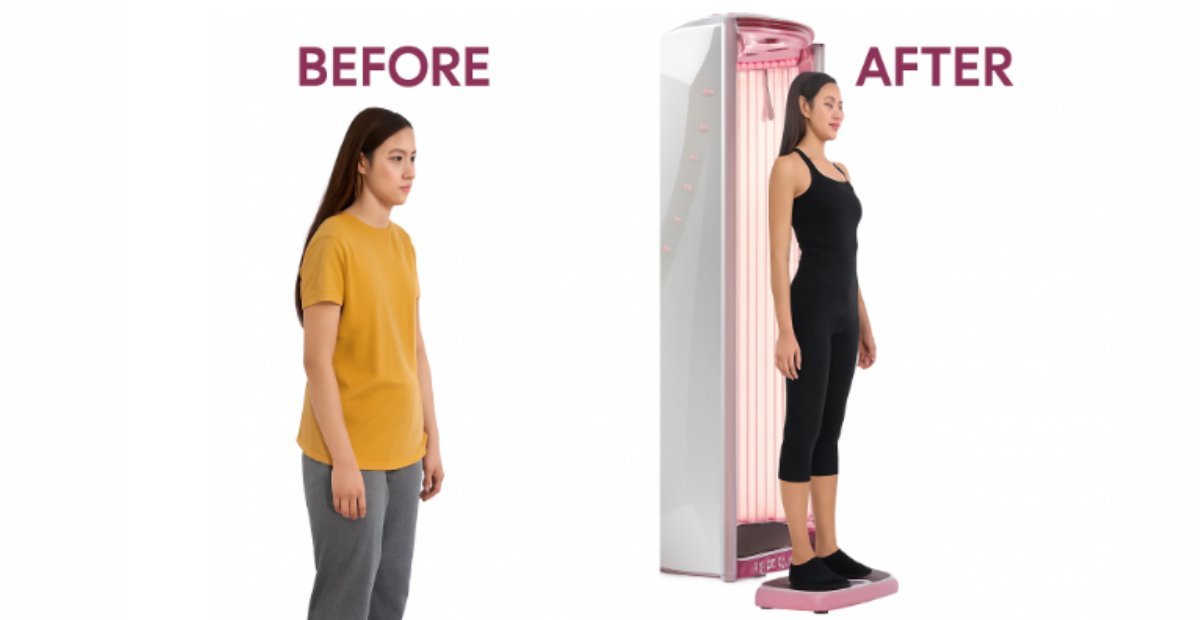
A vibration plate before and after shows up in two places: how your body feels in the first few weeks, and what a machine can actually change. Visible muscle tone takes longer, and only if you train against resistance too.
The thing that decides your result is whether you add real load or just stand there. Whole-body vibration makes your muscles fire faster, but a plate alone won’t build much muscle. The CDC’s physical activity guidance is clear that adults need muscle-strengthening work on 2 or more days a week, and a plate counts as support, not the whole job.
The common mistake happens before you start. If you have a joint replacement, a recent fracture, a hernia, or you’re pregnant, talk to your doctor first.
How to use a vibration plate safely

- Start at the lowest setting for 2 minutes. Stand with feet shoulder-width apart, knees soft, and hold the handrail. If you feel fine, add 1 minute per session until you reach 10 minutes. Higher frequencies aren’t better at the start — control is.
- Pick your stance for the muscle you want. Wide stance works glutes and inner thighs; narrow stance works calves and quads. Hold each position 30 to 60 seconds, then switch. Two or three stances per session is enough.
-
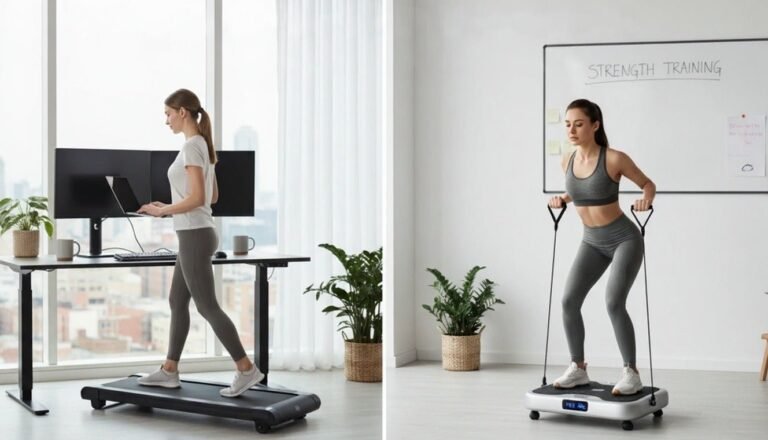
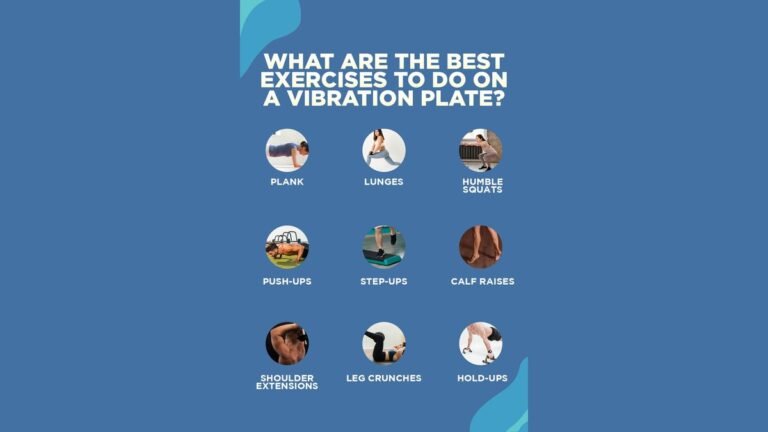
Add load once standing feels easy. Hold dumbbells, do squats, or wear a weighted vest. This is where tone actually changes. Aim for 2 to 3 sessions a week with weights, on top of your standing sessions. Tip: Don’t lock your knees. Keep a soft bend so your legs absorb the movement.
-
Keep sessions under 15 minutes total. Longer isn’t better. Most published protocols sit between 10 and 15 minutes per session, and going past that raises your odds of dizziness and joint ache.
- Stop if you feel dizzy, numb, or get a headache. Step off, sit down, drink water. If it keeps happening, lower the frequency or shorten the session. Tip: Never use the plate right after a big meal or when you’re dehydrated — both make dizziness more likely.
If you have a heart condition, a pacemaker, a blood clot history, or you’re pregnant, this isn’t a do-it-yourself call.
How long before you see changes
Timelines shift a lot depending on what you’re measuring. The table below assumes a healthy adult doing 10 to 15 minutes, 3 to 5 days a week, with resistance work added twice a week.
| Situation | How long | What changes it | What to watch for |
|---|---|---|---|
| Balance and steadiness | 4 to 6 weeks | How often you train | Progress stalls if you skip weeks |
| Muscle soreness after sessions | 1 to 2 weeks | Starting frequency | Soreness should fade, not grow |
| Visible muscle tone | 8 to 12 weeks | Adding weights or squats | Standing only rarely changes shape |
| Fat loss | 12+ weeks | Diet and total activity | The plate burns few calories alone |
| Flexibility and range | 3 to 4 weeks | Stretching on the plate | Stop before sharp pain |
If you’re far past these windows, check the boring things first: session length, how many days a week you actually train, and whether you’ve added load.
Signs the vibration plate is working

The first sign is usually steadier balance — you notice it standing on one leg or walking downstairs. Next comes easier movement in the morning, less stiffness in your calves and hips. Muscle soreness should show up 12 to 24 hours after a session and fade within 2 days.
The test that settles it: stand on one leg with your eyes closed before you start, and again after 6 weeks. Time yourself both times. If the number hasn’t moved, your session length or frequency is the problem.
Mistakes that spoil your results

- Standing still and expecting muscle. Vibration makes muscles fire, but without load there’s little to build. Add squats, lunges, or dumbbells to 2 sessions a week.
- Going too long, too soon. Jumping straight to 15 minutes raises dizziness and joint ache. Build from 2 minutes and add a minute at a time.
- Locking your knees. Keep a soft bend the whole session so your legs absorb the movement.
- Ignoring a medical condition. A pacemaker, pregnancy, or a recent fracture changes the whole answer. Get a doctor’s clearance first, not after.
- Skipping rest days. Muscles need recovery to change. Train 3 to 5 days a week and leave the rest for repair.
Frequently asked questions
How long does it take to see results from a vibration plate?
Balance and stiffness often improve in 4 to 6 weeks with 10 to 15 minutes, 3 to 5 days a week. Visible muscle tone takes 8 to 12 weeks, and only if you add resistance work like squats or dumbbells twice a week.
Can a vibration plate help you lose belly fat?
No, not on its own. A plate burns few calories compared to walking or cycling, and spot reduction isn’t real. Fat loss comes from a calorie deficit and total daily activity.
Is it safe to use a vibration plate every day?
For most healthy adults, yes — 10 to 15 minutes a day is within common protocols. But muscles still need recovery, so 3 to 5 days a week is enough.
Why do I feel dizzy after using a vibration plate?
Dizziness usually comes from a session that’s too long, a frequency that’s too high, or dehydration. Step off, sit down, and drink water. Next time, cut the session by half and lower the setting.
What happens if you use a vibration plate wrong?
Locking your knees, going past 15 minutes, or skipping the handrail raises your risk of joint ache, lower back soreness, and falls. None of these are permanent for most people, but they’ll stall your progress.
Do vibration plates build muscle without exercise?
They help, but they don’t replace resistance training. Vibration makes your muscles contract faster, which can improve activation and balance. Real muscle growth needs load — weights, bands, or bodyweight moves — done 2 or more days a week.
Can I use a vibration plate if I’m pregnant?
Ask your doctor first. Many providers advise against whole-body vibration during pregnancy, especially in the first trimester, because the effects on the fetus aren’t well studied. Your doctor knows your history and can give you a clear yes or no.
Conclusion
Your starting point decides most of this — your age, your fitness now, and any condition you carry. Read your own numbers off the two tests that matter: how long you can stand on one leg with your eyes closed, and how many loaded sessions you finish each week. Those two tell you more than any before-and-after photo.

I am a certified fitness coach with over 10 years of experience helping people improve their strength, endurance, and overall health. Specializes in workout programming, weight training, fat loss, muscle building, home fitness, and evidence-based nutrition.My goal is to make fitness simple and practical through well-researched guides, honest product reviews, and actionable training advice.