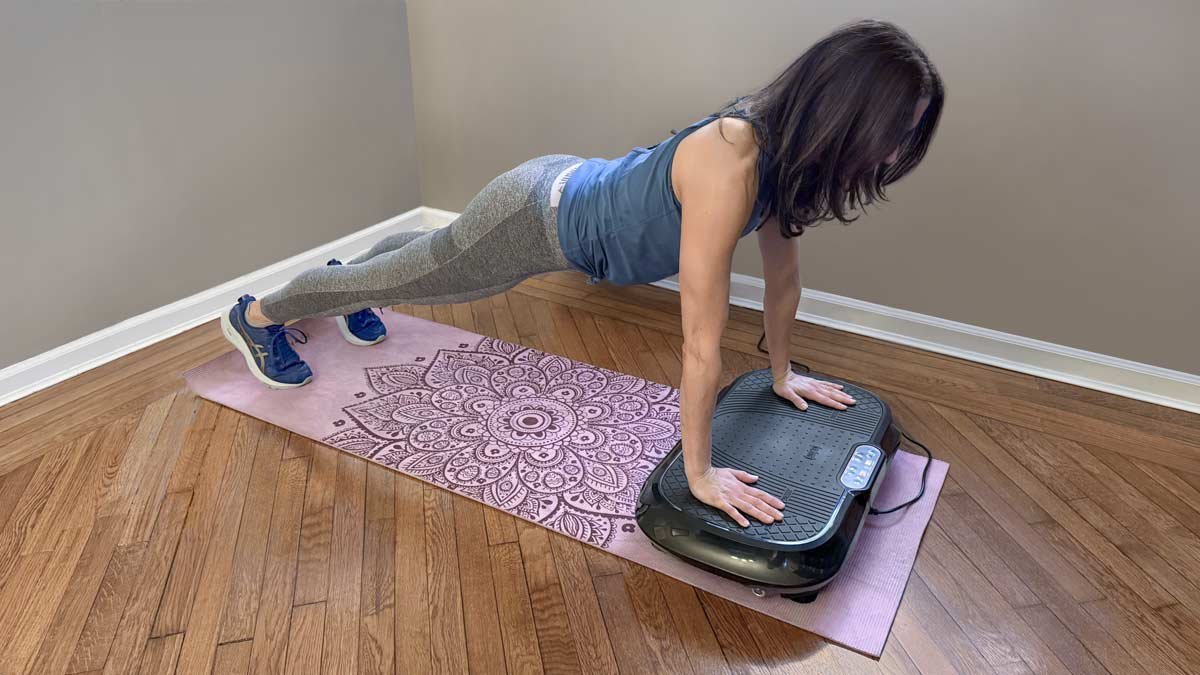
Doctors don’t recommend vibration plates as a treatment for any condition. Some doctors say they’re fine to try for general fitness, balance or bone strength in older adults, but the evidence is mixed. If you have a health problem, ask your doctor first.
What doctors recommend before vibration plates

The one thing that decides whether this goes well is your starting health, not the machine.
The most common mistake is treating a vibration plate like a cure. The plate is a tool you add to a plan, not a plan by itself.
How to use a vibration plate safely
- Check with your doctor first if you have any health condition. Ask about your back, joints, heart, blood pressure and balance. Get a clear yes or no before you stand on the plate.
- Start with the lowest setting for 5 minutes. Do this once a day for the first week. Your body needs time to get used to the shaking.
- Build up slowly to 10-15 minutes a session. Add about 2 minutes every few days. Stop if you feel dizzy, sick or sore.
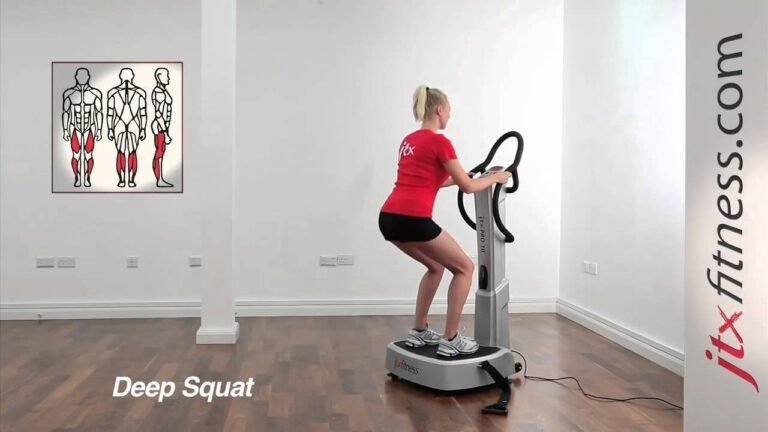
- Hold on to the handles the whole time. Never let go, even on a low setting. The plate can throw off your balance in a second.
- Stand with soft knees, feet shoulder-width apart. Locked knees send the vibration straight into your spine. Keep your head up and breathe normally.
- Stop at once if you feel pain, numbness or dizziness. Sit down and rest. Don’t push through it — that’s how people get hurt.
Tip: Never use a vibration plate right after eating. Wait at least 1 hour, or you may feel sick.
Tip: If you have a pacemaker or any implanted device, don’t use one at all unless your doctor says it’s safe.
How long before you notice a change

Most people feel nothing special at first. Real changes in balance or leg strength usually show up after 6 to 12 weeks of regular use. That assumes you use it 2 to 3 times a week.
| Situation | How long | What changes it | What to watch for |
|---|---|---|---|
| General fitness, healthy adult | 6-12 weeks | How often you use it | Slow progress is normal |
| Balance training, older adult | 8-12 weeks | Whether you also do strength work | Dizziness at first |
| Bone density goal | 6-12 months | Diet, calcium, other exercise | Don’t stop your medication |
| Back pain relief | Days to weeks, if at all | Cause of the pain | Pain that gets worse |
| Weight loss | Not a real effect | Diet and activity | Don’t rely on the plate |
If it’s taking far longer than the table says, that’s normal for some people. Talk to your doctor or a physiotherapist instead of pushing harder on the machine.
Signs it’s working for you
You’ll notice small things first. Your legs feel steadier on stairs. You can stand on one foot a bit longer. Your balance when you close your eyes improves.
For a clearer check, time how long you can stand on one leg. Test it before you start and again after 8 weeks. If the time goes up, it’s helping. If it doesn’t move, stop and see a doctor.
Mistakes that spoil the result

- Skipping your doctor’s advice. If you have a heart condition, a pacemaker, a hernia, a recent fracture or pregnancy, using a plate without checking can cause real harm. Ask first, always.
- Going too hard, too soon. Long sessions on high settings in week one cause sore joints, headaches and dizziness. Start at 5 minutes on the lowest setting.
- Letting go of the handles. A moment of lost balance on a shaking plate means a fall. Keep both hands on the rails the whole time.
- Using it as your only exercise. A plate doesn’t build muscle the way walking, lifting or swimming does. Pair it with real activity.
- Ignoring new pain. Pain that starts during or after a session isn’t “working.” Stop, rest, and get it checked if it lasts more than a few days.
Frequently asked questions
Do doctors recommend vibration plates for weight loss?
No. Whole-body vibration doesn’t burn enough calories to matter, and no major medical body lists it as a weight-loss treatment. If weight loss is your goal, focus on diet and regular activity, and talk to your doctor about a plan.
Is it safe to use a vibration plate every day?
For most healthy adults, yes — 10 to 15 minutes a day is fine. But if you have back problems, joint issues, a heart condition or a pacemaker, ask your doctor first.
Can vibration plates help with bone density?
Some studies suggest a small benefit for older women, but results are mixed and it’s not a replacement for medication or calcium.
Why do my legs feel weird after using a vibration plate?
That tingling or buzzing feeling is normal for the first few sessions. It usually fades within 30 minutes. If it lasts longer, or you feel numbness or sharp pain, stop using the plate and see a doctor.
Who shouldn’t use a vibration plate?
People with pacemakers or implanted devices, pregnant women, anyone with a recent fracture, a hernia, severe back problems or a history of blood clots should avoid them unless a doctor says it’s safe. When in doubt, ask before you stand on one.
How long should a vibration plate session last?
Most sessions run 10 to 15 minutes, 2 to 3 times a week, once you’re used to it.
What happens if I use a vibration plate without asking my doctor?
If you have a hidden condition like a heart problem, a hernia or a spinal issue, you could make it worse or cause an injury.
Conclusion
Vibration plates aren’t a medical treatment, and no doctor will hand you one as a prescription. They’re a fitness tool that some people find helpful for balance and leg strength. Use one only after your doctor clears you, start slow, and keep up your other exercise. If something hurts, stop and get it checked.
I am a certified fitness coach with over 10 years of experience helping people improve their strength, endurance, and overall health. Specializes in workout programming, weight training, fat loss, muscle building, home fitness, and evidence-based nutrition.My goal is to make fitness simple and practical through well-researched guides, honest product reviews, and actionable training advice.