
Use a vibration plate after your workout for most goals. It’s a warm-down and recovery tool, not a warm-up. If your main goal is balance or you’re short on time, use it before — but keep it light.
Vibration plate timing compared

You’ve got a few real options, and each one fits a different goal. The table below shows how they stack up on time, effort and cost. Cost is a word, not a number — prices vary a lot by brand, so check the maker’s own site for current figures.
| Method | How long | Effort | Cost | Best for |
|---|---|---|---|---|
| Before workout | 5–10 min | Low | Low | Balance, activation |
| After workout | 10–15 min | Low | Low | Recovery, soreness |
| Both sessions | 15–25 min | Medium | Low | Serious training blocks |
| Skip the plate today | 0 min | None | None | Rest days, injury |
Using it after your workout
This is the timing most people want. It fits recovery and it’s easy to stick with.
- Finish your main session and cool down for 5 minutes.
- Stand with soft knees for 2 minutes, then hold a squat for 1 minute.
- Repeat the cycle for 10–15 minutes total.
- Stretch while the plate is still running, if you like.
It’s good at easing sore legs and it needs no skill to start. The weakness: it won’t build much strength on its own. If you have a spine, joint or heart condition, talk to your doctor before you use one.
Using it before your workout

A short pre-workout session can wake up your muscles and sharpen your balance. Keep it brief and light.
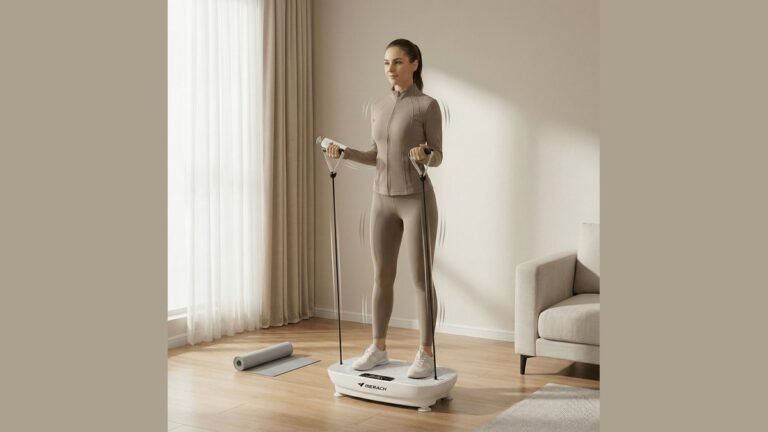
- Set the plate to a low speed — 15–25 Hz is a common starting range.
- Stand on it for 2 minutes with feet shoulder-width apart.
- Do 10 slow bodyweight squats, keeping your knees soft.
- Add 30 seconds of single-leg stands, 15 seconds per side.
- Stop after 5–10 minutes and move to your main workout.
It’s great for balance and joint position sense. The catch: heavy or long vibration before lifting can leave your legs feeling flat. Check your plate’s manual for its own speed settings, since they differ by model.
Standing on a plate for recovery only
Sometimes you don’t want a workout at all — you just want to feel better. This method is pure recovery.
- Sit or stand for 10 minutes.
- Breathe slowly and let your shoulders drop.
- Do it on rest days, once or twice.
- Stop if you feel dizzy or numb.
It’s gentle, it needs no training, and it’s easy to fit into a busy day. The weakness is real: the evidence for big recovery gains is still thin, so treat it as a comfort tool, not a cure.
A fourth option — using the plate as your whole workout — rarely pays off. It can’t replace resistance training for strength or bone health.
Which timing fits your goal
If you’re in a hurry, do it after. Ten minutes post-workout gives you the recovery benefit without eating into your training time. If it’s your first time, start after your workout too — it’s the safer, easier habit to build.
If you want the best possible result and you have the time, split it. Five minutes before for activation, then 10–15 minutes after for recovery. That’s the setup serious users pick, and it costs you nothing extra but time.
The trade-off is simple. Before-workout use helps balance and readiness but can sap your legs. After-workout use helps recovery but won’t fire you up. You can’t get both from one short session, so pick the goal that matters most this week.
Rules that apply either way

Whatever timing you choose, a few things stay the same. The American Council on Exercise and similar fitness bodies publish general vibration training guidance — check their current pages for the latest advice.
Prepare first: read your plate’s manual, wear shoes or go barefoot as it advises, and start at the lowest speed. Check partway through: if you feel dizzy, numb or sick, stop and sit down. At the end: cool down and drink water.
People with a pacemaker, pregnancy, recent fractures or blood clot risk shouldn’t use a vibration plate without a doctor’s OK. Ask your physician first.
Related guides
- Weight Plates Workout Routines for Beginners at Home
- Benefits of Weight Plate Exercises for Home Workouts Explained
- Weight Plates Kg Vs Lbs Conversion
Frequently asked questions
Can I use a vibration plate before and after a workout?
Yes. A short 5-minute session before and 10–15 minutes after is fine for most healthy people. Keep the before-session light so your legs stay fresh.
Why do people say after is better?
Because the main benefit is recovery, not performance. After a workout, the plate helps you cool down and ease soreness. Before, it can leave legs feeling tired.
How long should I use a vibration plate after a workout?
About 10–15 minutes at a low speed, around 20–30 Hz if your plate shows frequency. That assumes a standard home plate — for a commercial model, follow its own manual.
Is it safe to use one every day?
For most healthy adults, yes — 10–15 minutes a day is a common routine. Skip it if you’re injured or pregnant, and ask your doctor if you have a heart or joint condition.
What happens if I use it too long?
You may feel dizzy, numb or shaky. Stop, sit down and rest. Long sessions don’t add much benefit, so keep them short.
Does it matter if I do it on an empty stomach?
Not much. Some people feel lightheaded on a full or empty stomach. A small snack 30–60 minutes before is a safe middle ground.
Can I skip my warm-up if I use the plate first?
No. A vibration plate isn’t a full warm-up. Do 5 minutes of easy movement first, then use the plate if you want.
Conclusion
Pick your timing based on your goal, not the clock. After your workout suits most people, and a short session before is a bonus if balance is your focus.
I am a certified fitness coach with over 10 years of experience helping people improve their strength, endurance, and overall health. Specializes in workout programming, weight training, fat loss, muscle building, home fitness, and evidence-based nutrition.My goal is to make fitness simple and practical through well-researched guides, honest product reviews, and actionable training advice.