Starting a home workout can feel confusing, especially with so many equipment choices. But there’s one tool that stands out for both new and experienced fitness fans: weight plates. If you want to build strength, add muscle, or keep your workouts fresh, weight plate exercises for home workouts offer a simple, powerful solution. This guide will show you why weight plates are a smart choice, how they work, and how to use them safely for the best results.
Why Choose Weight Plate Exercises For Home Workouts?
Weight plates are more than just parts of a barbell. On their own, they become a flexible tool for many types of training. Many home gym owners start with dumbbells or resistance bands, but weight plates can do much more, often at a lower cost.
Key benefits:
- Save space in your home gym—plates are easy to store and stack.
- Versatile—use them for arms, chest, legs, and core.
- Budget-friendly—one set can cover many exercises.
- Suitable for all levels—just pick the right weight for your strength.
- Easy grip—many plates have handles for safer movements.
Relevant image suggestion:
*Image of several weight plates stacked neatly on a home gym floor, with a yoga mat and resistance bands in the background. Alt text: Weight plates for home gym next to other basic equipment.*
Main Benefits Of Weight Plate Exercises
Weight plates can transform your home workouts in ways that go beyond basic lifting. Here’s why:
1. Full-body Strength
With weight plates, you can target nearly every muscle group:
- Chest: Plate presses, plate push-ups
- Shoulders: Front raises, overhead presses
- Back: Plate rows, halo swings
- Core: Russian twists, standing twists
- Legs: Goblet squats, lunges
Unlike machines or fixed dumbbells, plates let you move freely. This means more muscles work together, giving you better results with less equipment.
2. Functional Fitness
Functional fitness means training your body for real-life moves. Weight plates help you practice lifting, carrying, and twisting—just like daily life. For example, picking up a heavy bag or moving boxes uses similar muscles as a plate deadlift or carry.
3. Better Balance And Coordination
When you use plates without a bar, your hands and arms must stabilize the weight. This challenges your balance and coordination, forcing your core and small muscles to work harder.
4. Progressive Overload And Variety
Building muscle needs progressive overload—slowly making exercises harder. With plates, you can:
- Add heavier plates as you get stronger
- Change how you hold the plate to increase the challenge
- Try new moves to shock your muscles
5. Space And Cost Efficiency
Most home gyms have limited space. A set of weight plates often takes up less room than a full rack of dumbbells. You can use one or two plates for dozens of exercises, stretching your budget further.
Types Of Weight Plates For Home Workouts
Choosing the right plate makes a big difference. Here’s a quick comparison:
| Type | Main Features | Best For |
|---|---|---|
| Standard Plates | 1-inch center hole, basic iron or steel | Beginners, limited budgets |
| Olympic Plates | 2-inch center hole, often rubber-coated | Serious lifters, future upgrades |
| Bumper Plates | Thick rubber, safe to drop | Garage gyms, CrossFit-style workouts |
| Grip Plates | Cut-out handles for easy holding | Plate-only exercises, safer grip |
Tip: For most home users, grip plates are ideal. They’re easy to hold and let you do more exercises safely.
Essential Weight Plate Exercises For Beginners
You don’t need a long list of moves to get strong. Here are some of the most effective weight plate exercises for home workouts:
- Plate Squat: Hold a plate at chest height, feet shoulder-width. Squat down, keeping your chest up. Great for legs and core.
- Standing Plate Press: Press a plate overhead to work shoulders and arms.
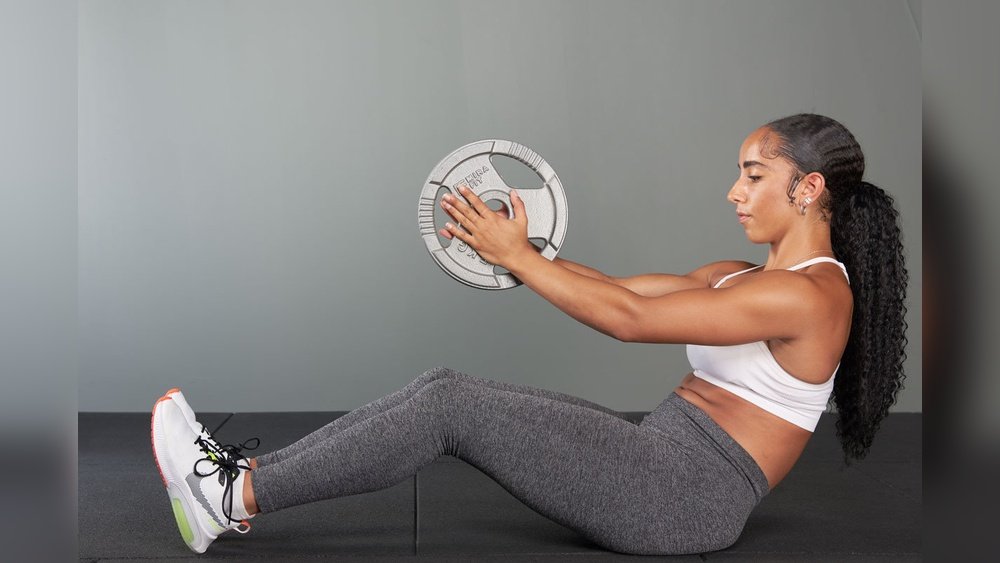
- Russian Twists: Sit on the floor, hold a plate, and twist side to side for a strong core.
- Plate Row: Bend forward, hold a plate with both hands, and pull toward your chest.
- Lateral Raises: Hold a light plate in each hand and lift out to the sides—good for shoulder shape.
- Overhead Plate Carry: Walk while holding a plate overhead. Builds core and stability.
- Halo: Move a plate in a circle around your head. Improves shoulder mobility and core strength.
- Plate Push-Up: Place hands on plates instead of the floor. This increases wrist comfort and difficulty.
Relevant image suggestion:
*Image showing a person doing a Russian twist with a weight plate in a living room. Alt text: Home exerciser doing Russian twist with weight plate.*
How To Structure A Weight Plate Home Workout
A good home workout with weight plates is simple but effective. Here’s a sample plan for beginners:
Warm-up (5 minutes):
- Arm circles, squats, light jogging in place
Main workout (3 rounds):
- Plate squat – 12 reps
- Standing plate press – 10 reps
- Plate row – 12 reps
- Russian twist – 20 twists (10 each side)
- Overhead plate carry – 30 seconds
Rest 60 seconds between rounds. Adjust weight so last 2 reps feel tough but safe.
Cool-down (5 minutes):
- Stretch arms, legs, and back
Actionable tips:
- Start with a light plate (5-10 lbs) and increase slowly.
- Focus on good form—don’t rush.
- Always warm up and cool down to prevent injuries.
Weight Plate Vs. Dumbbell Exercises: Which Is Better For Home Gyms?
It’s common to wonder if you need both. Here’s a side-by-side look:
| Feature | Weight Plates | Dumbbells |
|---|---|---|
| Price | Lower (one set for many uses) | Higher (need several pairs) |
| Space Needed | Very little | More (if you have a full rack) |
| Versatility | High (can use for lifts, carries, core) | High (isolated muscle work) |
| Grip Strength | Works grip more | Standard grip |
| Safety | Easy to drop; watch fingers | Handles are easier to hold |
Bottom line: Weight plates are a smart first buy for space and money. Dumbbells add variety if you have the budget and room.
Common Mistakes To Avoid
Starting with weight plate exercises for home workouts is simple, but mistakes can slow progress or cause injury. Watch out for these:
- Using too much weight: Start light. Form is more important than showing off.
- Bad grip: Always use plates with handles or grip holes. Smooth plates can slip.
- Skipping warm-up: Cold muscles are easy to injure.
- Fast, jerky moves: Control each rep. Don’t swing or throw the plate.
- Ignoring core: Every move should keep your core tight for safety.
- Poor posture: Shoulders back, chest up—don’t hunch or round your back.
Non-obvious insight: Many beginners forget to balance their workouts. For example, doing only chest and arm moves leads to weak legs and back. Always include full-body exercises.
How To Choose The Right Weight Plates For Your Home
Not all plates are the same. Consider these points when buying:
- Size and shape: Make sure plates fit your hands and your space.
- Material: Rubber-coated plates are quieter and safer on floors.
- Weight range: Get a few light and medium plates to start (5, 10, 25 lbs).
- Handles: Plates with cut-out grips are safer and more flexible.
- Budget: Buy what you’ll use most—extras can wait.
Example: A beginner might start with two 10-lb grip plates and one 25-lb plate. This lets you mix and match for different exercises.
External resource: For a deeper look at weight plate options and how to use them, check out the Verywell Fit weight plate guide.
Credit: www.hypervibe.com
Making Progress With Weight Plate Workouts
Building strength is a journey. Here’s how to keep improving at home:
- Track your reps and weight in a notebook or app.
- Increase weight or reps every 2-3 weeks.
- Try new exercises—add lunges, single-arm presses, or plate slams.
- Mix in cardio—use plates for high-rep circuits.
- Rest and recover—don’t train the same muscles every day.
Advanced tip: Once you master basic moves, try unilateral exercises (one arm or leg at a time) to fix muscle imbalances and increase core activation.
Safety Tips For Plate Training At Home
Safety matters, especially if you train alone:
- Clear your workout area—remove clutter and slippery rugs.
- Check your plates for cracks or sharp edges.
- Lift with your legs, not your back, when picking up plates.
- Use a mat to protect floors from dropped plates.
- Store plates safely—stack them flat or use a rack.
Relevant image suggestion:
*Image of a home gym corner with weight plates stored safely on a rack, next to a workout mat. Alt text: Weight plates stored on rack in a clean home gym.*

Credit: squatwolf.com
Creative Ways To Use Weight Plates
Don’t get bored! Plates work for more than just lifting:
- Cardio circuits: Do squats, presses, and carries back to back.
- Partner workouts: Pass a plate to a friend for fun and challenge.
- Stretching: Use plates to hold down your feet during sit-ups.
- Obstacle courses: Step over or around plates for agility training.
Non-obvious insight: Even kids and older adults can use very light plates for gentle strength and balance exercises.
Summary And Motivation
Weight plate exercises for home workouts offer a powerful, flexible, and affordable way to get fit. With just a few plates, you can train your whole body, improve real-life strength, and keep challenging yourself as you grow. Remember to start light, focus on good form, and enjoy the journey.
Every small step adds up to real progress. Your home gym doesn’t need to be fancy—just consistent and creative. Grab those plates, get moving, and discover how strong you can become!

Credit: www.youtube.com
I am a certified fitness coach with over 10 years of experience helping people improve their strength, endurance, and overall health. Specializes in workout programming, weight training, fat loss, muscle building, home fitness, and evidence-based nutrition.My goal is to make fitness simple and practical through well-researched guides, honest product reviews, and actionable training advice.