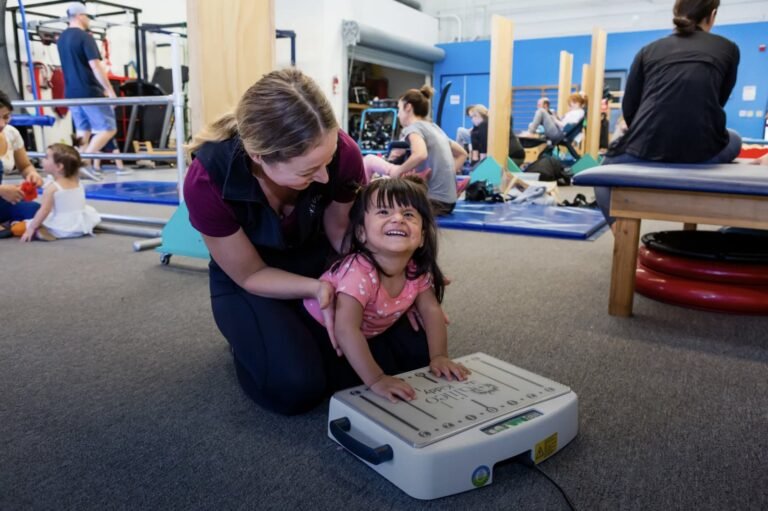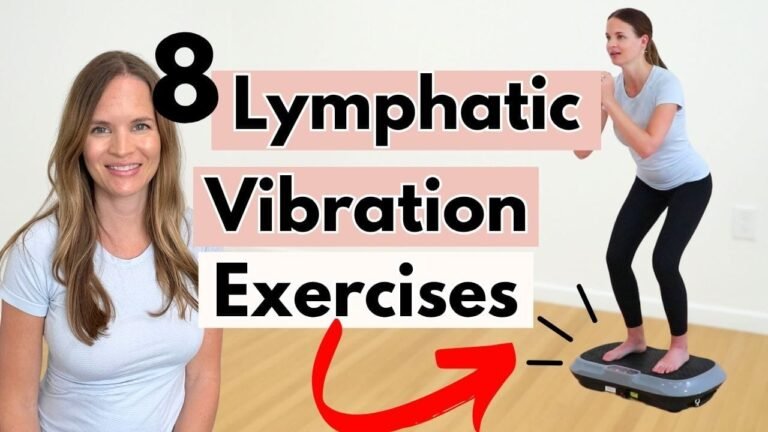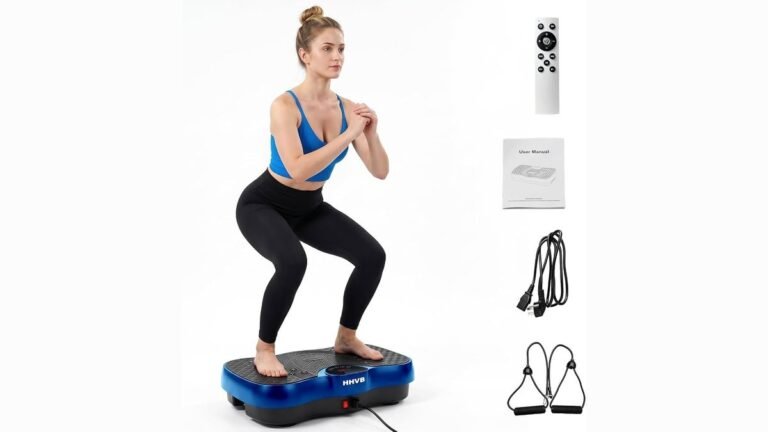

Whole body vibration benefits come from standing, sitting or lying on a machine that shakes 15–50 times a second. Sessions run 10–20 minutes, 2–5 times a week, at 15–40 Hz. This guide covers the evidence, the settings, and who should skip it.
How whole body vibration works
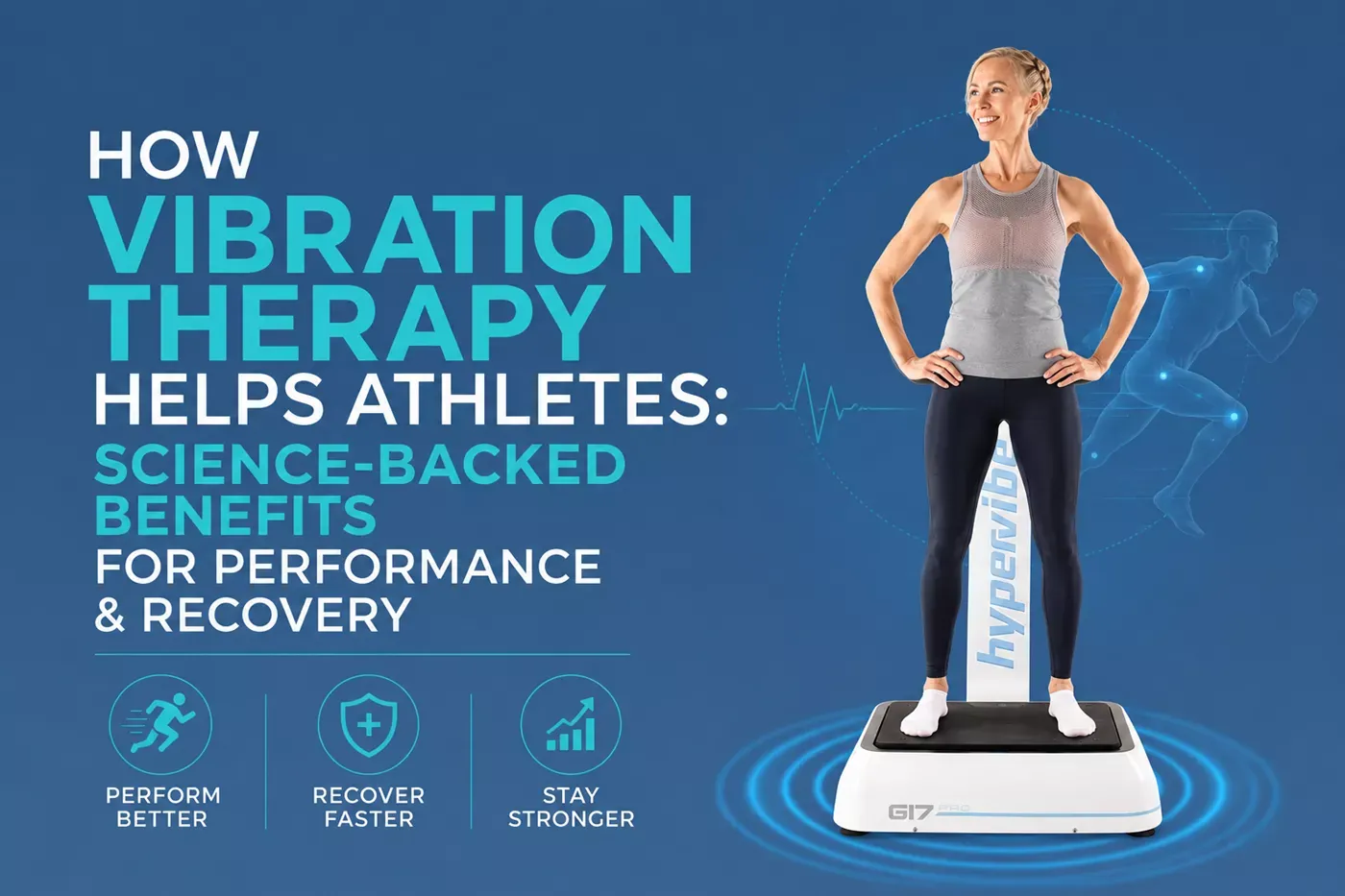
A vibration platform sends mechanical energy through your feet or seat, and your muscles answer with small, fast contractions. That reflex is why people use it — for balance, bone density, muscle power and circulation.
The common misconception is that you can just stand there and get fit. The benefit depends on frequency, amplitude and posture.
How to run a vibration session
- Set the frequency to 15–25 Hz for a warm-up and 25–40 Hz for strength work.
- Choose low amplitude (about 1–2 mm) if you’re new; higher amplitude adds load.
- Stand with feet shoulder-width apart, knees slightly bent, for 30–60 seconds.
- Rest 30–60 seconds, then repeat for 5–8 rounds, total 10–20 minutes.
- Add a static hold — squat, lunge or push-up — for the last 3 rounds.
- Stop at 20 minutes; longer isn’t better and raises dizziness risk.
The judgement call is posture. Soft knees and a straight spine let the vibration travel through your body; locked knees send it into your head. If you have a heart condition, a recent fracture, a pacemaker or you’re pregnant, don’t self-prescribe this — talk to your doctor or a physiotherapist first.
Settings and timings at a glance
Match the setting to your goal, because a balance session and a strength session use different numbers.
| Situation | What to use | How long | What to watch for |
|---|---|---|---|
| First session | 15–20 Hz, low amplitude | 5–8 min | Dizziness, start slow |
| Balance training | 20–30 Hz, low amplitude | 10 min | Hold a rail if needed |
| Muscle power | 30–40 Hz, higher amplitude | 15 min | Soreness next day |
| Bone density work | 30–40 Hz, low amplitude | 10–15 min | Needs medical advice |
| Circulation | 15–25 Hz, low amplitude | 10 min | Tingling in feet |
| Cool-down | 10–15 Hz, low amplitude | 5 min | Keep breathing steady |
What separates good results from bad ones
People who get results treat the plate like a training tool, not a gadget. They warm up first, keep sessions short, and progress the frequency over weeks instead of jumping to the top setting on day one.
Preparation and order
They check their stance before switching on, and they keep the same routine for 4–6 weeks before changing it. The order matters: warm-up frequency first, strength frequency second, cool-down last.
What they check and leave alone
Partway through, they check their knees are soft and breathing is normal. They stop when they feel sharp pain — vibration amplifies bad positions, so a sore knee gets worse.
Common problems and quick fixes

Most issues trace back to stance, frequency or session length, and they’re easy to correct.
| What you notice | What it usually means | What to do first |
|---|---|---|
| Dizziness or headache | Frequency too high, knees locked | Drop to 15 Hz, bend knees |
| No progress after weeks | Same setting every time | Raise frequency by 5 Hz |
| Sore knees | Straight legs, no bend | Add 20–30° knee bend |
| Tingling feet | Long session, thin shoes | Wear trainers, cut to 10 min |
| Back ache | Leaning forward | Stand tall, reduce amplitude |
Safety rules and who sets them
Vibration training isn’t risk-free, and the rules come from health bodies, not marketing pages. The U.S. Food and Drug Administration classes some whole-body vibration devices as medical devices, so check its guidance on cleared uses before buying.
Keeping progress going
Once you’ve found a setting that works, hold it for 4–6 weeks before moving up. If you stop for a month, restart at your beginner setting. Watch for returning dizziness or joint pain; that’s the sign to drop back a level, not push through.
When vibration training isn’t the right choice

Skip it if you’re pregnant, have a pacemaker, or have a recent fracture or blood clot — use guided physiotherapy instead. If your goal is real strength, free weights or resistance bands build more muscle than a plate alone.
Frequently asked questions
How long should a whole body vibration session last?
10–20 minutes, 2–5 times a week, at the standard settings. Beginners should start at 5–8 minutes and build up over 2–3 weeks.
Is whole body vibration safe every day?
No — most guidance suggests 2–5 sessions a week, not daily. Daily use raises dizziness and joint-soreness risk without adding benefit.
How many Hz is best for weight loss?
There’s no proven fat-loss frequency. Use 25–40 Hz for muscle work, but treat weight loss as a diet and activity result, not a vibration one.
Can vibration plates help bone density?
Some studies suggest a possible effect, but evidence isn’t strong enough to replace medical treatment. Ask your doctor before using it for osteoporosis.
Why do I feel dizzy after using a vibration plate?
High frequency or locked knees send more vibration to your head. Drop to 15 Hz, bend your knees, and shorten the session to 10 minutes.
What happens if I use it while pregnant?
Don’t — avoid it unless your doctor approves. The effects on pregnancy aren’t well established, so treat it as off-limits.
Do I need special shoes on a vibration plate?
Yes, wear supportive trainers rather than bare feet or socks. They cushion the vibration and reduce tingling in your feet.
Conclusion
Whole body vibration can support balance, muscle power and circulation when you use the right settings for your goal — but it’s a tool, not a shortcut. Start low, keep sessions short, and check with a doctor if you have any health condition before you step on.
I am a certified fitness coach with over 10 years of experience helping people improve their strength, endurance, and overall health. Specializes in workout programming, weight training, fat loss, muscle building, home fitness, and evidence-based nutrition.My goal is to make fitness simple and practical through well-researched guides, honest product reviews, and actionable training advice.