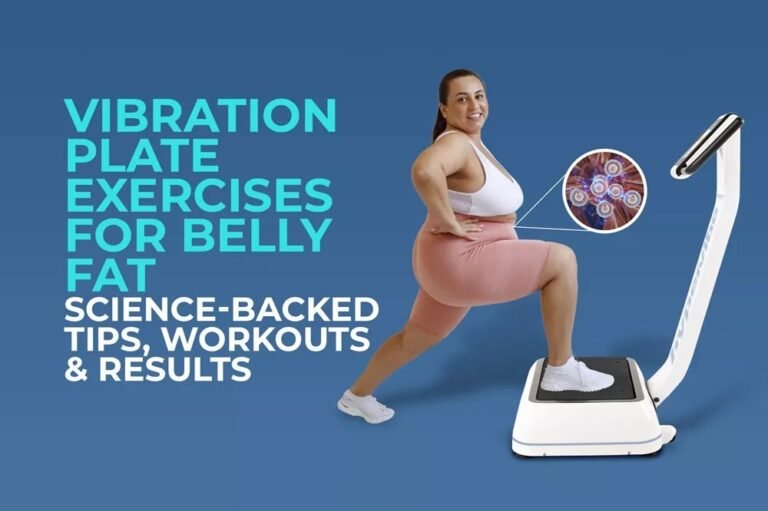

Vibration plates can help with balance, muscle strength, and bone density, but only with 2–3 sessions a week for 6–8 weeks.
Two things decide your result: how hard the plate shakes and how you stand. Start low and hold on.
The common mistake is treating it like a ride. People stand stiff-legged for 5 minutes, feel a buzz, and stop. That’s not a workout. Bend your knees, keep your weight even, and let your muscles fight to stay steady.
How to use a vibration plate

- Set the frequency low to start. Begin at 15–20 Hz for your first few sessions. Stay there for a week before you push higher. High settings on day one are how people lose their balance.
- Hold a stable stance for 30–60 seconds. Feet shoulder-width apart, knees soft, not locked. Do 3–5 rounds with 30 seconds of rest between them.
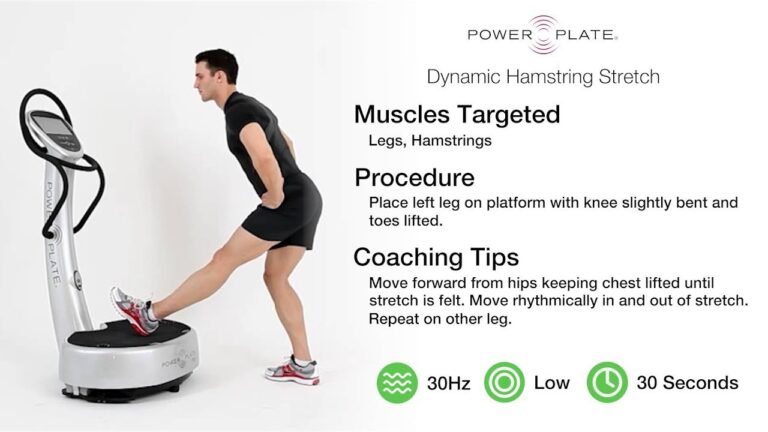
- Add a movement once the basic stance feels easy. Do a slow squat, a lunge, or a calf raise while the plate runs. This is where strength work actually happens — 10–12 slow reps per round.
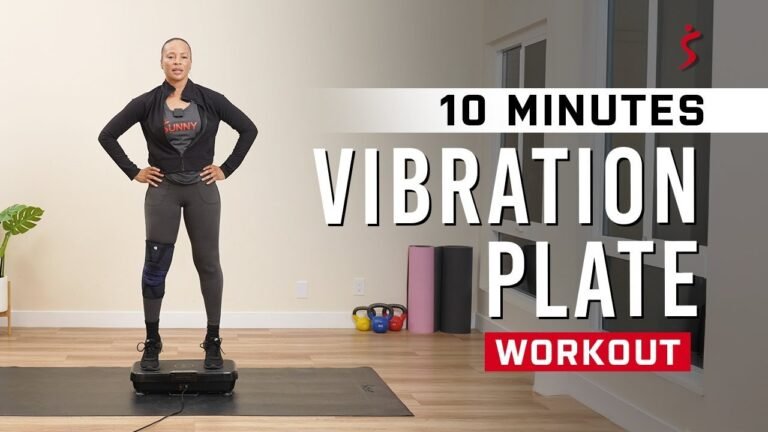
- Keep sessions short. 10–15 minutes total, 2–3 times a week. Longer isn’t better here. Your muscles need rest days the same as any other training.
- Stop if you feel dizzy, sick, or your vision blurs. Step off, sit down, and don’t restart that day. If it happens again, see a doctor before your next session.
Tip: Never use a plate barefoot on a hard floor if you have balance problems. Wear supportive shoes and keep a chair or rail within arm’s reach.
Tip: If you have a joint replacement, a spine condition, a pacemaker, or you’re pregnant, talk to your doctor first.
How long before you see results
You’ll feel steadier on your feet in about 2 weeks. The table below assumes 2–3 sessions a week at a low to moderate setting.
| Situation | How long | What changes it | What to watch for |
|---|---|---|---|
| Balance and steadiness | 2–4 weeks | How often you train | Skipping weeks resets progress |
| Leg strength | 6–8 weeks | Adding squats or lunges | Standing still does less |
| Bone density | 6–12 months | Age, diet, hormone status | Needs a doctor’s scan to confirm |
| Fat loss | Months, if at all | Diet and total activity | The plate burns few calories alone |
| Flexibility | 4–6 weeks | Stretching on the plate | Don’t force a stretch |
If it’s taking far longer than the table says, check your frequency setting and whether you’re actually doing reps — not just standing there.
Signs a vibration plate is working for you

You’ll notice you can stand on one leg longer or climb stairs without the rail. Your legs feel tired after a session the way they do after a walk uphill.
For balance, the test is a single-leg stand: time how long you hold each side with your eyes open. Compare week 1 to week 8.
Bone density can’t be judged at home. Only a DEXA scan ordered by a doctor shows that.
Mistakes that waste your time on a plate

- Standing still and calling it a workout. Your muscles adapt in days, so the buzz stops doing anything. Add squats, lunges, or calf raises to keep the load real.
- Cranking the frequency too high. A setting you can’t control makes you tense up and grip the handles. That kills the benefit and raises your fall risk. Drop back to a speed you can hold.
- Training every day. Vibration loads your muscles and joints like any resistance work. Daily sessions without rest leave you sore and weaker, not stronger. Keep 2–3 days a week.
- Expecting weight loss from the plate alone. A 15-minute session burns far fewer calories than a brisk walk of the same length. If fat loss is the goal, the plate is a small add-on, not the plan.
- Ignoring pain or numbness in your feet or legs. That’s a sign to stop and get checked. Pushing through it can turn a minor issue into a lasting one.
Frequently asked questions
Do vibration plates really work for weight loss?
No, not on their own. A 15-minute session burns only a small number of calories, well below a brisk walk. They can support a weight-loss plan as one small piece, but the results come from your diet and total daily activity, not the plate.
How long do you need to use a vibration plate to see results?
About 6–8 weeks for strength and balance, at 2–3 sessions a week, 10–15 minutes each. Bone density, if it changes, takes 6 months or more and needs a scan to confirm.
Is it safe to use a vibration plate every day?
It’s not recommended. Your muscles and joints need rest between sessions, the same as with weights. Two to three days a week is enough for most people. Daily use raises your risk of soreness and joint strain without adding benefit.
Can vibration plates build muscle?
They can build some leg and core strength, mainly in people who don’t train otherwise. The gains are modest compared to squats, lunges, or lifting weights.
What happens if you use a vibration plate with a pacemaker?
Don’t. Strong vibration can affect implanted electronic devices. Ask your cardiologist before you buy one.
Are vibration plates bad for your knees?
Not at a low setting with soft knees and short sessions. High frequency, long sessions, or locked knees can irritate them. If you have existing knee problems, get your doctor’s clearance and start at the lowest setting.
How often should you use a vibration plate?
Two to three times a week, 10–15 minutes per session, with rest days between.
Conclusion
The honest answer is that a vibration plate is a useful add-on for balance and leg strength, and a poor substitute for real exercise. Results depend on your age, your health, and how often you actually use it — and you can read your own progress off a single-leg stand, week by week.
I am a certified fitness coach with over 10 years of experience helping people improve their strength, endurance, and overall health. Specializes in workout programming, weight training, fat loss, muscle building, home fitness, and evidence-based nutrition.My goal is to make fitness simple and practical through well-researched guides, honest product reviews, and actionable training advice.