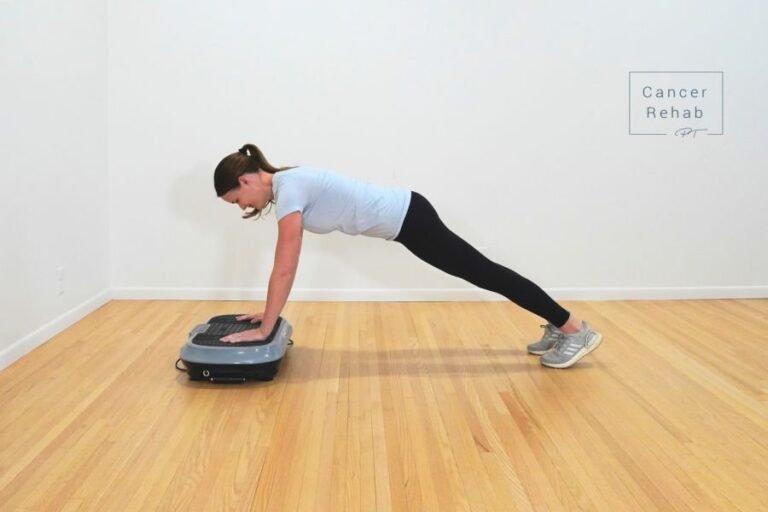
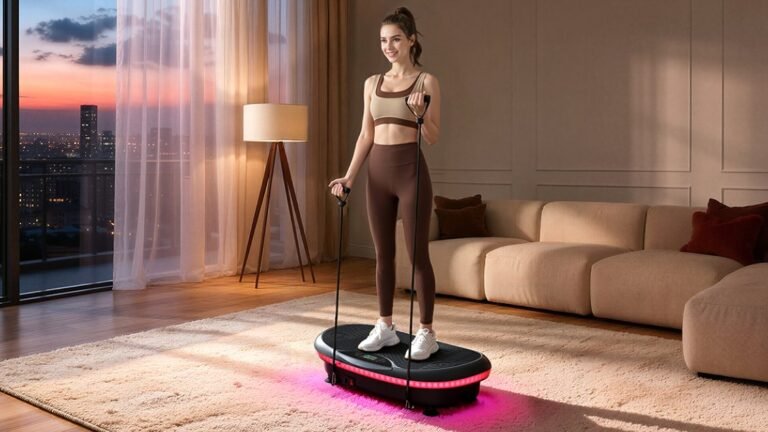
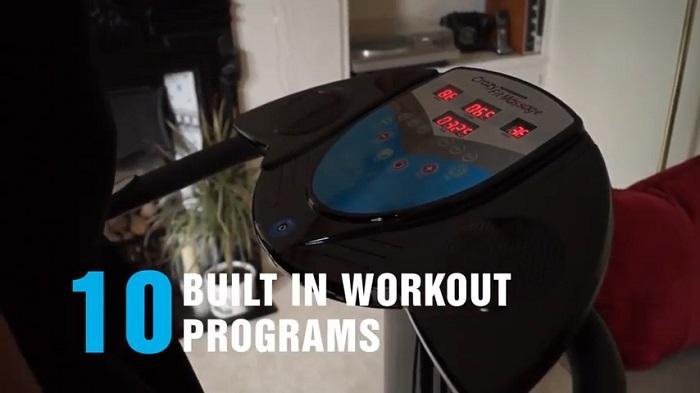
A vibration plate sends energy up through your body from the platform under your feet. The plate shakes 20 to 50 times every second. Your muscles tighten and let go without you deciding to move.
What’s inside a vibration plate

The platform, motor, spring mounts and control board decide how the shake reaches you.
| Part or input | What it does | What you notice when it goes wrong |
|---|---|---|
| Platform | Passes the shake into your feet | Dead spots or a rattling sound |
| Motor | Spins the offset weight | Slower shake, or a burning smell |
| Spring mounts | Soften the up-and-down push | Whole unit walks across the floor |
| Control board | Sets speed and timer | Speeds jump or won’t hold |
| Your stance | Changes which muscles answer | Same setting feels easy or harsh |
| Body position | Shifts load to different muscles | Knees or lower back take the strain |
Check the plate’s manual or the maker’s page for its rated speed range in hertz — that figure changes by model.
What happens, step by step
- You step on and set your feet about hip-width apart, which spreads the load evenly across both legs.
- You choose a speed, usually starting at the lowest setting for the first 30 to 60 seconds.
- The motor spins its offset weight, turning that spin into a vertical push at the platform.
- The platform moves up and down at the rate you picked, often between 20 and 50 times per second.
- Your muscles sense the instability and fire in short bursts to keep you upright, dozens of times per second.
- Blood flow rises in the working legs as those muscles keep contracting, which is why skin feels warm after a few minutes.
- You hold the pose for the set time, often 30 to 60 seconds per position on a first session.
- You step off slowly, because your legs have been working and a fast dismount can catch you off balance.
Why the shake reaches your muscles

Whole-body vibration passes mechanical energy into the body through the feet, and the muscles respond with repeated small contractions. That’s the mechanism behind every claim you’ve read about these machines.
A symptom points at one part, not another. If the platform stutters or slows under your weight, the motor or spring mounts are the suspect. If your knees hurt during the session, look at your stance first.
What you control, and what you don’t
You control how you use the machine more than the machine itself. Your stance, speed and session length decide where you land under it.
Things you control
- Speed setting, from the lowest step up to the plate’s top rate.
- Stance width and knee bend, which shift load between muscles and joints.
- Session length and how many sets you do per day.
- What you do on the plate — standing, squatting, lunging or sitting.
- When you stop. Soreness, dizziness or joint pain is your signal, not the timer’s.
Things fixed by design
- The motor’s top speed, set at the factory and printed in the manual.
- The direction of movement — vertical, rocking or dual-motion.
- The platform’s size and the weight it’s rated to hold.
- The spring stiffness, which sets how much of the shake you actually feel.
If you have a heart condition, a recent fracture, a blood clot, a hernia, a spinal implant or you’re pregnant, talk to your doctor first. Whole-body vibration isn’t a neutral input for everyone, and a clinician who knows your history is the only person who can clear you.
Getting more out of a vibration plate

Match the speed to the job. Low settings suit balance work; higher settings load muscles harder in less time. Keep first sessions to 5 to 10 minutes total.
Bend your knees slightly on every standing pose.
Track your settings in a note. Stop while your legs still feel steady, not after they’ve gone shaky.
Related guides
- Weight Plates Kg Vs Lbs Conversion
- Weight Plates Workout Routines for Beginners at Home
- Best Bumper Plates for Home Gym Reddit Picks 2026: Top Buys
Frequently asked questions
How does a vibration plate work on your muscles?
The platform shakes your body 20 to 50 times per second, and your muscles fire in short bursts to keep you balanced.
How long should you use a vibration plate?
Start with 5 to 10 minutes total per session, split into 30 to 60 second holds. That assumes a beginner on a home plate at low to mid speed. Build up over several weeks.
Can you lose weight using a vibration plate?
Not by standing on it alone. The muscle work burns some calories, but it’s far less than walking or cycling for the same time. Use it alongside activity you already do.
Is a vibration plate safe every day?
For most healthy adults, yes, at moderate speeds and short sessions. Skip it if you’re pregnant, have a blood clot, a recent fracture or a spinal implant, unless cleared by your doctor.
What happens if you use a vibration plate too long?
You’ll get shaky legs, sore muscles and sometimes dizziness. The risk isn’t injury from the shake itself — it’s losing your balance when you step off tired. Keep sessions short and dismount slowly.
Does the speed setting matter?
Yes, a lot. Low speeds under about 30 Hz suit balance work; higher speeds load muscles harder in less time.
Why do my legs feel shaky after using one?
Your muscles have been firing dozens of times per second, which tires them in a way slow lifting doesn’t. Stop if it turns into joint pain.
Can you use a vibration plate if you have bad knees?
Sometimes, but check with a doctor or physical therapist first. A slight knee bend and a narrow stance usually feel better than locked knees and a wide stance. Stop if the joint hurts.

I am a certified fitness coach with over 10 years of experience helping people improve their strength, endurance, and overall health. Specializes in workout programming, weight training, fat loss, muscle building, home fitness, and evidence-based nutrition.My goal is to make fitness simple and practical through well-researched guides, honest product reviews, and actionable training advice.