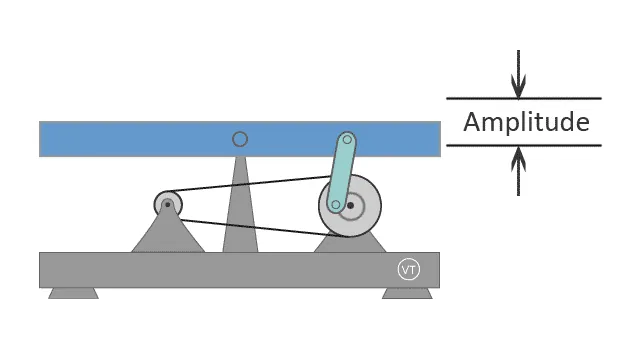
Amplitude is how far the plate moves up and down. Most home vibration plates run at 1-2 mm, and that number matters more than the speed setting for how hard the workout feels.
What amplitude means on a plate
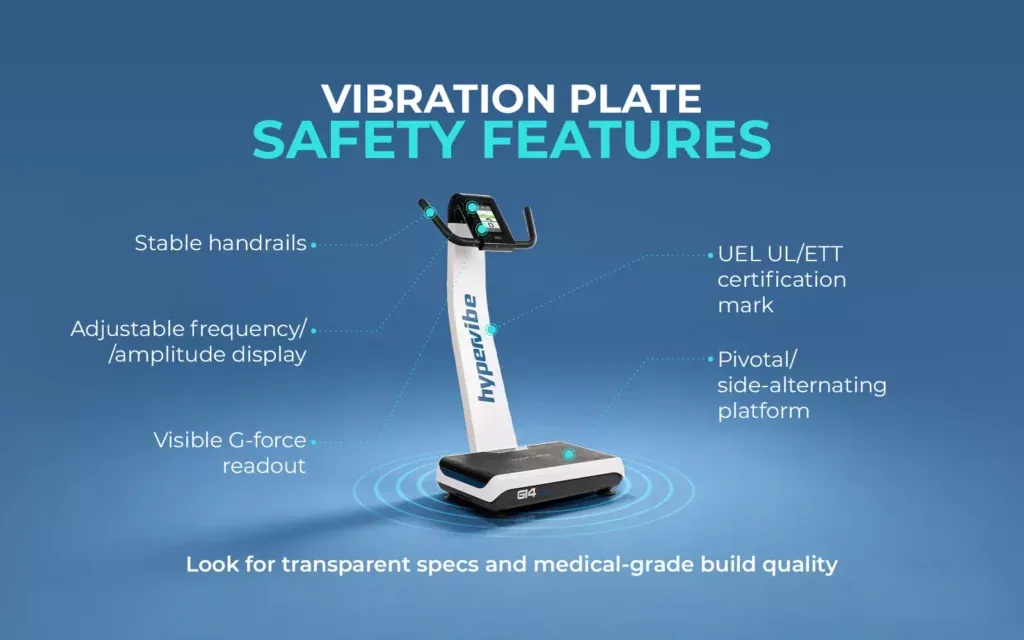
Amplitude is how far the platform is displaced from its rest position, measured in millimeters. A 2 mm plate lifts your feet 2 mm above rest and 2 mm below it. That’s it.
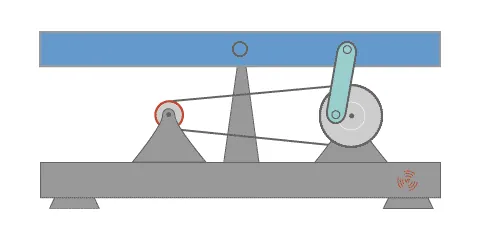
A pivoting plate tilts like a seesaw, so the movement is bigger at the edges. A lineal plate moves straight up and down, so the whole platform travels the same distance.
How to set amplitude for a session
Amplitude isn’t usually a dial you turn — it’s fixed by the machine you bought. What you control is stance, position, and time.
- Check your plate’s spec first. Look for the amplitude figure in the manual or on the maker’s site. If it isn’t listed, treat it as a small-amplitude plate.
- Set frequency low to start — around 15-20 Hz. Use this for your first 2-3 sessions to learn the balance.
- Stand with feet shoulder-width apart. Wider stance reduces how much the tilt reaches your hips on a pivoting plate.
- Hold each position for 30-60 seconds. Do 3-5 positions per session.
- Bend your knees slightly. Straight, locked legs pass more vibration into your lower back.
- Build to 30 Hz only if 20 Hz feels easy. Raise frequency, not time, first.
- Stop at 10-15 minutes total. Longer isn’t better here.
The one judgement call that decides your result: whether you keep your heels down. Lifting onto your toes cuts the vibration path. Keep both feet flat unless the exercise says otherwise.
Amplitude and frequency settings
The right setting depends on your plate type and your goal. Use this as a starting map, then adjust to how you feel.
| Situation | What to use | How long | What to watch for |
|---|---|---|---|
| First session, any plate | 15-20 Hz, feet flat | 5 minutes | Dizziness when you step off |
| Balance work, pivoting plate | 15-25 Hz, wide stance | 30-60 sec per pose | Grip on the handles |
| General toning, lineal plate | 25-30 Hz, knees soft | 10 minutes | Lower back ache |
| Small 1 mm plate | 30-40 Hz to feel it | 10-15 minutes | Numb or tingling feet |
| Large 2 mm+ plate | 20-25 Hz is plenty | 10 minutes | Knee or ankle strain |
| Seated or hands on plate | 30-40 Hz | 5-10 minutes | Skin irritation |
| After a workout | 20-30 Hz, relaxed | 5 minutes | Sore spots the next day |
What good sessions look like
Experienced users warm up before they touch the plate. Cold muscles and a moving platform don’t mix well.
Partway through, they check one thing — are my heels still down? The moment your heels lift, you’ve lost most of the effect. That single check does more than any setting change.
And they leave things alone. They don’t chase the highest Hz on the dial, and they don’t add extra minutes because it “feels like nothing.” A 10-minute session at a sensible setting beats 25 minutes at a setting your joints can’t handle.
Common problems and fixes
Most issues trace back to stance, time, or too high a setting.
| What you notice | What it usually means | What to do first |
|---|---|---|
| Feet go numb | Too long on one setting | Cut to 5 minutes, raise frequency slightly |
| Dizzy when stepping off | Frequency too high for you | Drop to 15 Hz, hold the handles |
| Lower back aches | Legs locked straight | Soften knees, reduce time |
| Nothing feels different | Amplitude too small for the stance | Widen stance, raise Hz |
| Knees hurt | Too much time at high Hz | Lower Hz, shorten session |
| Headache after | Neck tension, poor posture | Relax shoulders, look forward |
What the rules and labels say
In the US, fitness vibration plates fall under the Consumer Product Safety Commission (CPSC)’s general product safety rules. Machines marketed for a medical purpose fall under the FDA instead.
Check the manual for a maximum user weight and time limit. Going past them is where most warranty claims and injuries start.
Keeping the plate working
Wipe the platform after each session. Check the rubber feet every few months — worn feet make the plate wobble. If the plate rattles or feels loose, stop using it. Don’t keep training on a plate that has changed how it moves.
When a vibration plate isn’t right
Skip the plate if you’re pregnant, have a recent fracture or spinal implant, or wear a pacemaker — ask your doctor first.
Related guides
- Weight Plates Kg Vs Lbs Conversion
- Weight Plates Workout Routines for Beginners at Home
- Best Bumper Plates for Home Gym Reddit Picks 2026: Top Buys
Frequently asked questions
What is a good amplitude for a vibration plate?
For home use, 1-2 mm suits most people. Under 1 mm is gentle and best for balance work; over 2 mm is rare and mostly found on commercial machines. Match it to your fitness level, not to a bigger number.
Is higher amplitude better?
No. Higher amplitude means more travel, which is harder on joints and balance. A 2 mm plate at 25 Hz is plenty for most home users. Only trained users on commercial plates need more.
How long should I use a vibration plate each day?
10-15 minutes a day is the common range for home plates, split into 3-5 positions. Start at 5 minutes for your first week. Check your manual — the maker’s limit overrides any general figure.
Can I use a vibration plate every day?
Yes, daily use is fine for most healthy adults at 10-15 minutes. Give yourself one rest day a week if you feel sore. If you have a health condition, get your doctor’s OK first.
Why do my feet go numb on a vibration plate?
Numb feet usually mean the session ran too long or the frequency is too high for you. Step off, shake your feet out, and restart at a lower setting for 5 minutes.
Is it safe to use a vibration plate with a bad back?
Not without medical advice. Vibration loads the spine, so a herniated disc or recent injury makes it risky. Ask a physiotherapist or doctor, who can tell you whether a seated routine is safer.
What happens if I use too much amplitude?
Too much travel, for too long, tends to show up as joint pain, dizziness, or lower back ache the next day. Drop the frequency, shorten the session, and keep your knees soft.
Conclusion
Amplitude is a fixed number, not a challenge. Find your plate’s figure, keep your heels down, and pick a frequency you can hold for 10 minutes with good form. That’s the whole game — the rest is patience.

I am a certified fitness coach with over 10 years of experience helping people improve their strength, endurance, and overall health. Specializes in workout programming, weight training, fat loss, muscle building, home fitness, and evidence-based nutrition.My goal is to make fitness simple and practical through well-researched guides, honest product reviews, and actionable training advice.