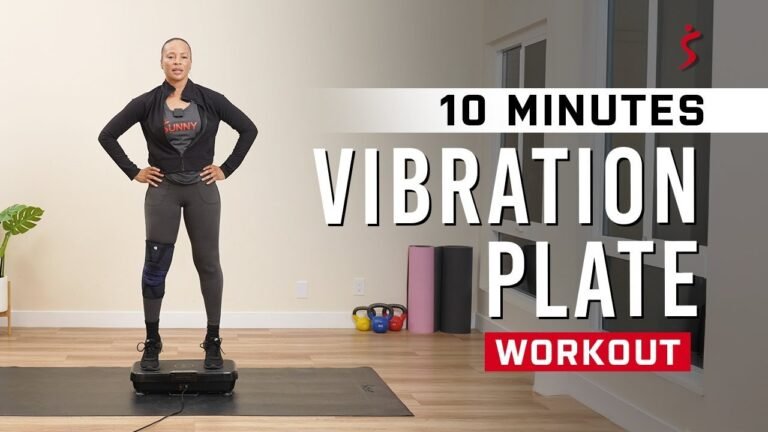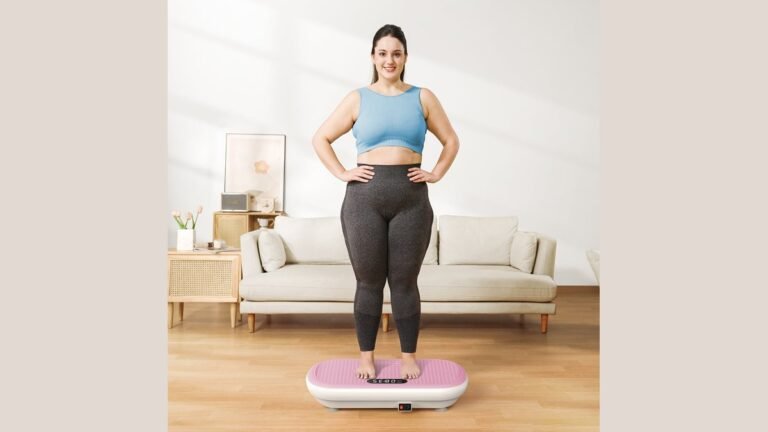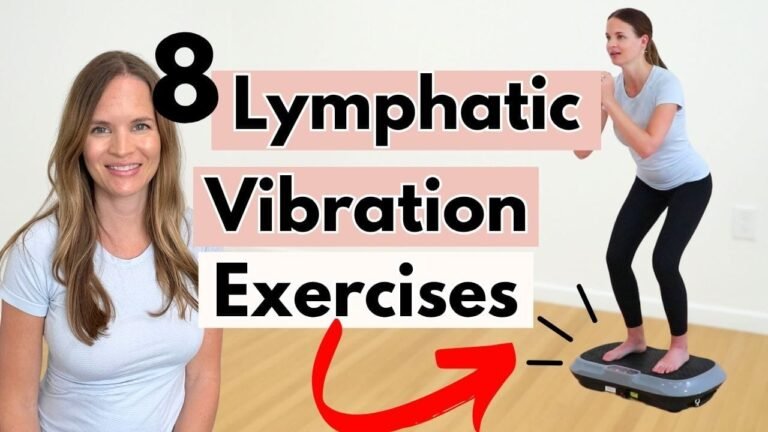

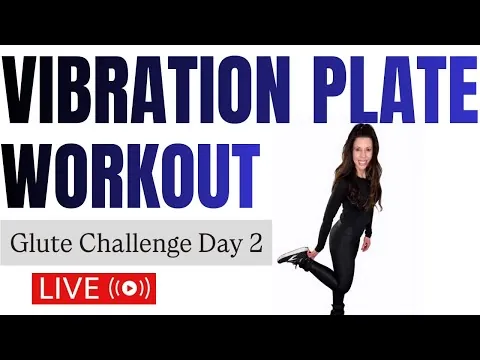
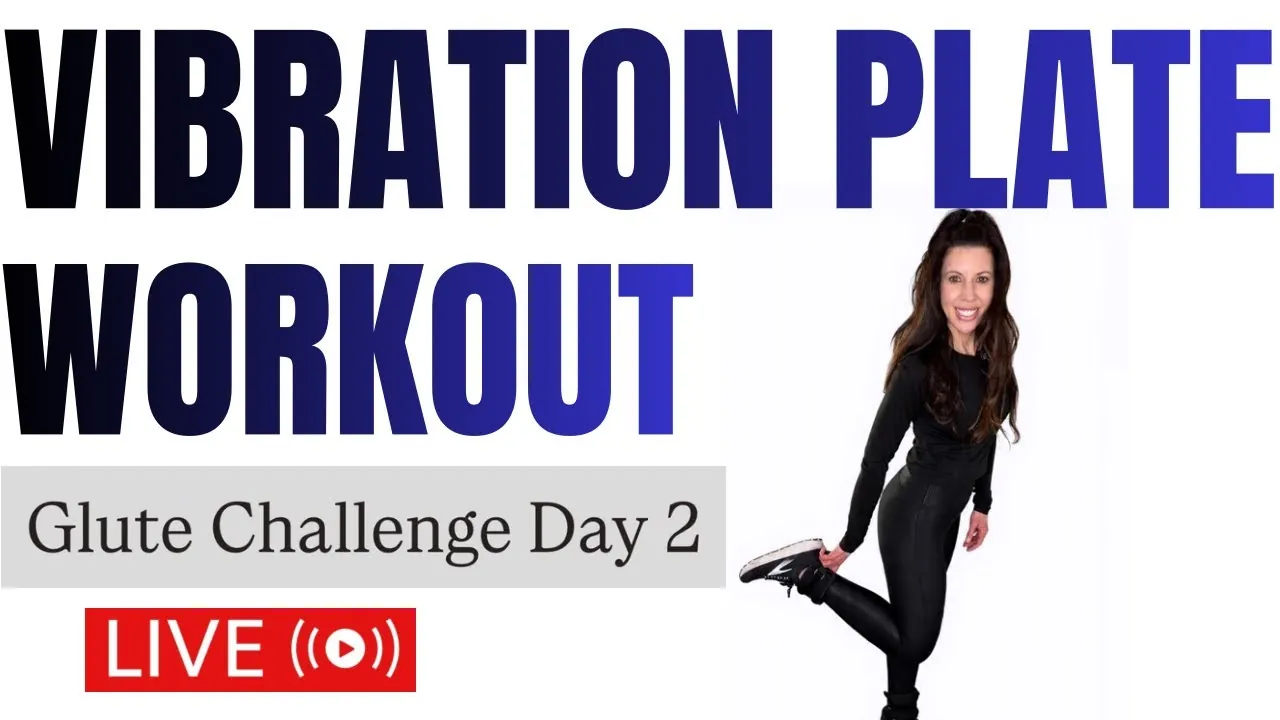
A vibration plate glute workout works best as a short strength circuit: 3 rounds of squats, glute bridges, and hip hinges, 30-45 seconds per move, with the plate on a low setting. It suits anyone short on time who already knows basic exercise form.
What you’ll need before you start

- A vibration plate with a low speed setting — most home models start around 20-30 Hz. If yours only runs fast, that’s a problem for control.
- Non-slip shoes or bare feet on the plate surface. Socks slide.
- A resistance band (light or medium loop) for glute bridges if bodyweight feels too easy.
- A stable chair or wall within arm’s reach for balance.
- Water and a 2×2 meter clear floor space — plates wobble, and you’ll want room to step off safely.
- A mat for the floor moves you’ll do between plate sets.
- A timer on your phone for 30-45 second intervals.
A light dumbbell works fine instead of a band for extra load. What won’t work is a high-speed plate set to maximum — you’ll lose form before you feel your glutes.
Step-by-step glute circuit
- Warm up for 2 minutes with easy marching on the floor, not on the plate. Cold glutes pull.
- Set the plate to its lowest speed and stand on it with feet hip-width apart. Hold the chair if you feel unsteady.
- Do 12-15 bodyweight squats, pushing your hips back and squeezing your glutes at the top. Slow down if the vibration throws off your balance.
- Step off and do 15 glute bridges on your mat, 2 seconds up, 2 seconds down.
Tip: The bridge is where most of the glute work happens. Don’t rush it.
- Return to the plate for 10 hip hinges per leg — one foot on the plate, one on the floor. Keep your back flat.
- Rest 45-60 seconds, then repeat the whole circuit 2 more times. Total: 3 rounds, about 12 minutes.
- Cool down for 3 minutes with slow walking and a seated glute stretch, 30 seconds per side.
Careful: Step off the plate before it stops moving.
Careful: If you have a pacemaker, a recent fracture, or you’re pregnant, skip vibration training and ask your doctor first. The FDA lists vibration plates as contraindicated for some of these conditions — check their device guidance first.
How the work changes with your setup
Your time and effort shift a lot depending on the plate and your experience level. Here’s the honest picture:
| Your situation | Time per session | What’s different | Watch for |
|---|---|---|---|
| First week, any plate | 8-10 min | Bodyweight only, 2 rounds | Soreness for 1-2 days |
| Home plate, low speed | 12-15 min | 3 rounds, add band | Balance on squats |
| Gym plate, adjustable | 15-20 min | Add dumbbells, 4 rounds | Overloading too fast |
| Plate over 40 Hz | 8-10 min | Fewer reps, more control | Form breaks down |
| Bad knees or hips | 8-10 min | Bridges only, no squats | Joint pain, stop early |
Start with 2 rounds and add the third only when you finish without losing balance.
How to tell it’s working
A good session leaves your glutes tired but your knees and lower back fine.
A poor result: shaky squats, no glute sensation, and next-day lower-back pain. That means you’re letting your back take the load instead of your hips.
The fix is simple: slow down, drop the speed setting, and squeeze hard at the top of every rep. Two or three controlled rounds beat five sloppy ones every time.
The rules and what to do after
The American College of Sports Medicine recommends strength training for the major muscle groups at least twice a week.
After each session, wipe the plate down, unplug it, and coil the cord. Log your rounds and speed so you can add a little next time. Expect to change your routine every 4-6 weeks as it gets easier.
If you have a heart condition, are pregnant, or have a joint replacement, get clearance from your doctor before you start. Vibration training isn’t a DIY call for everyone.
Other ways to hit the glutes
Bodyweight only, no plate
Skip the machine and do the same circuit on the floor with a 3-second pause at the top of each bridge. It takes about 15 minutes and costs nothing, but you lose the extra muscle activation the plate adds.
Add dumbbells to the plate
Hold a pair of light dumbbells during squats and hinges. This raises the load and shortens your session to about 10 minutes, but balance gets harder — keep one hand near the chair.
See a trainer for one session
A certified trainer can check your form once and hand you a written plan. Expect to pay for that hour. Worth it if your back hurts after every session.
Frequently asked questions
How long should a vibration plate glute workout be?
About 12-15 minutes for 3 rounds at low speed. If you’re new, start at 8-10 minutes with 2 rounds and add one round per week. Longer isn’t better — form fails before your glutes do.
Can you build glutes on a vibration plate alone?
Only partly. The plate adds instability and some extra muscle activation, but real growth needs progressive resistance. Use the plate plus bands, dumbbells, or floor bridges to keep challenging the muscle.
Is a vibration plate safe for your knees?
For most healthy people, yes, at low speed with controlled movement. If you have knee pain, arthritis, or a replacement, talk to your doctor first. Stop immediately if you feel joint pain rather than muscle fatigue.
Why don’t I feel it in my glutes?
You’re probably using your quads and lower back instead. Slow the reps down, push your hips back further in the squat, and squeeze your glutes hard for 2 seconds at the top of every bridge.
How often should you do it?
Two or three times a week, with a rest day between sessions. Daily sessions at high intensity raise your injury risk without speeding up results.
What happens if you use a vibration plate every day?
You’ll likely get sore and tired, and your form will drop. Muscles grow during rest, not during the set. Two to three quality sessions a week beat seven rushed ones.
Do you need shoes on a vibration plate?
Bare feet give you better grip and let your feet work naturally. If you have foot pain or arch issues, wear flat training shoes. Avoid thick cushioned running shoes — they make balance worse.
Conclusion
The plate is a tool, not a shortcut. Three short, controlled rounds twice a week will do more for your glutes than an hour of standing on a fast machine. Keep your reps slow, add load when it gets easy, and give your body the rest days it needs to actually build something.
I am a certified fitness coach with over 10 years of experience helping people improve their strength, endurance, and overall health. Specializes in workout programming, weight training, fat loss, muscle building, home fitness, and evidence-based nutrition.My goal is to make fitness simple and practical through well-researched guides, honest product reviews, and actionable training advice.