
Foam rollers, massage guns, compression boots, cold plunges, and sleep are the post workout recovery tools most people end up choosing between. They all aim at the same thing — helping your muscles bounce back after training — but they split on one point: how much time, money, and effort each one asks from you.
Recovery tools compared
Here’s the full lineup, matched to what each one does best and a real example you’d spot in a gym bag or a locker room.
| Tool | Best for | Example |
|---|---|---|
| Foam roller | Cheap daily self-massage | TriggerPoint GRID roller |
| Massage gun | Fast spot treatment | Theragun or Hypervolt |
| Compression boots | Legs after long runs | Normatec or Air Relax |
| Cold plunge | Cooling down fast | Ice bath or plunge tub |
| Sleep | Full-body repair | 7–9 hours a night |
| Protein and fluids | Rebuilding and rehydrating | Shake plus water and salt |
| Active recovery | Flushing out stiffness | Easy walk or light swim |
Foam roller
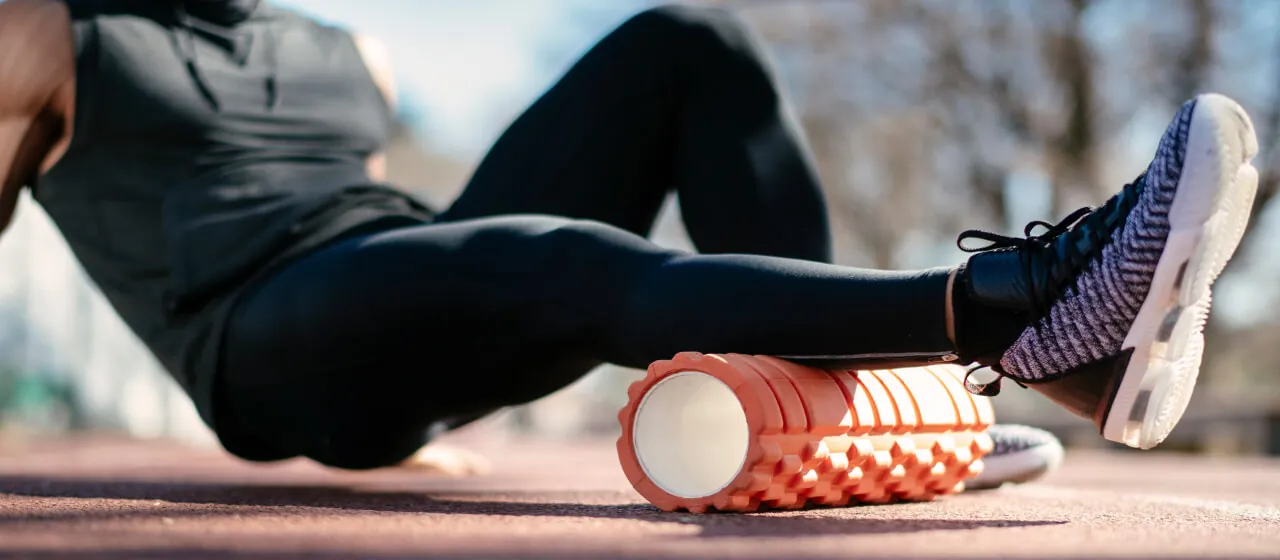
A foam roller is a dense cylinder you roll your muscles over to ease tightness, and it suits anyone who wants a cheap daily habit.
- Loosens tight spots after a hard leg day
- Costs far less than any powered tool
- Packs flat for travel or the gym
- Needs no charging and never runs out
Roll slowly and pause on tender spots for 20 to 30 seconds. A runner easing sore calves after a 10K would spend 5 minutes total, split between both legs.
Massage gun
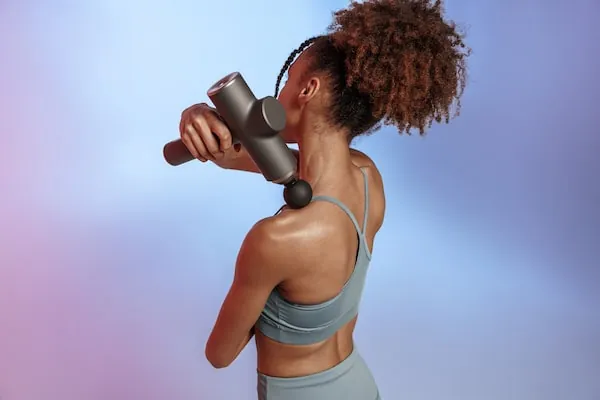
A massage gun is a handheld device that pulses into one muscle at a time, and it does something a foam roller can’t: reach deep, narrow spots like your calves or shoulders without you lying on the floor.
- Targets one tight muscle in under 2 minutes
- Works on hard-to-reach areas like the upper back
- Speeds up your routine on busy days
- Lets you control the pressure and speed
Start on the lowest setting and move the head over the muscle belly, not the joint or spine. Someone with a stiff shoulder after overhead presses might spend 90 seconds per side before bed.
Compression boots
Compression boots are inflatable sleeves that squeeze your legs in waves, and they suit runners, cyclists, and anyone on their feet for hours.
- Pushes fluid out of swollen legs after long runs
- Lets you lie back and recover hands-free
- Covers the whole leg, not just one spot
- Fits into a 15 to 30 minute wind-down
The catch is cost and space: a good pair runs into hundreds of dollars and takes up floor room. A marathoner might use them for 20 minutes the evening after a long run.
Cold plunge and ice baths
A cold plunge is a tub of cold water you sit in for a few minutes, and it suits athletes who need to cool down fast after intense sessions.
- Lowers muscle temperature quickly after hard efforts
- Cuts that heavy, inflamed feeling in the legs
- Needs only water, ice, and a few minutes
- Fits after a game or a race, not every workout
Keep the water cold but not freezing, stay in for a short, set time, and never alone if you’re new to it. For most people, aim for a 10-minute soak at around 50–59°F.
Sleep, food, and easy movement
Sleep is where your body actually rebuilds muscle, and it beats every gadget on this list.
- Sleep — 7 to 9 hours a night for most adults; your body does its repair work here.
- Protein and fluids — a shake plus water with a pinch of salt after sweaty sessions.
- Active recovery — a 20 to 30 minute easy walk or swim the day after a hard workout.
Other tools worth knowing
A few more options show up in gyms and physio rooms, each with a narrow job.
- Percussion ball or lacrosse ball — cheap, firm pressure for glutes and feet when a roller is too soft.
- Compression sleeves — worn during or after training to support one area like a calf or knee.
- Massage or physio session — hands-on work for a stubborn problem a tool can’t reach.
- Stretching and mobility work — 5 to 10 minutes of slow movement to keep range of motion.
- Heat packs — warm, relaxed muscles before activity, not after hard training.
How to pick your post workout recovery tools
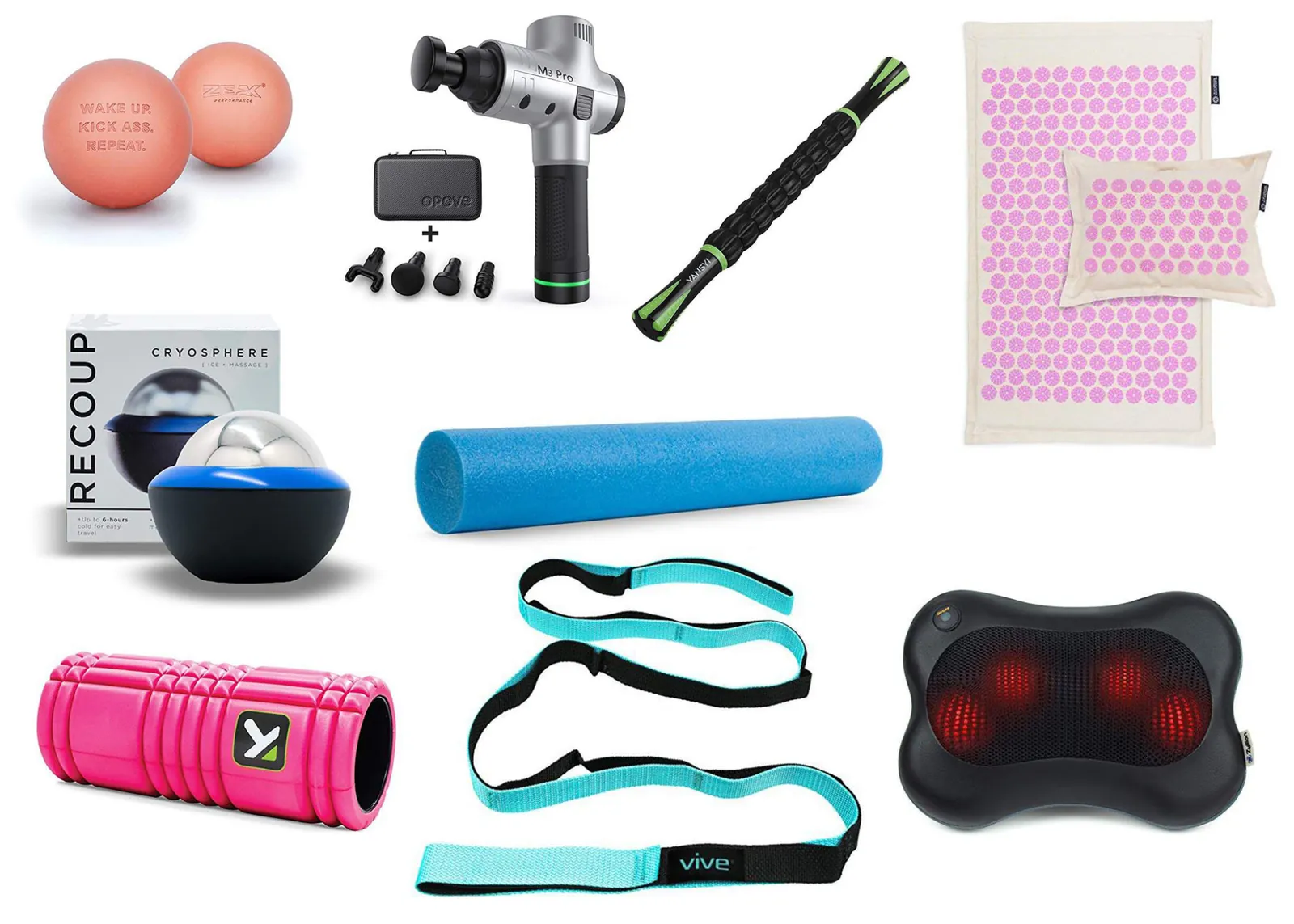
Your budget settles most of this. If you train most days on a tight budget, a foam roller is your pick — it covers the basics and never needs charging. If you’re short on time and want one tight spot fixed fast, a massage gun earns its place. If you race or train long hours and your legs swell, compression boots are worth the space.
Frequently asked questions
Do recovery tools actually work?
Some do, for some goals. Massage guns and foam rollers can ease tightness and soreness, and sleep clearly helps repair. No tool replaces rest, food, and fluids, so treat them as extras, not fixes.
How long should I use a massage gun?
About 30 to 60 seconds per muscle, on a low setting, is enough for most people. Move slowly and skip bony areas like the spine. Longer sessions don’t add much and can leave you sore.
Is it safe to take an ice bath at home?
It can be, with care. Keep the water cold but not freezing, stay in for a short set time, and never go alone if you’re new. If you have a heart condition, ask your doctor first.
How long do sore muscles last after a workout?
Delayed soreness usually peaks 24 to 72 hours after training and fades on its own. Light movement, fluids, and sleep help you feel better while it passes. Sharp pain that lasts longer isn’t normal soreness.
What happens if I skip recovery?
You’ll likely feel stiffer and perform worse at your next session. Skip it often and nagging aches build up. Recovery isn’t optional — it’s part of the training.
Does stretching count as recovery?
Yes, gently. Slow stretching for 5 to 10 minutes can ease stiffness and keep your range of motion. Hard stretching right after a tough session can make soreness worse, so keep it easy.
Can I use these tools every day?
Most are fine daily if you keep sessions short and pressure light. Your muscles need rest days too, so don’t hammer the same sore spot hard every day. If something hurts more after, back off.
Do compression boots help after a marathon?
Many runners say their legs feel lighter, though the effect is short-lived. Use them for 15 to 30 minutes in the evening after a long run. They’re a comfort boost, not a repair shortcut.
Start with one thing tonight
Pick the single tool that matches your weakest link and use it tonight — a roller for 5 minutes or a gun for 90 seconds per side. Expect looser, less achy muscles by morning, and the sign it’s working is easier movement the next day. If pain gets sharp, lasts more than a few days, or comes with swelling, stop and see a doctor or physio.
I am a certified fitness coach with over 10 years of experience helping people improve their strength, endurance, and overall health. Specializes in workout programming, weight training, fat loss, muscle building, home fitness, and evidence-based nutrition.My goal is to make fitness simple and practical through well-researched guides, honest product reviews, and actionable training advice.