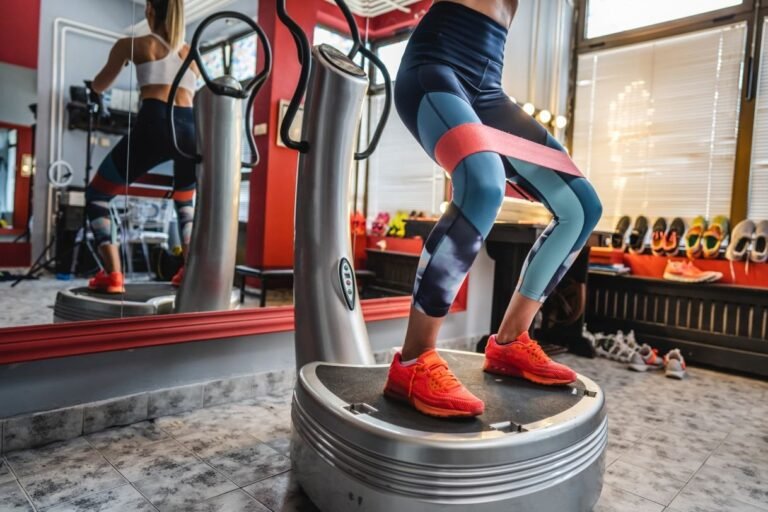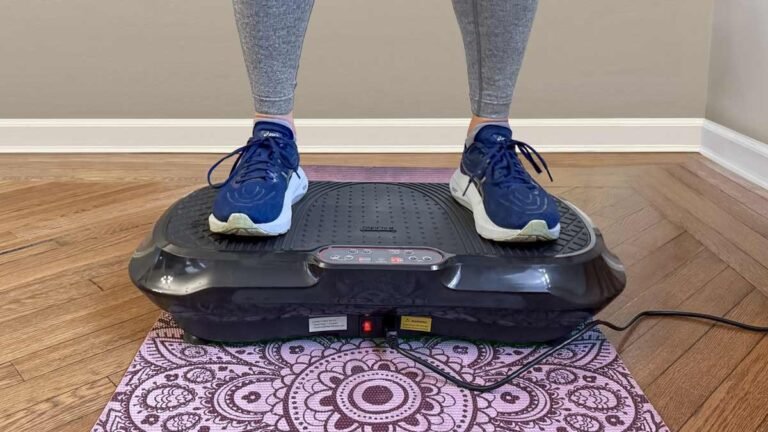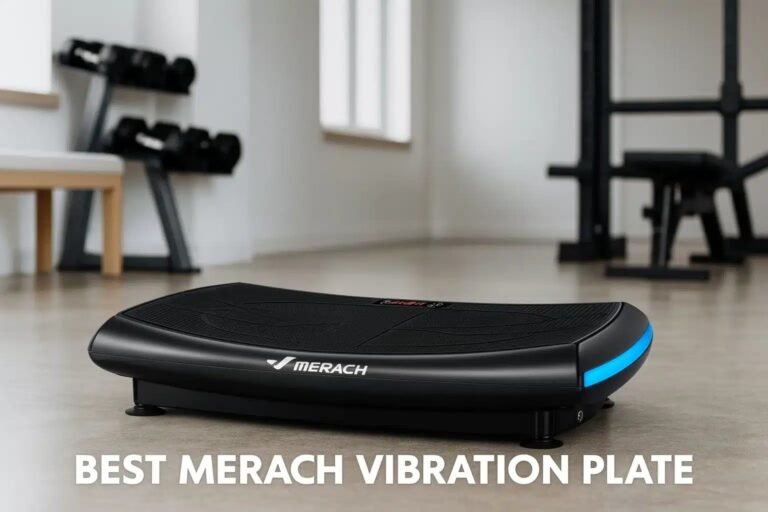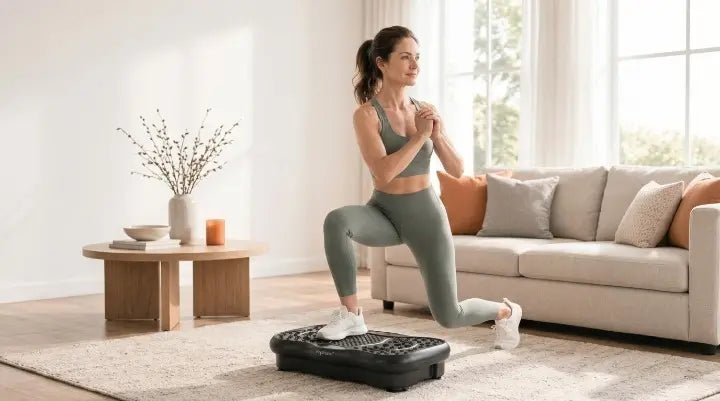
Stand on a vibration plate for 10 to 15 minutes per session, 3 to 5 times a week.
The setting decides more than the clock. A gentle 15 Hz wobble for 10 minutes feels nothing like 40 Hz for 10 minutes.
How to use a vibration plate, step by step

-
Set your stance first. Stand with feet shoulder-width apart, knees slightly bent. A wider stance shifts the work to your thighs and glutes; a narrow stance targets your calves more. Hold a rail or wall if you feel unsteady.
-
Pick your frequency. Most home plates run 15 to 50 Hz. Beginners do well at 15 to 20 Hz for the first two weeks. Higher frequencies (30 Hz and up) are for people who’ve built a base.
-
Start with 5 minutes. Set a timer. Five minutes at low frequency is enough for session one. Your legs may feel like jelly afterward — that’s normal and it fades.
-
Add 2 minutes per week. Week two: 7 minutes. Week three: 9 minutes. Stop at 15 minutes per session. There’s no proven benefit to going longer for general fitness.
-
Take a rest day between sessions. Aim for 3 to 5 sessions a week, not daily. Your muscles need recovery time the same way they do after any resistance work.
-
Cool down with slow movement. Step off and walk for 2 minutes. This helps your circulation settle before you sit down.
Tip: If you feel dizzy or nauseous, step off immediately. Some people are sensitive to the vibration, especially at higher frequencies.
Tip: Don’t do vibration plate sessions right after a heavy meal. Wait at least an hour.
If you have a pacemaker, are pregnant, or have a history of blood clots, talk to your doctor before using one. The FDA’s guidance on whole body vibration devices covers who should avoid them.
How long vibration plate sessions take
The table below shows realistic session lengths for different situations.
| Situation | How long | What changes it | What to watch for |
|---|---|---|---|
| First session, any age | 5 minutes | Your balance and comfort | Dizziness, shaky legs |
| Weeks 1–2, building up | 5–9 minutes | Frequency setting | Soreness next day |
| Weeks 3–4, settled routine | 10–15 minutes | Your fitness base | Fatigue mid-session |
| Maintenance, ongoing | 10–15 minutes, 3–5x weekly | Your goals | Boredom, skipping days |
| Higher frequency (30+ Hz) | 5–10 minutes | Intensity is higher | Joint stress, tingling |
If a session runs far longer than the table suggests, drop the frequency by 5 Hz and try again.
Signs your vibration plate session is done

Your legs feel warm and slightly tired, but you can still walk normally. If your calves are twitching or you feel lightheaded, you’ve gone too far.
A simple test: stand up from a chair without using your hands. If that feels shaky, you’ve done enough for today.
For balance and bone health claims, the National Institute on Aging publishes exercise guidance that separates proven methods from unproven ones. Vibration plates don’t appear on their recommended list for fall prevention.
Mistakes that ruin your vibration plate routine

- Going too long on day one. A 30-minute first session causes muscle soreness that lasts days and kills your motivation. Start at 5 minutes and add slowly.
- Skipping the knee bend. Standing with locked, straight legs sends vibration straight into your joints. Keep a slight bend at all times.
- Using it every day. Daily sessions don’t give muscles time to recover. Three to five sessions a week works better than seven.
- Ignoring the frequency setting. Running 50 Hz when you meant 15 Hz turns a gentle session into a jarring one. Check the display before you step on.
- Holding your breath. People tense up on the plate without noticing. Breathe normally and relax your shoulders.
Frequently asked questions
Can you stand on a vibration plate every day?
No — 3 to 5 sessions a week is enough. If you want daily movement, walk on your off days. Your body builds strength during rest, not during the session itself.
How long should a beginner stay on a vibration plate?
Five minutes for your first session, at 15 to 20 Hz. Add 2 minutes each week until you reach 15 minutes.
Is 10 minutes on a vibration plate enough?
Yes, for general fitness and circulation. Ten minutes at 20 to 30 Hz, 3 to 5 times a week, is a solid routine. If you’re using it for a specific rehab goal, your physical therapist sets the number, not a general guide.
What happens if you stay on a vibration plate too long?
You’ll get muscle soreness, fatigue, and possibly dizziness. Sessions past 20 minutes at high frequency don’t add benefit for most people. Long sessions also raise the risk of joint discomfort, especially in the knees and lower back.
How long until you see results from a vibration plate?
Most people notice better balance and less stiffness after 3 to 4 weeks of consistent use. Strength changes take longer — usually 6 to 8 weeks. Results depend on your starting fitness, how often you use it, and what else you do for exercise.
Is it safe to use a vibration plate if you have back pain?
Ask your doctor or physical therapist first. Some people with lower back pain find gentle vibration helpful; others find it makes things worse. Skip it entirely if you have a spinal injury, a recent fracture, or a herniated disc without medical clearance.
Can you use a vibration plate for weight loss?
No — vibration plates don’t burn enough calories to cause weight loss on their own. A 10-minute session burns far less than a brisk walk of the same length. Use it alongside regular exercise and a balanced diet.
Conclusion
If you’re new to this, start with a few short sessions and see how your body feels the next day. Once you’re comfortable, you can gradually add a little more time. Keep it easy, stay consistent, and let your own energy guide you.

I am a certified fitness coach with over 10 years of experience helping people improve their strength, endurance, and overall health. Specializes in workout programming, weight training, fat loss, muscle building, home fitness, and evidence-based nutrition.My goal is to make fitness simple and practical through well-researched guides, honest product reviews, and actionable training advice.