You lose belly fat at home by eating in a small calorie deficit, doing 150 minutes of moderate cardio a week, and strength training 2-3 times a week. Here’s the full method, with numbers you can follow.
What belly fat really is
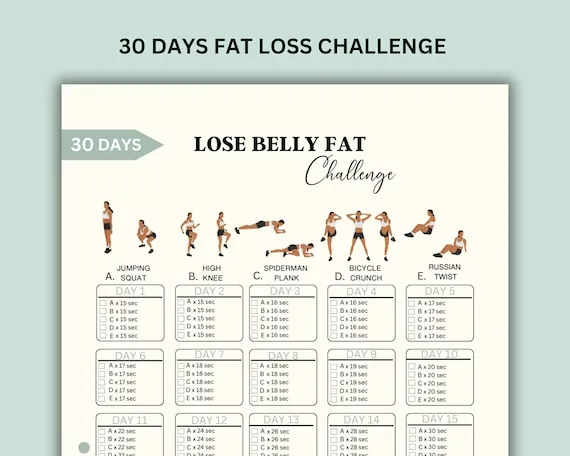
Belly fat is two different things. Subcutaneous fat sits just under the skin — you can pinch it. Visceral fat sits deep inside, around your organs, and it’s the one linked to health problems. You can’t see it, but it shrinks when your whole body loses fat.
How to lose belly fat at home
- Set your calorie target. Take your body weight in pounds and multiply by 12. That’s your daily calorie goal for slow fat loss. For a 180 lb person, that’s about 2,160 calories.
- Eat 25-35 grams of protein per meal. Protein keeps you full and protects muscle while you lose fat. Eggs, chicken, Greek yogurt, beans, and tofu all work.
- Walk 7,000-10,000 steps a day. This is your base. It burns calories without wrecking your recovery.
- Add 150 minutes of cardio per week. Brisk walking, cycling, or swimming. Split it into five 30-minute sessions.
- Strength train 2-3 times a week. Squats, push-ups, rows, and lunges. 3 sets of 8-12 reps each. More muscle means you burn more at rest.
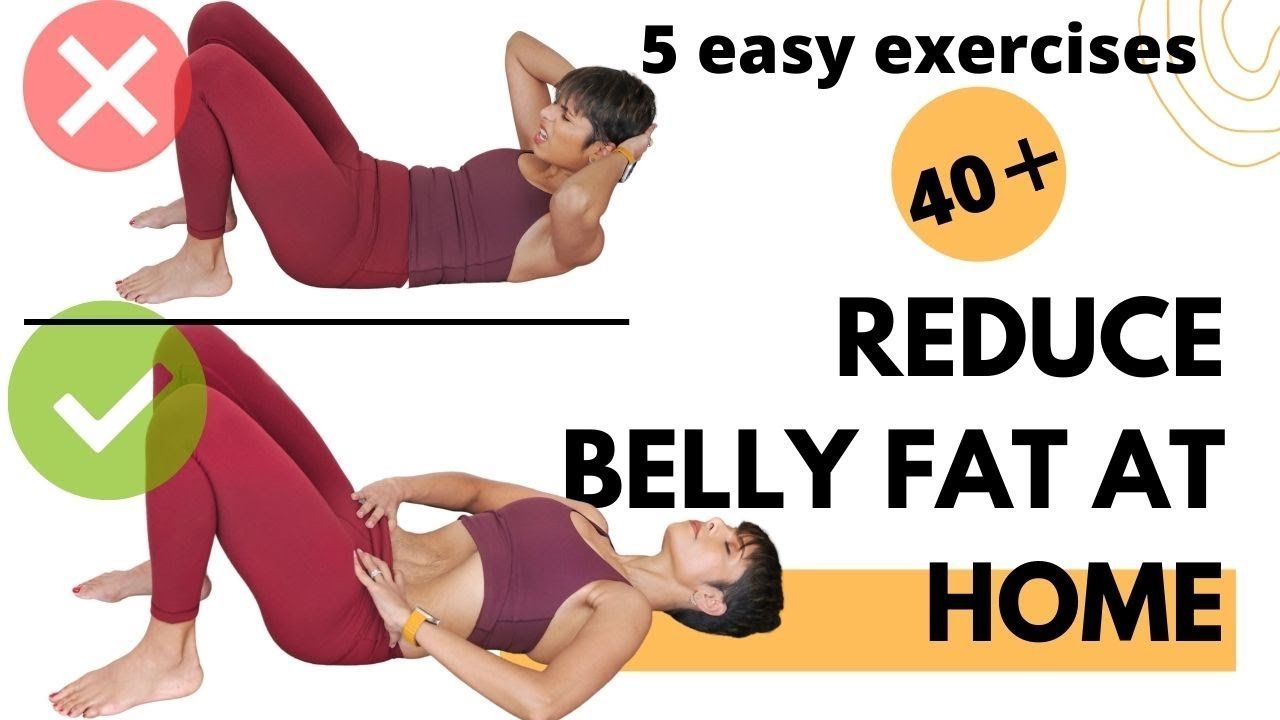
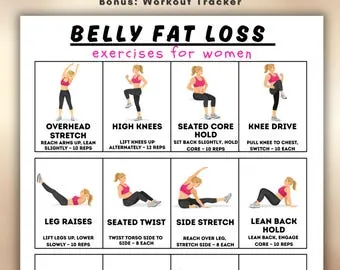
- Train your core 2-3 times a week. Planks, dead bugs, and leg raises. This builds the muscle, it doesn’t strip the fat.
- Sleep 7-9 hours. Short sleep is linked to higher ghrelin and lower leptin, hormones that can increase appetite.
The judgement call is pace. Losing 0.5-1% of your body weight per week is the sweet spot.
Numbers to work with
Use these as starting points, then adjust after two weeks based on what the scale and tape measure say.
| Situation | What to use | How long | What to watch for |
|---|---|---|---|
| Total beginner | Walking + light weights | 20-30 min, 4x a week | Soreness that lasts past 3 days |
| Already active | Cardio + strength split | 45-60 min, 5x a week | Overtraining and poor sleep |
| Short on time | 20-min full-body circuit | 4x a week | Skipping warm-up |
| Joint pain | Swimming or cycling | 30 min, 4x a week | Pain that doesn’t ease |
| Plateau | Add 1,000 steps daily | Ongoing | Cutting calories too low |
| High stress | Walking + yoga | 30 min daily | Cortisol-driven snacking |
What makes the difference
People who get results track two things: their food and their waist. Weighing yourself daily is noisy — water, salt, and hormones move the number by 2-3 pounds. A tape measure at the belly button once a week tells the real story.
They also lift weights before they add more cardio. Doing only cardio while eating very little is the fastest way to lose muscle and stall.
When it’s not working

| What you notice | What it usually means | What to do first |
|---|---|---|
| Scale won’t move for 2 weeks | You’re eating more than you think | Track food for 3 days honestly |
| Waist smaller, scale same | Losing fat, gaining muscle | Keep going, trust the tape |
| Always hungry | Too little protein or sleep | Add protein and 1 hour of sleep |
| Tired and weak | Calories too low | Raise intake by 200 calories |
| Belly still soft after months | Fat loss is slow and genetic | Stay consistent, don’t add more cardio |
The rules that apply
There’s no law against any of this, but some claims are regulated.
If a plan promises you’ll lose a specific amount in a specific time, treat it with suspicion. Real fat loss follows the math: about 3,500 calories burned equals roughly 1 pound of fat.
Keeping the weight off
Once you hit your goal, don’t go back to old habits.
Weigh yourself once a week, not daily. If you’re up 5 pounds from your goal, return to your deficit until your weight stabilizes. That small correction beats a full restart.
When this approach isn’t right
If you have a medical condition like PCOS, thyroid issues, or type 2 diabetes, a generic calorie plan may not work for you. See a doctor or registered dietitian who can tailor it.
If you’re severely obese or have joint damage, high-impact cardio can hurt you. Swimming and cycling are safer starting points.
Frequently asked questions
How long does it take to lose belly fat at home?
Most people see visible change in 6-12 weeks with a consistent deficit and 150 minutes of weekly cardio. The first 2-3 weeks often show water loss, not fat loss.
Can I lose belly fat without exercise?
Yes, but slower. A calorie deficit alone works, though you’ll lose muscle too. Adding strength training 2-3 times a week protects muscle and keeps your metabolism up.
Is walking enough to lose belly fat?
Walking helps, especially at 7,000-10,000 steps a day. But walking alone rarely creates a big enough deficit.
Why is my belly fat not going away?
Fat loss order is genetic, and the belly is often last for many people. If the scale hasn’t moved in 2-3 weeks, your intake is probably higher than you think.
Is it safe to lose belly fat fast?
Losing more than 1% of your body weight per week isn’t safe for most people. It causes muscle loss, fatigue, and rebound weight gain. Aim for 0.5-1% weekly.
Do crunches burn belly fat?
No. Crunches build abdominal muscle but don’t burn the fat covering it. Fat loss happens through a calorie deficit across your whole body, not one spot.
What should I eat to lose belly fat at home?
Focus on protein at every meal, vegetables, whole grains, and water. Cut sugary drinks first — they add calories without filling you up. No single food burns fat.
Conclusion
The honest truth is that belly fat comes off on its own schedule. Your genetics decide where you lose first and last, and no exercise or food changes that order. Track your waist weekly, keep protein high, and stay in a small deficit — the result follows the math, not the effort you feel.

I am a certified fitness coach with over 10 years of experience helping people improve their strength, endurance, and overall health. Specializes in workout programming, weight training, fat loss, muscle building, home fitness, and evidence-based nutrition.My goal is to make fitness simple and practical through well-researched guides, honest product reviews, and actionable training advice.