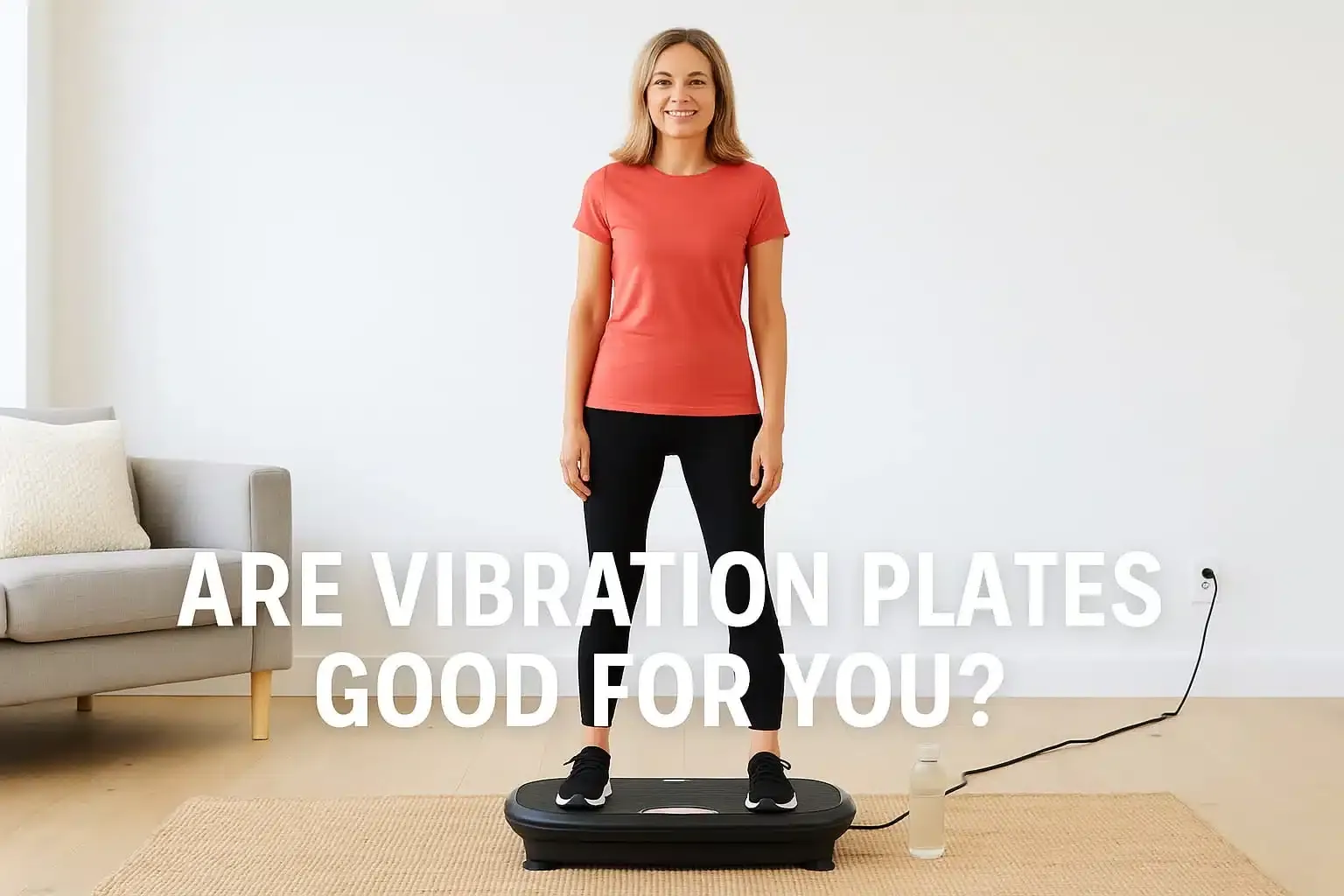
Yes — a vibration plate is good for you if you use it standing, with your knees slightly bent, for 10–15 minutes a day, 3–5 days a week. It builds leg and core strength in that range, but it won’t replace walking, lifting, or a balanced diet.
Start with the one thing that decides it

The pose is what makes or breaks it. Whole-body vibration sends energy through your body, and your muscles answer with small, fast contractions. Stand tall with soft knees and the shake goes into your legs and trunk. Lock your knees or sit down and it mostly goes nowhere useful.
The mistake people make first is treating it like a ride. They step on, grip the handles, and let the plate do the work. Your body has to hold a position — a slight squat, a lunge, a calf raise — or nothing much happens. Pick one pose before you turn it on.
How to use a vibration plate safely
- Set the speed low first. Start at the lowest setting your machine offers and stay there for your first 3–5 sessions. Most home plates run from about 15 Hz to 40 Hz, and the high end is for people who’ve already adjusted.
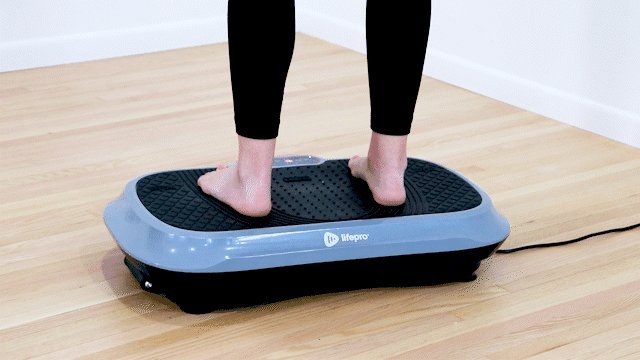
- Stand with feet shoulder-width apart and knees soft. Keep a small bend — about 15 to 20 degrees — so your legs absorb the vibration. Never lock your knees.
- Hold one pose for 30–60 seconds. A quarter squat, a lunge, or a calf raise. Then step off and rest for the same time.
- Repeat for 10–15 minutes total. That’s the whole session. More time doesn’t add more benefit, and it does add soreness.
- Build up over 4–6 weeks. Add one higher setting or one new pose each week, not both at once.
- Stop if you feel dizzy, numb, or sick. Step off, sit down, and don’t restart that day.
Tip: Don’t use the plate barefoot on a high setting if you have nerve problems in your feet. Wear thin-soled shoes instead.
Tip: Keep the handles loose. Gripping hard takes work away from your legs.
If you have a pacemaker, a recent fracture, a blood clot, or you’re pregnant, talk to your doctor before you start. Whole-body vibration devices carry real safety cautions, so this isn’t a “try it and see” call for those groups.
How long before you notice a difference

Most people feel their legs working in the first session, but real strength changes take 4–8 weeks of steady use. The table below assumes 3–5 short sessions a week at a moderate setting. If you’re on a lower setting or training less often, stretch every number out.
| Situation | How long | What changes it | What to watch for |
|---|---|---|---|
| First session soreness | 1–2 days | Speed and how long you stood | Dull ache is normal; sharp pain isn’t |
| Better balance | 4–6 weeks | How many days a week you train | Progress stalls if you skip weeks |
| Leg strength gain | 6–10 weeks | Adding resistance poses | No added load means no added strength |
| Visible muscle tone | 8–12 weeks | Diet and other training | The plate alone won’t show much |
If it’s taking far longer than this, look at your setting and your pose before you blame the machine.
Signs the session is working
Your legs should feel warm and tired when you step off, and the shake should travel up through your calves and thighs.
The one test that settles it: hold a wall squat off the plate for 30 seconds. Then do the same squat on the plate for 30 seconds. If the second one is clearly harder, the plate is loading your muscles. If it feels the same, you’re not holding the pose.
For balance gains, the gold standard is a single-leg stand with eyes open, timed. A commonly used benchmark for adults is holding a single-leg stand for at least 10 seconds.
Mistakes that spoil your results
- Locking your knees. A locked stance keeps your leg muscles from absorbing the vibration, which can make the session uncomfortable and leave you feeling unsteady. Keep a soft bend every time.
- Going too long. Twenty or thirty minutes doesn’t build more strength — it just leaves you sore for days. Cap it at 15 minutes.
- Using it as your only exercise. Vibration plates don’t train your heart or lungs the way walking or cycling does. Keep your cardio separate.
- Skipping the rest days. Your muscles need 24–48 hours between hard sessions to rebuild. Train 3–5 days a week, not every day.
- Standing still the whole time. If you don’t change pose, your muscles adapt and stop responding as much. Swap poses each session.
Related guides
Frequently asked questions
Is a vibration plate safe for your knees?
Yes, for healthy knees, if you keep a soft bend and stay at a low to moderate speed. If you have knee arthritis, a torn ligament, or a recent knee replacement, ask your doctor or a physical therapist first — the vibration load may be too much for a healing joint.
How long should you stand on a vibration plate?
10–15 minutes per session, 3–5 days a week, at a moderate setting. That’s the range most home machines are built around. Going past 15 minutes doesn’t add strength and does raise the chance of soreness and dizziness the next day.
Can you lose weight on a vibration plate?
Not much on its own. It burns some calories and helps build leg muscle, which supports a healthy metabolism, but the effect is small. Weight loss still comes down to how much you eat and how much you move overall.
Why do you have to bend your knees on a vibration plate?
Bent knees let your leg muscles absorb the vibration and work against it. A soft bend keeps the load in your legs and makes the session easier to tolerate. A bend of about 15 to 20 degrees is enough.
Is it safe if you’re pregnant?
No — skip it unless your doctor says otherwise. Whole-body vibration hasn’t been proven safe in pregnancy, and the FDA’s safety notes list pregnancy as a reason to talk to a clinician first. Walking and swimming are safer options.
What happens if you use it every day?
You’ll likely get sore legs and joints, and you may feel dizzy. Muscles need rest to rebuild, so daily use works against you. Stick to 3–5 days a week and let your body recover in between.
Does a vibration plate help with bone density?
The evidence is mixed, and results are much smaller than what you get from weight-bearing exercise like walking or lifting. Some studies show small gains in older adults, but it isn’t a substitute for resistance training or a doctor’s plan for osteoporosis.
Conclusion
A vibration plate earns its place if you use it as a short add-on to real training — soft knees, one held pose, 10 to 15 minutes, a few days a week. It won’t carry your fitness on its own, and for anyone with a heart device, a healing fracture, or a pregnancy, the doctor’s answer comes before the machine’s.

I am a certified fitness coach with over 10 years of experience helping people improve their strength, endurance, and overall health. Specializes in workout programming, weight training, fat loss, muscle building, home fitness, and evidence-based nutrition.My goal is to make fitness simple and practical through well-researched guides, honest product reviews, and actionable training advice.