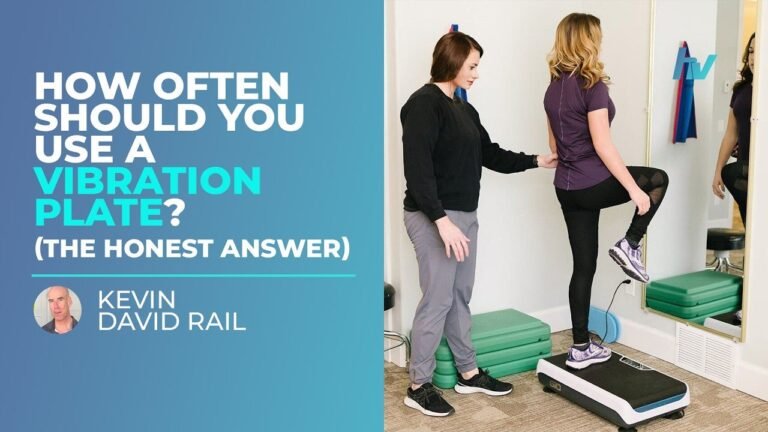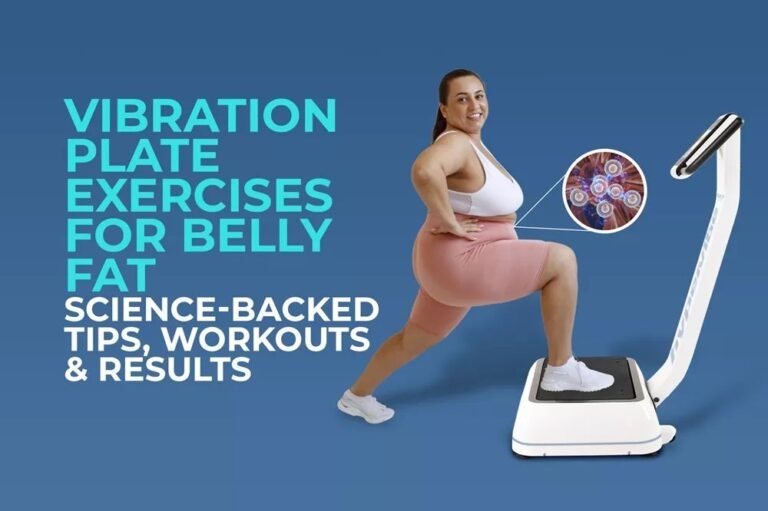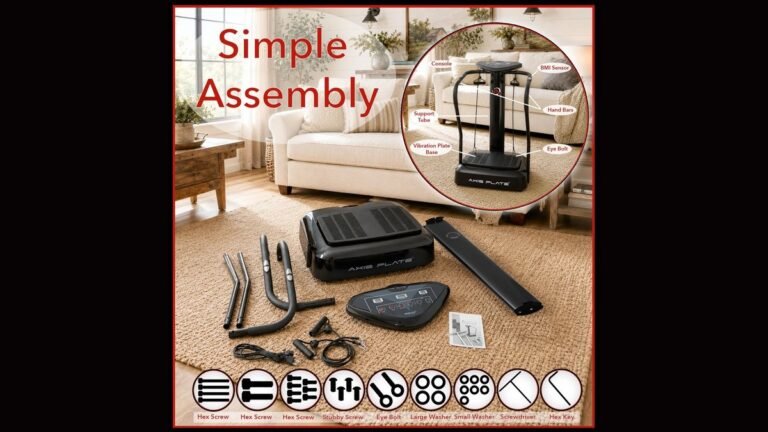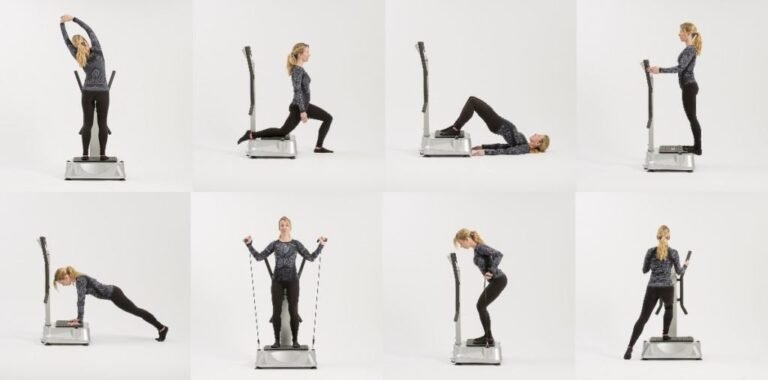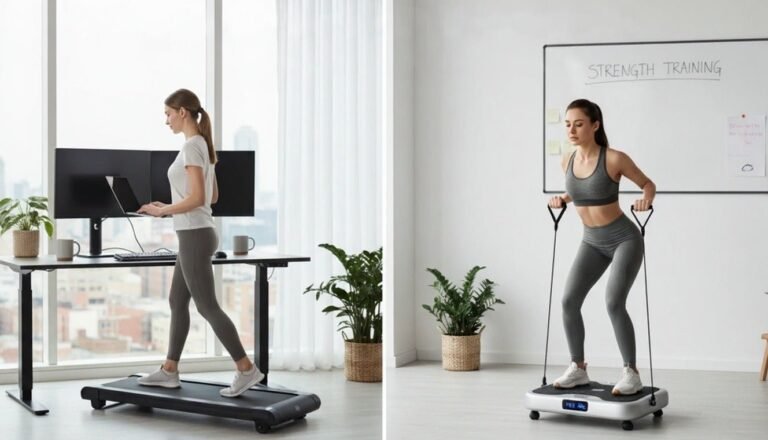
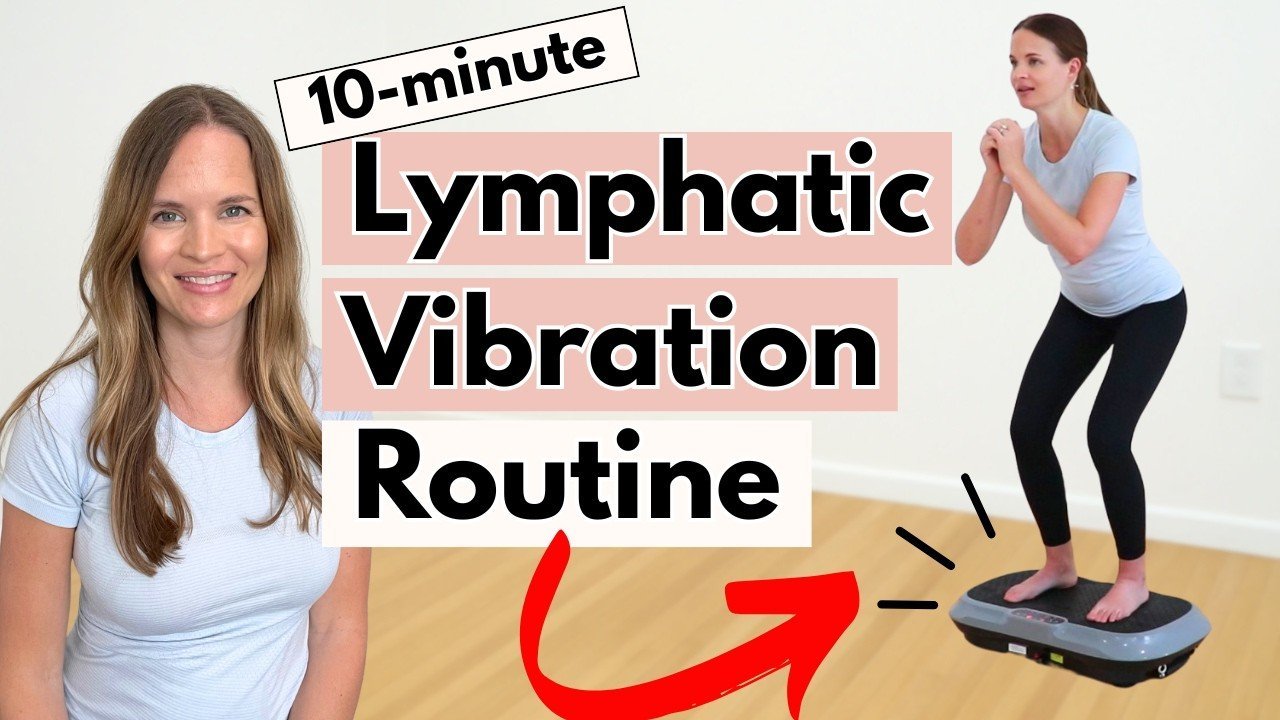
A vibration plate for beginners works best in short, easy sessions: stand on it for 10 minutes, 3 times a week, at a low speed. Hold the handlebars, keep your knees soft, and stop if you feel dizzy. This guide covers the settings, the safety rules, and what to expect.
What a vibration plate actually does

A vibration plate is a machine with a flat platform that shakes fast — usually 20 to 50 times a second. You stand, sit or squat on it. The shaking triggers repeated reflex muscle contractions, and people use the plate as a platform for balance, gentle strength work and light exercise at home.
The common misconception is that it replaces a workout. It doesn’t. Your body still has to work, and the plate only adds to what you’re already doing. The movement is a mechanical shake, not a magic pass. If you want a real strength or cardio result, you still need to move and breathe hard.
How to use a vibration plate step by step
Start lower than you think you need. Most beginners push the speed up too fast in week one, feel sore or dizzy, and quit. The steps below assume a standard home plate with speeds from 1 to 20.
- Set the plate on a hard floor, not carpet. Leave 2 feet of clear space on every side.
- Stand on it with bare feet or flat shoes. Hold the handlebars with both hands.
- Turn the speed to 1 or 2. Stay there for 2 minutes. This is your warm-up.
- Raise the speed one level at a time until you feel a buzz in your legs, not a jolt. Most beginners land between speed 3 and 6.
- Stay on for 10 minutes total. Keep your knees slightly bent and your weight even on both feet.
- Step off slowly. Wait 2 minutes before your next task, especially if you feel light-headed.
- Repeat 3 times a week. Add 2 minutes per week, up to 20 minutes, only if you feel fine.
The one judgement call that matters is speed. If your teeth chatter or your vision blurs, the setting is too high — stop and step off, then restart at a lower speed next session. If you have a pacemaker, are pregnant, or have a recent fracture or joint replacement, don’t use a vibration plate without asking your doctor first. That’s a medical question, not a fitness one.
Settings and session lengths at a glance
Use the table to find your starting point. Every row assumes a healthy adult with no medical conditions, using a home plate with speeds 1 to 20.
| Situation | What to use | How long | What to watch for |
|---|---|---|---|
| Total beginner, first week | Speed 1-3, standing still, holding handles | 5-10 min, 3x a week | Dizziness, tingling feet |
| Beginner after 2 weeks | Speed 3-6, standing with soft knees | 10-15 min, 3x a week | Sore calves the next day |
| Balance training | Speed 2-4, one hand on the handlebar | 5 min per leg position | Loss of balance — keep a chair nearby |
| Light strength work | Speed 4-8, squat hold or lunge | 30-60 sec per move, 2-3 rounds | Knee pain, back rounding |
| Seated use (chair or plate seat) | Speed 3-6, feet flat on the platform | 10 min | Numb legs, sliding forward |
| Older adult, new to exercise | Speed 1-2, seated or holding handles | 5 min, 2x a week | Dizziness on standing up |
What separates a good session from a bad one
The people who get on well with a vibration plate treat it like a warm-up. They do it before a walk or a gym session, not instead of one. They keep the speed low for the first two weeks, even when it feels too easy.
Preparation and order
Set up before you turn the machine on: water nearby, clear floor, phone away. Then work up in one-level steps, not jumps. Finish with 1 minute at speed 1 to cool down.
What to check partway through
At the 5-minute mark, check three things: are your knees still soft, is your weight even on both feet, and is your breathing normal? Don’t grip the handles hard — that shifts your weight forward and sends the shake up your spine.
Common problems and quick fixes

Most beginner issues come from speed, posture or footwear, not from a broken machine.
| What you notice | What it usually means | What to do first |
|---|---|---|
| Dizzy or light-headed | Speed too high, or you stood up too fast | Stop, sit down, restart at speed 1 next session |
| Tingling or numb feet | Standing too long in one position | Shift weight every 2 minutes, or wear flat shoes |
| Sore calves for 2+ days | Speed climbed too fast | Drop 2 levels and hold there for a week |
| Knee or ankle pain | Knees locked straight, or wrong footwear | Bend knees slightly, try flat shoes or bare feet |
| Machine feels weaker | Plate is on carpet or a loose rug | Move it to a hard, level floor |
| Slipping on the platform | Bare feet with lotion, or socks | Wipe the plate, use flat shoes or dry bare feet |
Safety rules and who to ask
Vibration plates are sold as fitness equipment, not medical devices, so the FDA doesn’t review them for treating any condition. That means the safety rules come from the maker and from your own doctor, not from a regulator. Check your manual for weight limits — the exact figure is in your own booklet.
Ask your doctor before you start if you’re pregnant, have a pacemaker or metal implant, have a blood clot history, or have a spine, hip or knee problem. A physiotherapist is the right person for balance or rehab work, not a sales page. If you feel sharp pain, stop and get it checked.
Keeping the plate working
Wipe the platform with a damp cloth after each session — sweat and skin oils make it slippery. Check the rubber feet and bolts once a month; a loose foot makes the plate wobble and wear faster. Keep it out of damp rooms, and unplug it when you’re away for more than a few days. When the shake feels uneven or the machine starts making new noises, that’s your sign to check the manual’s service section or contact the maker.
When a vibration plate isn’t the right choice

Skip it if you have an untreated hernia, a recent fracture, or a joint replacement your surgeon hasn’t cleared. Use a chair-based exercise class or a walking program instead. If your goal is weight loss, a plate won’t do it alone — a brisk walk burns more and costs less. And if you have bad balance, start with a physiotherapist-supervised program, not a home machine.
Related guides
- Weight Plates Beginner Guide for Home Gym: Start Strong Today
- Common Mistakes Beginners Make With Weight Plates and How to Avoid Them
- Olympic Weight Plates Explained for New Home Gym Owners: A Beginner’s Guide
Frequently asked questions
How long should a beginner use a vibration plate?
Start with 5-10 minutes, 3 times a week, at speed 1-3. Add 2 minutes per week only if you feel fine the next day. Most people work up to 15-20 minutes over 6-8 weeks.
Can a vibration plate help you lose weight?
No, not by itself. It adds a small amount of muscle activity, but weight loss comes from your diet and total daily movement. Treat it as a supplement to walking or gym work, not a replacement.
Is a vibration plate safe every day?
For most healthy adults, yes — 10-15 minutes a day at low speed is fine. But your muscles need rest, so 3-5 sessions a week is plenty. Stop and see a doctor if you get dizzy or feel pain.
What speed should a beginner start on?
Speed 1-3 on a plate with a 1-20 range. That’s a gentle buzz, not a jolt. If your vision blurs or your teeth chatter, stop and step off, then restart at a lower speed next session.
What happens if you use a vibration plate too much?
You’ll get sore calves, sore thighs and possibly dizziness. In rare cases, heavy daily use at high speed can stress joints. Cut back to every other day until the soreness clears.
Can you use a vibration plate with a bad back?
Only with your doctor’s or physiotherapist’s OK. Some back problems get worse with whole-body vibration, and others improve. Get a clear answer before you step on.
Do vibration plates work if you just stand on them?
They give a mild effect on muscles and balance, mostly in the legs. You’ll get more from adding squats or lunges at low speed. Standing still is a starting point, not the finish line.
Conclusion
The plate is a tool, not a shortcut. Ten minutes at speed 3, three times a week, beats an hour at speed 15 that leaves you sore and done with it by Friday. Keep the sessions short, keep the speed low, and let your body tell you when to add more.
I am a certified fitness coach with over 10 years of experience helping people improve their strength, endurance, and overall health. Specializes in workout programming, weight training, fat loss, muscle building, home fitness, and evidence-based nutrition.My goal is to make fitness simple and practical through well-researched guides, honest product reviews, and actionable training advice.