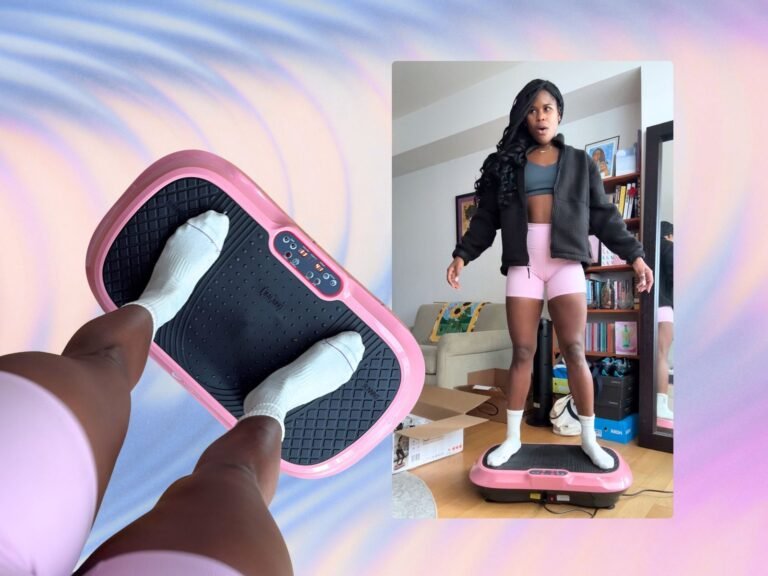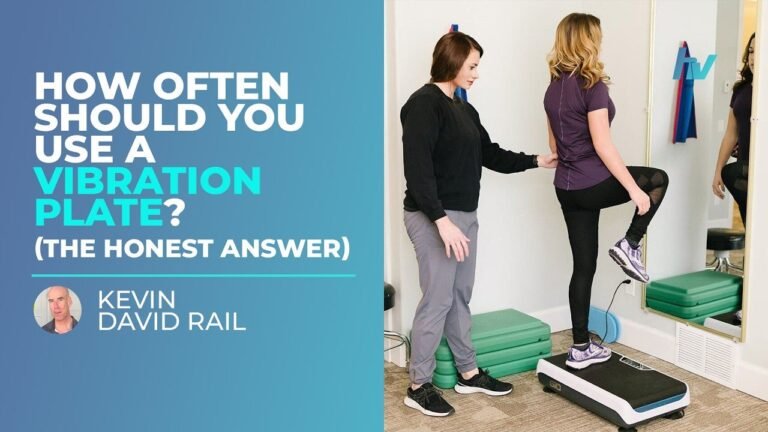
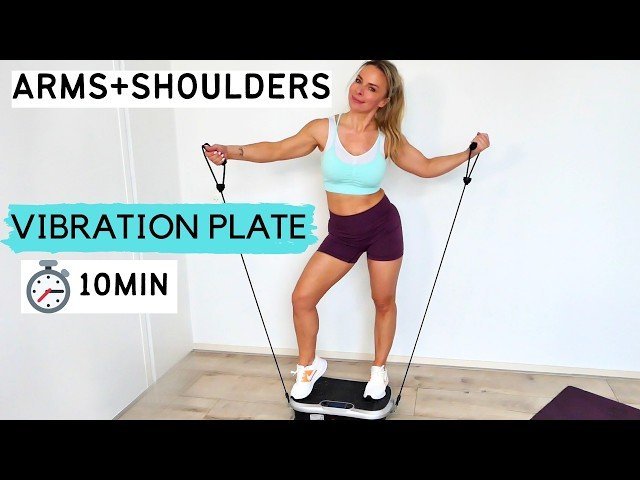
A vibration plate arm workout uses slow, controlled arm moves while the plate’s vibration makes your muscles fire harder. Plan 15–20 minutes, 3 days a week, at a low setting. It suits people who want arm toning without heavy weights.
What you need for a vibration plate workout
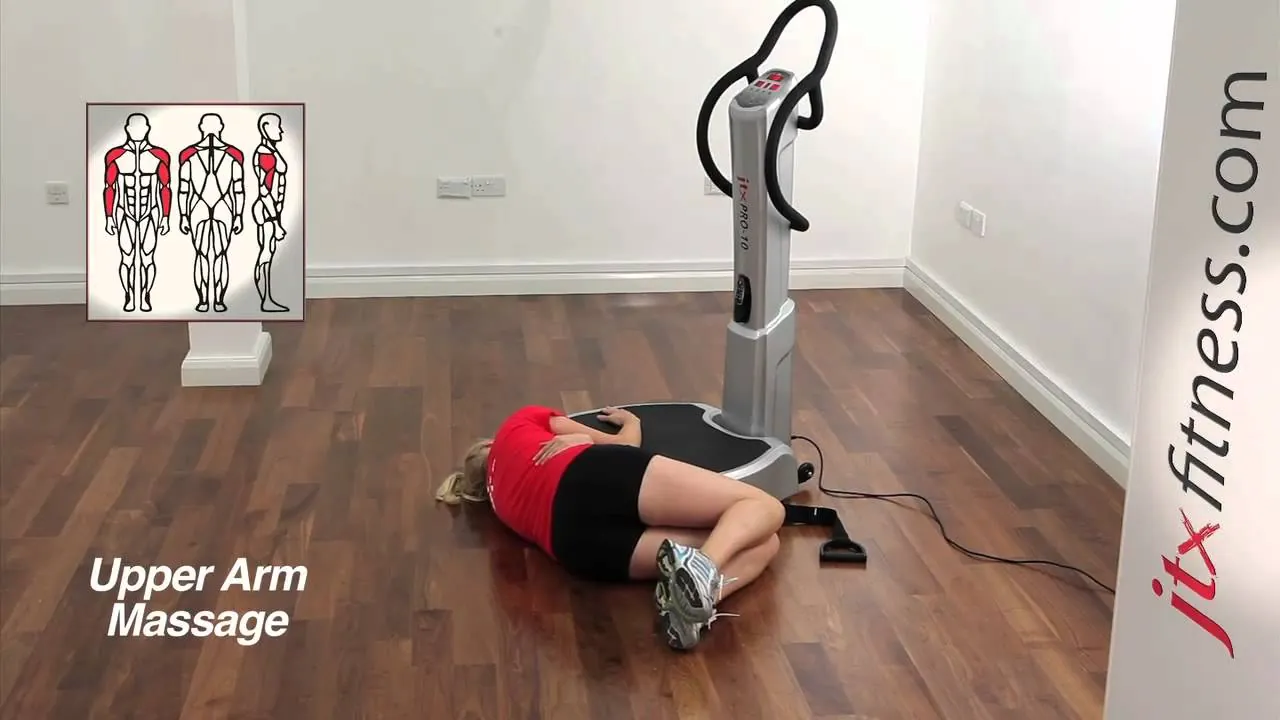
- A vibration plate that runs — check the maker’s weight limit before you stand on it
- Two light dumbbells, 2–5 lb each, or two water bottles if you don’t own weights
- A resistance band with handles, light to medium
- A stable chair or wall within arm’s reach
- Flat shoes or bare feet, never socks on the plate
- A towel and water
- A mat for floor moves beside the plate
A light band works fine here; a heavy gym band doesn’t, because you can’t control it at speed. If you have a heart condition, a pacemaker, or you’re pregnant, talk to your doctor before you start — the NHS exercise guidelines page explains who should check first.
How to do the workout
- Set the plate to its lowest speed and stand on it with soft knees, feet hip-width apart. Hold the handrails for 30 seconds until you feel steady.
- Hold one dumbbell in each hand, arms at your sides. Curl both up to your shoulders over 3 seconds, then lower over 3 seconds. Do 10 reps.
- Raise both arms straight out to the sides until they reach shoulder height. Hold for 2 seconds at the top, then lower. Do 10 reps.
- Careful: keep your elbows slightly bent on this move. Locked elbows plus vibration puts strain on the joint.
- Press both arms straight overhead, pause, and lower slowly. Do 8 reps. Drop to 5 reps if your shoulders feel tired.
- Loop the band under one foot and curl the handle up to your shoulder. Do 12 reps per arm, then swap sides.
- Step off the plate and rest for 60 seconds. Shake out your arms.
- Repeat the whole set two more times. Total time: 15–20 minutes.
Tip: if you can’t keep the slow 3-second count, the speed is too high. Turn it down one level.
Careful: stop at once if you feel numbness, tingling, or dizziness. Step off, sit down, and rest. Vibration plates carry real safety warnings — check the maker’s own manual for your model.
How the workout changes with your situation

The numbers below assume a standard home plate on a low setting. A bigger plate or a higher speed changes how hard your muscles work, so start lower than you think you need.
| Your situation | Time per session | What’s different | What to watch |
|---|---|---|---|
| Total beginner | 10–12 min | No weights at all | Balance first, speed second |
| Some gym experience | 15–20 min | Add 2–5 lb dumbbells | Keep the slow count |
| Bad shoulders | 10 min | Skip overhead presses | Pain means stop |
| Bad knees or back | 10 min | Sit on a chair on the plate | Don’t stand if unsteady |
| Very fit | 20–25 min | Heavier weights, slower reps | Form breaks first |
Start small and add more. Overshooting on day one leaves your arms sore for days, and sore arms mean you skip the next session.
How to tell you did it right
A good result feels like tired arms for a day, not pain. Your form stays slow and steady, your shoulders stay down, and you finish the last rep with the same control as the first. A poor result looks rushed — swinging the weights, locked elbows, or leaning on the handrails to stay up.
The quality problem here is speed. When the plate vibrates, your body wants to move faster to keep up, and fast reps let momentum do the work instead of your muscles. Three things prevent it: a lower speed setting, a 3-second count up and down, and lighter weights than you’d use on the floor.
The rules and what to do afterward
The American Heart Association recommends at least 150 minutes of moderate activity a week for adults, spread across the week.
After each session, wipe the plate down, put your weights back, and stretch your arms for 2 minutes. If you have a medical condition, get clearance from your doctor before you start.
Other ways to hit the same muscles

Use the plate as a warm-up only
Do 5 minutes of arm moves on the plate, then lift weights on the floor. Sessions run about 30 minutes total.
Join a class or get a trainer
A certified trainer can watch your form and adjust your speed. Results come faster, but so does the cost.
Train arms without a plate
Bodyweight moves like push-ups and triceps dips work the same muscles with no equipment. Check with a trainer if you’re unsure.
Frequently asked questions
How long should a vibration plate arm workout be?
15–20 minutes, 3 days a week, at a low speed with light weights. Beginners should start at 10 minutes with no weights and add time once their balance feels steady.
Can you build arm muscle on a vibration plate?
You can build some, but it’s not the fastest way. Light weights and short sessions limit growth. For real muscle size, add heavier resistance training on the floor alongside it.
Is a vibration plate safe for your arms and joints?
Yes for most healthy adults at low speed with light weights. Skip it if you’re pregnant, have a pacemaker, or have a heart condition, unless your doctor says it’s fine.
What happens if you use a vibration plate every day?
Daily use can leave your arms and joints sore, since muscles need rest to recover. Three days a week with rest days between is enough for most people.
Why do my hands tingle after using a vibration plate?
Vibration can irritate nerves in your hands and wrists. Lower the speed, loosen your grip, and stop if it doesn’t settle. See a doctor if tingling lasts.
Do you need weights for arm work on a vibration plate?
No. Bodyweight moves like arm raises and presses work without them. Weights just add resistance once the basic moves feel easy.
Conclusion
Pick a low speed, keep every rep slow, and stop while your form is still good. Three short sessions a week will do more for your arms than one long, rushed one.
I am a certified fitness coach with over 10 years of experience helping people improve their strength, endurance, and overall health. Specializes in workout programming, weight training, fat loss, muscle building, home fitness, and evidence-based nutrition.My goal is to make fitness simple and practical through well-researched guides, honest product reviews, and actionable training advice.