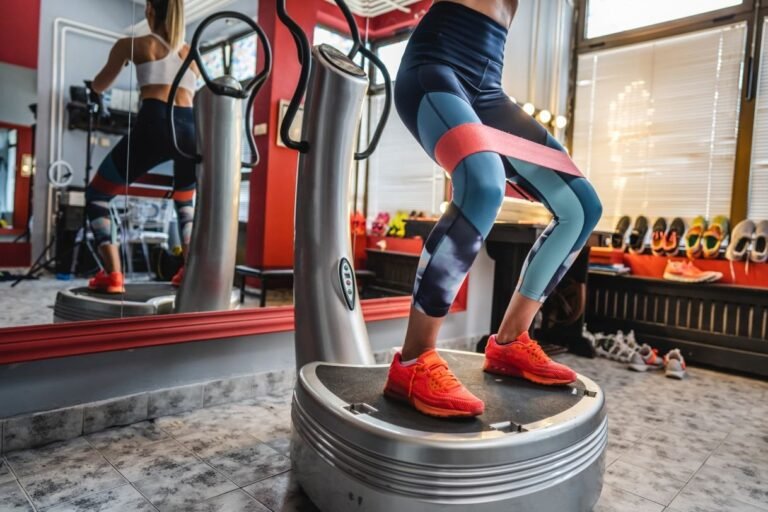
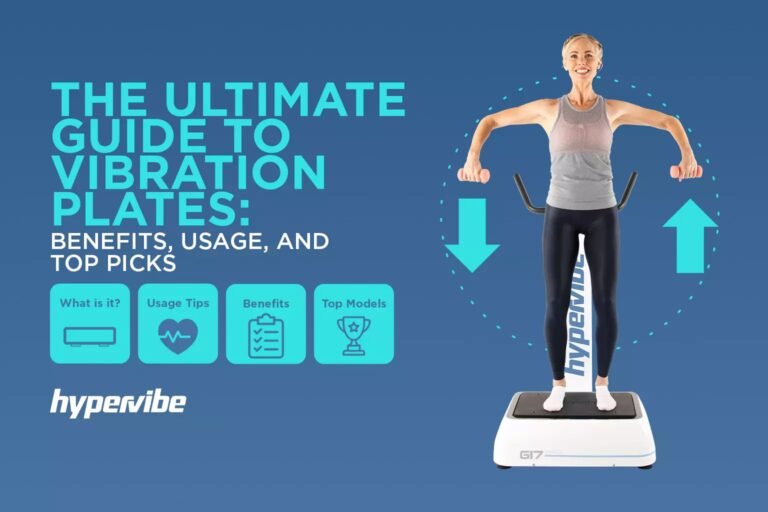
An oscillating vibration plate has a platform that rocks side to side around a center pivot. You stand on it, and the side-to-side tilt makes your muscles tighten and relax to keep you balanced.
The most common mistake is treating the plate like a magic fat burner. It’s not. The machine adds a balance challenge to exercises you already do. Check the maker’s own manual for the speed and time settings your model allows before you start.
How to use an oscillating vibration plate safely

- Start with the machine off and both feet centered. Place your feet shoulder-width apart, one on each side of the center pivot. This is your neutral stance — everything else builds from here.
- Turn on the lowest speed and stand still for 30 seconds. Just hold your balance. If you feel unsteady, step off and try again later. Don’t grip the handles hard — a light touch is enough.
- Add one basic move at a time. A bodyweight squat is a good first choice. Do 2 sets of 10 slow reps at the lowest speed before you raise it.
- Raise the speed in small steps, not big jumps. Go up one level at a time, and only after you can finish your set with steady balance. Most home models top out well below what a gym machine offers.
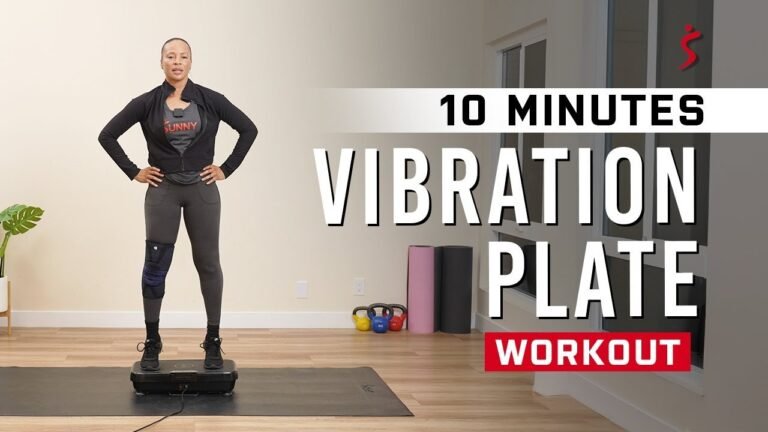
- Keep sessions short — 10 to 15 minutes, 3 to 4 times a week. Longer isn’t better here. Your muscles need rest days to recover, same as any other training.
- Stop if you feel dizzy, numb, or sharp pain. Step off, sit down, and don’t push through it.
Tip: Never lock your knees. A locked joint can’t absorb the tilt, and that’s how people lose balance and fall.
Tip: If you have a hip or knee replacement, a pacemaker, or you’re pregnant, talk to your doctor before you buy one.
How long sessions usually take
Most people get a full session done in 10 to 15 minutes, and that’s the number to plan around. The table below shows how that shifts with your fitness level and how hard you’re working.
| Situation | How long | What changes it | What to watch for |
|---|---|---|---|
| First week, standing only | 5-8 min | Your balance confidence | Dizziness if you push too fast |
| Beginner doing squats | 10-12 min | How many reps you can hold | Knee wobble on the tilt |
| Regular user, mixed moves | 15-20 min | Number of exercises in your set | Grip fatigue from the handles |
| Advanced, high speed | 20-25 min | Speed level and rest breaks | Sore calves the next day |
| Balance training only | 8-10 min | Whether you use one leg | Falling if you close your eyes |
If a session is running much longer than the table says, you’re probably resting too much between moves.
Signs your session is working

You’ll know it’s working when your legs feel tired in a smooth, even way.
A simple test: stand on one foot on the floor with your eyes open. Time how long you can hold it. Do this every two weeks. If the time goes up, the plate is helping your stability.
Mistakes that spoil your results

- Holding the handles too tightly. You end up supporting your weight with your arms, so your legs and core do less work. Use a light fingertip touch for balance only.
- Jumping straight to the highest speed. Your body can’t adapt that fast, and you’ll lose form or fall. Start low and move up one level per week.
- Skipping rest days. Vibration training loads your muscles like any other workout. Training daily without rest leads to soreness and stalled progress. Take at least one day off between sessions.
- Standing in one fixed pose the whole time. You get bored and your body stops adapting. Change your stance or add a new move every couple of weeks.
- Ignoring your own medical history. A pacemaker, pregnancy, or a recent joint surgery changes what’s safe. Get clearance first, every time.
Related guides
Frequently asked questions
What is an oscillating vibration plate good for?
It’s best for balance training and adding a stability challenge to basic strength moves. Pair it with regular exercise and a sensible diet if fat loss is your goal.
Can you lose weight using an oscillating vibration plate?
Only as part of a full routine. Real weight loss comes from your overall activity and eating habits.
How long should you use an oscillating vibration plate each day?
Aim for 10 to 15 minutes, 3 to 4 times a week.
Is an oscillating vibration plate safe?
For most healthy adults, yes, at low to moderate speeds. Skip it if you’re pregnant, have a pacemaker, or had recent joint surgery, unless your doctor says it’s fine.
What’s the difference between oscillating and vertical vibration plates?
An oscillating plate rocks side to side around a center pivot. A vertical plate moves the whole platform straight up and down at the same time. Oscillating models tend to feel gentler and are easier for beginners to balance on.
What happens if you use it every day?
You’ll likely get sore muscles and won’t recover well. If you want daily movement, walk or stretch on your off days instead.
Do you need to warm up before using one?
Yes, 3 to 5 minutes of light movement helps. Walk around, do some ankle circles, and gently stretch your calves and hips.
Conclusion
An oscillating vibration plate is a balance and light-strength tool, not a shortcut. Used at a low speed for 10 to 15 minutes, a few times a week, it can make your legs and core work harder than they would on flat ground. Check with your doctor first if you have any health condition, and let your own steadiness — not the machine’s settings — decide when you’re ready for more.

I am a certified fitness coach with over 10 years of experience helping people improve their strength, endurance, and overall health. Specializes in workout programming, weight training, fat loss, muscle building, home fitness, and evidence-based nutrition.My goal is to make fitness simple and practical through well-researched guides, honest product reviews, and actionable training advice.