If you have ever stepped onto a vibrating platform and wondered whether you should stretch before, during, or after, you’re in good company. Searching for guidance on stretching on vibration plate machines usually means you want a straight answer: does it help, what do you actually do, and how long does it take? This article covers the whole routine — timing, specific stretches, settings, safety, and the mistakes that waste your session.
Key Takeaways
- Stretching on a vibration plate is generally done during or right after a short warm-up, not as a replacement for it.
- Most home sessions run 10–15 minutes total, with each stretch held 30–60 seconds.
- Start at the lowest frequency your machine offers and the lowest amplitude setting.
- Vibration plus static stretching may improve short-term flexibility more than stretching alone, but the evidence is modest.
- Skip it entirely if you’re pregnant, have a pacemaker, or have an acute injury — check with a clinician first.
- Bare feet or flat-soled shoes only; socks on a smooth plate are a fall risk.
Why Stretch on a Vibration Plate?
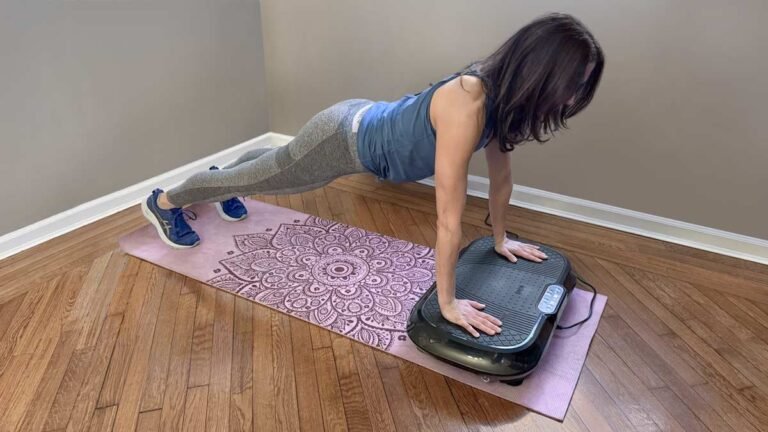
A vibration plate sends rapid, low-amplitude oscillations through your body. When you hold a stretch on the plate, those oscillations trigger small, repeated muscle contractions — a reflex sometimes called tonic vibration reflex. The practical effect is that your muscles stay slightly active while lengthening, which many people find makes a stretch feel more productive than holding it on the floor.
That said, be realistic. The research on vibration-assisted stretching is promising but not overwhelming. Most studies show short-term gains in range of motion, similar to or slightly better than static stretching alone. It’s a useful tool, not a magic one.
Before You Start: Two-Minute Setup
- Warm up first. March in place or walk for 2–3 minutes. Cold muscles and vibration don’t mix well.
- Set the machine. Frequency around 20–30 Hz for stretching; amplitude on low.
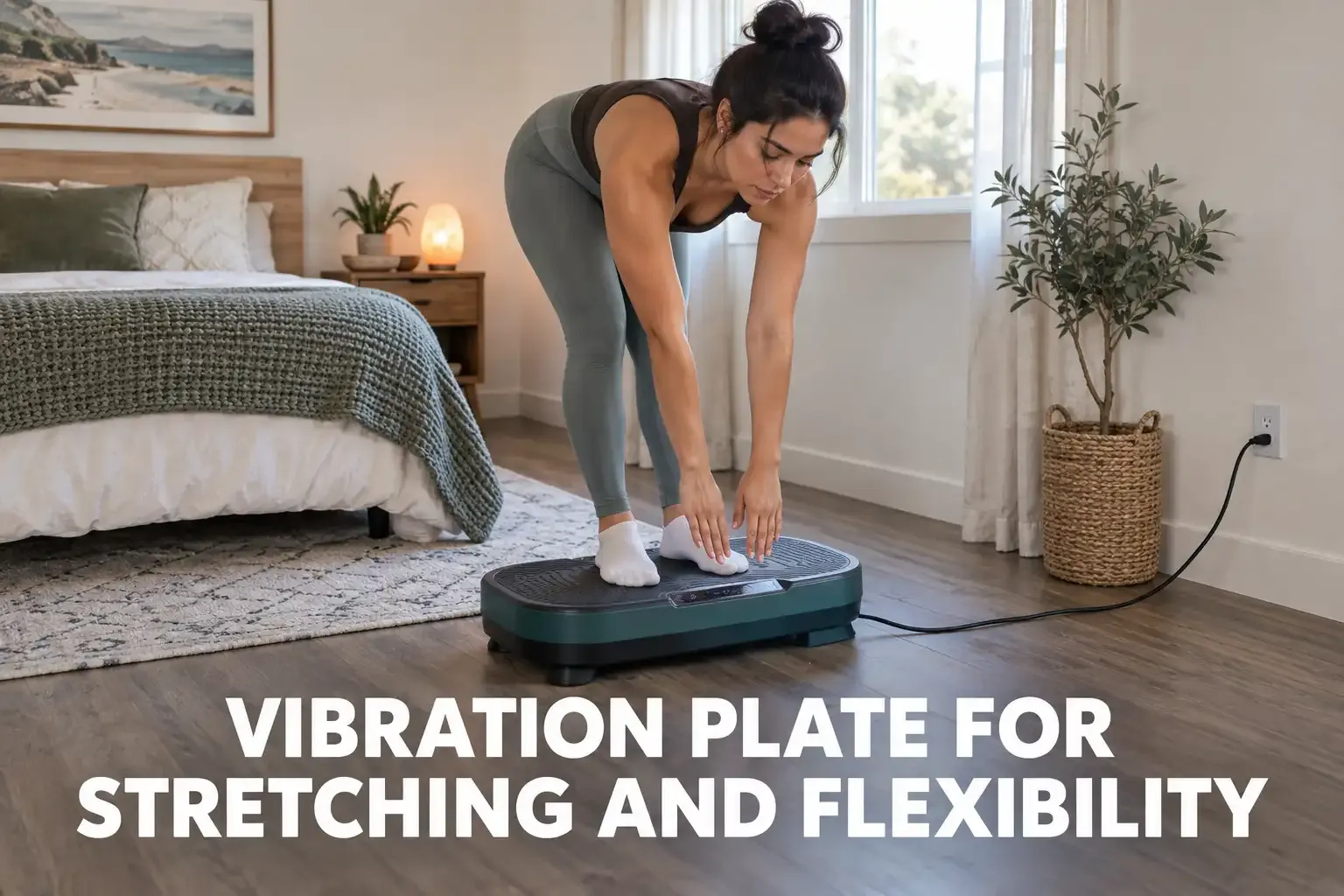
- Check your footing. Bare feet or thin flat shoes. Never socks on a bare plate.
- Have support nearby. A chair, wall, or counter within arm’s reach.
Warning: Never step onto a moving plate without something to grab. The first thirty seconds are when most slips happen.
The Best Stretches to Do on the Plate
Calf Stretch
Stand facing a wall, hands on it, one foot back with the heel down. Hold 30–60 seconds per side. The plate’s oscillation makes this one noticeably more intense — reduce amplitude if it feels sharp rather than stretchy.
Hamstring Stretch
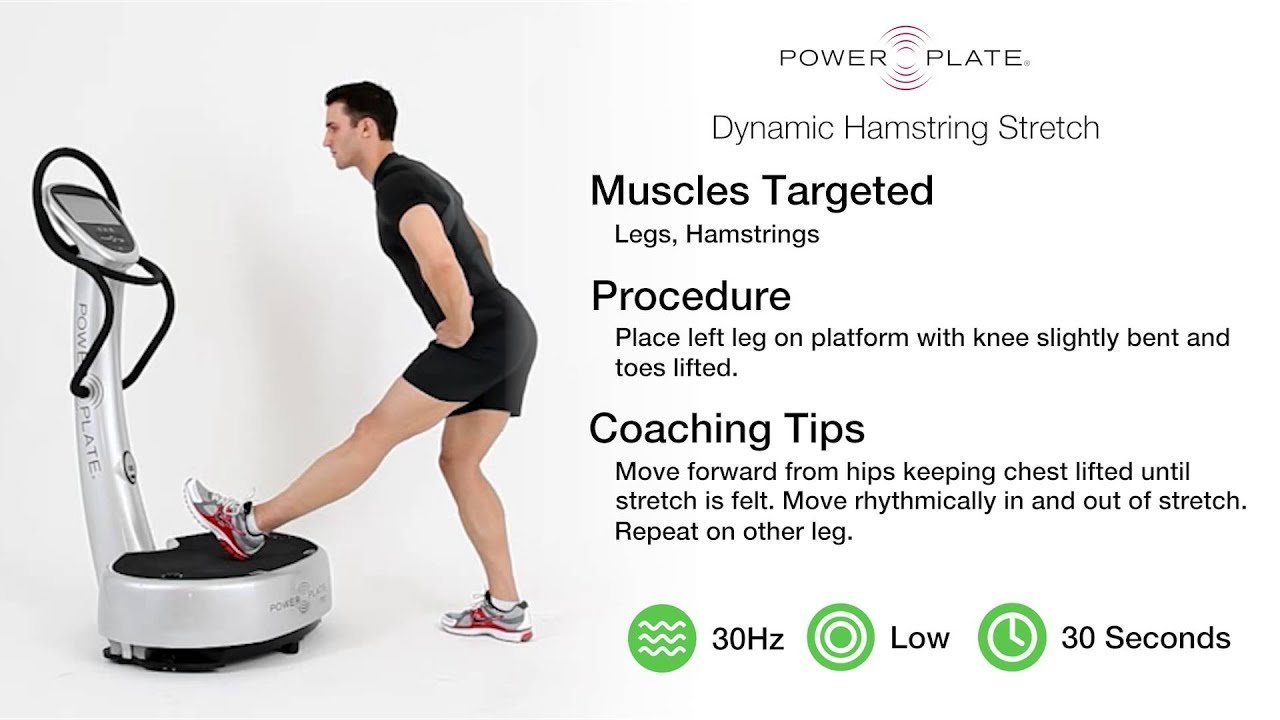
Place one heel on the plate’s edge or a low step beside it, leg straight, hinge forward from the hips. Keep your back flat. 30–45 seconds per side.
Quad Stretch
Stand beside the plate, one hand on a chair, pull your heel toward your glutes. Keep knees together. 30 seconds per side.
Hip Flexor Stretch
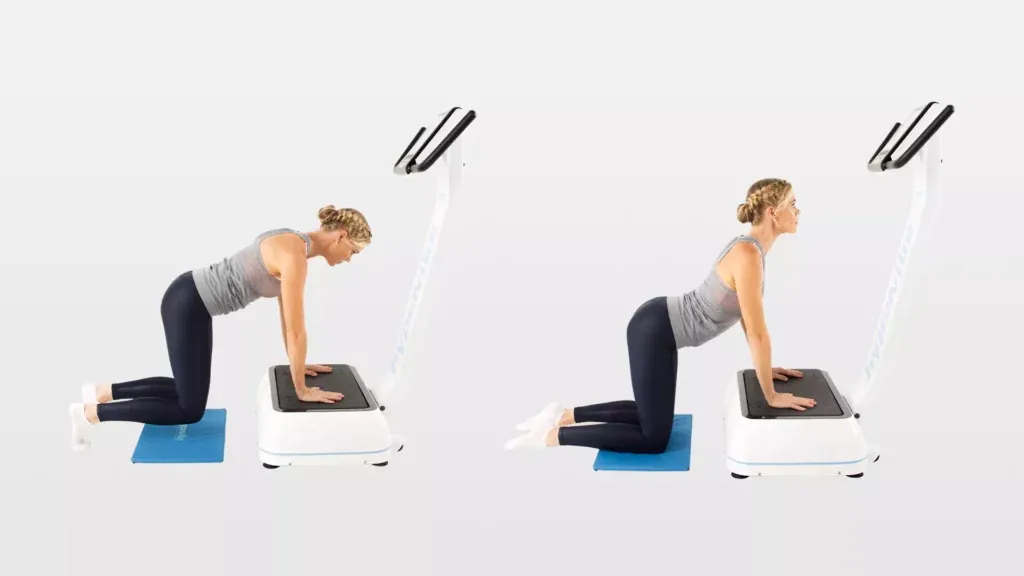
Half-kneeling with the front foot on the plate and the back knee on a pad. Tuck your pelvis and lean forward gently. This is one of the most popular plate stretches because the vibration reaches the hip capsule well.
Chest and Shoulder Opener
Stand on the plate, clasp your hands behind your back, lift and open the chest. 30 seconds. Good for anyone who sits at a desk.
| Stretch | Time per side | Plate position | Frequency |
|---|---|---|---|
| Calf | 30–60 sec | Standing on plate | 20–25 Hz |
| Hamstring | 30–45 sec | Foot on edge | 20–25 Hz |
| Quad | 30 sec | Standing beside | 20–25 Hz |
| Hip flexor | 45–60 sec | Front foot on plate | 25–30 Hz |
| Chest opener | 30 sec | Standing on plate | 20–25 Hz |
What Setting Should You Use?
| Goal | Frequency | Amplitude | Session length |
|---|---|---|---|
| Gentle stretching | 15–25 Hz | Low | 10 min |
| Deeper flexibility work | 25–35 Hz | Low–medium | 10–15 min |
| Post-workout recovery | 20–30 Hz | Low | 10 min |
| Balance and stability | 10–20 Hz | Low | 5–10 min |
Higher frequency isn’t better for stretching. If you can’t relax into the position, you’re fighting the machine instead of using it.
Static vs. Dynamic on the Plate
Static stretching — holding a position — is the classic approach and works well on a plate.
Dynamic stretching — controlled movement through range — is better as a warm-up. Try leg swings, arm circles, or slow hip rotations while the plate runs at 15–20 Hz.
A reasonable session uses dynamic work for the first three minutes and static holds for the rest.
Common Mistakes to Avoid
- Holding your breath. Breathe slowly; tension follows breath.
- Bouncing. The plate already provides movement. Adding your own bounce risks strain.
- Going too long. More than 15 minutes of stretching on the plate rarely adds benefit.
- Skipping the cooldown. Step off slowly and walk for a minute.
- Ignoring numbness or tingling. That’s a signal to stop, not push through. The FDA has published guidance on whole-body vibration devices and their contraindications worth reviewing if you have a health condition.
Pro Tip: Film one 30-second stretch on your phone. Most people discover they’re holding far more tension in their shoulders and jaw than they realized.
Safety and Who Should Skip It
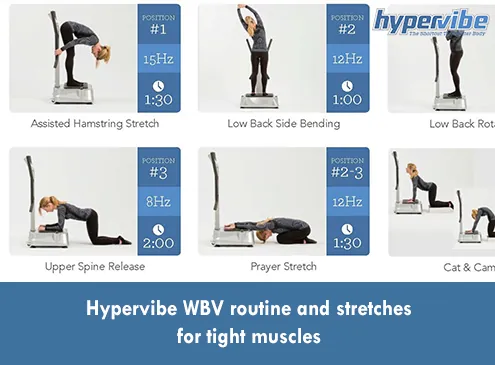
Avoid vibration plate stretching if you’re pregnant, have a pacemaker or implanted electronic device, have a recent fracture, acute disc injury, blood clot, or uncontrolled vertigo. People with diabetes-related neuropathy should get clearance first, because reduced foot sensation plus a moving surface raises fall risk.
Warning: Stop immediately if you feel dizzy, nauseated, or develop a headache. Step off, sit down, and rest.
Frequently Asked Questions
Can you stretch on a vibration plate every day?
Yes, for most healthy adults. Daily sessions of 10–15 minutes are generally well tolerated. Give yourself one rest day per week and reduce intensity if you feel unusually sore the next morning.
Should you stretch before or after the vibration plate?
Either works. Dynamic stretching before a workout on the plate, static stretching after, is the most common and practical split. If you only have one session, do both inside it.
How long should you hold a stretch on a vibration plate?
Thirty to sixty seconds per side is the sweet spot. Shorter holds rarely produce a lasting change; longer holds on a vibrating surface mostly produce fatigue and irritation.
Does vibration plate stretching actually improve flexibility?
Studies suggest modest short-term improvements in range of motion, comparable to or slightly better than static stretching alone. Long-term gains depend far more on consistency than on the plate itself.
Can you stretch on a vibration plate while sitting?
Yes. Seated hamstring, calf, and hip stretches work well, and sitting reduces fall risk. Many people start seated and progress to standing once they’re comfortable.
What should you wear on a vibration plate?
Bare feet or thin, flat-soled athletic shoes. Avoid thick cushioned running shoes, which absorb the vibration, and avoid socks on a smooth plate.
Conclusion
Pick one stretch from the table above, set your plate to its lowest frequency, and hold it for thirty seconds today. That single rep tells you more about whether vibration-assisted stretching suits your body than any article can.

I am a certified fitness coach with over 10 years of experience helping people improve their strength, endurance, and overall health. Specializes in workout programming, weight training, fat loss, muscle building, home fitness, and evidence-based nutrition.My goal is to make fitness simple and practical through well-researched guides, honest product reviews, and actionable training advice.