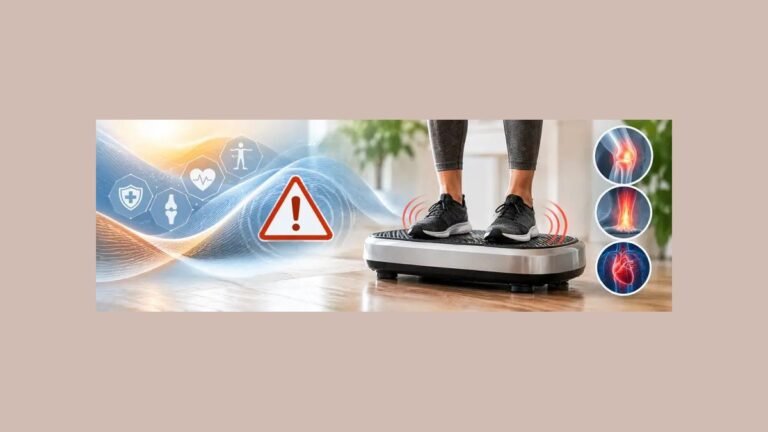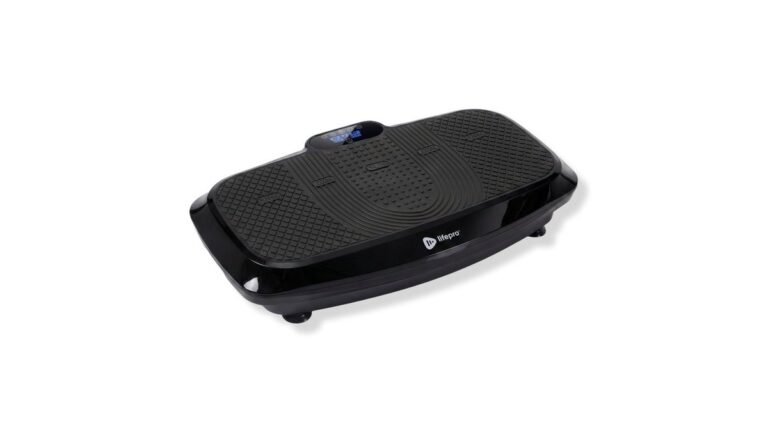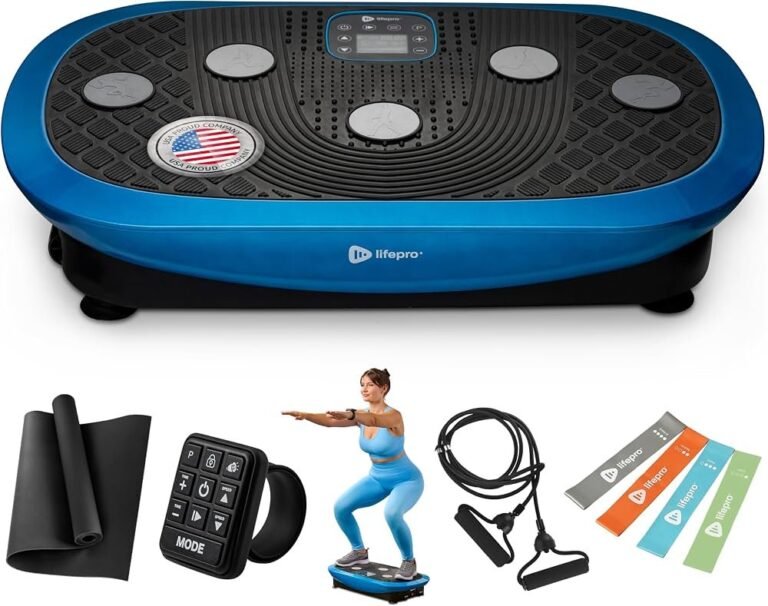
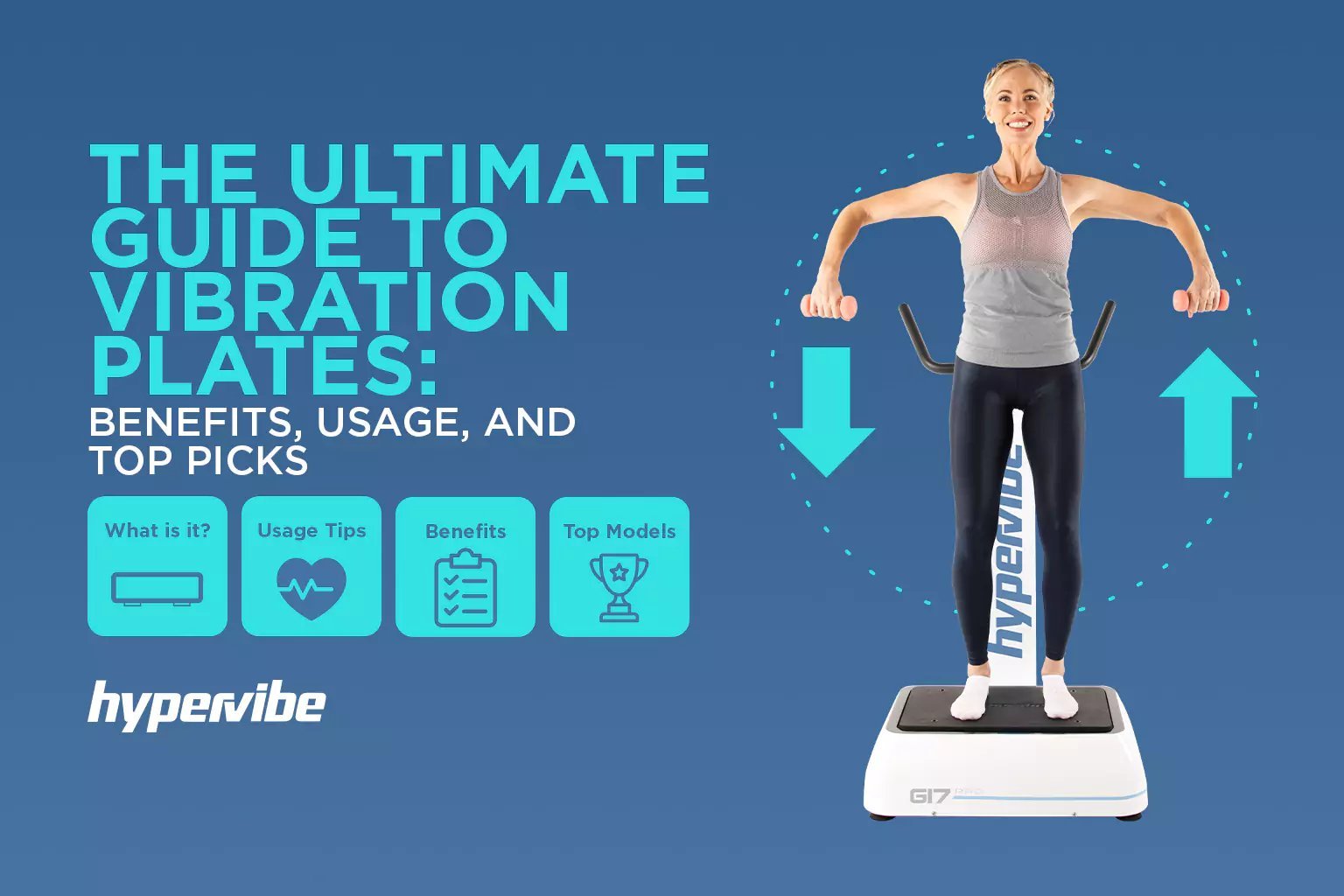
Vibration plates are the machine itself, plus the moves you do on it — standing, squatting, lunging, and holding a pose. The benefits come from the way the platform shakes your muscles, so they contract and relax many times a second. What separates one benefit from another is your position and how long you hold it.
Vibration plate benefits at a glance
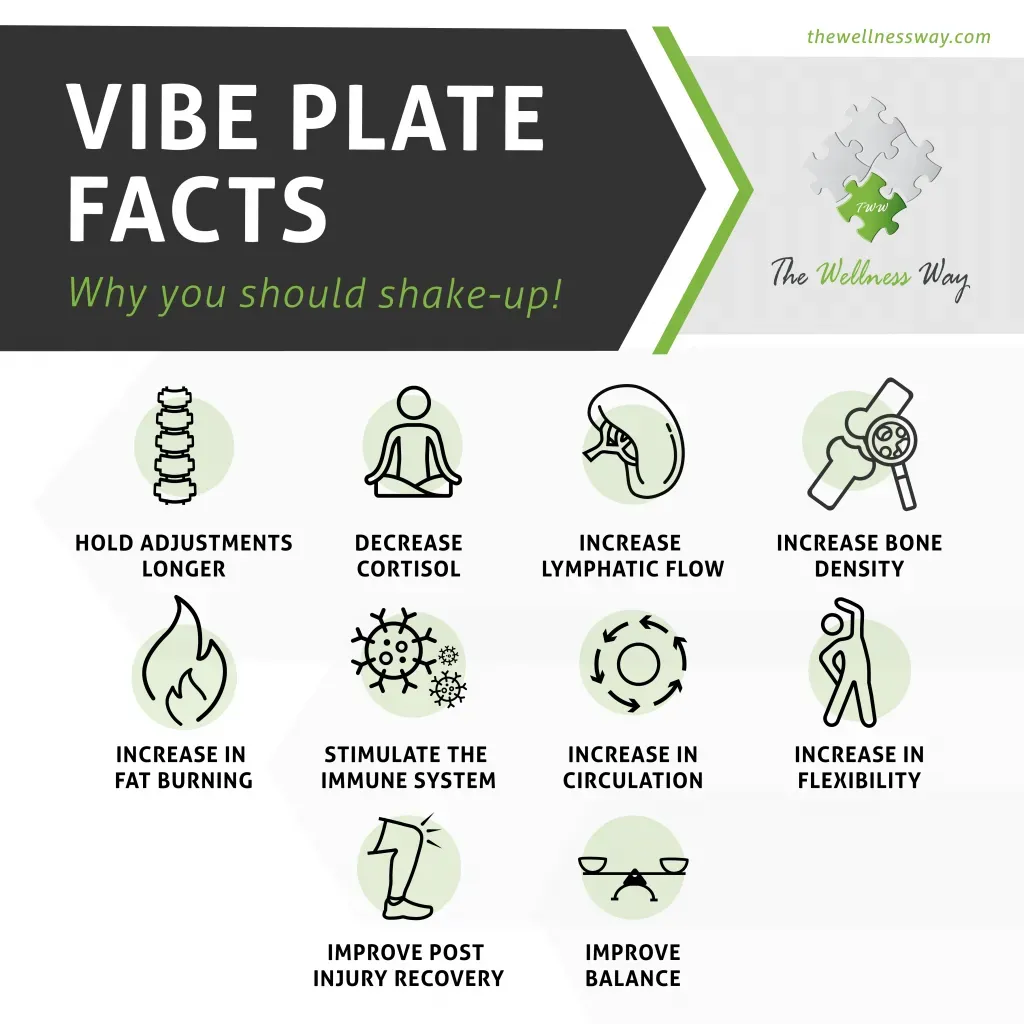
The table below puts every benefit on this page side by side, so you can see which one fits your goal before reading the details.
| Benefit | Best for | Example move |
|---|---|---|
| Balance training | Steadying shaky ankles | Standing on one leg |
| Muscle activation | Waking up leg muscles | Half squat hold |
| Bone density support | Post-menopausal women | Standing with light weights |
| Circulation boost | Sitting all day | Sitting with feet on plate |
| Flexibility | Tight hamstrings | Standing forward fold |
| Core stability | Weak lower back | Plank with hands on plate |
| Lymph flow | Swollen ankles | Lying with legs raised |
Balance training on a vibration plate
Balance training adds an unstable surface under your feet. The plate shakes, so your ankle and calf muscles fire faster to keep you upright.
- Trains the small ankle muscles that stop a stumble
- Builds reaction speed in your feet and lower legs
- Lets you practice one-leg standing with support nearby
Start with both feet flat, knees soft, and hold for 30 seconds at a low setting. If that feels easy after two weeks, lift one heel slightly. A 70-year-old doing 30-second holds three times a week is a normal starting point.
Muscle activation and strength
Muscle activation means your leg muscles switch on more strongly than standing still. The platform’s movement triggers a reflex that tightens your muscles each cycle.
- Warms up calves and thighs in a few minutes
- Adds resistance to squats and lunges without weights
- Fits a short session on a busy day
A half squat held for 45 seconds at a medium setting is a common drill. The exact number of contractions per second depends on your machine — check the Hz figure in your manual, since most home plates run somewhere between 20 and 50 Hz.
Bone density support after menopause
Bone density support has the most research behind it, and matters most for women past menopause. The shaking sends a small load through your bones, and bone responds by staying strong. A NASA-funded study on rats found low-level vibration helped maintain bone and muscle.
- Gives bones a gentle daily load
- Pairs with calcium and vitamin D intake
- Works as a low-impact option if running hurts
Two 10-minute sessions a day, standing with soft knees, follow the pattern used in published trials. If you have osteoporosis or a fracture history, ask your doctor before you start — safe settings are a medical question, not a machine question.
Circulation and blood flow
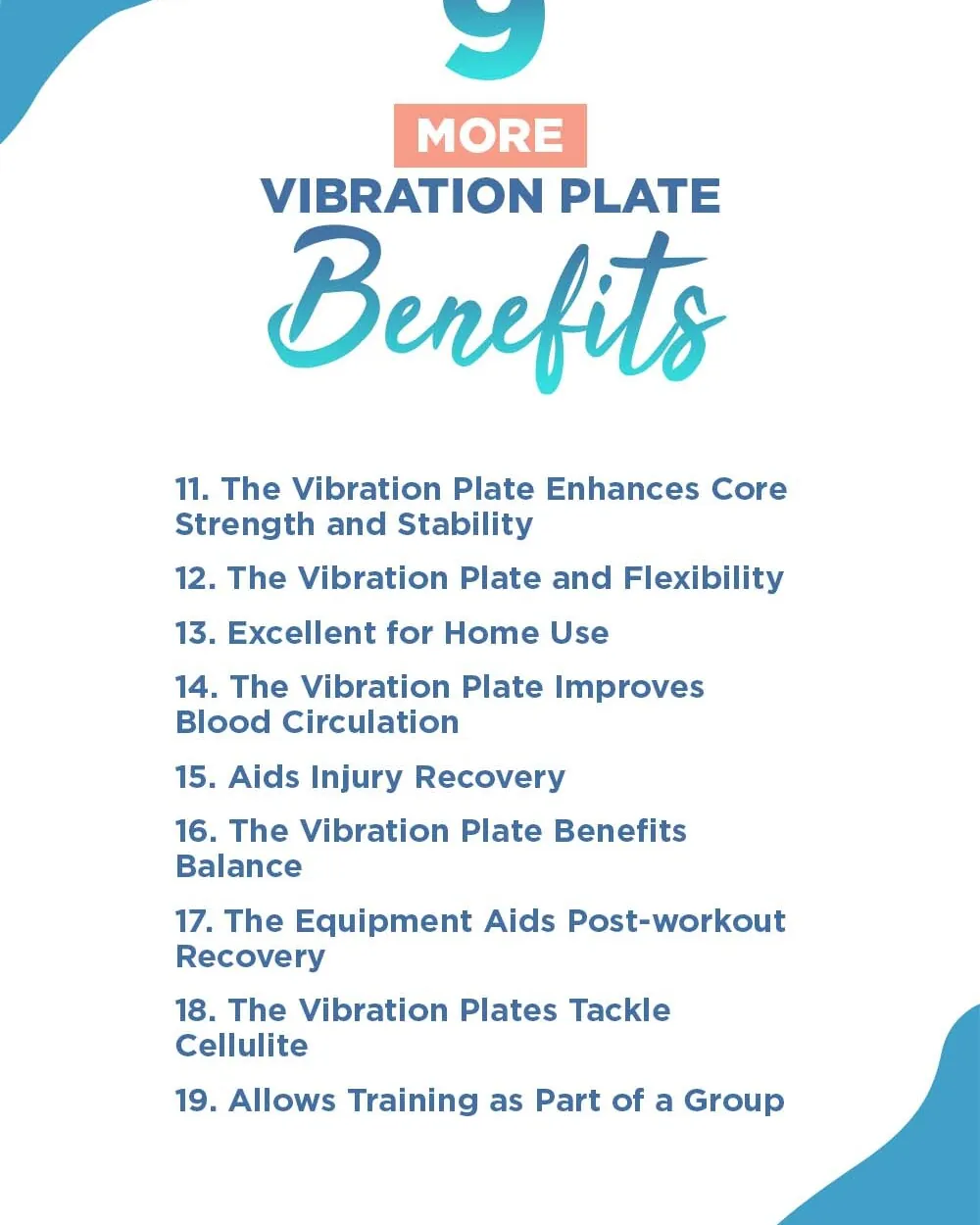
Circulation is the benefit you’ll feel fastest, often within minutes. The plate’s movement pushes blood through the small vessels in your legs and feet.
- Eases heavy, tired legs after desk work
- Helps swollen ankles in the evening
- Gives you a reason to stand up every hour
Try 5 minutes at a low setting with bare feet after work. People with a history of blood clots, or who take blood thinners, should check with their doctor first — this is one benefit where a health condition changes the answer.
Flexibility and stretching
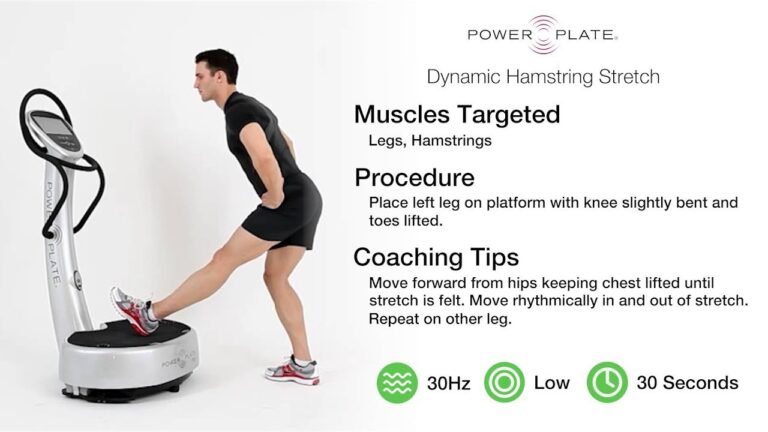
Flexibility improves because the plate helps your muscles relax into a stretch. The vibration reduces the reflex that makes a muscle tighten when stretched.
- Deepens a hamstring stretch in less time
- Loosens calves before a run
- Fits into a 5-minute cool-down
Stand facing the plate, put one heel on it, and lean forward for 30 seconds per leg at a low setting. Don’t push into pain — a gentle pull is the target.
Other benefits worth knowing
A few more uses come up often, and each one suits a different person.
- Lymph flow — helps move fluid out of swollen legs; good if you stand all day.
- Core stability — holding a plank on the plate makes your deep belly muscles work harder; suits anyone with a nagging lower back.
- Post-workout recovery — a short low-setting session may ease soreness; suits people training several days a week.
- Warm-up before sport — 3 minutes of standing drills raise leg temperature; good before a run or match.
How to pick the right benefit for you
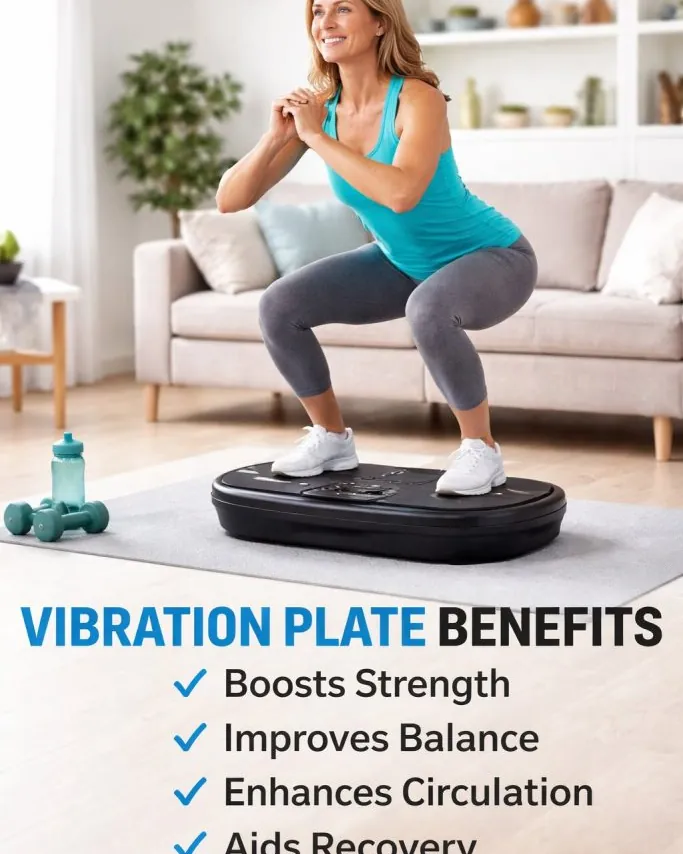
Your starting point settles which benefit is yours.
Time decides the rest. With 5 minutes a day, choose circulation or flexibility. With 20 minutes, you can pair muscle activation with balance. You can combine most of these in one session, but do bone density work and balance work one after the other, not at once.
Related guides
- Stair Stepper Benefits That Help Burn Fat Build Endurance and Tone Legs
- How Many Weight Plates Do I Need for Beginner Strength Training?
- Real Benefits of Elliptical Training That Help You Burn Fat
Frequently asked questions
How long should you use a vibration plate each day?
Most home routines run 10 to 15 minutes a day, split into two sessions of 5 to 7 minutes. Start at 5 minutes total for the first week, then add a minute every few days if your muscles don’t ache the next morning.
Can a vibration plate help you lose weight?
No — it won’t burn enough calories on its own to cause weight loss. A 10-minute session burns far fewer calories than a brisk walk of the same length. Use it for strength and balance, and treat diet and cardio as the weight-loss tools.
Is a vibration plate safe for your knees?
Yes, for most people with healthy knees, because your feet stay on the plate and there’s no jumping. If you have knee arthritis or a recent injury, use a low setting, keep a slight bend, and get your doctor’s OK first.
Why do you feel tingling in your feet after using it?
Tingling is normal and usually fades within a few minutes. It comes from the vibration stimulating nerves and blood flow in your feet. If it lasts more than an hour or comes with numbness, stop and see a doctor.
What happens if you use a vibration plate every day?
Daily use is fine for most people at 10 to 15 minutes total. Doing much more, or at a high setting, can leave your legs sore and your joints achy. Rest one day a week if you’re new to it.
Does it matter what you wear on a vibration plate?
Yes — wear flat shoes or go barefoot, and skip thick cushioned sneakers. Soft soles soak up the vibration, so less of it reaches your muscles and you get less from the session.
Can you use a vibration plate if you’re pregnant?
Ask your doctor first. Most makers advise against it during pregnancy, and the guidance differs between machines. Check your manual and follow your doctor’s advice over anything you read online.
How often should you use it to see results?
Three to five sessions a week for 6 to 12 weeks is the range where people notice changes in balance and leg strength. Bone density changes take much longer — think 6 to 12 months, and only alongside enough calcium and vitamin D.
Start with one benefit, not all of them
Pick the benefit that matches your weakest point, and do that one move for 5 minutes today. Expect warm calves and steadier balance within a couple of weeks — that’s your sign it’s working. If you feel sharp pain, dizziness, or numbness that won’t pass, stop and call your doctor.
I am a certified fitness coach with over 10 years of experience helping people improve their strength, endurance, and overall health. Specializes in workout programming, weight training, fat loss, muscle building, home fitness, and evidence-based nutrition.My goal is to make fitness simple and practical through well-researched guides, honest product reviews, and actionable training advice.