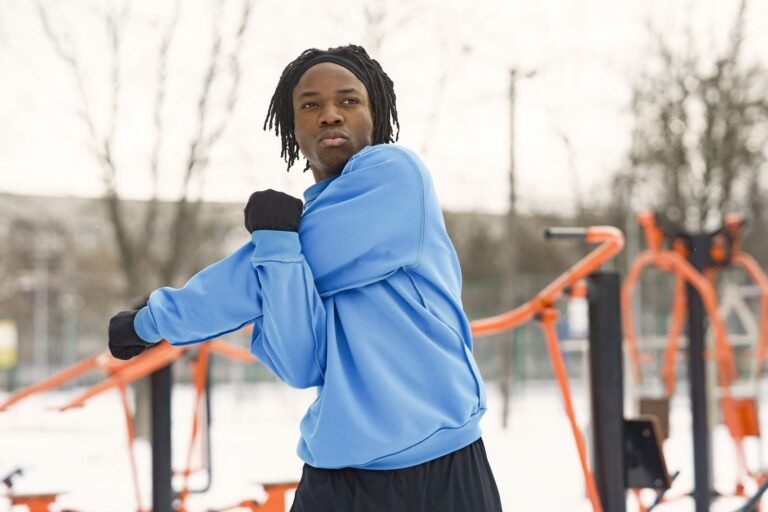
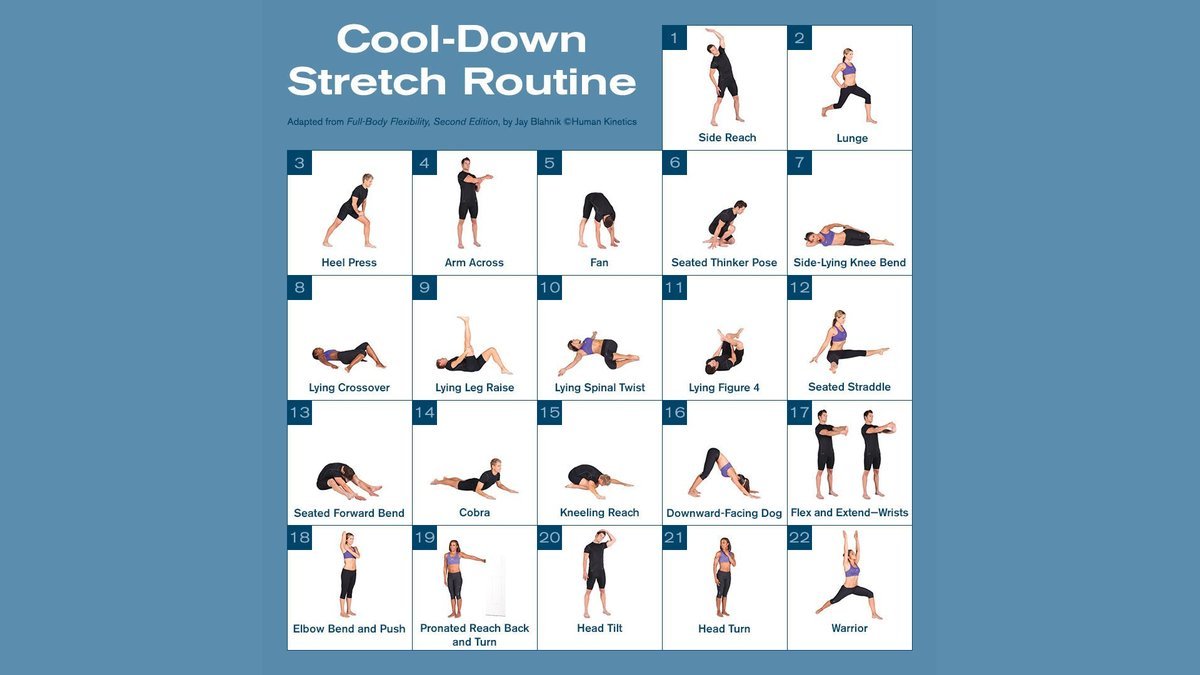
Cool-down exercises are the easy movements you do for 5 to 10 minutes after a workout, letting your heart rate and breathing come down gradually.
What you need for a cool-down
You don’t need much, and that’s the point. If you’re missing one item, the table shows what works instead.
| Item | How much | Why it’s needed | A substitute |
|---|---|---|---|
| Comfortable workout clothes | What you wore | Muscles stay warm during stretching | None — don’t swap this |
| Exercise mat or towel | 1 | Padding for floor stretches | Carpet or grass |
| Water bottle | 250–500 ml | Replaces fluid lost in sweat | Any cup of water |
| Timer or phone | 5–10 minutes | Keeps each stretch long enough | Counting slowly to 30 |
| Open floor space | About 2 m by 2 m | Room to stretch arms and legs | Standing beside a chair |
| Foam roller (optional) | 1 | Loosens tight leg muscles | None — skip it if you don’t have one |
Prepare before you finish your workout
The cool-down starts before your last rep, not after. Don’t skip the first bullet — it causes most of the trouble.
- Slow your main activity down instead of stopping mid-effort.
- Finish your last hard set at least 5 minutes before you plan to leave.
- Move your water bottle and mat within reach so you won’t cut the cool-down short.
- If you felt dizzy, chest pain, or sharp pain during the workout, stop and get medical advice — don’t cool down through it.
Cool-down steps, one at a time
Work through these in order. The whole routine takes 8–10 minutes, and it assumes a moderate workout like running, cycling, or a gym session.
- Keep moving, but slowly. Walk or pedal gently for 3–5 minutes until your breathing returns to near-normal and you could hold a conversation.
- Check your heart rate. Feel your pulse for 30 seconds; if it’s still racing, keep walking another 2 minutes before stretching.
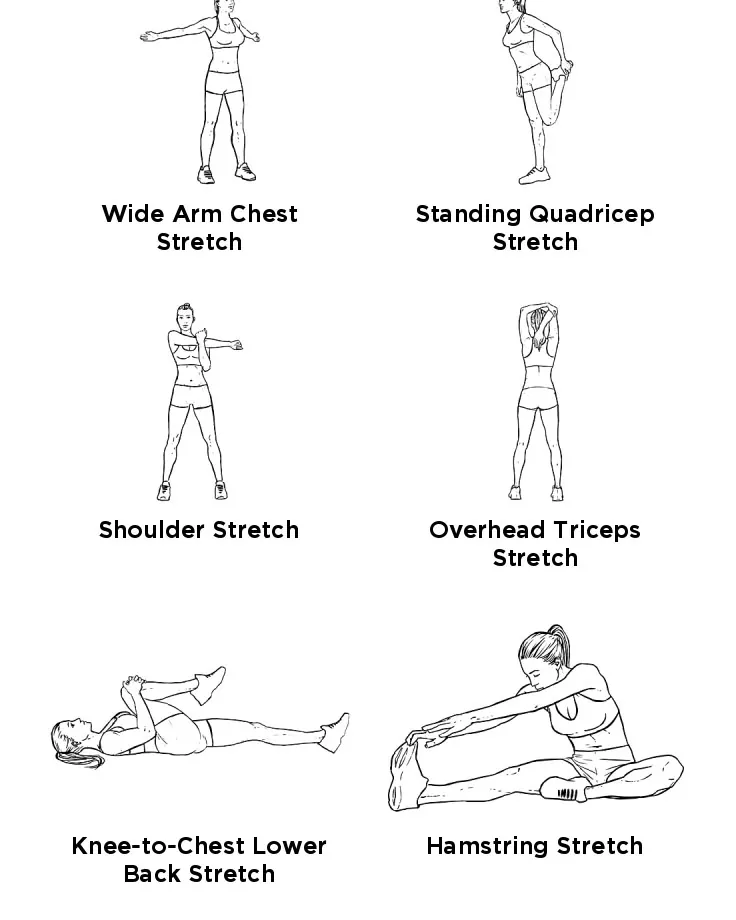
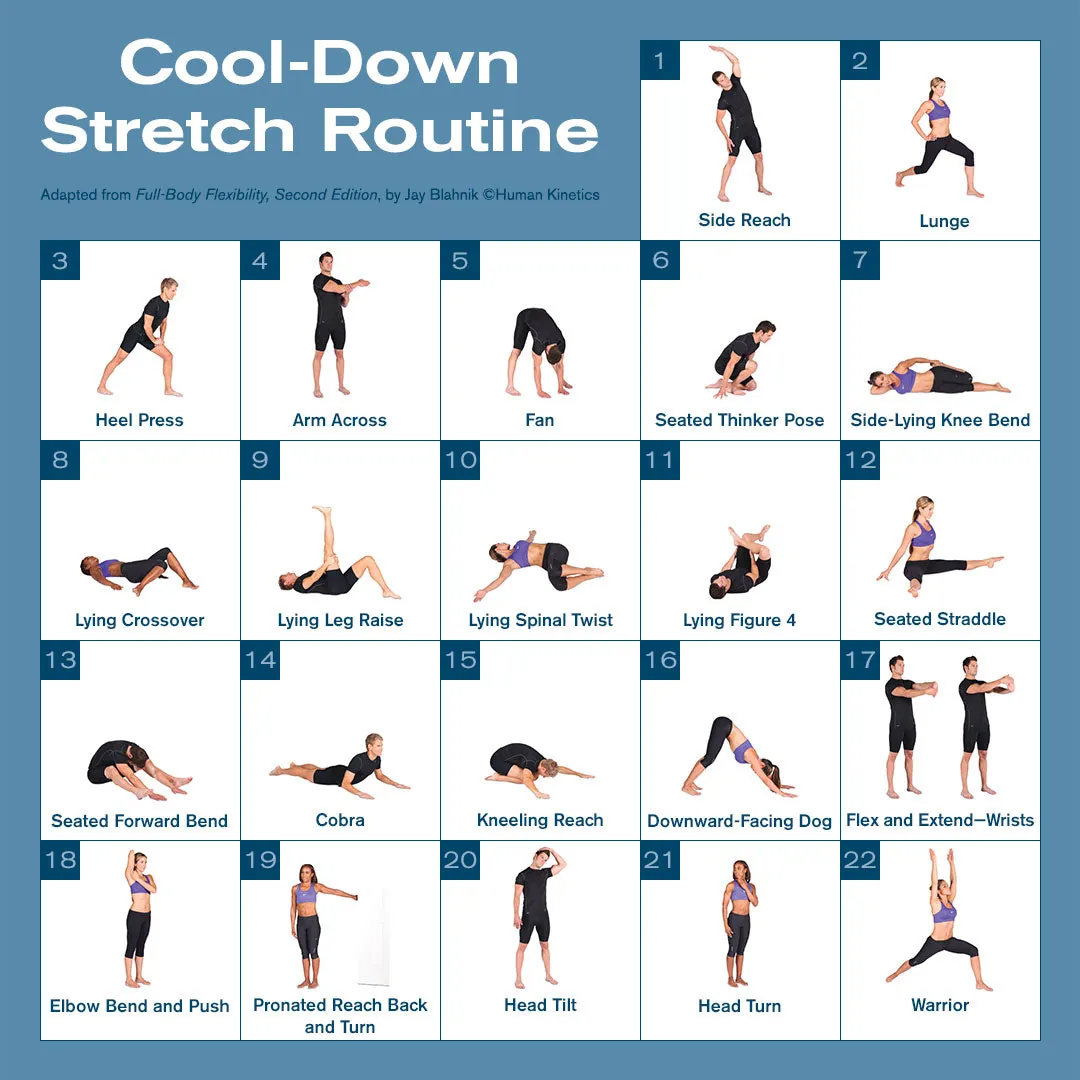
- Stretch your thighs. Pull one heel toward your glutes while standing, hold 20–30 seconds, then switch legs.
- Stretch your hamstrings. Sit with one leg extended, reach toward your toes, and hold 20–30 seconds per side without bouncing.
- Stretch your calves. Press your back heel into the floor against a wall or step, holding 20–30 seconds each side.
- Stretch your chest and shoulders. Clasp your hands behind your back and lift gently, holding 20–30 seconds.
- Breathe deeply for 60 seconds. Inhale for 4 counts, exhale for 6; your heart rate should feel steady by the end.
- Drink 250–500 ml of water. Sip it over the next 15 minutes rather than gulping it all at once.
- Note how your body feels. If one muscle group feels unusually tight, give it one more 20-second stretch before you go.
Signs your cool-down worked
You’ll know it worked if your breathing is back to normal within about 5 minutes and you can walk down stairs the next day without gripping the rail. Dizziness that doesn’t settle within a few minutes of rest is a sign to sit down and get medical advice, not to push on.
When a cool-down goes wrong
Most problems here are small and fixable on the spot. The table below matches the common failures to what actually causes them and what to do next.
| What happened | Why | What to do |
|---|---|---|
| Dizzy after stopping | Heart rate dropped too fast | Lie down, elevate legs, walk slower next time |
| Muscle cramped mid-stretch | Stretched cold or too hard | Ease off, gently move the joint, wait before retrying |
| Still breathless after 10 min | Cool-down was too short | Walk another 5 minutes at an easier pace |
| Felt sharper pain during a stretch | Went past a stretch, into strain | Stop that stretch; see a physio if it lasts over 48 hours |
| Bouncing during stretches | Rushing the hold | Hold still 20–30 seconds; bouncing can tear muscle fibres |
How often should you cool down?
Cool down after every workout that leaves you breathing hard — that means most sessions, not just races or heavy gym days. The check is simple: if your breathing and pulse haven’t settled, you’re not done.
Related guides
Frequently asked questions
How long should a cool-down last?
About 5 to 10 minutes for a normal workout, and up to 15 after a very hard one. The deciding factor is your breathing: you’re finished when it’s back to normal and you could chat comfortably.
Is it safe to skip a cool-down?
Yes, for light exercise like an easy walk — your body never left its comfort zone. For hard workouts, skipping it risks dizziness and extra stiffness, because blood pools in your legs when you stop abruptly.
What happens if you stop exercising without cooling down?
Your heart rate drops suddenly and blood can pool in your legs, which may make you feel dizzy or faint. It doesn’t harm a healthy heart, but it’s unpleasant and easy to avoid with a few minutes of walking.
Does stretching after a workout prevent soreness?
Probably not, according to current evidence. A Cochrane review found stretching before or after exercise produces little to no reduction in muscle soreness. Cool down for comfort and recovery, not as a soreness guarantee.
Can you do a cool-down without a mat?
Yes. Every stretch in this routine works standing up or using a chair for balance. A mat only adds padding for the seated hamstring stretch, and carpet or grass does the same job.
Why do you have to keep moving during a cool-down?
Moving keeps your muscles pumping blood back to your heart while your heart rate falls. If you stand or sit still immediately, that pump stops, and the blood sitting in your legs is what makes you feel light-headed.
Conclusion
Cool-down exercises cost you nothing but 8 minutes, and they’re the easiest part of any workout to cut. Don’t. Set your timer before the session starts, and treat the walk-and-stretch routine as the last set of the day — it’s the one that keeps tomorrow’s run from feeling like a slog.
I am a certified fitness coach with over 10 years of experience helping people improve their strength, endurance, and overall health. Specializes in workout programming, weight training, fat loss, muscle building, home fitness, and evidence-based nutrition.My goal is to make fitness simple and practical through well-researched guides, honest product reviews, and actionable training advice.