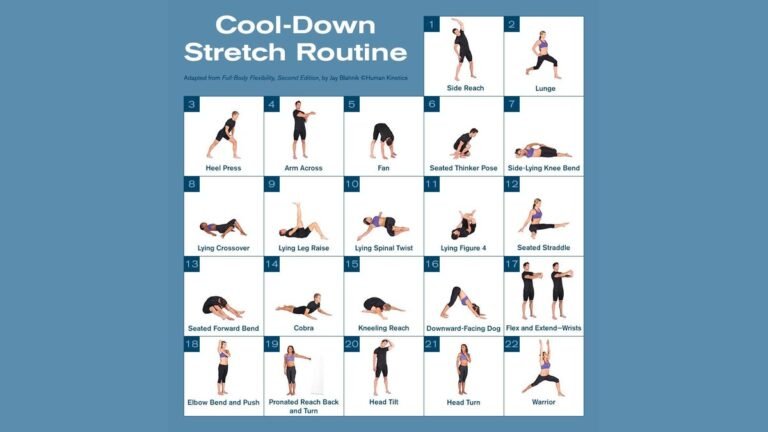
Stretching is best done after a light warm-up, holding each position for 15 to 30 seconds without bouncing. That’s the short answer. What follows covers the exact holds, the numbers, and the cases where stretching is the wrong move.
What stretching actually is
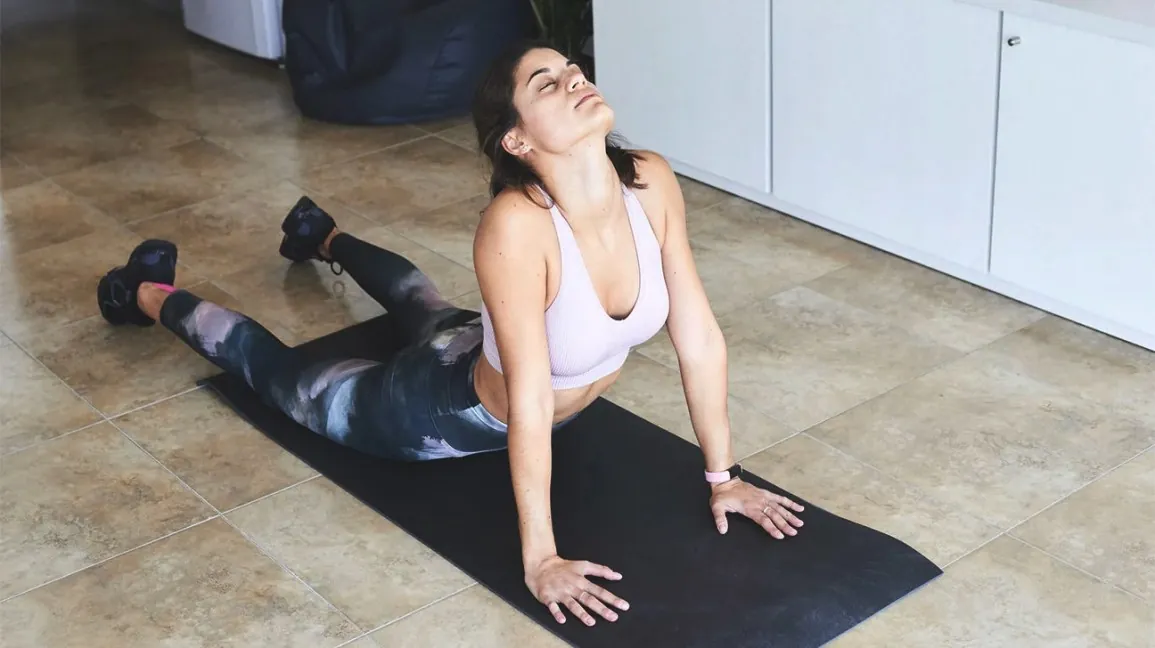
Stretching means moving a joint to the end of its comfortable range and holding it there. It’s used to keep muscles flexible, ease stiffness after sitting, and prepare the body for sport. The common misconception is that stretching prevents injury. The evidence for that’s weak.
The basic stretch routine
- Warm up first. Walk or march in place for 3 to 5 minutes so your muscles are warm, not cold.
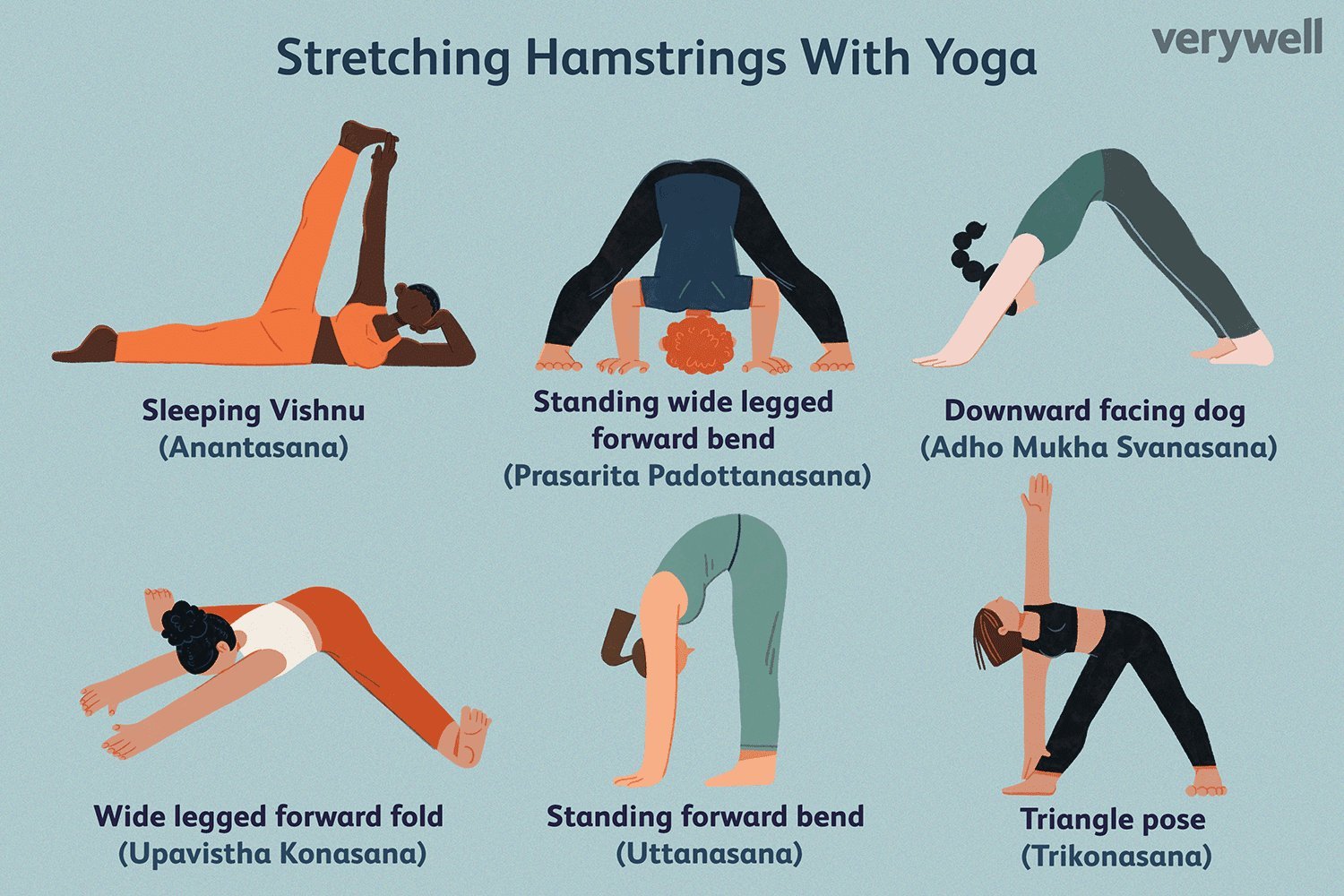
- Pick 4 to 6 stretches for the areas you use most — calves, hamstrings, hips, chest, shoulders.
- Move into the position slowly until you feel a mild pull, not pain. Stop there.
- Hold for 15 to 30 seconds. Breathe normally. Don’t bounce.
- Come out slowly, rest 10 to 15 seconds, then repeat the stretch 2 to 4 times.
- Do this 2 to 3 days a week, or daily if it feels good.
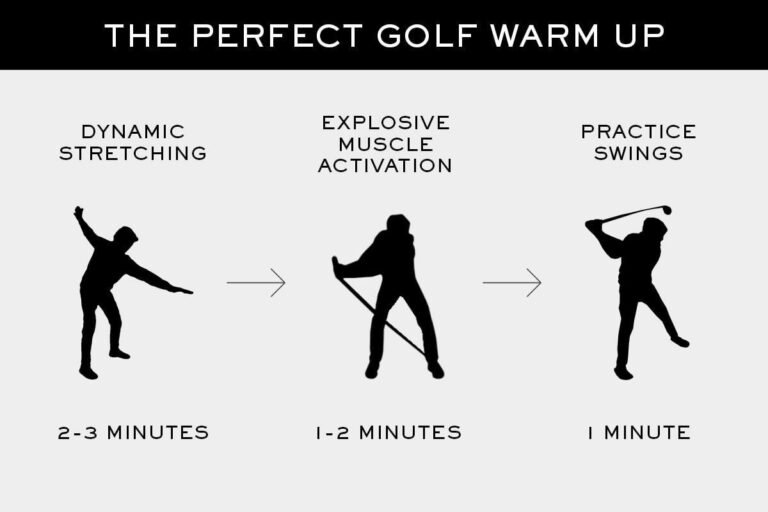
- For a sport, do dynamic moves like leg swings before play, and save the long holds for after.
The one judgement call is how far to go. A mild pull that fades as you hold is right. Sharp pain, tingling or numbness means you’ve gone too far — back off. If you’ve had surgery, a joint replacement or a recent injury, see a physical therapist rather than following a general routine.
Stretch types, holds and timing at a glance
Use this table to match the type of stretch to your goal. Times assume you’re healthy and warmed up.
| Situation | What to use | How long | What to watch for |
|---|---|---|---|
| General stiffness | Static hold | 15–30 sec, 2–4 reps | Don’t bounce |
| Before sport | Dynamic moves | 5–10 min total | Keep moving, no long holds |
| After sport | Static hold | 30 sec per muscle | Wait until breathing is calm |
| Tight calves | Wall stretch | 30 sec each side | Heel stays down |
| Desk-day hips | Hip flexor lunge | 30 sec each side | Don’t arch your lower back |
| Older adults | Gentle static | 15–20 sec | Use a chair for balance |
| After injury | Guided only | As your therapist sets | Never self-prescribe |
What separates a good stretch from a wasted one
Experienced people warm up first, because a cold muscle resists. They hold the position still and let the pull ease, rather than pushing deeper every second. They also stretch both sides evenly, even when only one feels tight — an uneven routine pulls your posture off over time.
They check in partway through. If they feel tingling or numbness, they stop that stretch completely.
Order matters
Do the big muscles first — hips, hamstrings, calves — then the smaller ones like shoulders and neck.
Breathe, don’t brace
Holding your breath raises tension and makes the stretch feel tighter. Slow, steady breathing lets the muscle release.
Common problems and quick fixes
Here’s what people usually notice, and what to do about it. If a problem doesn’t settle in a week or two, see a doctor or physical therapist.
| What you notice | What it usually means | What to do first |
|---|---|---|
| Sharp pain during a hold | You’ve gone past your range | Ease back, shorten the hold |
| Tingling or numbness | A nerve is being compressed | Stop that stretch entirely |
| No progress after weeks | Holds too short or too rare | Hold 30 sec, stretch 3 days a week |
| Muscle feels tighter after | You stretched cold or too hard | Warm up first, reduce the depth |
| One side always tighter | Normal asymmetry or old injury | Stretch both sides equally |
The rules and limits that apply
There’s no law that says how long you must stretch, but public health bodies do publish guidance. The American College of Sports Medicine recommends flexibility work 2 to 3 days a week for healthy adults. The NHS stretching and flexibility guidance covers safe holds for the general public. Never stretch a joint you’ve recently dislocated or had replaced without a clinician’s sign-off.
Keeping flexibility once you have it
Flexibility fades if you stop. Keep your routine going 2 to 3 days a week to hold what you’ve gained. If you skip a couple of weeks, don’t jump back to your old depth — start shallower and rebuild. The sign it’s time to stretch again is simple: the area feels stiff when you get up or after sitting. That’s your cue, not a calendar.
When stretching isn’t the answer
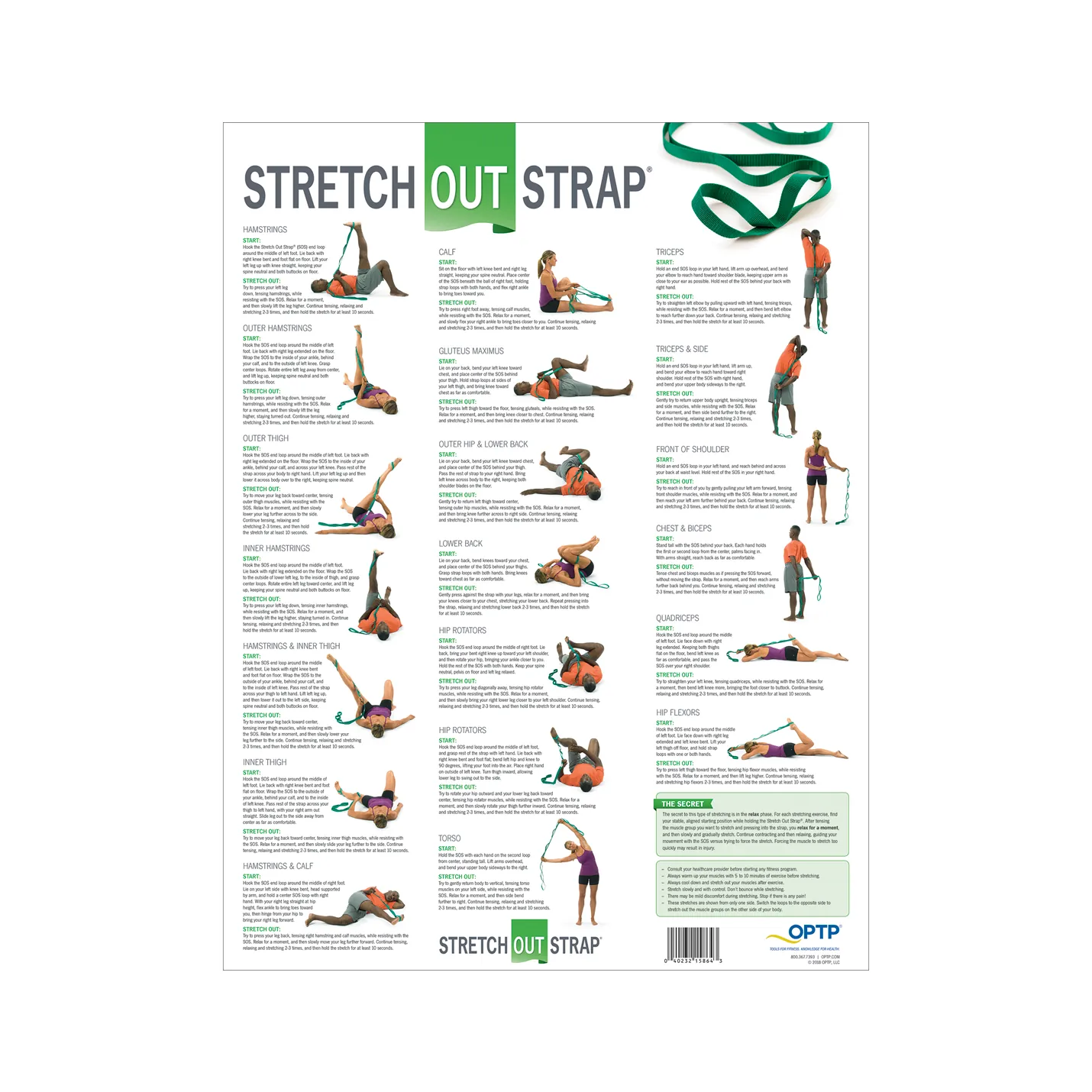
Skip stretching if you have an acute injury, a swollen joint, or a suspected muscle tear — rest and see a doctor instead. If you’re hypermobile and joints already move too far, stretching makes it worse; strength work is the better choice. And if pain is sharp, constant or wakes you at night, that’s a medical question, not a flexibility one.
Frequently asked questions
How long should you hold a stretch?
Hold 15 to 30 seconds per muscle for general flexibility. For a sport or a very tight area, 30 to 60 seconds works, assuming you’re warm and pain-free.
Is it safe to stretch every day?
Yes, daily stretching is safe for healthy people if you stay in a comfortable range. If a muscle feels sore the next day, give it a rest day.
Why does stretching feel good?
The pull signals your nervous system to relax the muscle, which lowers tension. That’s why a slow hold eases stiffness — it’s a nervous system response, not the muscle getting longer.
What happens if you stretch too far?
You can strain the muscle or irritate a joint. Sharp pain, bruising or swelling afterward means you went past your range. Ease back and let it heal.
Can you stretch cold muscles?
You can, but it’s less effective and riskier. A 3 to 5 minute warm-up raises muscle temperature and makes the tissue more willing to lengthen.
How often should you stretch for flexibility gains?
Two to three days a week is the standard starting point from public health guidance. Daily is fine if you’re comfortable and not sore.
Does stretching prevent injury?
The evidence is mixed and weaker than most people assume. Being generally fit and warming up properly does more for injury prevention than stretching alone.
Conclusion
Stretching works best as a small, regular habit — warm up, hold gently, breathe, and stop when something feels sharp. You don’t need a long routine or fancy equipment. A few minutes, most days, keeps your range where you want it.

I am a certified fitness coach with over 10 years of experience helping people improve their strength, endurance, and overall health. Specializes in workout programming, weight training, fat loss, muscle building, home fitness, and evidence-based nutrition.My goal is to make fitness simple and practical through well-researched guides, honest product reviews, and actionable training advice.