Start beginner workouts with two full-body sessions a week, 20-30 minutes each, using 5-8 exercises that cover pushing, pulling, squatting, hinging and carrying. That’s the whole answer. What a two-line answer can’t give you is the sets, rest times, order, and when to ask a professional.
What beginner workouts really are
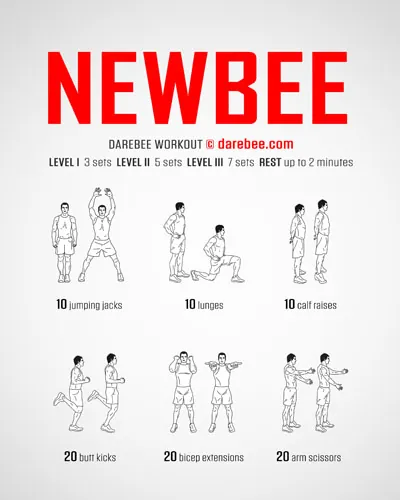
Beginner workouts are short, full-body training sessions built around simple movements you already do every day: standing up, bending down, pushing a door, picking up a bag. They’re for anyone starting from zero, or coming back after a long break.
The one idea people get wrong is that soreness equals progress. It doesn’t. Soreness mostly shows your body met something new, not that you got stronger. Strength comes from doing a little more over weeks, not from one brutal session.
One rule is worth knowing: your muscles adapt to the demand you place on them, so the work has to be slightly harder than what you’re used to. That’s it.
How to run your first four weeks
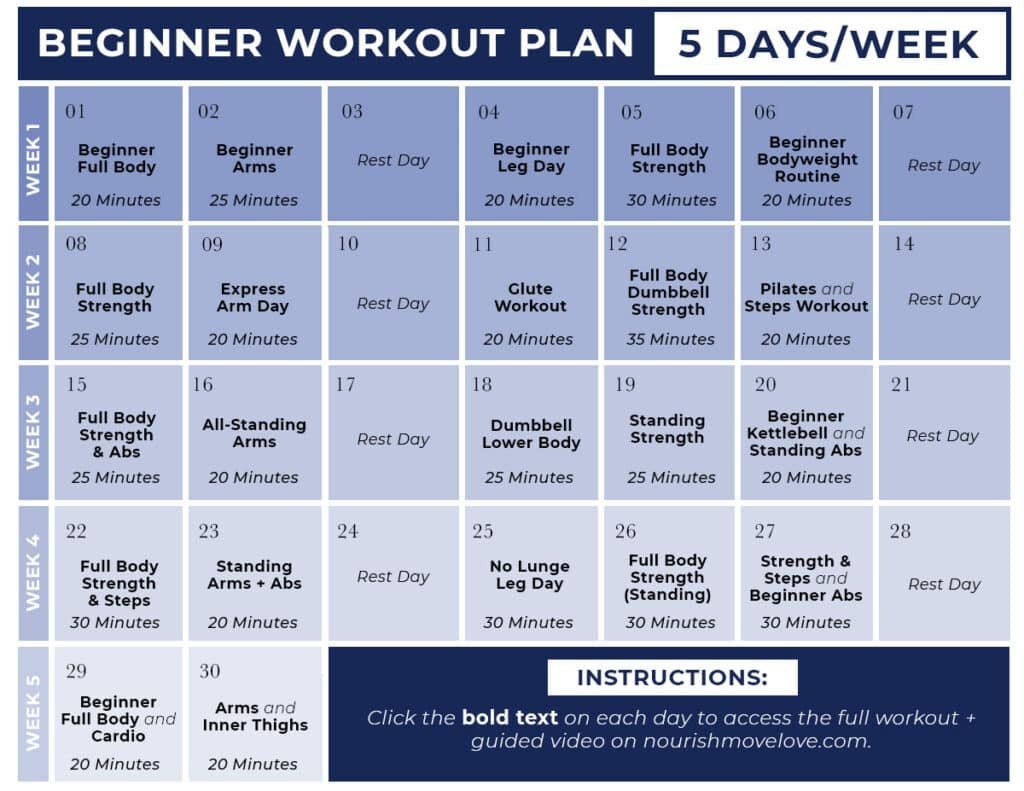
- Pick 2 days with a gap between them — Tuesday and Saturday works well. Rest at least 48 hours between sessions at the start.
- Warm up for 5 minutes — walk briskly or march in place, then do 10 arm circles each way and 10 slow bodyweight squats.
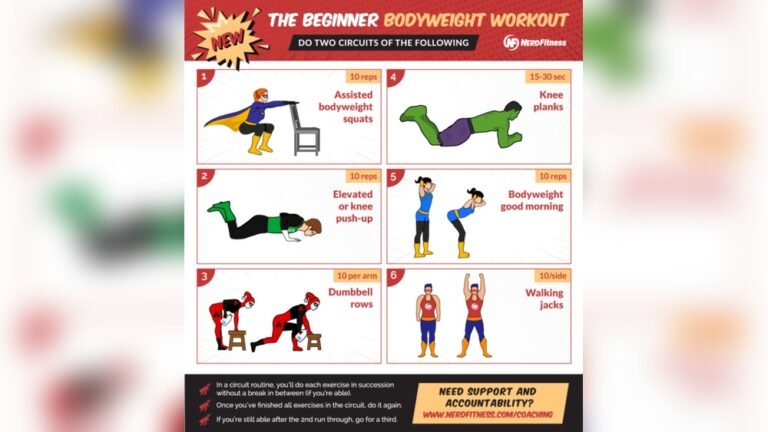
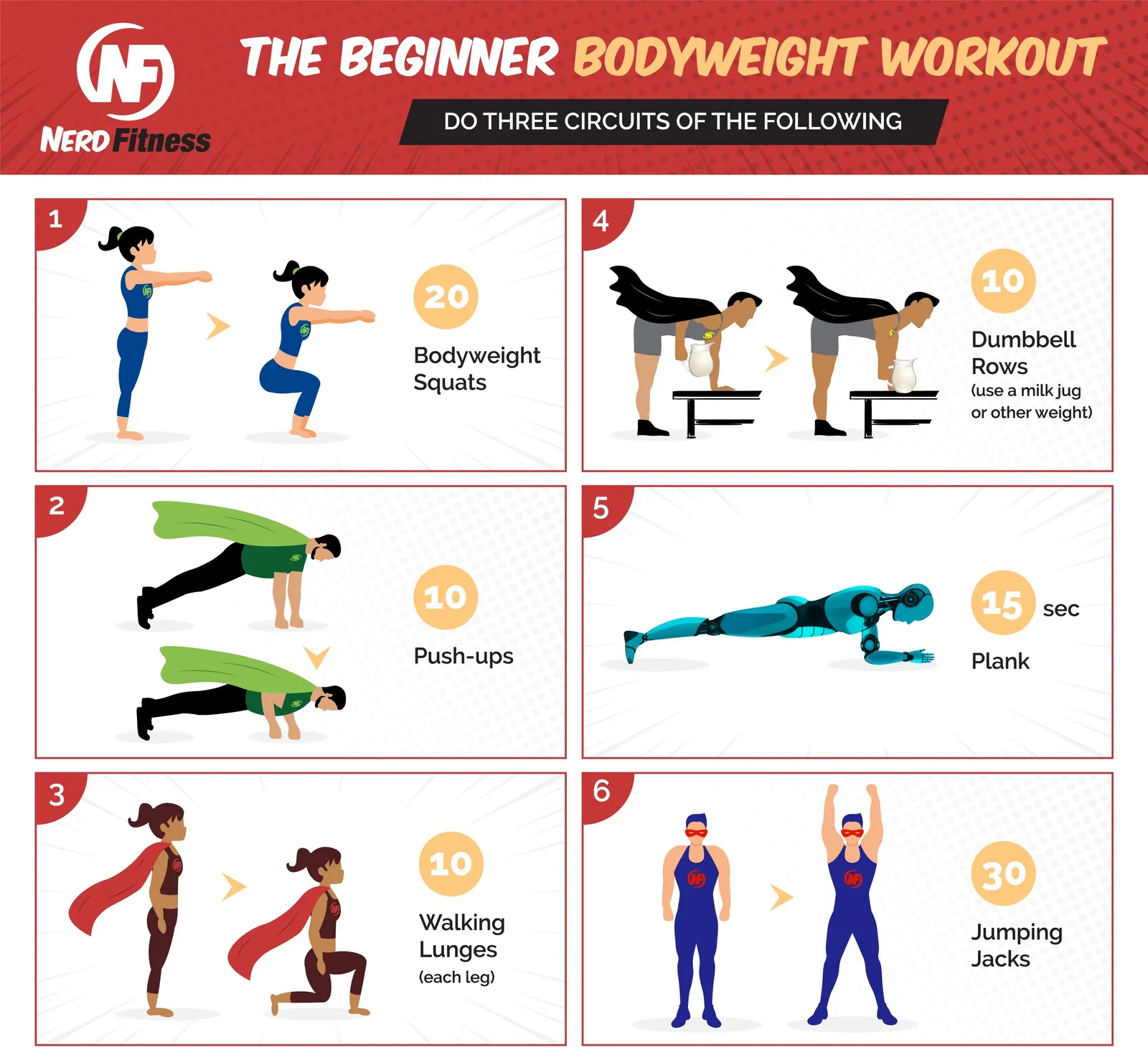
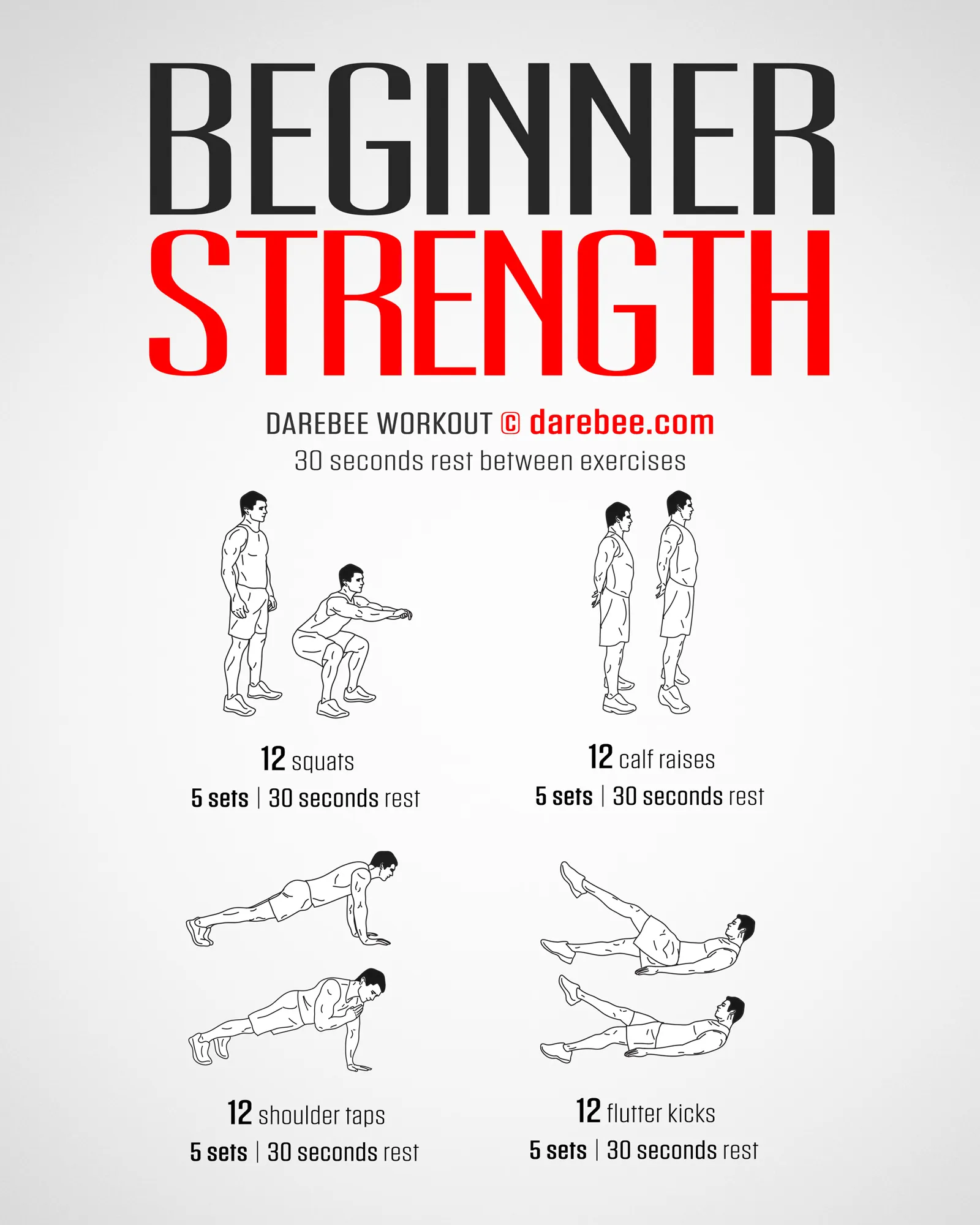
- Do 5 exercises, 2 sets each — squat, push-up (on a wall or knees), row with a band or dumbbell, hip hinge with a light weight, and a 30-second plank.
- Use 8-12 reps per set — the last 2 reps should feel hard but still clean. If you can do 15 easily, add weight or slow down.
- Rest 60-90 seconds between sets. Longer if you’re still breathing hard.
- Finish with 5 minutes of easy walking to bring your heart rate down.
- Repeat for 4 weeks before adding anything. Then add one set, not one day.
The judgement call that matters most is your starting weight. Too light wastes your time; too heavy breaks your form in week one. Start lighter than your ego wants, and add a small amount only when all your reps feel controlled.
Beginner workout numbers at a glance
These figures assume a healthy adult doing full-body sessions.
| Situation | What to use | How long | What to watch for |
|---|---|---|---|
| Complete beginner, first 2 weeks | Bodyweight only, 2 sets of 8-10 | 20 minutes | Stopping early because of breathlessness, not muscle tiredness |
| Comfortable with bodyweight | Add 2-5 lb dumbbells, 2-3 sets of 10-12 | 25-30 minutes | Losing form in the last 2 reps |
| Returning after 6+ months off | Half your old weight, 2 sets of 10 | 20-25 minutes | Doing too much in week one |
| Short on time | 3 compound moves, 3 sets each | 15 minutes | Skipping the warm-up |
| Training at home, no equipment | Bands plus a chair, 3 sets of 12 | 25 minutes | Bands that are too light to challenge you |
| Older adult, new to training | Chair-supported squats, 2 sets of 8 | 20 minutes | Dizziness when standing up fast |
What separates good results from bad ones
People who get results prepare the session before they start. They set out their weights, decide the order, and write down what they did last time. That last part is the difference between guessing and knowing.
What they check partway through
Halfway into a set, they ask one question: can I keep this form for two more reps? If no, they stop.
What they leave alone
They don’t add cardio, stretching routines and a new diet in the same week. If everything changes at once, you can’t tell what’s working.
Common problems and quick fixes
Most early problems come from doing too much, too soon, or from a setup detail that’s easy to miss.
| What you notice | What it usually means | What to do first |
|---|---|---|
| Sharp joint pain | The load is too heavy for that joint right now | Stop the exercise, drop the weight by half next session |
| Dull muscle ache for 1-2 days | Normal response to new work | Keep training, reduce sets by one |
| Dizzy or lightheaded | You stood up fast or didn’t eat beforehand | Sit down, drink water, eat something, rest 10 minutes |
| Can’t finish the last set | You started too heavy | Drop 10-20% next time |
| Bored after 3 weeks | Same exercises, no progress to see | Add one rep per set, or swap one exercise |
The rules that apply
Gym and fitness rules vary by country and by facility, so check your gym’s own policy before you sign anything. In the US, the CDC publishes physical activity guidelines for adults: it recommends at least 150 minutes of moderate activity a week, plus muscle-strengthening work on 2 or more days.
The CDC physical activity guidelines are the reference point most trainers use. If you have a health condition, or you’re over 65 and haven’t trained before, speak to your doctor first.
Keeping it working afterwards
Write down your sets, reps and weights after every session — a notebook or a phone note is fine. That record tells you when to add weight: when you hit the top of your rep range on all sets, two sessions in a row.
Take a lighter week every 6-8 weeks: same exercises, half the sets. If your sleep gets worse, your joints ache at rest, or your weights drop for two sessions running, that’s your sign to ease off.
When beginner workouts aren’t right
If you’re training for a specific sport or event, a general full-body plan won’t build the skill you need — get a sport-specific program instead. If you’re rehabbing an injury, a physical therapist should set your plan, not a general guide. And if you have a heart condition, uncontrolled blood pressure, or you’re pregnant, get medical clearance first.
Related guides
- Best Weight Bench Set for Home With Weights: Ultimate Full-Body Workout Guide
- Benefits of Rowing Machine: Ultimate Full-Body Workout Guide
Frequently asked questions
How many days a week should a beginner work out?
Two to three full-body days a week, with at least one rest day between sessions. This assumes you’re new to training; if you’ve trained before, three days is fine from the start.
How long should a beginner workout last?
20 to 30 minutes of actual training, plus a 5-minute warm-up. That’s for a full-body session with 5 exercises and 2-3 sets each.
Can beginners build muscle with bodyweight only?
Yes, for the first few months. Push-ups, squats and rows give your muscles enough resistance — but once 15 reps feel easy, you’ll need added weight to keep progressing.
Why am I so sore after my first workout?
Your muscles are responding to unfamiliar work, and soreness usually peaks 24-48 hours later. It fades as your body adapts, so the second session is normally easier.
Is it safe to lift weights as a beginner?
Yes, for most healthy adults, when you start light and keep your form controlled. If you have a heart condition or joint problems, check with your doctor first.
What happens if I skip the warm-up?
Your muscles are colder and your joints are stiffer, so your first working set feels harder and your injury risk goes up. Five minutes of easy movement is enough.
How do I know when to add more weight?
When you finish all your sets at the top of your rep range and the last rep still feels controlled. Add the smallest jump available, usually 2-5 lb.
Conclusion
Two sessions a week, written down, with a little more weight when the reps feel easy — that’s the whole system. The plan matters far less than showing up for the next four weeks.

I am a certified fitness coach with over 10 years of experience helping people improve their strength, endurance, and overall health. Specializes in workout programming, weight training, fat loss, muscle building, home fitness, and evidence-based nutrition.My goal is to make fitness simple and practical through well-researched guides, honest product reviews, and actionable training advice.