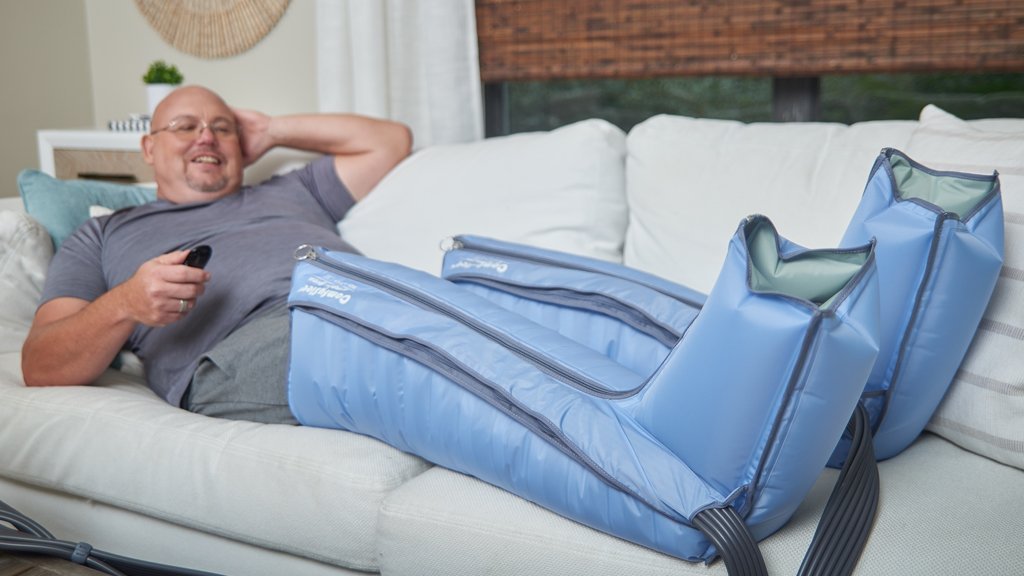
Lymphatic drainage machines are motorized devices — pneumatic compression sleeves, handheld vibrating massagers, and similar tools — that use pressure or movement on the skin to help move lymph fluid. What separates them is how much of your body they cover and how much pressure they apply.
Types of machines at a glance
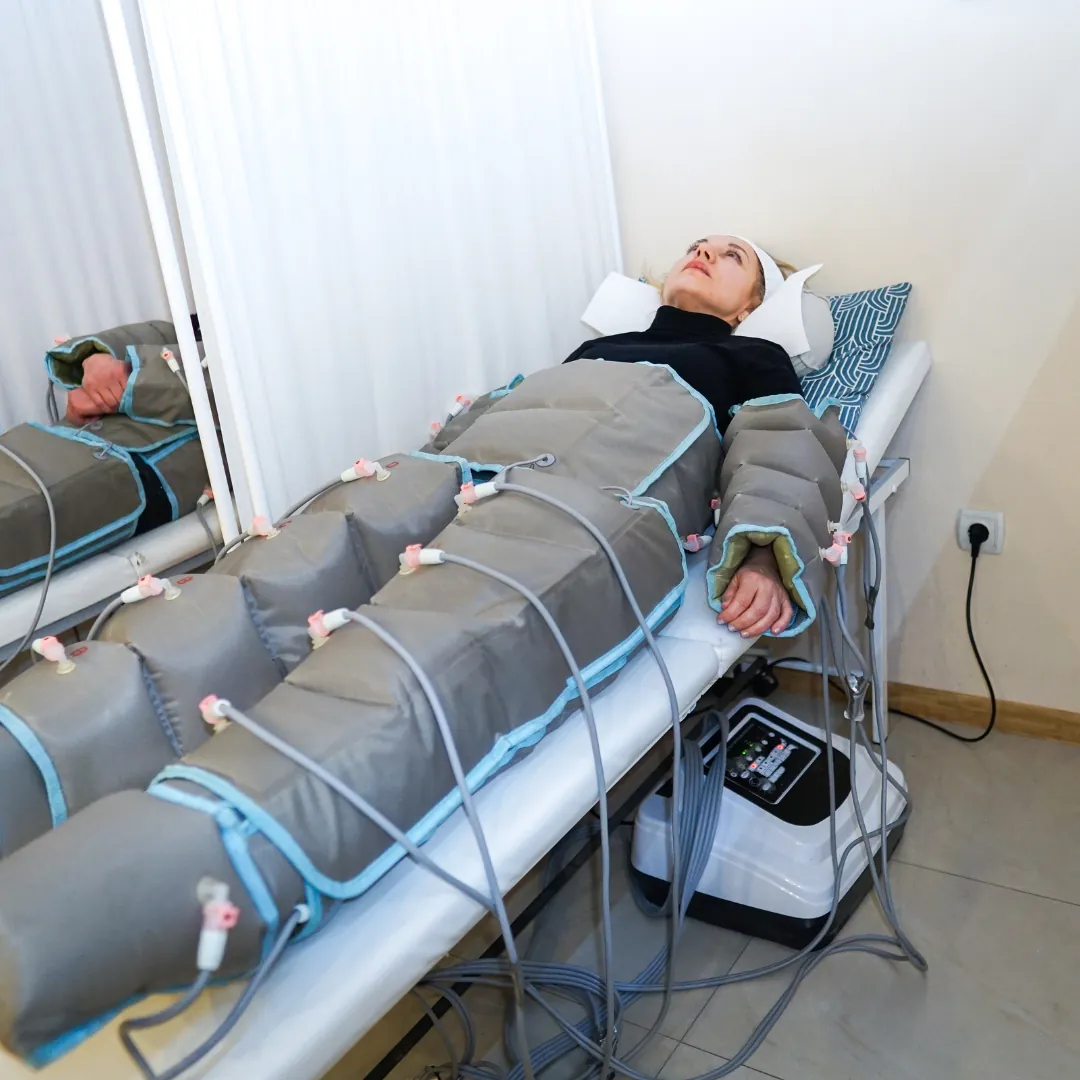
Most machines fall into a few clear groups, and the group decides how much of your body gets treated at once.
| Machine type | Best for | Example |
|---|---|---|
| Pneumatic compression sleeves | Full-limb coverage at home | Sequential leg sleeve |
| Handheld vibrating massager | Small, targeted areas | Neck and face wand |
| Manual pump with garment | Clinic-level pressure control | Multi-chamber arm sleeve |
| Percussion device | Breaking up tight tissue | Handheld percussion gun |
| Infrared heat mat | Relaxation and light warmth | Foldable body mat |
| Facial roller tool | Face and jaw puffiness | Manual face roller |
Pneumatic compression sleeves
Pneumatic compression sleeves are the closest thing to a clinic treatment at home. A small pump inflates chambers in the sleeve in sequence, pushing fluid from your ankle upward toward your groin. They suit people with swollen legs or arms who want a repeatable routine without booking an appointment each time.
- Cover a whole limb in one session
- Let you set pressure and time on the pump
- Work while you sit or lie down
A typical at-home session runs 20 to 30 minutes per limb at a low-to-medium pressure setting, but the right number depends on your pump’s manual and your doctor’s advice. If you have heart or kidney problems, ask a doctor before using one.
Handheld vibrating massagers
A handheld vibrating massager is the cheapest way to work on a single area — your face, neck, or a swollen ankle. It lets you control exactly where the head touches, which matters near the jaw and collarbone.
- Target puffiness around the eyes and jaw
- Reach spots a sleeve can’t wrap
- Fit into a five-minute morning routine
Use light pressure and move in one direction — toward the heart, not back and forth.
Manual pump with garment
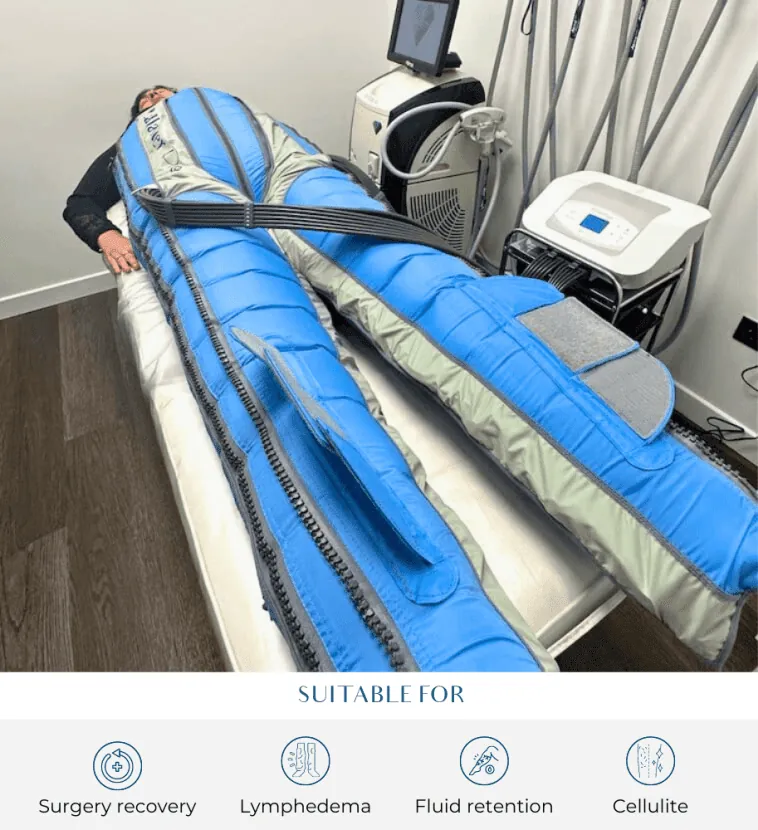
A manual pump with a garment gives finer pressure control than a fixed home unit. The pump has a dial or gauge, and the garment is sized to the limb, so the same machine can treat an arm, a leg, or the trunk.
- Adjust pressure chamber by chamber
- Treat more than one body area
- Match pressure to what a clinician prescribes
This is the option that needs training or supervision. Lymphedema treatment should be guided by a certified lymphedema therapist — the National Lymphedema Network lists qualified therapists by state. Getting the pressure or sequence wrong can make swelling worse, so don’t self-prescribe this setup.
Percussion devices
A percussion device uses a fast, tapping head instead of steady pressure. It’s better for loosening tight muscle tissue than for moving lymph, so it suits people who feel stiff.
- Relax tight calves and shoulders
- Cover a broad area quickly
- Add movement before a stretch
Keep it off bony areas, the front of the neck, and any spot that’s swollen, red, or hot.
Other machines worth knowing
A few more devices show up for this topic. None of them replace the options above, but each has a narrow use.
- Infrared heat mat — gentle warmth for relaxation; not a drainage tool, and not for anyone with reduced skin sensation.
- Facial roller tool — a manual, non-motorized way to sweep the face and jaw; good for a light morning routine.
- Compression boots — a lighter version of pneumatic sleeves, often sold for recovery after exercise rather than swelling.
- Wooden or stone massage tools — manual scraping and rolling for tight tissue; skip them on any swollen or bruised area.
How to choose the right one for you

Your starting point decides this. If you have diagnosed lymphedema or swelling after surgery, a manual pump with a garment under a therapist’s guidance is the right pick. If you just feel puffy after sitting, a pneumatic sleeve or handheld massager is enough. If you want face and jaw work, choose the handheld massager. If you mainly want muscle recovery, take the percussion device.
Related guides
- Size Guide Rowing Machine: Find Your Perfect Fit Fast
- Size Guide Smith Machine: Ultimate Tips for Perfect Fit
- Easy Ways to Store Your Elliptical Machine and Save Space
Frequently asked questions
Can a lymphatic drainage machine replace manual therapy?
No. A machine can support a routine your therapist sets, but manual lymphatic drainage is a trained technique. Use a device only as part of a plan a clinician has approved for you.
Why does my leg swell more after using one?
Pressure that’s too high or applied in the wrong direction can push fluid the wrong way. Stop using it and see a doctor or lymphedema therapist before continuing.
How long should a session last?
Most at-home sessions run 20 to 30 minutes per limb at low-to-medium pressure. Check your device’s manual for its own recommended time, since that varies by model.
Is it safe to use every day?
For mild puffiness, daily use at low pressure is usually fine. If you have heart, kidney, or clotting problems, ask your doctor first — daily use isn’t right for everyone.
What happens if I use it on a swollen, red area?
Stop. Redness, heat, or pain can signal an infection or clot, and pressure can make it worse. See a doctor before using the device again.
Does it matter which direction I move the head?
Yes. Working against that direction can undo the benefit and leave the area more swollen.
How much should I pay for one?
These machines are inexpensive relative to the alternative. Check the manufacturer’s official page for current pricing, since it changes often.
Can I use one after surgery?
Only with your surgeon’s clearance. Some procedures need a waiting period before any pressure or vibration goes near the area, and the length depends on the surgery.
What to do first
Start with the gentlest option that matches your goal — a handheld massager for light puffiness, or a sleeve if a clinician has cleared you. If swelling gets worse, or the area turns red and hot, stop and see a doctor.

I am a certified fitness coach with over 10 years of experience helping people improve their strength, endurance, and overall health. Specializes in workout programming, weight training, fat loss, muscle building, home fitness, and evidence-based nutrition.My goal is to make fitness simple and practical through well-researched guides, honest product reviews, and actionable training advice.