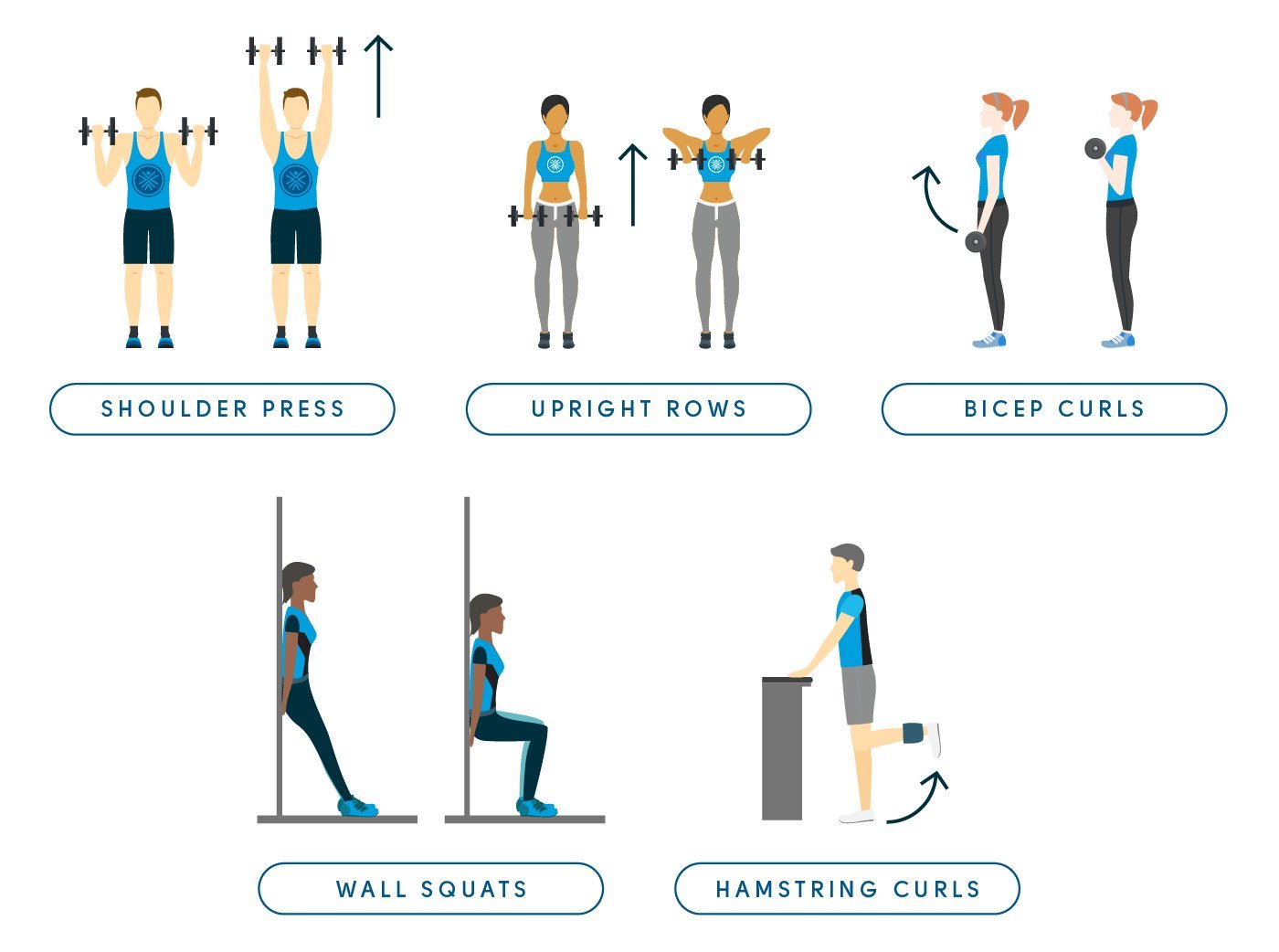
Weight-bearing and resistance training are the two types of bone density exercises that matter most. Aim for 2-3 sessions a week, plus balance work on other days. This guide covers the exact moves, the numbers to track, and who should get medical advice before starting.
What bone density exercises do
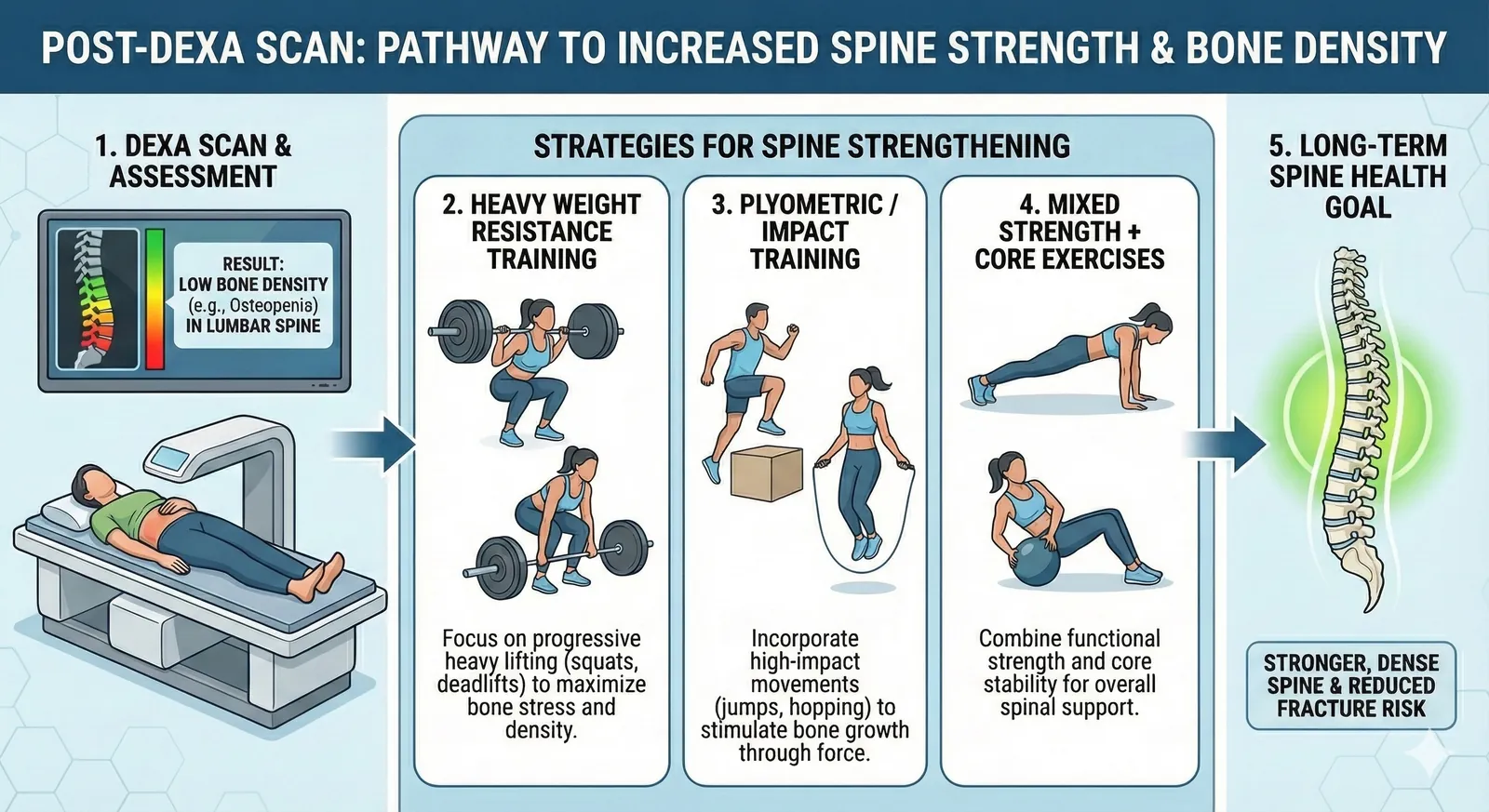
Bone is living tissue. When you put load on it — through gravity or through muscle pulling on the bone — it responds by rebuilding itself stronger. That’s the whole idea behind bone density exercises. They’re for adults who want to slow bone loss, especially women past menopause and anyone told they have low bone mass.
How to do them safely
- Warm up for 5 minutes. March in place or walk briskly. Cold muscles don’t handle load well.
- Do 2-3 sets of 8-12 reps for each resistance move — squats, lunges, rows, overhead press. Use a weight where the last 2 reps feel hard.
- Add impact 3-4 days a week. 10-20 jumps or heel drops, done in 2 sets. Start with 5 if you’re new.
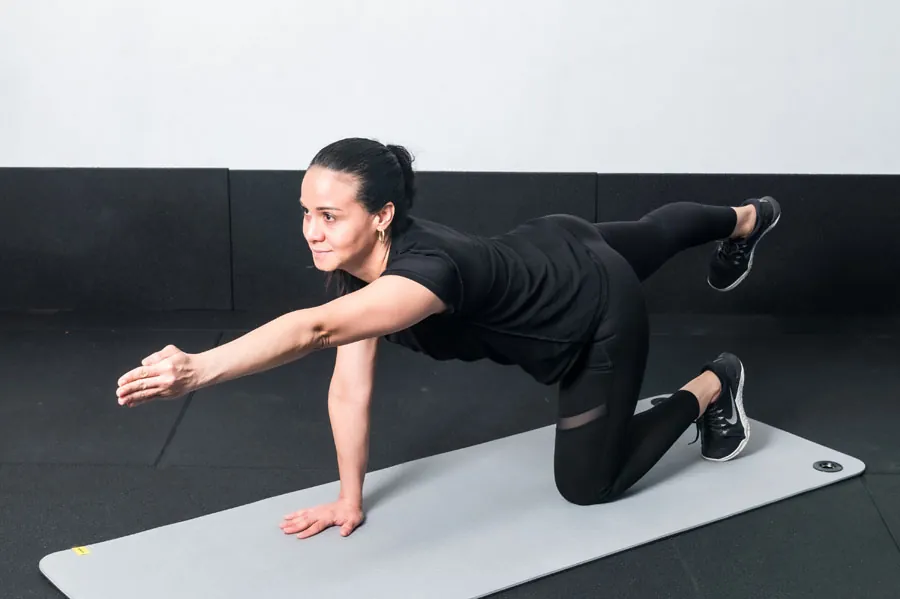
- Hold each balance pose for 30 seconds, one leg at a time, near a counter you can grab.
- Rest 48 hours between resistance sessions on the same muscle group.
- Cool down for 5 minutes with gentle stretching.
The judgement call is load. If you have osteoporosis, a prior fracture, or you’re over 65 and haven’t trained before, talk to a doctor or a physical therapist first — a physiotherapist can set safe loads for your case. For everyone else, the general guidance from the National Institute on Aging is a good starting point.
Key numbers
These figures assume a healthy adult with no fracture history. If you have osteoporosis or a recent fracture, halve the impact work and get clearance first.
| Situation | What to use | How long | What to watch for |
|---|---|---|---|
| Complete beginner | Bodyweight squats, wall push-ups | 20 min, 2x/week | Soreness that lasts past 3 days |
| Some training history | Dumbbells, 8-12 lb | 30 min, 3x/week | Joint pain, not muscle burn |
| Post-menopause, no fracture | Weights + 10 jumps | 30 min, 3x/week | Any sharp pain in hip or spine |
| Over 65, new to exercise | Chair squats, bands | 20 min, 2x/week | Dizziness when standing |
| Osteoporosis diagnosis | Doctor-approved program only | Per your clinician | Any new back pain |
| Balance problems | Single-leg stands, heel-toe walk | 10 min daily | Do it near a wall or counter |
What makes the difference between results and none
The people who get results progress the load. If 10 lb felt hard in January, it should feel easy by March — that’s your signal to move up. Bone adapts to the load it’s given, so a routine that never gets harder stops doing much.
What they leave alone is the idea that more is always better. Two or three hard sessions a week, done for years, beats six sessions a week done for a month.
Common problems and fixes
| What you notice | What it usually means | What to do first |
|---|---|---|
| No progress after 3 months | Load never increased | Add 5-10% to your weights |
| Sharp hip or back pain | Possible injury or fracture | Stop and see a doctor |
| Knee pain during squats | Form or depth issue | Reduce depth, check your stance |
| Feeling dizzy | Blood pressure or dehydration | Sit down, drink water, see a doctor if it repeats |
| Boredom, skipping sessions | Routine too repetitive | Change 2 exercises, keep the schedule |
What the guidelines say
The U.S. Department of Health and Human Services publishes physical activity guidelines recommending muscle-strengthening activity for all major muscle groups at least 2 days a week, plus balance training for older adults. The Bone Health & Osteoporosis Foundation gives similar advice and notes that people with osteoporosis should avoid spine flexion and twisting under load. If you have a diagnosis, follow your clinician’s specific restrictions — general advice isn’t written for your spine.
Keeping it up over time
Progress fades if you stop. Recheck your strength every 8-12 weeks: if a weight feels easy, go heavier. Get a DEXA scan on the schedule your doctor sets — that scan, not how you feel, tells you whether it’s working.
When this approach isn’t right

If you’ve had a fragility fracture, a doctor should design your program. If you have severe arthritis or a recent joint replacement, a physical therapist should guide the loading.
Related guides
- Maintenance Tips for Exercise Bike: Ultimate Guide to Lasting Performance
- How to Use Exercise Bike: Ultimate Guide for Fast Fitness Results
Frequently asked questions
How long does it take to improve bone density?
Most studies show measurable change after 6-12 months of consistent training, assuming you progress the load. DEXA scans are usually repeated every 1-2 years, so that’s when you’ll see the number.
Can walking alone build bone density?
No. Walking loads your legs lightly but not enough to build bone in the hips or spine.
Is it safe to do bone density exercises with osteoporosis?
Only with medical clearance. A doctor or physical therapist should approve your specific routine.
How many days a week should I do them?
2-3 resistance sessions a week, with balance work on the other days. More than that without rest doesn’t build bone faster and raises injury risk.
What happens if I stop for a few months?
You lose some of the gain, but not all of it.
Do I need supplements with these exercises?
Exercise and nutrition work together. Calcium and vitamin D matter for bone, but the right amounts depend on your diet and blood levels — ask your doctor before adding supplements.
Conclusion
Start with two sessions a week, add impact slowly, and progress the weight every few weeks. The routine that works is the one you’re still doing next year — so pick moves you don’t hate, and let the scan be your scorecard.
I am a certified fitness coach with over 10 years of experience helping people improve their strength, endurance, and overall health. Specializes in workout programming, weight training, fat loss, muscle building, home fitness, and evidence-based nutrition.My goal is to make fitness simple and practical through well-researched guides, honest product reviews, and actionable training advice.