Poor leg circulation makes your legs feel heavy, cold, or tingly. The fix is movement: walk for 10 minutes every hour or two, and pump your ankles up and down 20 times whenever you sit for long. Sitting still is the most common cause.
What slows circulation in your legs
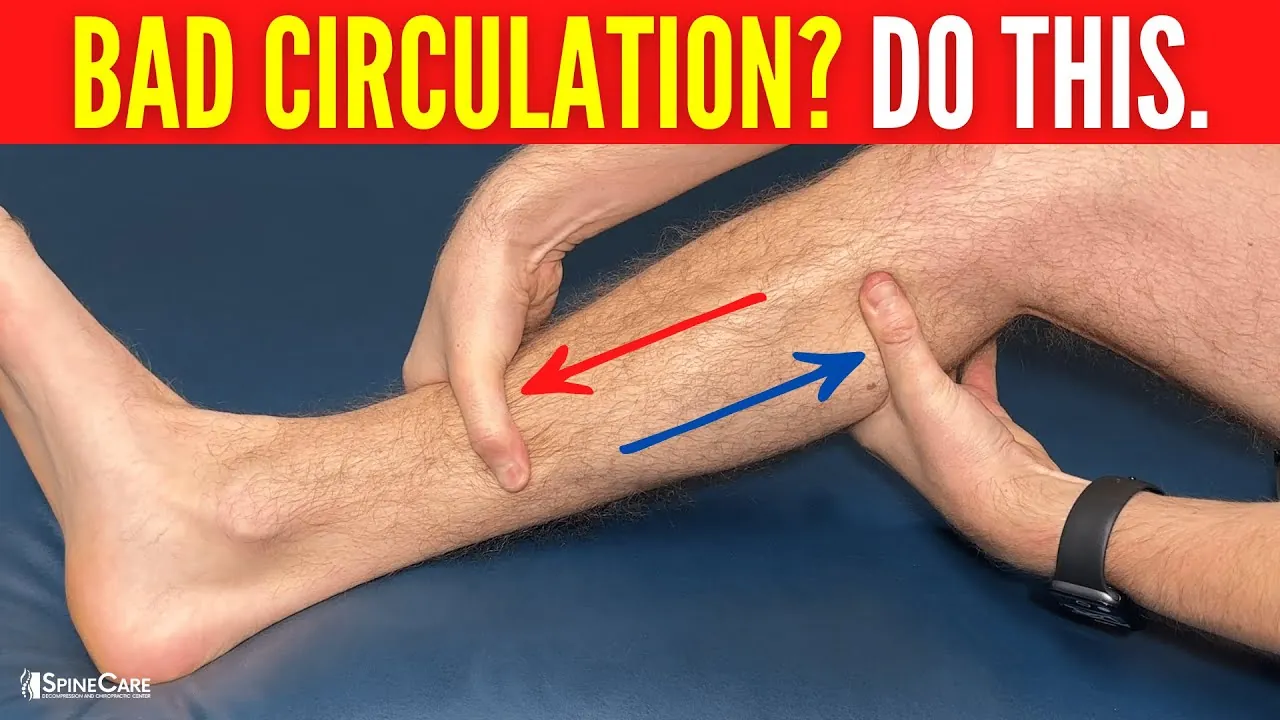
Blood coming back up from your legs relies on two things: the calf muscles squeezing the veins, and one-way valves keeping blood moving in one direction. When you sit or stand for hours, the calf pump switches off and blood pools in your lower legs.
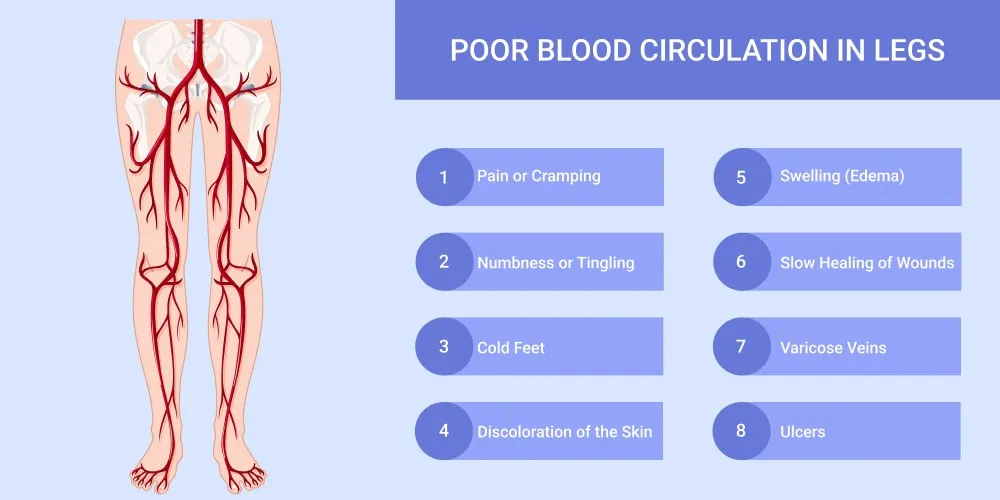
Age plays a part too. Vein walls and valves get weaker over time, so the same long day hits a 60-year-old harder than a 25-year-old. Smoking and narrowed arteries also reduce flow, and those need a doctor, not a walk.
If your legs hurt when you walk and feel better when you rest, or one leg is swollen, red, or hot, see a doctor first. That’s not a circulation habit problem.
Move your ankles and calves every hour
This fix is for anyone who sits, drives, or flies for long stretches.
Set a timer for every 60 minutes. When it rings, do 20 ankle pumps: point your toes down, then pull them up toward your shins. Then do 10 seated heel raises — press your toes into the floor and lift your heels.
You should feel a gentle pull in your calves. That squeeze is what pushes blood back up. If your legs feel lighter and less tingly within a day or two, it’s working. If you have a clot history or recent leg surgery, ask your doctor before starting.
Walk 10 minutes every hour
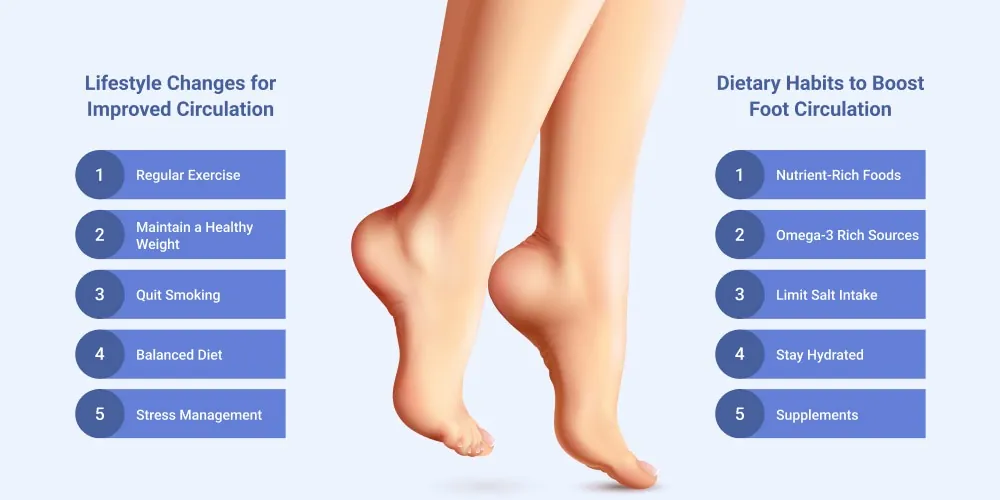
Walking turns on the calf pump properly.
Aim for 10 minutes of walking every hour or two, building toward 30 minutes total on most days. Speed matters less than frequency — three short walks beat one long one, because blood pools again the moment you sit back down.
Walk at a pace where you can talk but not sing. If your legs ache, rest, then continue. Pain that forces you to stop and eases with rest is a sign to get checked by a doctor.
Raise your legs above your heart
This is for harder cases — long days on your feet, swelling by evening, or legs that ache at night.
Lie on your back and rest your legs on 3 or 4 pillows so your ankles sit higher than your chest. Stay there 15 to 20 minutes, once or twice a day. Gravity helps drain the pooled blood while you rest.
Don’t do this if you have heart failure or swollen legs from a heart or kidney problem. Ask your doctor first.
What makes leg circulation worse
- Standing still for hours. Standing doesn’t pump the calf the way walking does, so blood pools just as badly as when you sit.
- Crossing your legs for long periods. The pressure slows flow in the veins behind your knee. Shift position every 20 minutes or so.
- Wearing tight socks or tight shoes all day. Anything that presses into your calf or ankle can slow the return flow. Check for deep marks when you take them off.
- Ignoring one swollen, hot leg. That’s a possible clot, and massage or heat can make it dangerous. Get medical help the same day.
- Thinking a hot bath fixes it. Heat widens veins and can make swelling worse for some people. Cool water and elevation work better.
How to keep it from coming back
The pattern that works: never let your legs stay still for long. Build the habits below into your normal day instead of treating them as one-off fixes.
| If you’re doing this | Do this instead | Why |
|---|---|---|
| Sitting for 3 hours straight | Stand and walk 10 minutes every hour | Restarts the calf pump that pushes blood up |
| Standing at a counter all day | Shift weight, rise onto your toes 20 times each hour | Toe raises squeeze the calf without leaving your spot |
| Flying or driving for hours | Ankle pumps every 30 minutes, plus walk the aisle when you can | Long stillness is when clots are most likely |
| Legs swelling by evening | Elevate above heart level for 15–20 minutes | Gravity drains pooled blood while you rest |
| Wearing tight socks daily | Switch to socks that leave no deep marks | Pressure at the calf slows the return flow |
Related guides
- Stair Stepper Benefits That Help Burn Fat Build Endurance and Tone Legs
- Best Barbell Set for Body Pump: Top Adjustable Weights for Home Workouts
Frequently asked questions
How long does it take to improve circulation in legs?
Most people notice lighter legs within a few days, with clearer change in 4 to 6 weeks. If nothing changes in a month, see a doctor.
Can I improve leg circulation without walking?
Yes. Ankle pumps, seated heel raises, and lying with your legs elevated above heart level all help. Do 20 ankle pumps every hour and elevate for 15 to 20 minutes daily.
Why do my legs feel heavy at night?
Blood pools in your lower legs during a day of sitting or standing, and the swelling shows up when you lie down. Elevating your legs for 15 to 20 minutes in the evening usually helps. If one leg is swollen, hot, or red, get medical help.
Is it safe to massage my legs to improve circulation?
Gentle massage is fine for tired legs. Skip it if one leg is swollen, hot, or painful — massage can move a clot, which is dangerous. In that case, see a doctor the same day rather than treating it at home.
What happens if poor leg circulation is left alone?
Over time, pooled blood and weak flow can lead to swollen ankles, skin changes, and slow-healing sores. The NHS page on poor circulation lists the warning signs worth checking. Getting checked early keeps small problems small.
How often should I get up to help my leg circulation?
Every 60 minutes if you sit for a living, and every 30 minutes on a long flight or drive. Each break needs only 2 to 3 minutes of walking or 20 ankle pumps.
Do compression socks help leg circulation?
They can, for swelling and heavy legs, when the size and pressure are right for you. Don’t self-prescribe them if you have artery disease or diabetes without checking first — the wrong pressure can cause harm.
Conclusion
Your legs tell you quickly whether any of this is working. Start with the hourly ankle pumps and a 10-minute walk, add elevation in the evening, and give it a month. If your legs stay heavy, one leg swells, or walking pain stops you, that’s the point to see a doctor — the habits above help ordinary sluggish flow, not a blocked artery or a clot.
I am a certified fitness coach with over 10 years of experience helping people improve their strength, endurance, and overall health. Specializes in workout programming, weight training, fat loss, muscle building, home fitness, and evidence-based nutrition.My goal is to make fitness simple and practical through well-researched guides, honest product reviews, and actionable training advice.