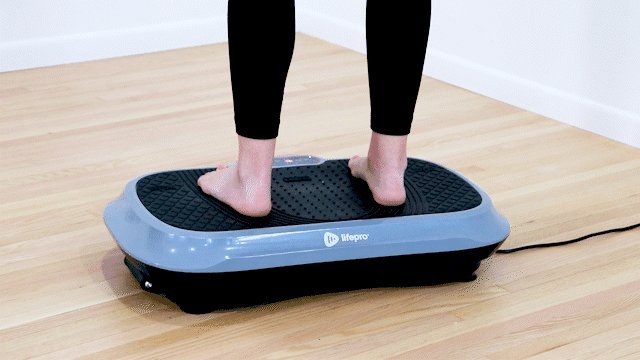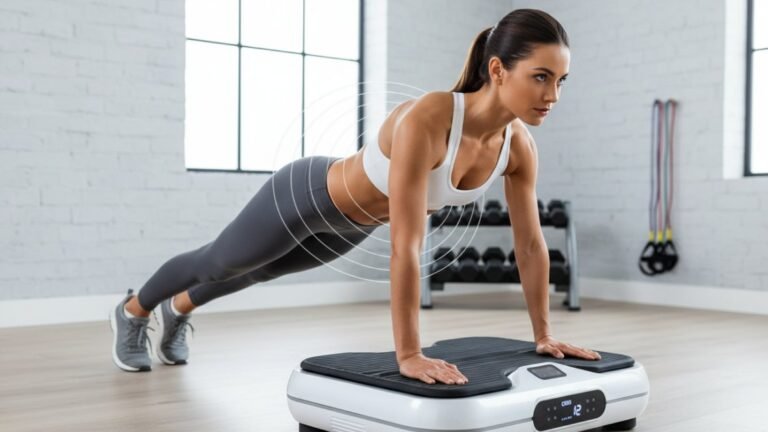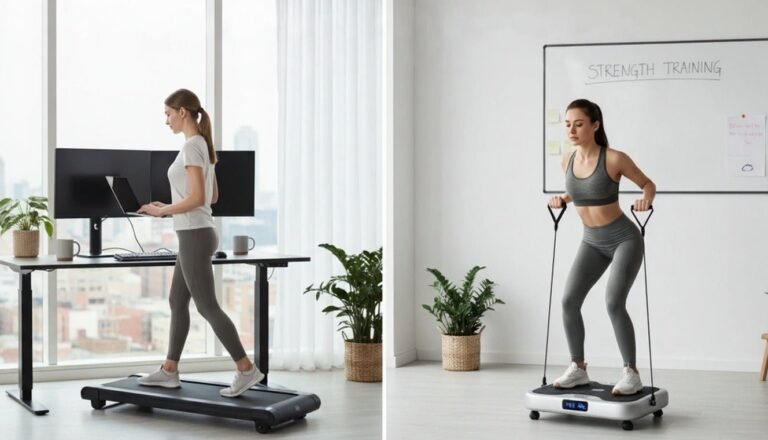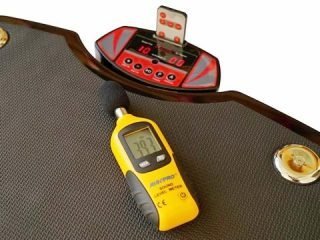
Most vibration plates run between 55 and 75 decibels at arm’s length — roughly the volume of a normal conversation or a running dishwasher. That single number is what most buyers want, but the real answer depends on the machine, the surface under it, and how hard you’re running it. This guide covers realistic vibration plate noise level figures, what actually makes the difference, and how to quiet a plate you already own.
Key Takeaways
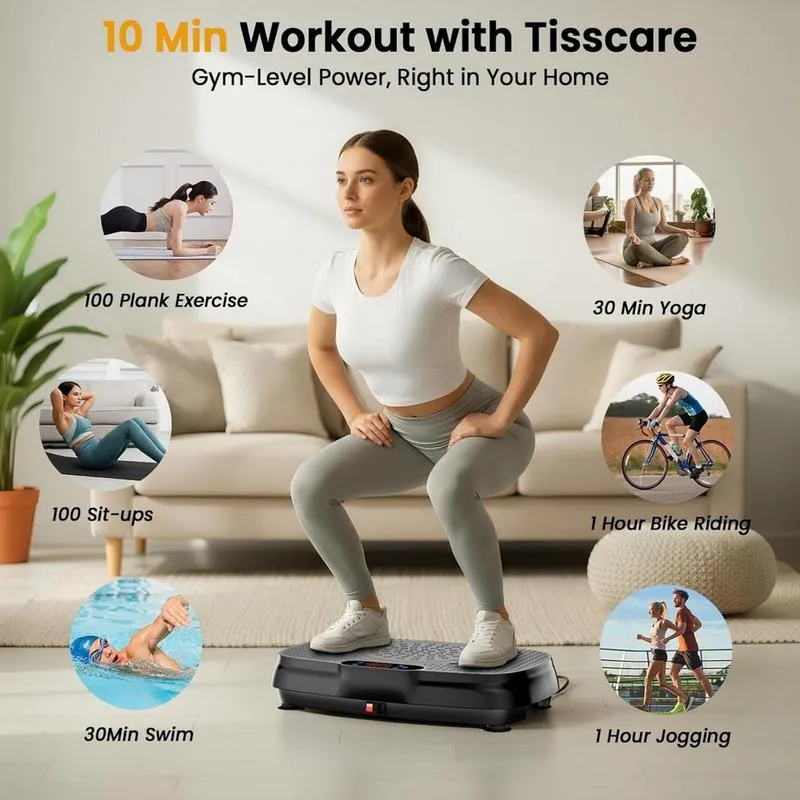
- Typical plates land in the 55–75 dB range; cheap and older models sit at the top of that band.
- Motors, not pads, are the primary noise source — a brushless motor is usually quieter than a brushed one.
- Flooring matters: a rubber mat on a concrete floor can cut perceived noise noticeably; a suspended wood floor amplifies it.
- Most people can still watch TV or take a call at 65 dB, but not at 75 dB.
- Loose bolts, worn bushings, and an unbalanced user are the three most common causes of sudden extra noise.
- If you live above a neighbor, buy for lowest dB first, features second.
What Decibels Actually Sound Like
Decibels are logarithmic, so a 10 dB jump is roughly twice as loud to the ear. That means the gap between a 60 dB plate and a 70 dB plate isn’t small — it’s the difference between a quiet conversation and a vacuum cleaner.
| Level | Comparable sound | Practical impact at home |
|---|---|---|
| 50–55 dB | Quiet office, refrigerator hum | Barely noticeable in the next room |
| 56–65 dB | Normal conversation, dishwasher | TV at normal volume still fine |
| 66–75 dB | Vacuum cleaner, busy street | TV needs volume up; calls are hard |
| 76 dB+ | Blender, garbage disposal | Neighbors may hear through floors |
Manufacturers often quote the lowest figure they measured, at the lowest speed, on a hard floor. Treat any spec sheet number as a best-case figure.
The Real Sources of Noise
The Motor
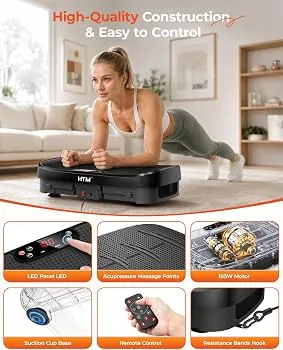
The motor is the dominant source. Brushed motors use carbon brushes that physically rub against a rotating part, which creates a constant whine. Brushless motors eliminate that contact and are generally quieter and longer-lived. Oscillating plates with a single central motor tend to be quieter than dual-motor designs running two independent platforms.
The Surface Underneath
A vibration plate transfers energy into whatever it sits on. On a concrete slab, that energy dissipates. On a suspended wooden floor, the floor itself becomes a sounding board and can amplify the noise into the room below. This is the single biggest variable most buyers overlook.
Speed and Amplitude Settings
Almost every plate gets louder as you increase frequency and amplitude. A machine rated at 58 dB on setting one may hit 72 dB on its top setting. If you plan to train at high frequency, buy based on the high-setting number, not the low one.
Loose Hardware and Wear
Bolts, foot pads, and bushings loosen over time. A plate that was quiet when new and is now rattling usually has a mechanical fix rather than a design problem.
How to Quiet a Noisy Plate
Work through these in order — the first two cost almost nothing.
- Add a vibration isolation mat. A dense rubber or cork-rubber mat under the plate absorbs energy before it reaches the floor. Anti-vibration pads sold for washing machines work well.
- Move it off wood. If possible, place the plate on a concrete slab, in a garage, or on a ground-floor tiled room.
- Tighten every bolt and screw. Go around the frame, the base plate, and the handlebar mounts with the correct wrench.
- Check the rubber feet. Replace flattened or missing feet; they’re cheap and directly reduce rattle.
- Re-level the machine. A plate that rocks slightly will buzz. Adjust the feet until all four contact the floor evenly.
- Reduce the frequency setting during early-morning or late-night sessions.
- Put a rug or carpet pad underneath if a mat alone isn’t enough — layered damping beats a single layer.
Pro Tip: Put the plate on the mat, then stand on the plate. The mat must be wider than the base by at least a few inches on every side, or vibration will travel around it.
Choosing a Vibration Plate by Noise Level
You can’t reliably compare dB ratings across brands, because there’s no mandatory standard for how they’re measured. Instead, look for design features that correlate with lower noise.
| Feature | Quieter choice | Louder choice |
|---|---|---|
| Motor type | Brushless | Brushed |
| Drive | Single central motor | Dual motor |
| Frame | Welded steel with rubber isolators | Thin tubular frame, plastic joints |
| Base | Wide, weighted, rubber feet | Narrow, light, hard plastic feet |
| Controls | Sealed digital panel | Loose mechanical dials |
If you’re shopping in person, ask to run the display unit at its highest setting. That’s the number that matters.
Noise and Your Building
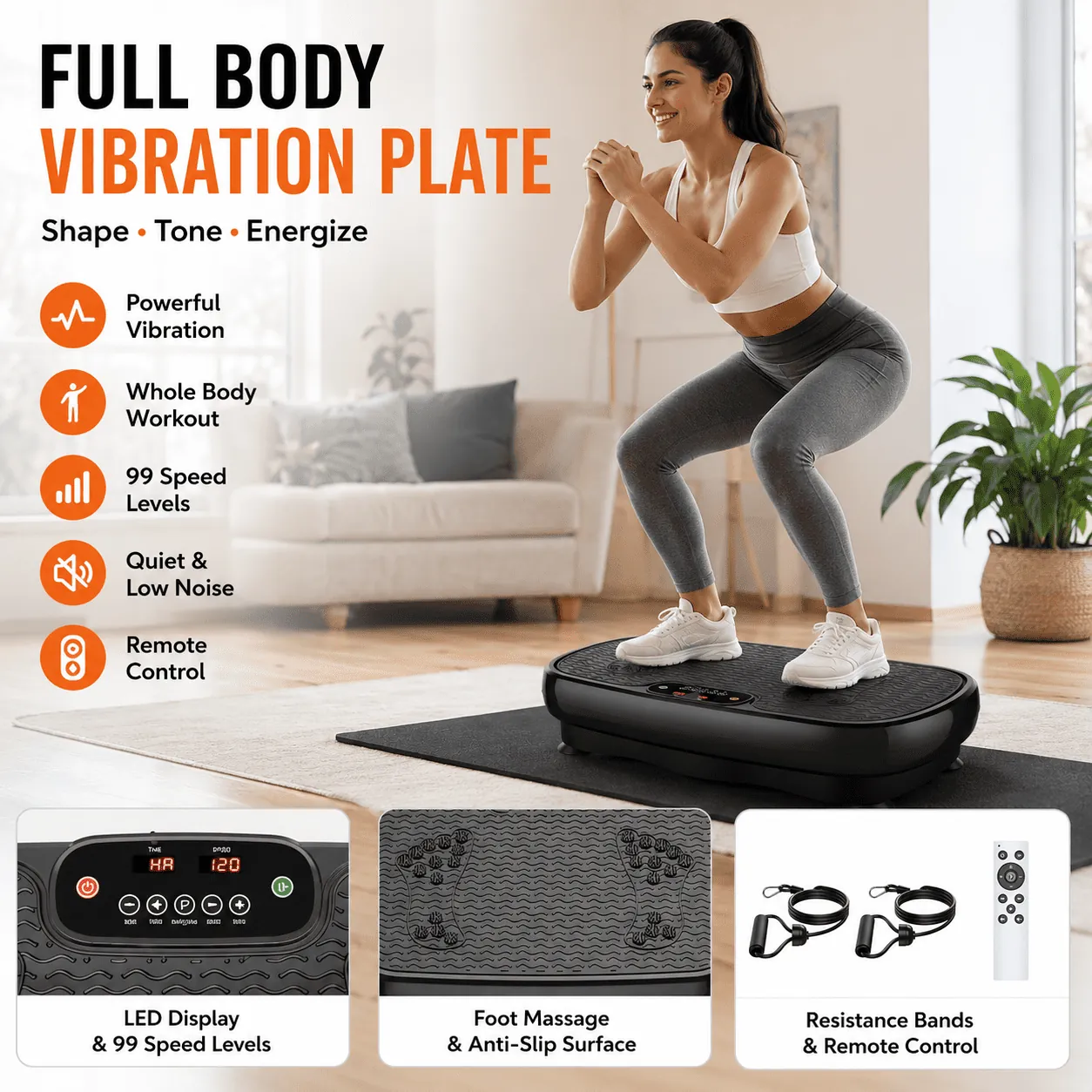
In apartments and multi-unit buildings, structure-borne vibration travels further than airborne sound. Even a plate that measures a modest 60 dB in your room can produce a low-frequency thump in the unit below that’s more annoying than the dB figure suggests. If you rent, check your lease for quiet-hours clauses before buying, and consider a thick isolation platform rather than a thin mat.
For context on how exposure limits are set for continuous noise, the U.S. Occupational Safety and Health Administration publishes occupational noise exposure limits that explain the 85 dB eight-hour threshold — useful for understanding why 60–70 dB at home is generally not a hearing concern, even though it can still annoy a neighbor.
Related guides
- Weight Plates Kg Vs Lbs Conversion
- Weight Plates Workout Routines for Beginners at Home
- Home Workouts | Complete Guide for All Fitness Levels
Frequently Asked Questions
Are vibration plates loud enough to annoy neighbors?
Usually not through walls, but often through floors. Airborne noise in the 60–70 dB range rarely travels far, while low-frequency vibration passes easily through building structure. An isolation mat and a ground-floor placement solve most complaints.
Is a vibration plate louder than a treadmill?
Typically quieter. Most treadmills run 70–80 dB under a running user, while most vibration plates sit in the 55–75 dB range. A plate at low frequency is usually the quieter of the two.
Can I use a vibration plate in an apartment?
Yes, with precautions. Use a dense anti-vibration mat, keep sessions to reasonable hours, avoid the highest frequency settings, and consider placing it on a tiled or concrete area rather than carpet over suspended wood.
Why did my vibration plate suddenly get louder?
Loose bolts, worn rubber feet, dried-out bushings, or a slight tilt are the usual causes. Tighten all fasteners, check that all feet contact the floor evenly, and replace any flattened rubber components.
Does a higher price mean a quieter plate?
Not automatically, but it correlates. Higher-priced models more often use brushless motors, welded frames, and proper rubber isolation, all of which reduce noise. Check the specs and, if possible, hear the unit running.
Do vibration plate mats really work?
Yes, within limits. A dense rubber mat reduces structure-borne transmission meaningfully, especially on hard floors. It won’t make a brushed-motor plate silent, because most of the noise you hear is airborne from the motor itself.
Conclusion
Start by measuring your own situation: run the plate at the setting you actually use, stand where your neighbor or family member would be, and judge from there. If it’s too loud, a mat and a wrench usually fix more than a new machine would.

I am a certified fitness coach with over 10 years of experience helping people improve their strength, endurance, and overall health. Specializes in workout programming, weight training, fat loss, muscle building, home fitness, and evidence-based nutrition.My goal is to make fitness simple and practical through well-researched guides, honest product reviews, and actionable training advice.