Building a home gym is exciting. But one question often confuses beginners: How to calculate total weight plates needed for home gym? If you buy too few plates, your workouts will be limited. If you buy too many, you waste money and space. This guide will show you exactly how to figure out the right number and types of plates for your home gym. We’ll use simple steps, real examples, and practical advice. Whether you’re lifting for strength, fitness, or muscle, you’ll learn how to set up your home gym for success.
Why Choosing The Right Weight Plates Matters
Weight plates are the foundation of most home gyms. The amount and variety you choose affects:
- Workout flexibility: More plate sizes means more exercises.
- Progress tracking: You need enough plates to increase weight safely.
- Budget and space: Plates can be expensive and take up room.
- Safety: Using mismatched or too few plates can be risky.
Many beginners make mistakes here. They buy a random set or only big plates, then realize they can’t adjust weights in small steps.
Understanding Your Training Goals
Before buying weight plates, think about your training goals. Different goals need different plate sets.
- Strength training: Needs heavier plates, often in larger increments.
- Bodybuilding: Needs smaller plates for gradual progress.
- General fitness: Needs a mix, but not extreme heavy weights.
For example, if you want to bench press 200 lbs one day, you need enough plates to reach that weight, plus smaller plates to increase in small steps.

Credit: www.ritfitsports.com
Types Of Weight Plates
There are several kinds of weight plates. Each has pros and cons.
- Standard plates: 1-inch hole, fit standard bars. Usually cheaper.
- Olympic plates: 2-inch hole, fit Olympic bars. More common in gyms.
- Bumper plates: Rubber-coated, made for dropping. Safer and quieter.
- Cast iron plates: Classic, durable, but noisy if dropped.
Most home gyms use Olympic plates. They’re easier to find, fit most bars, and offer more sizes.
_Image suggestion: Photo of different weight plate types side by side. Alt text: “Comparison of Olympic, standard, and bumper plates for home gyms.”_
Planning Your Maximum Weight Needs
The most important step is to plan for your maximum weight. This means the heaviest you want to lift for any exercise.
Ask yourself:
- What is your current max on major lifts (bench, squat, deadlift)?
- How much do you want to improve in the next year?
- Will anyone else use the gym?
For example, if your squat max is 150 lbs, but you want to reach 250 lbs, buy plates for at least 250 lbs. If your partner lifts less, plan for both.
Here’s a sample max weight plan:
| Exercise | Current Max (lbs) | 1-Year Goal (lbs) | Plates Needed |
|---|---|---|---|
| Bench Press | 120 | 180 | 180 |
| Squat | 150 | 250 | 250 |
| Deadlift | 170 | 270 | 270 |
Always plan for the highest number.
Calculating Total Weight Plates Needed
Now, let’s walk through how to calculate total weight plates needed for home gym. Follow these steps:
1. Determine Bar Weight
Most Olympic bars weigh 45 lbs. Standard bars are often 15–20 lbs. Subtract the bar weight from your max lift to find the plate weight needed.
Example: If you want to bench press 180 lbs, and your bar is 45 lbs:
- 180 lbs (goal) minus 45 lbs (bar) = 135 lbs plates needed
2. Decide Plate Sizes
Plates come in several sizes. Common Olympic plate sizes:
- 2.5 lbs
- 5 lbs
- 10 lbs
- 25 lbs
- 35 lbs
- 45 lbs
Some brands offer 1. 25 lbs or 50 lbs plates too.
For most beginners, these sizes are enough.
3. Calculate Plate Pairs
You need pairs of each plate (one for each side of the bar). Most exercises use even weight distribution.
Let’s break down a basic set for a 250 lbs max lift (using a 45 lbs bar):
- Goal weight: 250 lbs
- Plates needed: 250 – 45 = 205 lbs
Typical beginner set:
- 2 pairs 45 lbs (4 plates) = 180 lbs
- 1 pair 25 lbs (2 plates) = 50 lbs
- 1 pair 10 lbs (2 plates) = 20 lbs
- 1 pair 5 lbs (2 plates) = 10 lbs
- 1 pair 2.5 lbs (2 plates) = 5 lbs
Total: 180 + 50 + 20 + 10 + 5 = 265 lbs
This covers your max and gives small plates for small increases.
4. Consider Small Increments
Small plates let you make progressive overload—adding small amounts each workout.
- 2.5 lbs and 5 lbs plates are vital.
- For advanced lifters, 1.25 lbs plates can help.
Never skip small plates. Without them, you’ll struggle to increase weight safely.
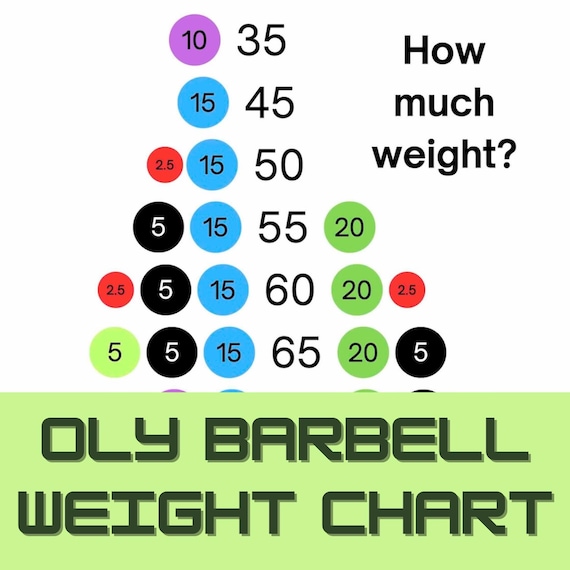
Example Plate Set For A Beginner Home Gym
Here’s a sample beginner plate set for a 250 lbs max:
| Plate Size (lbs) | Number of Plates | Total Weight (lbs) |
|---|---|---|
| 45 | 4 | 180 |
| 25 | 2 | 50 |
| 10 | 2 | 20 |
| 5 | 2 | 10 |
| 2.5 | 2 | 5 |
Total Plate Weight: 265 Lbs
This set lets you do most exercises and progress in small steps.
_Image suggestion: Close-up of weight plates stacked on a barbell. Alt text: “Sample home gym weight plate set for beginners.”_
Credit: www.etsy.com
Practical Tips For Buying Weight Plates
When shopping for plates, keep these tips in mind:
- Buy in pairs: For balanced lifting.
- Mix sizes: Get at least two pairs of big plates, but don’t skip smaller ones.
- Start with essentials: You don’t need every size at first.
- Check your bar type: Olympic plates don’t fit standard bars.
- Look for deals: Used plates are often cheaper and just as good.
Many beginners overlook small plates. They’re important for progress and flexibility.
Comparing Weight Plate Materials
Weight plates come in different materials. Each has unique features.
| Type | Material | Noise | Durability | Cost |
|---|---|---|---|---|
| Cast Iron | Metal | High | Very Durable | Low |
| Bumper | Rubber | Low | Durable | Medium |
| Vinyl | Plastic | Low | Less Durable | Low |
Cast iron plates are classic and cheap, but noisy. Bumper plates are safer and quieter, but cost more. Choose based on your space and budget.
Common Mistakes When Calculating Plate Needs
Many new home gym owners make these mistakes:
- Ignoring the bar weight: Always subtract it from your max.
- Buying only large plates: Limits your ability to increase weight slowly.
- Not planning for growth: Buy plates for your future goals, not just your current strength.
- Mixing plate types: Standard and Olympic plates don’t fit the same bar.
- Skipping small plates: Makes progress hard.
Avoid these mistakes to save money and frustration.
How To Save Money And Space
Plates can be expensive and heavy. Here’s how to get the best value:
- Buy used plates: Check local classifieds or gyms.
- Choose only needed sizes: Skip rare or huge plates unless you need them.
- Store plates vertically: Use racks or stands to save floor space.
- Share with family: Plan plate sets for all users.
Buying extra 45 lbs plates is common, but often unnecessary unless you’re lifting very heavy.
Example Calculation For Different Users
Let’s see how plate needs vary by user:
- Beginner lifter: Max bench press 100 lbs, max squat 150 lbs.
- Needs: 2 pairs 25 lbs, 1 pair 10 lbs, 1 pair 5 lbs, 1 pair 2.5 lbs.
- Intermediate lifter: Max bench press 180 lbs, max squat 250 lbs.
- Needs: 2 pairs 45 lbs, 1 pair 25 lbs, 1 pair 10 lbs, 1 pair 5 lbs, 1 pair 2.5 lbs.
- Advanced lifter: Max bench press 300 lbs, max squat 400 lbs.
- Needs: 4 pairs 45 lbs, 2 pairs 25 lbs, 2 pairs 10 lbs, 2 pairs 5 lbs, 2 pairs 2.5 lbs.
Each user should buy plates based on their current and future goals.
_Image suggestion: Image showing three different plate sets for beginner, intermediate, and advanced lifters. Alt text: “Weight plate sets for different home gym owners.”_
Safety Considerations
Safety is key in home gyms. Using the right plates helps prevent injuries.
- Never overload the bar: Stay within the bar’s weight limit.
- Use collars: Secure plates so they don’t slide.
- Check for damage: Cracked or chipped plates can break.
- Lift with proper form: Wrong technique is dangerous, no matter the plates.
For more safety tips, visit the Centers for Disease Control and Prevention.

Credit: www.ritfitsports.com
Key Takeaways And Motivation
Setting up your home gym starts with smart planning. Now you know how to calculate total weight plates needed for home gym. Remember:
- Plan for your highest goals—not just your current strength.
- Always subtract the bar weight.
- Buy plates in pairs, and include small sizes.
- Avoid common mistakes and save money by buying only what you need.
- Safety matters—never overload your bar.
Building your home gym is a journey. With the right weight plates, you’ll enjoy better workouts, steady progress, and more motivation. Take your time, follow these steps, and start lifting with confidence. Your home gym will be ready for any challenge.
I am a certified fitness coach with over 10 years of experience helping people improve their strength, endurance, and overall health. Specializes in workout programming, weight training, fat loss, muscle building, home fitness, and evidence-based nutrition.My goal is to make fitness simple and practical through well-researched guides, honest product reviews, and actionable training advice.